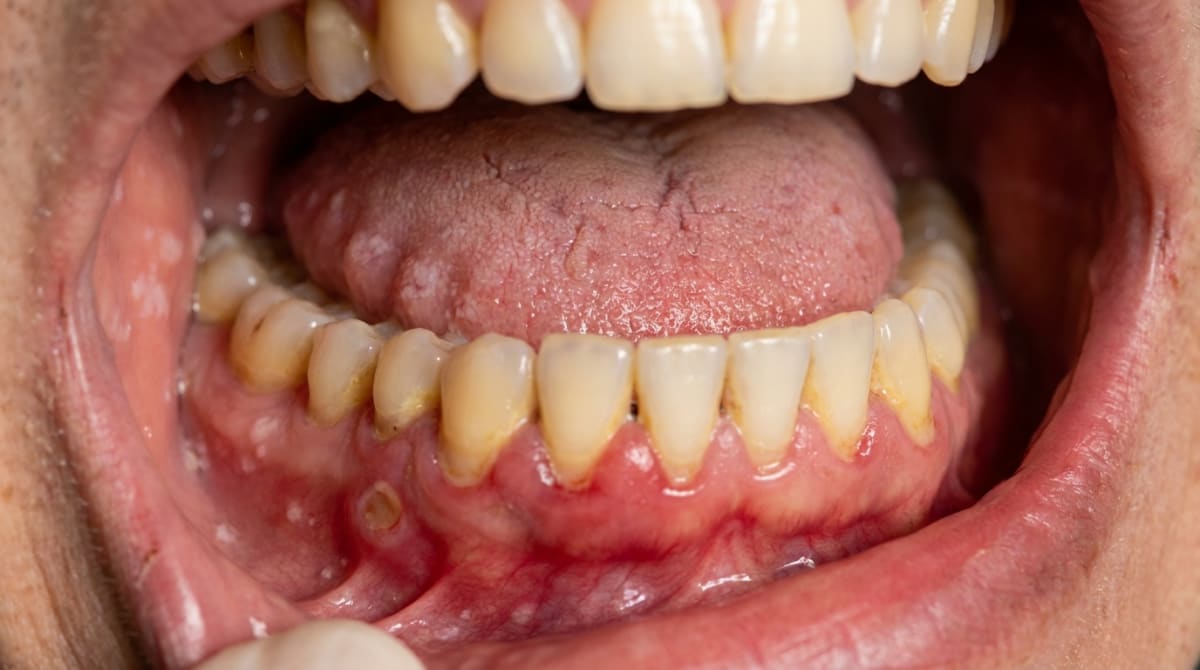
Compiled from clinical pathology references. Medically reviewed by Dr Cristian Dunker , Principal Dentist, ArtSmiles Cosmetic Dentistry.
Quick summary
Also called | Oral complications of diabetes mellitus, diabetic oral disease |
How urgent? | 🟡 Worth a check-up, diabetes-related changes in the mouth often appear before blood glucose problems are well controlled, and they can flag the need to revisit your medical management |
Common or rare? | Very common, diabetes affects roughly 7 to 11% of adults, and oral changes appear in a large proportion of those with poor control |
Who it affects | Adults more often than children; both Type 1 and Type 2 diabetes can cause oral changes |
Who treats it | General dentist, in close coordination with your GP or endocrinologist |
Based on | Neville, Cawson, Regezi, Laskaris |
What is it?
Diabetes mellitus is a long-term condition in which the body either does not make enough insulin or cannot use insulin properly, leading to higher than normal blood sugar levels. The mouth is one of the first places this can show up. When blood sugar runs high for long periods, the gums, tongue, salivary glands and tooth-supporting bone can all be affected.
The most important thing to know is that the relationship runs both ways. Diabetes can make oral problems worse, and oral problems, especially gum disease, can make blood sugar harder to control.
Who tends to get it?
Diabetes is common. In many countries it affects between 7 and 11 percent of adults, and a significant share of those people don't yet know they have it.
Type 1 diabetes usually starts in childhood or young adulthood, often before age 25, and the body makes very little insulin. It tends to be more dramatic and is more often linked with the classic oral manifestations.
Type 2 diabetes is more common, usually starts after middle age, and is closely linked with overweight and lifestyle factors. The current rise in childhood obesity is bringing Type 2 diabetes into younger age groups too.
Oral changes are seen in both types, but they are most striking when blood glucose is poorly controlled, whether because the diabetes hasn't yet been diagnosed, because medication isn't being taken consistently, or because the disease is hard to manage.
What causes it?
The oral changes seen in diabetes share a common root cause: persistently raised blood sugar. From there, several things go wrong at once:
Reduced infection-fighting ability, high glucose levels interfere with the way white blood cells travel to and engulf bacteria, particularly the cells called neutrophils.
Small blood vessel damage, chronic high glucose narrows the tiny vessels that supply the gums, bone and salivary glands, reducing blood flow and oxygen.
Altered saliva, the salivary glands can produce less saliva, or thicker saliva, which removes a key natural cleanser of the mouth.
A more sugar-rich oral environment, glucose can spill into the saliva, giving bacteria and yeast extra fuel.
Slower wound healing, tissue repair after extractions or surgery is slower than in non-diabetic patients.
Factors that make matters worse include smoking, poor oral hygiene, ill-fitting dentures, and skipping diabetes medications. The neutrophil defect is thought to be the key reason gum disease tends to be more aggressive in diabetic patients.
How does it develop?
Think of your mouth as a constant battleground between bacteria in the dental plaque and your body's defences. Normally, these forces stay roughly in balance, with regular brushing and flossing keeping the bacterial load in check.
When blood sugar is consistently high, two things tip that balance. First, the bacteria thrive in the sugar-richer environment. Second, your body's defenders, particularly the white blood cells that respond to gum infection, become slow and clumsy. The gums become inflamed more easily, the inflammation lasts longer, and the small blood vessels feeding the gums and bone become less able to deliver oxygen and nutrients.
Over months and years, this means gum disease can progress faster and further than it would otherwise. The same impaired blood supply and immune response also explain why fungal infections, dry mouth and slow healing become more common.
What might you notice?
What it looks like
There isn't one single sign. People with diabetes-related oral changes may notice:
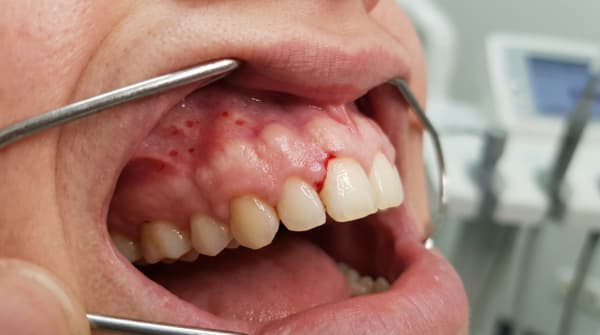
Gums that are red, swollen and bleed easily, sometimes with the gums appearing to pull away from the teeth.
Teeth that feel loose or appear to drift apart, particularly the front teeth, due to underlying bone loss.
Recurring gum abscesses, soft, painful swellings on the gum that come and go.
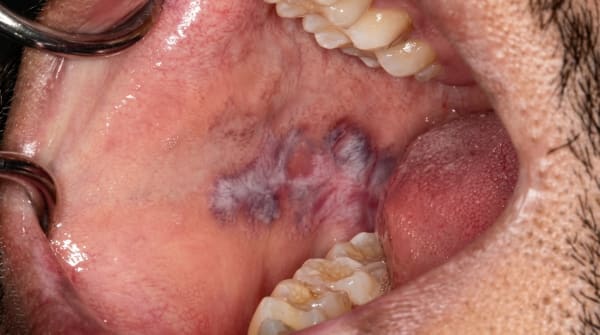
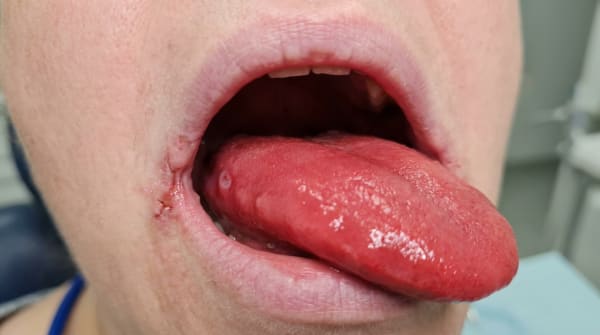
White patches that wipe off to reveal a red surface underneath, or a smooth red area in the centre of the tongue (a form of oral thrush, also seen as denture stomatitis under upper dentures).
A persistently dry, sometimes glazed-looking mouth.
Bilateral, painless swelling of the cheeks in front of the ears, where the parotid salivary glands sit. This is called sialadenosis.
In children with Type 1 diabetes, delayed or altered tooth eruption patterns may sometimes be picked up.
What it feels like
A dry mouth sensation that doesn't go away, often with thirst.
A burning or scalded feeling of the tongue, lips or other parts of the mouth, even when nothing looks wrong (similar to burning mouth syndrome).
Altered or reduced taste, with food sometimes tasting metallic or bland.
Soreness of the tongue and discomfort when eating spicy or acidic foods.
Tender, bleeding gums when brushing or flossing.
Slow healing after a tooth is removed or after a minor cut to the mouth.
Many people are surprised to learn that a recurring oral thrush infection or persistent dry mouth can be the first clue to undiagnosed diabetes.
What an X-ray might show
In poorly controlled diabetes, dental X-rays may show bone loss around the teeth that is more advanced than the patient's age and oral hygiene would predict. Multiple sites of bone loss, vertical bone defects, and occasionally several small abscesses at the tips of tooth roots may be visible. These radiographic findings often prompt the dentist to ask about general health.
What happens at the dentist?
If your dentist at ArtSmiles suspects that diabetes, known or unknown, is contributing to changes in your mouth, the assessment is usually straightforward and painless.
A careful conversation comes first. Your dentist may ask about thirst, tiredness, frequency of urination, recent weight changes and family history of diabetes. They will also want to know about your most recent HbA1c (a blood test that reflects average blood sugar over about three months) result if you already have a diagnosis, since this single blood test gives a good picture of your average blood sugar over the past two to three months.
The clinical examination involves checking your gums for inflammation and bleeding, measuring the depth of any pockets between the gum and tooth, looking for white or red patches on the tongue and palate, checking saliva flow, and assessing the size and feel of the salivary glands in front of the ears.
Dental X-rays may be recommended to assess bone levels around the teeth. If a fungal infection is suspected, a swab may be taken. If your dentist sees a pattern strongly suggestive of undiagnosed or poorly controlled diabetes, they may write to your GP suggesting a blood glucose check. For patients already under medical care, your dentist may liaise with your GP or endocrinologist before any extensive treatment, particularly oral surgery.
Is this serious?
🟡 Worth taking seriously, but very manageable. The oral changes themselves are rarely dangerous in the short term. The reason to act is twofold.
First, gum disease in poorly controlled diabetes can progress quickly, leading to tooth loss earlier than would otherwise be expected. Diabetic patients tend to have higher rates of decay and earlier loss of teeth than non-diabetic peers.
Second, and this is the important part, actively treating gum disease appears to help blood sugar control. The two conditions feed each other, so addressing one helps the other.
In rare cases, certain serious infections such as deep jaw infections or, very rarely, a fungal infection called mucormycosis can occur in patients with poorly controlled Type 1 diabetes. These need urgent medical and surgical care.
If you've noticed bleeding gums, persistent dry mouth, recurring mouth infections or unexplained taste changes for more than two weeks, it's worth booking an assessment.
Could it be something else?
Many of the signs that diabetes causes in the mouth can also be caused by other conditions. Your dentist will usually consider the following.
Standard plaque-related gingivitis and periodontitis (advanced gum disease with bone loss), bleeding gums and bone loss can occur in anyone with poor oral hygiene, smoking habits, or genetic susceptibility. Looks similar to early diabetes-related gum disease, but does not progress as rapidly and is not accompanied by other diabetes symptoms.
Sjögren's syndrome, an autoimmune condition that destroys salivary and tear glands. Causes very similar dry mouth and parotid swelling, but is usually accompanied by dry eyes and specific antibodies on a blood test.
Drug-induced dry mouth, many common medications (antidepressants, antihistamines, blood pressure medications) reduce saliva. The dentist will check the medication list to distinguish.
Oral candidiasis (oral thrush, a yeast infection of the mouth) from other causes, thrush can also be triggered by antibiotics, inhaled steroids for asthma, denture wear, anaemia, HIV infection or general immune suppression. The pattern is similar, but the underlying trigger differs.
Burning mouth syndrome, a similar burning feeling can occur in postmenopausal women, in iron or B12 deficiency, in pernicious anaemia, or as an idiopathic neuropathic condition with no clear cause. Tested by ruling out the underlying medical conditions.
Lichen planus, produces white lacy patterns and red sore patches in the mouth. There is a recognised but disputed association with diabetes; the histological appearance under the microscope is distinctive on biopsy.
Sialadenosis from other causes, bilateral parotid swelling can also be caused by chronic alcoholism, bulimia, malnutrition, pregnancy and certain medications. History and examination usually distinguish.
Other forms of aggressive periodontitis, including those associated with conditions like Down syndrome, Papillon,Lefèvre syndrome, Crohn disease, leukaemia, neutrophil disorders or HIV. These are usually distinguished by other systemic features and specialised testing.
Acromegaly and other endocrine disorders, may also produce salivary gland enlargement and mouth changes, but typically with very different facial features.
How is it treated?
Management has two arms that work together: looking after your blood sugar with your medical team, and looking after your mouth with your dental team.
At home, the most useful steps are:
Brushing thoroughly twice a day with a soft brush and fluoride toothpaste.
Cleaning between the teeth daily with floss or interdental brushes.
Sipping water through the day if your mouth is dry, and chewing sugar-free gum to stimulate saliva.
Avoiding alcohol-containing mouthwashes, which can worsen dryness.
Eating a diet that limits added sugar, important both for blood glucose and for tooth decay risk.
Not smoking. Smoking magnifies every gum disease risk diabetes already creates.
Taking your diabetes medication as prescribed and keeping up with HbA1c monitoring.
Professional dental care may include:
A professional clean (scale and polish) and, where pockets have formed around the teeth, a deeper clean of the root surfaces under local anaesthesia.
Treatment of any active infections, for example antifungal medication for oral thrush, or drainage and antibiotics for a gum abscess.
Saliva substitutes or sprays to relieve dry mouth, with prescription medications such as pilocarpine considered in selected cases.
Restorative work to repair teeth weakened by decay, particularly cavities at the gum line.
Referral to a periodontal specialist (gum specialist) if gum disease is advanced.
Careful timing of dental appointments so they don't disrupt meals or insulin doses, usually soon after breakfast.
Liaison with your medical team before surgery or extractions, particularly if your diabetes is not well controlled.
A targeted caries-control plan for high decay risk, including custom-fitted overnight fluoride trays. Our SmileShield protocol is designed for patients with reduced saliva, frequent cavities or higher-than-usual decay risk, all common patterns in poorly controlled diabetes.
Aggressive periodontal treatment in diabetic patients has been shown to do more than save teeth, it can also help improve overall blood glucose control.
What's the long-term outlook?
With good blood sugar control and good dental care, the long-term outlook is reassuring. Well-controlled diabetic patients can expect their oral health to be very close to that of non-diabetic peers. Acceleration of gum disease may not be noticeable at all in well-managed cases.
In poorly controlled diabetes, the picture is different. Gum disease progresses more rapidly, healing after surgery is slower, infections are more frequent and tooth loss tends to occur earlier. The good news is that most of these effects are reversible to some extent, the gingival enlargement and erythema seen in uncontrolled diabetes can dramatically improve once blood glucose is brought back under control.
Diabetes itself is a lifelong condition, so the oral monitoring is also lifelong. Most diabetic patients benefit from more frequent dental check-ups than the standard every-six-months, often every three to four months, so changes can be picked up early. With a coordinated approach between you, your dentist and your GP, the mouth-related complications of diabetes are very manageable.
A note on this article
This article is for educational purposes only and does not constitute a clinical diagnosis. Please consult a registered dental practitioner for assessment and treatment advice.
The cover image above is an AI-generated illustration based on the most common visible features of this condition described in clinical pathology references. It is not a photograph of a real case and should not be used to diagnose or rule out the condition in your own situation. If you are concerned about something you have noticed, please book an assessment with a registered dental practitioner.
References
Neville, B. W., Damm, D. D., Allen, C. M., & Chi, A. C. (2023). Oral and maxillofacial pathology (5th ed.). Elsevier. Chapter 17, Oral Manifestations of Systemic Diseases (Diabetes Mellitus), pp. 843 to 846; Chapter 4, Periodontal Diseases, pp. 159 to 162; Chapter 11, Salivary Gland Pathology (Sialadenosis), pp. 477 to 478.
Cawson, R. A., & Odell, E. W. (2017). Cawson's essentials of oral pathology and oral medicine (8th ed.). Elsevier. Chapter 31, Endocrine Disorders and Pregnancy (Diabetes Mellitus), pp. 412 to 413; Chapter 5, Gingivitis and Periodontitis, pp. 79 to 80; Chapter 18, Sialadenosis, p. 307.
Regezi, J. A., Sciubba, J. J., & Jordan, R. C. K. (2017). Oral pathology: Clinical pathologic correlations (7th ed.). Elsevier. Chapter 4, Red-Blue Lesions (Burning Mouth Syndrome), pp. 126 to 127; Chapter 8, Salivary Gland Diseases (Xerostomia and Sialadenosis), pp. 193 to 199; Chapter 3, White Lesions (Candidiasis), pp. 104 to 105.
Laskaris, G. (2003). Color atlas of oral diseases (3rd ed.). Thieme. Chapter 27, Endocrine Diseases (Diabetes Mellitus), pp. 250 to 251.
Frequently asked questions
How does diabetes affect the mouth?
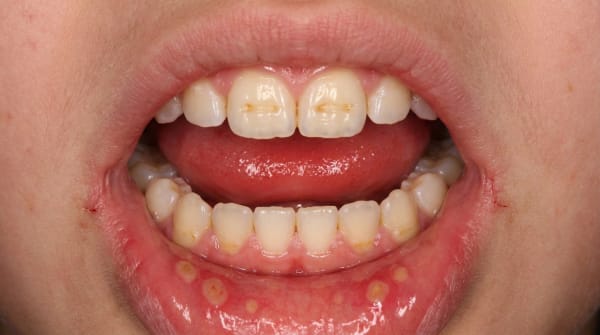
Diabetes increases the risk and severity of gum disease, slows healing after extractions and surgery, causes dry mouth (xerostomia), and increases susceptibility to oral candidiasis (thrush) and angular cheilitis. It can also cause burning mouth syndrome, taste disturbance and accelerated tooth decay if combined with dry mouth.
Why is gum disease worse in diabetes?
High blood glucose impairs immune cells and small blood vessel function in the gums and slows tissue repair. Periodontitis is now recognised as the sixth complication of diabetes. The relationship runs both ways — severe gum disease can also make blood sugar harder to control.
Should I tell my dentist about my diabetes?
Yes. Tell your dentist your latest HbA1c, the medications you take, whether you have ever had episodes of low blood sugar (hypoglycaemia) and how stable your diabetes is. Morning appointments after a normal meal and medication are usually safest. Blood sugar should be well controlled before any significant procedure.
How can I protect my mouth if I have diabetes?
Keep blood glucose under good long-term control, see your dentist regularly (usually every 6 months, sometimes 3 months if gum disease is active), brush twice daily and clean between teeth daily, treat dry mouth (sugar-free gum, sips of water, saliva substitutes), avoid smoking, and report any new ulcer, swelling or non-healing area promptly.