
Root Canal
Treatment
Stop the pain. Save your tooth.
A root canal doesn’t have to be scary. Modern root canal treatment at ArtSmiles is gentler and more comfortable than most people expect. We remove the infection, stop the pain, and save your natural tooth so you can keep smiling with confidence.
What Is
Root Canal Treatment?
When Is Root Canal Treatment Needed?
- Persistent toothache or throbbing tooth pain
- Pain when biting or chewing
- Sensitivity to hot or cold that lingers
- Swelling of the gum
- Pimple-like lesion on the gum
- Darkening of a tooth
- Infection visible on X-ray
- If you are experiencing severe tooth pain in Southport or the Gold Coast area, see your dentist in Southport for urgent assessment
Emergency Root Canal
Treatment in Southport
What Happens If an Infected Tooth Is Not Treated?
When bacteria invade the pulp:
- Infection can spread to surrounding bone
- An abscess may form
- Facial swelling may develop
- Bone destruction may occur
- Systemic symptoms can arise in severe cases
If you are suffering from a severe toothache or have a badly damaged or infected tooth, do not wait to seek care. Our experienced dental team in Southport on the Gold Coast are able to provide a comfortable and professional experience. Call (07) 5588 3677 or book online and someone from our practice will be in touch as soon as possible.
Book Your Root Canal Consultation
Share your details and our team will be in touch within 1 business day to confirm your appointment.
Prefer to call? Reach us on (07) 5588 3677
The Root Canal Procedure
Step by Step
A structured, conservative process designed to save your tooth and eliminate infection with minimal discomfort.

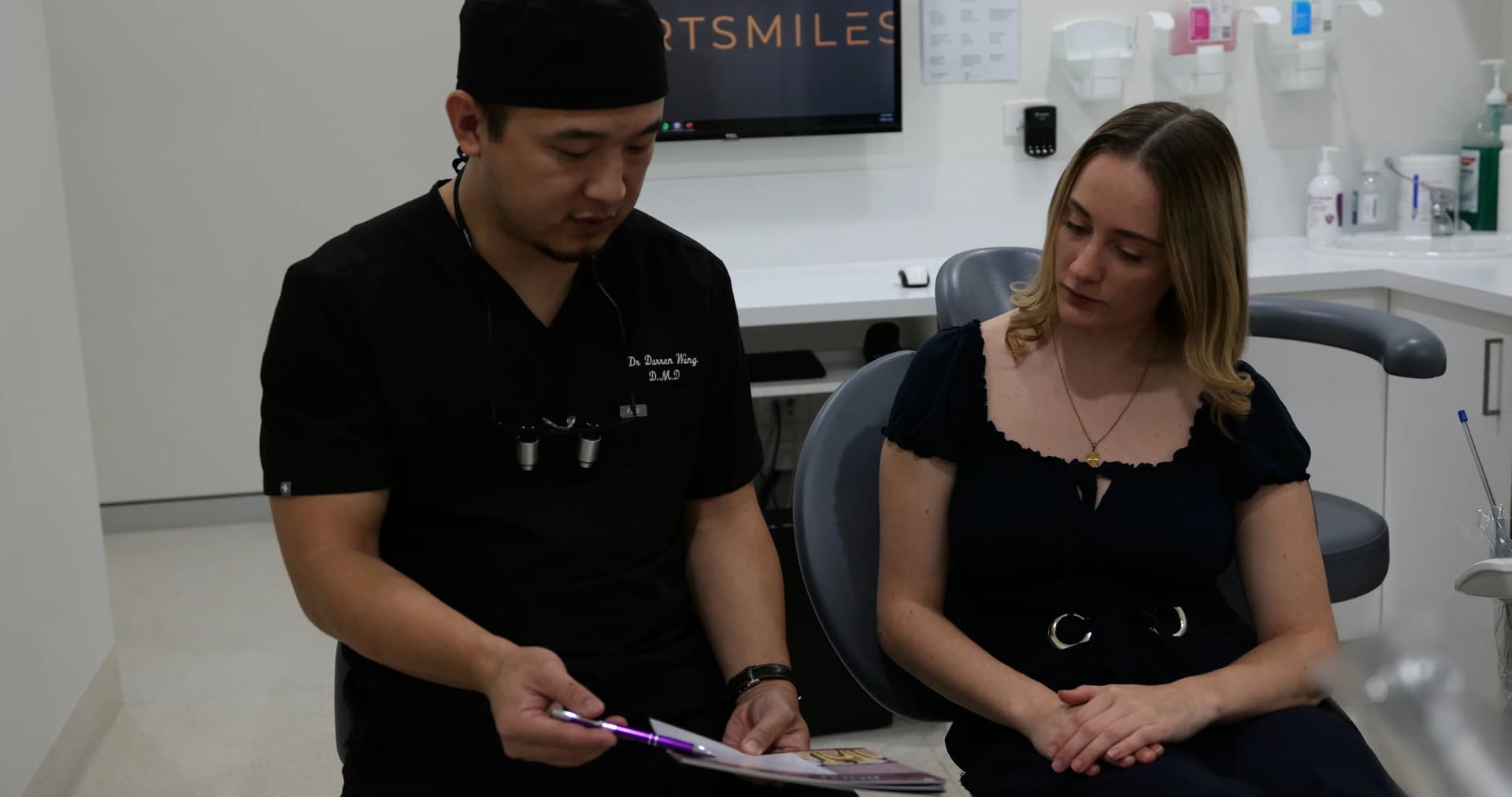
Diagnosis
We confirm the diagnosis using clinical testing and digital imaging.
- —Clinical testing, cold, percussion, palpation
- —Periapical X-rays
- —CBCT scan if complex anatomy is suspected
 Step 01 · ArtSmiles
Ready to take the next step?
Book a consultation to discuss your personalised plan.
Root Canal vs
Tooth Extraction
Long-Term Success
Reported success rates of 85 to 97%, depending on case complexity and restoration quality. Outcome depends on complete disinfection, proper restoration, maintained hygiene and regular reviews.
What If a Root Canal Fails?
Retreatment may be required if a canal was missed, reinfection occurs, or a crown leaks. The canal system is re-disinfected and resealed. Complex cases may be referred to a specialist endodontist.
Recovery After
Endodontic Therapy
This is one of the most common concerns. A root canal is performed to relieve pain, not cause it. With modern anaesthesia and techniques, most patients report that it feels similar to having a filling. Mild tenderness afterward is normal and usually settles within a few days. If the tooth was severely infected beforehand, post-operative discomfort may occur as inflammation resolves.
Once the internal infection is treated, the tooth needs to be protected. In many cases, especially for back teeth, a crown is recommended to restore strength, prevent fracture, and improve long-term durability. Without proper reinforcement, treated teeth are more prone to cracking over time.
At ArtSmiles, we take a structured and careful approach to endodontics. Diagnosis is confirmed with clinical testing and imaging, and the procedure is planned to maximise long-term preservation of the tooth. If you are experiencing a toothache or have been told you may need a root canal, a comprehensive assessment will determine the best course of action. Saving your natural tooth is often possible — and often the best choice.
The tooth may feel tender for a few days. This is normal. If pain worsens significantly or swelling develops, contact the practice promptly.

Worried About a Tooth?
If you’re in pain or think something isn’t right, don’t wait. Book a consultation and we’ll take a close look. The sooner we catch it, the simpler the treatment.
Ready to get started?
Prefer to call? (07) 5588 3677
Root Canal
Cost Guide
Root canal cost on the Gold Coast depends on tooth location (front vs molar), the number of canals, the complexity of root anatomy, and whether retreatment is required. A crown is typically recommended following the procedure and is quoted separately. A personalised assessment is required for accurate treatment planning.
- —Tooth location (front vs molar)
- —Number of canals (varies by tooth type)
- —Complexity of root canal anatomy
- —Retreatment vs first-time treatment
- —Need for crown restoration
- —Health fund coverage
| Tooth Type | Indicative Cost |
|---|---|
| Single-canal tooth (incisor / canine) | From $1,000–$1,300 |
| Two-canal tooth (premolar) | From $1,200–$1,500 |
| Three-canal tooth (molar) | From $2,200–$2,800 |
| Complex or retreatment case | From $2,800+ |
*Prices exclude crown restoration (recommended following treatment). Health fund rebates may apply. Final pricing confirmed after assessment.
Book a Consultation
Preventive care membership with check-ups, cleans, and savings on treatments. Priority scheduling included.
Flexible Payment Options
We understand that dental treatment is a significant decision. Flexible finance solutions and staged planning options are available. For more information, please visit our dedicated Finance page. For eligible patients facing hardship, structured access may be available under our Blessing Program.
Risks and
Clinical Considerations
Potential Risks Include
Post-Operative Discomfort
Mild tenderness when biting is common for several days after treatment. If the tooth was severely infected beforehand, discomfort may take longer to settle as inflammation resolves.
Incomplete Disinfection
Complex root anatomy, curved canals, or calcified channels may make complete disinfection difficult. Persistent bacteria can lead to treatment failure requiring retreatment or referral.
Instrument Separation
In rare cases, a fine rotary file may separate within a narrow or curved canal during treatment. This may or may not affect the outcome, depending on its location and the clinical situation.
Root Fracture
Root canal treated teeth lose structural resilience over time. Without adequate restoration, particularly a crown on back teeth, the risk of vertical root fracture increases.
Missed Canals
Some teeth have additional or unusually shaped canals that may not be detected during initial treatment. Untreated canals can harbour bacteria and lead to persistent infection.
Retreatment or Extraction
If a root canal fails due to reinfection, fracture, or restoration breakdown, retreatment or extraction may be required. Complex cases may be referred to a specialist endodontist.

Frequently Asked
Questions
What is root canal treatment?
A root canal — formally called endodontic therapy — removes infected or inflamed tissue from inside a tooth, then cleans, disinfects, and seals the canal system. The goal is to eliminate the toothache at its source and keep your natural tooth functioning for years to come.
Is a root canal painful?
The procedure is performed under local anaesthetic and most patients describe it as no more uncomfortable than a standard filling. In fact, the purpose of the treatment is to relieve the toothache you arrived with. Some mild tenderness for a few days afterward is normal and resolves quickly.
How long does a root canal take?
Most root canal treatments take between 60–90 minutes. Complex molars with multiple canals may require longer or a second visit.
Is it better to extract the tooth and get an implant?
Whenever possible, preserving your natural tooth is biologically preferable. Extraction often leads to bone loss, additional procedures, implant or bridge placement, and higher long-term cost. However, extraction may be recommended if the tooth cannot be predictably restored.
How do I know if my root canal is failing?
Signs of possible failure include pain when biting, swelling, a recurring abscess, darkening of the tooth, and infection visible on X-ray. Regular reviews help detect issues early.
Is endodontic therapy safe?
Yes. The root canal procedure is one of the most well-established treatments in dentistry, performed millions of times worldwide each year. It safely eliminates infection and preserves natural teeth with high predictability.
Do you refer to a root canal specialist?
ArtSmiles performs most root canal procedures in-house at our Southport practice. For particularly complex cases — such as teeth with unusual root anatomy, calcified canals, or cases requiring microsurgical retreatment — we refer to a trusted specialist endodontist on the Gold Coast to ensure the best possible outcome.
When should I seek urgent care?
Seek urgent dental assessment if you experience severe tooth pain, facial swelling, fever, difficulty swallowing, or pus discharge. Prompt care reduces complications and improves outcomes.
What is an abscessed tooth?
An abscessed tooth is a tooth with a bacterial infection that has spread beyond the pulp into the surrounding bone. It may cause severe pain, swelling, gum tenderness, pus discharge, and facial swelling. An abscess requires urgent assessment and often root canal treatment or extraction.
Can antibiotics replace a root canal?
No. Antibiotics may temporarily reduce swelling or symptoms but cannot remove diseased tissue inside a tooth. The only definitive solution is mechanical cleaning and sealing of the canal system — which is what endodontic therapy achieves.
How long does a root canal treated tooth last?
With proper restoration and maintenance, many root canal treated teeth last decades. Long-term success depends on complete infection removal, proper crown placement when indicated, good oral hygiene, and regular reviews.
Can a root canal fail?
While success rates are high (often between 85–97%), failure can occur due to complex root anatomy, missed canals, persistent bacteria, fracture, or breakdown of the final restoration. Retreatment or alternative solutions may then be considered.
Can I eat after a root canal?
Yes, once numbness has worn off. Avoid chewing on the treated tooth until it is permanently restored.
How much does a root canal cost on the Gold Coast?
Root canal cost on the Gold Coast typically ranges from $1,000 for a single-canal front tooth to $2,800+ for complex molar retreatment. Fees vary by tooth type, number of canals, and anatomy complexity. A crown (quoted separately) is usually recommended afterward. Health fund rebates may apply, and flexible payment plans are available at ArtSmiles Southport.
What is the difference between a dentist and an endodontist?
An endodontist is a dentist who has completed additional years of specialist training focused exclusively on root canal therapy and diseases of the dental pulp. General dentists like our team at ArtSmiles routinely perform endodontic procedures, but specialist endodontists handle the most complex cases.
Still have questions?
Our team is here to help. Book a consultation to discuss your options.
Our Other General Dentistry
Services
Check-up & Clean
Dentist-led check-up and scale and clean, with recall matched to your individual risk profile. From $9/week with the ArtSmiles Club.
Learn moreTeeth Whitening
Professional whitening using clinically approved agents for safe, controlled, and predictable lightening results.
Learn moreEmergency Dentist
Urgent dental assessment for severe pain, swelling, trauma, or broken teeth with same-day appointments.
Learn moreBruxism Treatment
Diagnosis and management of teeth grinding and jaw clenching, including occlusal splints and bite therapy.
Learn moreDental Fillings
Tooth-coloured composite restorations to repair decay or fractures, blending seamlessly with natural tooth structure.
Learn moreThis page has been clinically reviewed by Dr. Cristian Dunker, BDSc, MBA, Principal Dentist at ArtSmiles.