Compiled from clinical pathology references. Medically reviewed by Dr Cristian Dunker, Principal Dentist, ArtSmiles Cosmetic Dentistry.
Quick summary
Also called | Oral thrush, oropharyngeal candidiasis, acute pseudomembranous candidiasis |
How urgent? | 🟡 Usually mild, but worth confirming and treating; recurrent forms can flag undiagnosed diabetes, anaemia or immune issues |
Common or rare? | Common, one of the most frequent oral fungal infections at all ages |
Who it affects | Newborns, older adults, denture wearers, people on antibiotics, asthma inhaler users, people with dry mouth, diabetes or weakened immunity |
Who treats it | General dentist for diagnosis and topical antifungal; GP for systemic antifungal or workup of underlying cause; infectious diseases specialist in severely immunocompromised (with a weakened immune system) patients |
Based on | Neville, Cawson, Regezi, with cross-references in Laskaris |
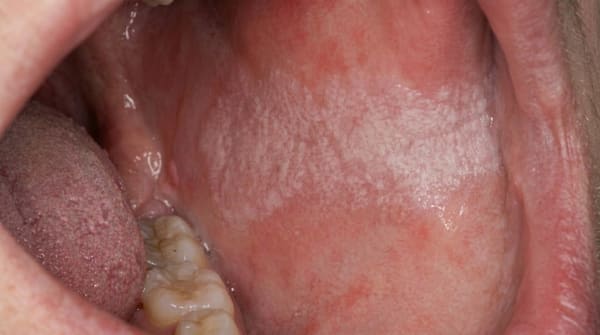
White creamy patches on the inside of the cheeks, the tongue or the palate that can be wiped off with a finger or cotton swab, leaving a slightly red, raw-looking surface, are the classic appearance of pseudomembranous candidiasis, more commonly known as oral thrush. It is one of the most common fungal infections of the mouth and can affect anyone from newborn babies to elderly adults.
This article from the team at ArtSmiles, reviewed by Dr Cristian Dunker, explains what oral thrush is, why some people get it more easily, and how it is treated.
What is it?
Pseudomembranous candidiasis is a fungal infection of the oral lining caused mostly by Candida albicans (and sometimes other Candida species). The classic features include:
Soft, creamy white plaques that can be wiped off with gauze or a tongue blade.
A reddish, slightly bleeding base under the wiped-off plaque.
Multiple sites involved, buccal mucosa, tongue, palate, lips.
A cottage-cheese-like or curd-like appearance.
Mild discomfort or burning, particularly when eating spicy or acidic food.
Altered taste, often a metallic or bitter feel.
The "pseudomembrane (a loose surface layer of fungal cells and debris)" is a layer made up of fungal cells, dead epithelial (of the surface lining) cells, food debris and inflammatory cells. It sits on top of the lining rather than being part of it, which is why it wipes off.
Who tends to get it?
Pseudomembranous candidiasis is seen most often in:
Newborn babies, who can pick up Candida during birth or feeding. Up to 5% of newborns develop oral thrush in the first weeks of life.
Older adults, particularly those with reduced saliva, dentures, or poor oral hygiene.
People who have recently taken antibiotics, which disturb the normal balance of bacteria in the mouth and allow Candida to overgrow.
People with dry mouth from medicines, Sjögren's syndrome (an autoimmune condition that dries up saliva and tears), dehydration or after head and neck radiotherapy.
People on inhaled corticosteroids for asthma, particularly when they don't rinse the mouth after using the inhaler.
People with poorly controlled diabetes, where higher sugar levels in saliva favour fungal growth.
Immunocompromised patients, HIV/AIDS, after chemotherapy, after organ transplant, on long-term high-dose corticosteroids.
Patients with iron, B12, folate or zinc deficiencies.
What causes it?
Candida species live harmlessly in the mouths of around 30 to 60% of healthy people. They become a problem only when the balance shifts. Common triggers include:
Antibiotic use, which kills the bacteria that normally keep Candida in check.
Reduced saliva flow, which removes a natural antifungal protection.
Reduced immunity, locally or systemically.
Surface changes of the lining, for example after radiotherapy or in chronic mucosal disease.
Inhaled steroid residue sitting on the lining of the mouth.
High sugar environment of poorly controlled diabetes.
Dentures, which provide a warm, moist surface for Candida to grow.
The condition is not transmitted in everyday contact between healthy adults. In newborns and breastfeeding mothers, however, Candida can pass back and forth between mouth and nipple.
How does it develop?
The course typically follows a clear pattern:
A trigger upsets the balance, antibiotics, dry mouth, inhaler use, illness.
Candida begins to multiply on the lining.
White plaques develop, made up of fungal cells, dead lining cells and inflammatory exudate (fluid released from inflamed tissue).
The patient notices the white patches, often with mild burning or altered taste.
With antifungal treatment, the plaques clear over one to two weeks.
Without addressing the underlying trigger, recurrence is common.
What might you notice?
Common things people notice include:
Creamy white or cottage-cheese-like patches on the cheek lining, tongue, palate or lips.
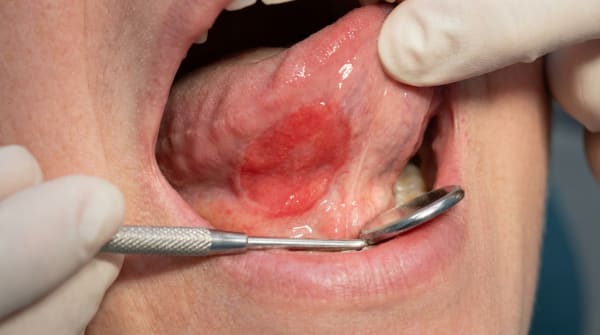
Patches that wipe off with light pressure, leaving a red, slightly tender base.
Mild burning when eating spicy or acidic food.
Altered taste, often a metallic or bitter feel.
Difficulty eating in severe cases, particularly in babies who become reluctant to feed.
Cracked corners of the mouth (angular cheilitis) sometimes appearing alongside.
A sore tongue that looks redder than usual once the plaques are removed.
No fever in most adults; some babies may be slightly grizzly.
What an X-ray might show
Pseudomembranous candidiasis is a surface infection of the mouth lining and does not show on X-rays.
What happens at the dentist?
When oral thrush is suspected at ArtSmiles, the visit usually involves:
A history conversation about recent antibiotics, inhaled steroids, denture wearing, dry mouth and any general health issues.
An examination of all the mouth lining surfaces, including under any denture.
A simple in-chair test, gently wiping a white patch with a gauze square confirms it lifts off, distinguishing thrush from leukoplakia.
A swab or oral rinse for laboratory confirmation in unclear or recurrent cases.
A treatment plan with a topical antifungal as first line, and oral antifungal tablets reserved for severe or recurrent disease.
Advice on the trigger, rinsing the mouth after asthma inhalers, improving denture hygiene, addressing dry mouth, controlling diabetes.
A check for underlying conditions in adults with frequent or severe thrush, with referral to a GP for HIV testing, blood sugar testing or nutritional review when appropriate.
Is this serious?
For most patients, oral thrush is a minor, easily treatable infection. The reasons it sometimes deserves more attention:
In babies, prolonged thrush can affect feeding and weight gain.
In immunocompromised patients, oral thrush can spread down the oesophagus (the food pipe between the mouth and stomach), making swallowing painful.
In severely immunocompromised patients, it can rarely become invasive and reach the bloodstream, a serious medical concern.
In adults with no obvious cause, recurrent thrush can be the first sign of an undiagnosed underlying condition such as diabetes, anaemia or HIV.
In denture wearers, untreated thrush keeps coming back unless denture hygiene improves.
Could it be something else?
White patches in the mouth can have several causes:
Frictional or chemical keratosis, does not wipe off; appears at sites of repeated rubbing.
Leukoplakia, does not wipe off; persistent white patch with malignant potential.
Lichen planus, lacy white streaks that do not wipe off; often symmetrical.
Hairy leukoplakia, corrugated white patches on the side of the tongue, particularly in HIV.
White sponge naevus, hereditary, soft folded white change present from a young age.
Burns, chemical or thermal injury producing white sloughed lining.
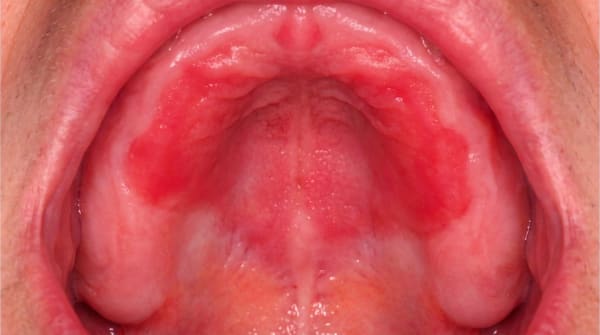
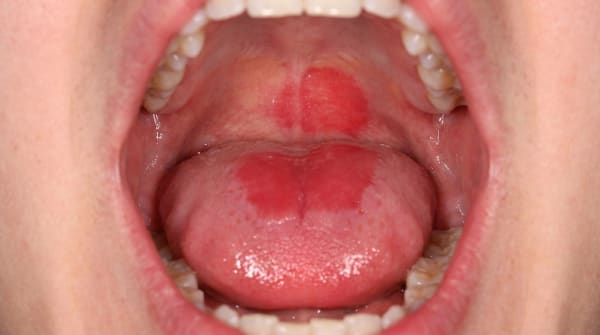
Other Candida forms, erythematous (red) candidiasis, chronic hyperplastic candidiasis, denture stomatitis.
The single best clinical clue for pseudomembranous candidiasis is the wipeable nature of the patches.
How is it treated?
Treatment combines killing the fungus with addressing the cause:
Topical antifungals as first line:
Nystatin oral suspension four times a day for 7 to 14 days.
Miconazole oral gel four times a day for 7 to 14 days (note interactions with warfarin and statins).
Amphotericin lozenges in some settings.
Oral antifungals for severe, recurrent or immunocompromised cases:
Fluconazole tablets, with attention to drug interactions.
Itraconazole in selected cases.
Address the trigger:
Rinse the mouth and clean teeth after using inhaled corticosteroids.
Improve denture hygiene, clean dentures daily, soak overnight in chlorhexidine or sodium hypochlorite (for non-metal dentures), do not sleep with dentures in.
Manage dry mouth with saliva substitutes and frequent water sips.
Optimise diabetes control with your GP.
Treat any nutritional deficiency.
Pain relief, soft, bland diet during the worst of symptoms.
For breastfeeding mothers and babies, treat both at the same time to prevent ping-pong recurrence.
In severely immunocompromised patients or those with persistent disease despite treatment, referral to an infectious disease specialist or oral medicine specialist may be appropriate.
What's the long-term outlook?
For most patients, the long-term outlook is excellent. With the right antifungal medicine and attention to the underlying trigger, oral thrush clears within one to two weeks and does not return. Recurrent or persistent thrush in an adult prompts a closer look at the underlying picture, often resolving once the contributing factor is addressed.
If you have noticed creamy white patches in your mouth, please book a visit. Most cases can be diagnosed at the chair and treated quickly.
A note on this article
This article is for educational purposes only and does not constitute a clinical diagnosis. Please consult a registered dental practitioner for assessment and treatment advice.
The cover image above is an AI-generated illustration based on the most common visible features of this condition described in clinical pathology references. It is not a photograph of a real case and should not be used to diagnose or rule out the condition in your own situation. If you are concerned about something you have noticed, please book an assessment with a registered dental practitioner.
References
Neville, B. W., Damm, D. D., Allen, C. M., & Chi, A. C. (2016). Oral and maxillofacial pathology (4th ed., Ch. 6: Fungal and Protozoal Diseases, Candidiasis, pp. 213 to 218). Elsevier.
Cawson, R. A., & Odell, E. W. (2017). Cawson's essentials of oral pathology and oral medicine (8th ed., Ch. 17: Mycotic Infections). Elsevier.
Regezi, J. A., Sciubba, J. J., & Jordan, R. C. K. (2017). Oral pathology: clinical pathologic correlations (7th ed., Ch. 2: Ulcerative Conditions). Elsevier.
Laskaris, G. (2006). Pocket atlas of oral diseases (2nd ed., Pseudomembranous Candidiasis). Thieme.
Frequently asked questions
What is pseudomembranous candidiasis (oral thrush)?
Pseudomembranous candidiasis is the classic 'oral thrush', an acute Candida infection that produces creamy white plaques that wipe off the lining to reveal a red base underneath. It is common in newborns, in elderly people with dentures, in those on inhaled or systemic steroids, antibiotics or chemotherapy, and in people with weakened immunity.
How can I tell if a white patch is thrush?
The classic feature is that thrush wipes off easily with gauze, leaving a red and sometimes bleeding base. Other white patches (leukoplakia, lichen planus, frictional keratosis) are firmly attached and do not wipe off. The pattern of when symptoms appeared and what medications are being used helps confirm the diagnosis.
Is oral thrush contagious?
Candida is normally present in many mouths without causing problems. Thrush develops when local or systemic factors let it overgrow. It is not contagious in the everyday sense, but breastfeeding mothers and babies can pass it back and forth and both may need treatment together.
How is oral thrush treated?
Topical antifungal therapy is the mainstay: nystatin suspension or miconazole gel for one to two weeks usually clears the infection. Systemic antifungals (such as fluconazole) are used for severe or recurrent cases. Addressing contributing factors (inhaler rinsing, denture hygiene, dry mouth, diabetes) is essential to prevent recurrence.