This article is general educational information from the ArtSmiles Dental Library. It is not individual clinical advice and isn’t a substitute for an in-person assessment.
Quick summary
The bottom line. SmileShield is our signature overnight protocol for decay that needs more than a stronger toothpaste. A custom-fitted tray, low-dose fluoride gel, worn while you sleep.
Why it matters. If you’re at high risk of tooth decay or we’ve just invested significant work in your smile, the eight hours you spend asleep are when your teeth are most exposed, and SmileShield fills that gap.
How often. Every night while you sleep, for as long as your risk stays high.
Who needs this. Adults with active decay and one of these: a dry mouth, radiotherapy to the head and neck, more than one active spot, decay that continues despite 5,000 ppm toothpaste, or major dental work to protect.
Based on. Soutome et al., 2020 (FluCar study); Marinho et al., 2015 (Cochrane); Featherstone & Chaffee, 2018 (CAMBRA).
The 60-second answer
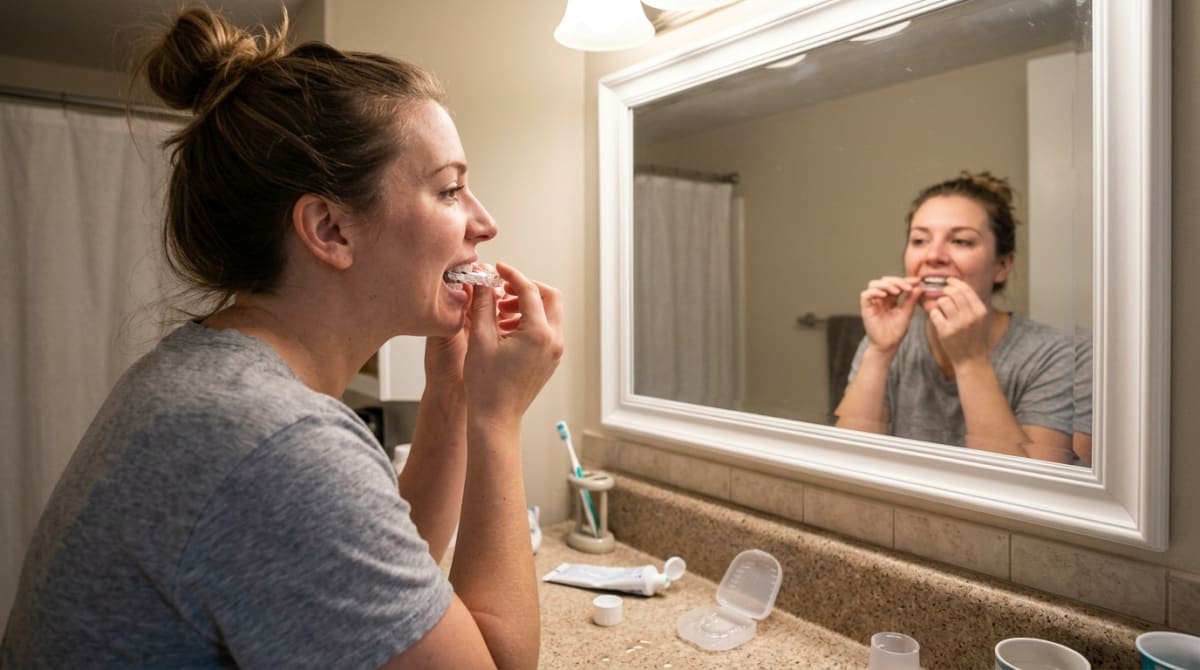
If you keep getting new cavities despite brushing carefully, or you’ve just had a big phase of dental work and want to protect it, overnight fluoride protection is often the missing piece. The ArtSmiles SmileShield Protocol is a thin, soft, vacuum-formed splint that holds a measured amount of fluoride gel against your teeth while you sleep. You wear it like a mouthguard, six to eight hours a night.
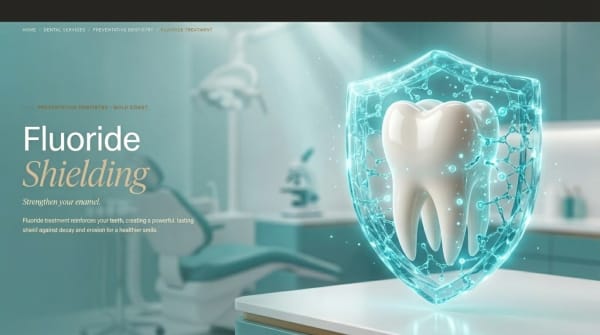
We use a low-concentration 0.145% sodium fluoride gel (around 660 parts per million of fluoride). It sits on the enamel for hours, slowly driving fluoride into the early softening of the tooth surface and helping the natural rebuilding process keep up with the daily acid attack from bacteria.
For patients who need it, SmileShield adds a slow, steady supply of fluoride through the night — the hours when saliva almost stops (Marinho et al., 2015, Cochrane; Soutome et al., 2020, BMJ Open).
What is SmileShield?
SmileShield is the name we give to our signature overnight caries-prevention protocol at ArtSmiles Cosmetic Dentistry. It’s the routine we put patients with active decay on so the cavities we’ve fixed stay fixed, and the work we’ve done together (fillings, crowns, veneers, implants, aligner treatment) keeps doing its job for as many years as it can.
The mechanics are simple. A thin custom-fitted tray, a low-dose fluoride gel, worn while you sleep. The clinical effect is what makes it powerful: it turns the most vulnerable eight hours of your day, when saliva almost stops flowing, into a window of active remineralisation rather than steady acid attack.
Most of the patients we put on SmileShield fit one of two profiles. The first is anyone we’ve just done significant restorative work for. After we’ve rebuilt teeth with fillings, placed crowns or veneers, we don’t want decay quietly undoing that work on the surrounding teeth or at the margins of the restorations. SmileShield protects the investment, yours and ours. The second is anyone with active decay and a particular reason the stronger toothpaste may not be enough — a dry mouth, more than one active spot, or decay that continues despite it.
SmileShield is the second step
When we find active decay, we always start with step 1: fluoride varnish at your visit, 5,000 ppm fluoride toothpaste twice a day, fewer sweet or acidic snacks between meals, and cleaning aimed at the areas that need it. For many people, that is enough. SmileShield is step 2, when:
you have a dry mouth, from medication, a condition, or a low saliva test
you have had radiotherapy to the head and neck
there is more than one active spot of decay
decay is still active, or new, despite the 5,000 ppm toothpaste
there is major dental work — crowns, bridges, veneers or implants — to protect
Why a tray, not just toothpaste?
Saliva is your mouth’s built-in defence. It washes away food, buffers acid, and carries calcium and phosphate back to the enamel. The problem is that saliva flow drops to almost nothing while you sleep. That’s why morning breath happens, and it’s also why decay tends to grow fastest overnight.
A tray solves a specific problem: it creates a fluoride reservoir held directly against your teeth, exactly when your natural defence has switched off. Work on oral fluoride reservoirs shows that this prolonged, low-level contact is what drives fluoride into the deeper layers of enamel, where it can keep working long after you’ve spat the gel out (Vogel, 2011, Monographs in Oral Science).
Toothpaste alone gives you a brief, high burst twice a day. SmileShield gives you a slow, steady infusion across the eight hours when your teeth need it most. The two work together; the tray isn’t a replacement for brushing.
Who actually needs SmileShield
Custom trays aren’t for everyone. SmileShield is the second step, for active decay with one of the reasons above (Featherstone & Chaffee, 2018, Advances in Dental Research). At your next check-up and clean we’ll talk through your risk and decide together.
We see the same pattern in three broad groups. People with more than one active spot of decay, or decay that keeps coming despite a 5,000 ppm toothpaste. People living with dry mouth from medication, autoimmune disease, age, or radiotherapy to the head and neck. And people with active demineralisation already visible on the teeth: chalky-white patches on the enamel, root caries where the gum has receded, white-spot lesions around orthodontic brackets, or the rapid generalised decay sometimes seen after methamphetamine use.
We also recommend SmileShield when decay is active and there is work you have just finished that we want to protect:
Crowns, bridges or veneers, where margin integrity matters long-term and recurrent decay under or around a restoration is the most common reason work fails.
Implants placed alongside natural teeth that are at risk themselves.
Orthodontic treatment that has left more than one active white-spot lesion, where the demineralisation needs to be re-hardened rather than left to drift.
If none of those fit you, regular brushing with a fluoride toothpaste and routine cleans will usually be enough. SmileShield is a targeted tool, not a default.
The two protocols, and why we lead with the overnight one
There are two evidence-based ways to deliver fluoride from a custom tray. SmileShield uses the overnight protocol for most patients, with a 5-minute fallback for those who can’t tolerate sleeping with a tray in.
SmileShield overnight (signature). 0.145% NaF (around 660 ppm fluoride). 6 to 8 hours, worn overnight. Best for most high-risk adults. Soutome 2020 reported no new caries at 12 months in radiotherapy patients.
5-minute fallback. 1.1% NaF (5,000 ppm) or 0.4% SnF2. 5 minutes, once daily. Best for CPAP users, those with a strong gag reflex, or anyone with disturbed sleep. Evidence base goes back to Englander 1967/1969 and the Weyant 2013 ADA topical fluoride guideline.
Why overnight? Mostly because the low concentration is gentler if a small amount is swallowed during sleep, it fills the saliva-poor window that toothpaste cannot reach, and patients find a “put it in, go to sleep” routine much easier to stick to than a 5-minute timed ritual every evening. The Japanese FluCar phase III trial protocol set out the overnight 0.145% approach precisely because compliance and safety profiles are better at the lower concentration over longer wear (Soutome et al., 2020, BMJ Open; Soutome et al., 2020, IJDR).
The SmileShield Protocol, step by step
Here’s how we run SmileShield at ArtSmiles, from first appointment to nightly routine.
Confirm it’s needed. Your check-up and clean rates your decay risk and looks for the reasons above. If step 1 — varnish and 5,000 ppm toothpaste — is enough, we start there and review it at your next visit.
Fit the custom carrier. We take a digital scan of your teeth, then a thin soft retainer is 3D printed in the lab. The edges are scalloped so the tray sits above the gum margin (this stops gel pooling on the gums). You’ll receive two trays, one upper and one lower.
Load the gel. Place about half a pea of 0.145% NaF gel into each tooth space along the tray. No more. More gel doesn’t mean more protection, it just means more waste and more risk of swallowing.
Brush and floss first. Clean teeth let fluoride reach the enamel. Spit out the toothpaste, but don’t rinse with water. You want the toothpaste fluoride to stay too.
Seat the trays. Push them gently onto your teeth and wipe any gel that squeezes out from the gum margin with a tissue or your finger.
Sleep. Six to eight hours of wear is the target.
In the morning. Spit out any residual gel, rinse the trays in cool (not hot) water, soft-brush them, and air-dry.
The 5-minute fallback for patients who can’t tolerate overnight wear
Some people just can’t sleep with a tray in. CPAP users, patients with a strong gag reflex, anyone wearing a sleep apnoea mask, claustrophobic sleepers, or those with already disturbed sleep all fall into this group. Forcing the overnight protocol on them just means the trays end up in a drawer.
For these patients, we keep the same custom SmileShield carrier but load it with a higher-concentration gel: 1.1% NaF (5,000 ppm) or 0.4% stannous fluoride (SnF2). You wear the tray for 5 minutes last thing before bed, then spit out the excess and don’t rinse, eat or drink for 30 minutes. This shorter-but-stronger approach is what the original tray studies used in the 1960s, and it remains in current American Dental Association guidance (Englander et al., 1967; Englander et al., 1969; Weyant et al., 2013, JADA; Slayton et al., 2018, JADA).
The rest of the high-risk home routine
SmileShield is the headline, but it works best inside a wider plan for preventing tooth decay. For the months we’re trying to stabilise your mouth, we’ll usually also recommend a few things in parallel.
Keep brushing twice a day with the 5,000 ppm fluoride toothpaste from step 1. The high-fluoride paste has a stronger anti-caries effect in adults at risk and on root surfaces (Srinivasan et al., 2014; Ekstrand et al., 2013). Swap your usual mouthwash for a 0.12% chlorhexidine rinse for one week each month while the disease is active, to knock back the bacterial load (Featherstone et al., 2021, CAMBRA practical guidelines). Aim for around 5 grams of xylitol gum or mints a day, spread across the day. Use a saliva substitute if you have dry mouth, as needed through the day and at bedtime (Plemons et al., 2014, JADA). Skip alcohol-containing mouthwashes, which dry the mouth further.
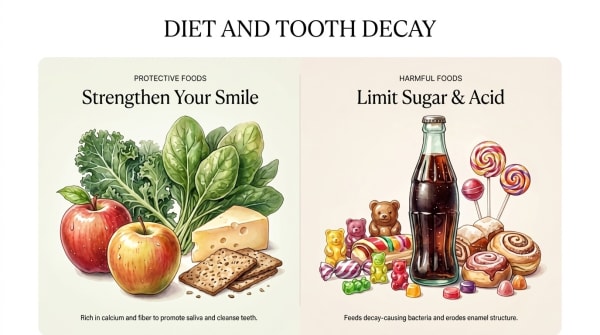
Diet matters too. Cut grazing on lollies, biscuits and acidic drinks. No sugary drinks at bedtime, ever. We’ll book a professional clean at an interval suited to your individual risk, every three months while your risk is high, stretching out as the picture improves.
Is it safe? Swallowing, pregnancy, kids
The most common question we get about SmileShield is about swallowing a little gel during sleep. The Soutome 2020 radiotherapy cohort reported no adverse events over 12 months on the 0.145% overnight protocol, and the total nightly fluoride load at the half-pea-per-arch dose sits well within safe systemic margins for adults. The key word is “prescribed amount.” Don’t load the tray more generously, thinking you’ll get more benefit, you won’t.
We don’t recommend SmileShield for children under 6, because they can’t reliably avoid swallowing (European Academy of Paediatric Dentistry position).
In pregnancy, your dentist will weigh the small theoretical risk against the benefit case-by-case. And if you notice any gum or cheek irritation, stop using the trays and ring the practice.
Written by Dr. Cristian Dunker, BDSc, MBA.
Medically reviewed by Dr. Cristian Dunker.
Frequently asked questions
What is the ArtSmiles SmileShield Protocol?
SmileShield is the name we give to our signature overnight caries-prevention protocol at ArtSmiles. It’s a thin custom-fitted tray loaded with a low-dose 0.145% sodium fluoride gel (around 660 ppm fluoride), worn while you sleep for six to eight hours a night. We recommend it when decay is active and there is a particular reason — a dry mouth, more than one active spot, or significant restorative work to protect, so the fillings, crowns, veneers and implants we’ve placed keep doing their job for as many years as possible.
Why such a low concentration if I’m wearing it all night?
It’s the contact time that does the work, not the concentration. A 0.145% gel held against your teeth for six to eight hours delivers far more total fluoride into the enamel than a 5,000 ppm paste that’s only on the tooth for five minutes. Lower concentration also means the gel is much safer if a small amount is swallowed during sleep, which matters because you can’t consciously control your swallow reflex while you’re unconscious. The FluCar trial (Soutome et al., 2020, BMJ Open) was designed around exactly this trade-off.
Is it safe to swallow a little while I sleep?
Yes, at the prescribed half-pea-per-arch dose. The total fluoride load across both arches over a full night sits well within safe systemic margins for adults. The Soutome 2020 study followed radiotherapy patients on this protocol for 12 months and reported no adverse events. The two safety rules are: use only the amount we prescribe, and wipe any visible excess off the gum margin before you sleep. If you ever notice nausea or a metallic taste in the morning, you’ve used too much, and we’ll review the dose.
Won’t a tray in my mouth all night affect my sleep?
Most patients adjust within a week. The trays are thin (about 1 mm), soft, and trimmed to sit above the gum margin so they don’t pinch or rub. If you’ve ever worn a clear aligner or a night guard for grinding, this is the same feel. If after two weeks you genuinely can’t sleep with the tray in, that’s not a failure, we just switch you to the 5-minute fallback protocol, which gets you most of the benefit in a routine you can actually keep up.
Do I need SmileShield even if I look after my teeth?
Most people don’t. We recommend SmileShield when decay is active and there is a particular reason the stronger toothpaste may not be enough — a dry mouth, more than one active spot, decay that continues despite it, radiotherapy, or major dental work to protect. For everyone else with active decay, we start with varnish and 5,000 ppm toothpaste.
References
Vogel, G. L. (2011). Oral fluoride reservoirs and the prevention of dental caries. Monographs in Oral Science, 22, 146-157.
Featherstone, J. D. B., & Chaffee, B. W. (2018). The evidence for caries management by risk assessment (CAMBRA). Advances in Dental Research, 29(1), 9-14.
Soutome, S., Yanamoto, S., Funahara, M., Kawashita, Y., Yoshimatsu, M., Murata, M., Saito, T., & Umeda, M. (2020). Prevention of dental caries by regular overnight application of a low-concentration fluoride gel loaded in a custom tray in patients undergoing radiotherapy for head and neck cancer: A preliminary study. Indian Journal of Dental Research, 31(6), 963-966.
Soutome, S., Yanamoto, S., Murata, M., Kawashita, Y., Yoshimatsu, M., Funahara, M., Umeda, M., & Saito, T. (2020). Evaluation of the efficacy of low concentration fluoride gel using custom trays to prevent radiation-related dental caries in patients with head and neck cancer: Protocol for a randomised controlled phase III trial (FluCar study). BMJ Open, 10(9), e038606.
Englander, H. R., Keyes, P. H., Gestwicki, M., & Sultz, H. A. (1967). Clinical anticaries effect of repeated topical sodium fluoride applications by mouthpieces. Journal of the American Dental Association, 75(3), 638-644.
Englander, H. R., Keyes, P. H., & Gestwicki, M. (1969). Residual anticaries effect of repeated topical sodium fluoride applications by mouthpieces. Journal of the American Dental Association, 78(4), 783-787.
Weyant, R. J., Tracy, S. L., Anselmo, T. T., et al. (2013). Topical fluoride for caries prevention: Executive summary of the updated clinical recommendations and supporting systematic review. Journal of the American Dental Association, 144(11), 1279-1291.
Slayton, R. L., Urquhart, O., Araujo, M. W. B., et al. (2018). Evidence-based clinical practice guideline on nonrestorative treatments for carious lesions: A report from the American Dental Association. Journal of the American Dental Association, 149(10), 837-849.
Srinivasan, M., Schimmel, M., Riesen, M., Ilgner, A., Wicht, M. J., Warncke, M., Ellwood, R. P., Nitschke, I., Müller, F., & Noack, M. J. (2014). High-fluoride toothpaste: A multicenter randomized controlled trial in adults. Community Dentistry and Oral Epidemiology, 42(4), 333-340.
Ekstrand, K. R., Poulsen, J. E., Hede, B., Twetman, S., Qvist, V., & Ellwood, R. P. (2013). A randomized clinical trial of the anti-caries efficacy of 5,000 compared to 1,450 ppm fluoridated toothpaste on root caries lesions in elderly disabled nursing home residents. Caries Research, 47(5), 391-398.
Featherstone, J. D. B., Crystal, Y. O., Alston, P., Chaffee, B. W., Doméjean, S., Rechmann, P., Zhan, L., & Ramos-Gomez, F. (2021). Evidence-based caries management for all ages: Practical guidelines. Frontiers in Oral Health, 2, 657518.
Plemons, J. M., Al-Hashimi, I., & Marek, C. L. (2014). Managing xerostomia and salivary gland hypofunction: Executive summary of a report from the American Dental Association Council on Scientific Affairs. Journal of the American Dental Association, 145(8), 867-873.
Marinho, V. C. C., Worthington, H. V., Walsh, T., & Chong, L. Y. (2015). Fluoride gels for preventing dental caries in children and adolescents. Cochrane Database of Systematic Reviews, 2015(6), CD002280.
Epstein, J. B., van der Meij, E. H., Lunn, R., & Stevenson-Moore, P. (1996). Effects of compliance with fluoride gel application on caries and caries risk in patients after radiation therapy for head and neck cancer. Oral Surgery, Oral Medicine, Oral Pathology, Oral Radiology and Endodontics, 82(3), 268-275.
University of Florida College of Dentistry. (n.d.). How to use custom fluoride carriers (trays).