Compiled from clinical pathology references. Medically reviewed by Dr Cristian Dunker, Principal Dentist at ArtSmiles Cosmetic Dentistry.
Quick summary
Also called | Plaque-induced gingivitis, marginal gingivitis, chronic gingivitis, gum inflammation |
How urgent? | 🟡 Worth a check-up, gingivitis is reversible, but if left alone it can progress to periodontitis (which is not) |
Common or rare? | Very common, prevalence approaches 95% across age groups |
Who it affects | Both adults and children, with peaks around puberty (9-14 years) and again later in adult life |
Who treats it | General dentist, often working with a hygienist |
Based on | Neville, Cawson, Regezi, Laskaris |
What is it?
Gingivitis is inflammation of the gums, the soft pink tissue that hugs the necks of your teeth. It is the body's response to bacterial plaque sitting along the gum line, and at this stage the inflammation is limited to the gums themselves. The bone, ligament and root surface that anchor the tooth in place are still untouched, which is why gingivitis is reversible with the right care.
Who tends to get it?
Gingivitis is one of the most common conditions in dentistry. Clinically detectable inflammation begins in childhood and increases with age, and prevalence approaches 100% by the sixth decade of life. There is a notable spike around puberty, between roughly 9 and 14 years of age, when hormonal changes make gums more reactive to plaque.
Females generally show slightly less gingivitis than males overall, which is thought to reflect better oral hygiene habits rather than a true biological difference. However, women experience their own susceptible periods, during the menstrual cycle, in pregnancy (especially the first two months), and historically with older high-dose oral contraceptives. Smokers can be misleading: nicotine narrows the small blood vessels in the gums, so smoking can mask the bleeding that would normally signal inflammation, even when significant gum disease is present.
What causes it?
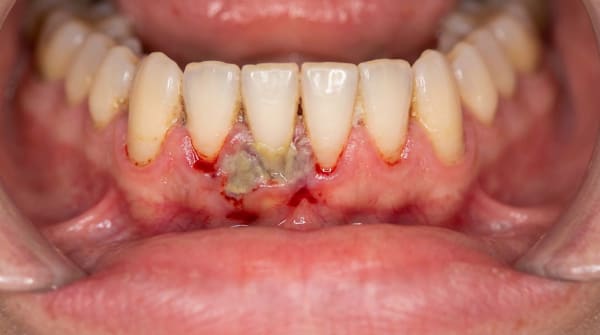
The primary cause is dental plaque, the soft, sticky bacterial film that builds up along the gum line when teeth are not cleaned thoroughly. Within 24 to 48 hours of plaque sitting undisturbed, the gums begin to react. If the plaque is left long enough to harden, it becomes calculus (tartar), which traps even more bacteria and cannot be removed by brushing alone.
Local factors that make plaque harder to clear include:
Crowded or overlapping teeth
Overhanging fillings, ill-fitting crowns or removable dentures
Orthodontic appliances such as braces
Mouth breathing or incomplete lip closure (which dries out the front gums)
Reduced saliva flow, which lessens the mouth's natural rinsing action
Gingival recession, dental anomalies and high frenum attachments
A range of systemic factors can amplify the gum's response to the same amount of plaque:
Hormonal shifts, puberty, the menstrual cycle, pregnancy, and older high-dose oral contraceptives
Pregnancy specifically (covered in our pregnancy oral health article)
Certain medications including phenytoin (an anti-epileptic), sodium valproate, calcium channel blockers (such as nifedipine and diltiazem, used for blood pressure and angina) and ciclosporin (an immunosuppressant)
Poorly controlled diabetes
Vitamin C deficiency
Blood disorders such as leukaemia
Down syndrome
Stress and poor general nutrition
Susceptibility also varies between individuals. Two people with the same amount of plaque can show very different levels of gum inflammation, and that individual susceptibility appears to predict who is more likely to develop periodontitis later on.
How does it develop?
Think of plaque as a slowly thickening mat of bacteria living against the gum line. In the first day or two, the body sends in immune cells (mostly neutrophils) and small blood vessels widen to deliver them, that is why early gingivitis looks pink-red and slightly swollen. If the plaque stays put, the immune response settles into a longer-running pattern dominated by lymphocytes and plasma cells. The gum tissue beneath the surface becomes congested, fluid leaks into the gum crevice, and the fine collagen fibres just under the surface start to break down.
At this stage everything is still reversible. The attachment between the gum and tooth, and the bone underneath, are intact. But if plaque remains for weeks or months, the inflammation deepens. The bacterial population shifts from friendlier gram-positive species to more aggressive gram-negative anaerobes, and the door opens to periodontitis, the irreversible form, where the bone supporting the tooth begins to be lost.
What might you notice?
What it looks like
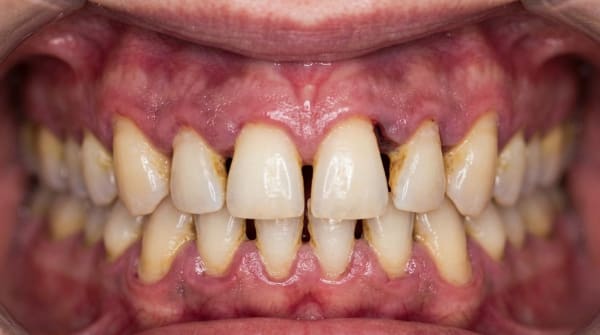
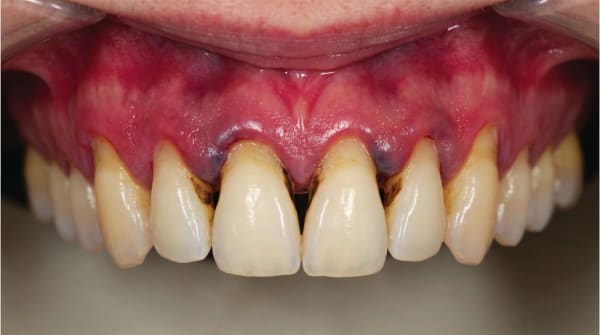
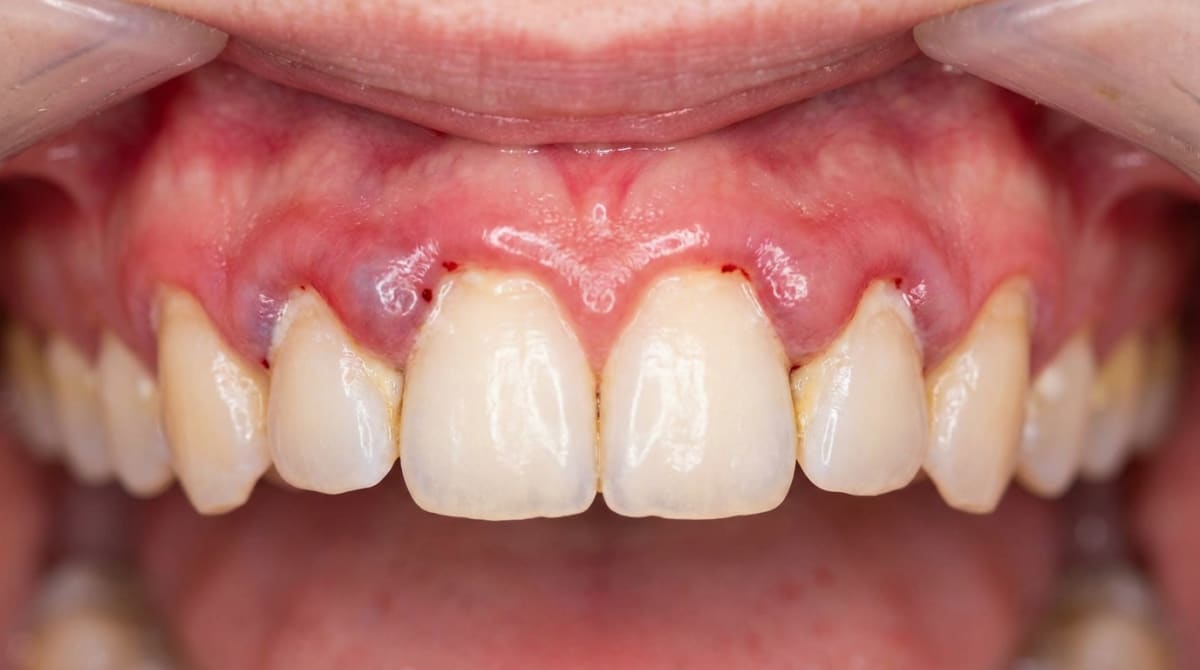
Healthy gums are a coral pink colour with a finely stippled, orange-peel-like surface. With gingivitis, that stippling is lost and the gums become a brighter red along the margins where they meet the teeth. They may look puffy or glazed, and the small triangular peaks of gum between the teeth (the papillae) often look swollen and rounded rather than crisp. In more long-standing cases the gum margins may appear blunted, receded or thickened, and there can be visible plaque or yellow-brown calculus along the gum line.
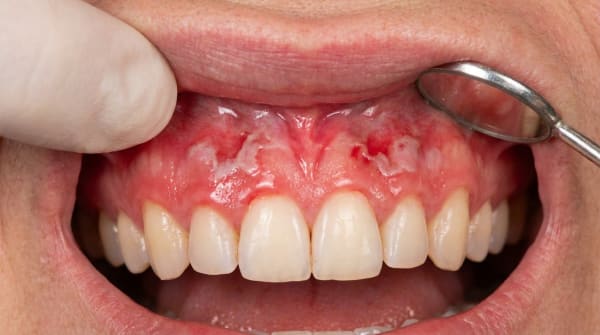
In mouth breathers, the picture is slightly different, the gums at the front of the upper jaw look slick, swollen and red, while the rest of the mouth may look relatively normal.
What it feels like
Gingivitis is usually painless. The most common signal is bleeding when you brush or floss, even gentle pressure with a toothbrush bristle or floss can be enough. Some people notice a metallic or unpleasant taste, mild gum tenderness, or bad breath that does not seem to lift with mouthwash. Because there is no real pain, gingivitis often goes unnoticed until a dentist or hygienist points it out at a check-up.
What an X-ray might show
This is one of the most important features of gingivitis: the X-ray is normal. The crest of the bone between the teeth stays sharp and intact, and there is no loss of the supporting bone. As soon as bone loss appears on an X-ray, the diagnosis has shifted from gingivitis to periodontitis.
What happens at the dentist?
At ArtSmiles, gingivitis is usually diagnosed from the clinical picture alone. Your dentist or hygienist will look at the colour, contour and texture of the gums, note any plaque or calculus, and gently run a small probe along the gum line to check whether the gums bleed and whether there is any pocketing, a deepening of the natural space between the gum and the tooth.
In straightforward gingivitis, the probe shows bleeding on gentle contact but no true pockets, and an X-ray (if taken) shows intact bone. The diagnosis is then often confirmed in the most reassuring way possible: the inflammation resolves once oral hygiene improves.
If the gums do not settle after a thorough clean and improved home care, your dentist may look more carefully for an underlying contributor, a medication that may be playing a role, a vitamin deficiency, poorly controlled diabetes, or in rare cases a blood disorder such as leukaemia. Gingivitis that resists standard treatment is sometimes the first clue to a wider health issue, so a medical review may be recommended.
Is this serious?
🟡 Gingivitis itself is not dangerous and is fully reversible, but it should not be ignored. Although periodontitis is always preceded by gingivitis, only a small proportion of gingivitis sites actually progress, most stay stable for years. The challenge is that there is no reliable way to predict who will progress and who will not. Bone and ligament loss, once they occur, cannot be regrown by ordinary treatment, so the goal is to settle gingivitis before it gets the chance.
Could it be something else?
Several other conditions can mimic the appearance of inflamed gums. Your dentist will tease them apart based on history, symptom pattern and (if needed) a biopsy or blood tests.
Chronic periodontitis, looks similar in the gums but has progressed to involve the supporting structures. A dentist tells them apart by probing for true pockets and by checking the X-ray for bone loss.
Necrotising gingivitis (acute necrotising ulcerative gingivitis, ANUG), also red and bleeding gums, but with sudden severe pain, a foul taste, and characteristic punched-out ulceration of the papillae. ANUG is covered in its own article.
Pregnancy gingivitis, the same plaque-driven inflammation, exaggerated by pregnancy hormones and sometimes accompanied by a localised vascular swelling (a pregnancy tumour). Covered in our pregnancy oral health article.
Drug-influenced gingival enlargement, long-term use of phenytoin, calcium channel blockers (nifedipine, diltiazem) or ciclosporin causes the interdental papillae to become firm, pale and bulbous. Distinguished by drug history and the typical firm, pale appearance compared with the soft, red gums of plaque-induced gingivitis.
Hereditary gingival fibromatosis, a rare inherited fibrous overgrowth that can almost bury the teeth. Distinguished by family history, age of onset and the firm, non-inflamed quality of the tissue.
Desquamative gingivitis, a clinical pattern (not a single disease) where the gums look raw and the surface peels off, usually a sign of an underlying skin condition such as lichen planus, mucous membrane pemphigoid or pemphigus vulgaris. A biopsy with immunofluorescence is needed to identify the underlying cause.
Plasma cell gingivitis, a rare allergic reaction (often to a flavouring in chewing gum, toothpaste or candy) that produces fiery red, edematous gums. Distinguished by the rapid onset, lack of response to plaque control, and association with a new product.
Leukaemic gingival enlargement, gums look swollen, shiny and pale or purplish, often with ulceration and easy bleeding. Distinguished by general signs such as pallor, bruising and lethargy, and by blood tests.
Acute herpetic gingivostomatitis, produces diffuse red gums with painful blisters and ulcers extending beyond the gum line, usually with fever and unwell feeling. Distinguished by the vesicular ulcers and acute illness, typically in children or young adults.
Gingivitis from mouth breathing, a localised pattern affecting only the front upper gums in habitual mouth breathers. Distinguished by the limited distribution and the underlying breathing pattern.
HIV-associated gingivitis (linear gingival erythema), a well-demarcated red band along the gum margin in someone with HIV, with profuse bleeding out of proportion to the plaque present. Distinguished by medical history and the dramatic erythematous band.
Wegener's granulomatosis (granulomatosis with polyangiitis), a rare systemic disease that can present with bright red, granular 'strawberry gums'. Distinguished by biopsy and systemic features (nasal, lung and kidney involvement).
How is it treated?
Gingivitis is one of the few dental conditions where the most important treatment happens at home. Treatment may include:
Improved daily plaque control. Brushing for two minutes twice a day, ideally with a powered brush which has been shown to remove more plaque than a manual one. The best toothbrush, however, is the one that actually gets used.
Daily interdental cleaning with floss, interdental brushes or specialised wood sticks. Brushing alone misses the surfaces between teeth, which is why gingivitis often starts there.
A professional clean. Your dentist or hygienist will remove the calculus and plaque you cannot reach, and recontour any rough or overhanging fillings that are trapping plaque.
Adjunctive rinses. Chlorhexidine or essential-oil mouthrinses, and toothpastes containing triclosan or stannous fluoride, can help in the short term while you re-establish good habits.
Addressing contributing factors. If a medication, dry mouth, diabetes or another systemic factor is playing a role, your dentist may liaise with your GP. In a few drug-related cases, a swap to a different medication (in consultation with the prescribing doctor) can dramatically improve the gums.
Surgical recontouring. If the gums have become permanently thickened or fibrotic from long-standing inflammation, minor surgical reshaping may be recommended once the inflammation has settled.
Most cases respond within a couple of weeks of consistent improved hygiene, with regular professional reinforcement. If gingivitis does not resolve despite good plaque control, your dentist may investigate for an underlying systemic contributor, sometimes with a targeted periodontal deep-cleaning programme for the more affected areas.
For practical at-home steps when bleeding gums first appear, see our guide on how to stop bleeding gums at home.
What's the long-term outlook?
The outlook for gingivitis is excellent, provided it is addressed. Because the inflammation is confined to the soft tissues and the bone is still intact, the gums can return to full health once the plaque is brought under control. Colour, contour and the natural stippled texture all come back.
Left alone, gingivitis often persists for years without progressing, but in some people it gradually transitions into periodontitis, with permanent loss of the bone and ligament that hold the teeth. Once that happens, treatment can stabilise the disease but cannot fully reverse the damage. The earlier gingivitis is identified and the more consistently it is managed at home, the more likely your gums and teeth are to last comfortably for life.
Gingivitis can also recur whenever oral hygiene slips, particularly during stressful periods, illness, pregnancy or with the start of a new medication. Regular check-ups give your dentist the chance to catch it early, before any lasting harm is done.
A note on this article
This article is for educational purposes only and does not constitute a clinical diagnosis. Please consult a registered dental practitioner for assessment and treatment advice.
The cover image above is an AI-generated illustration based on the most common visible features of this condition described in clinical pathology references. It is not a photograph of a real case and should not be used to diagnose or rule out the condition in your own situation. If you are concerned about something you have noticed, please book an assessment with a registered dental practitioner.
References
Neville, B. W., Damm, D. D., Allen, C. M., & Chi, A. C. (2023). Oral and maxillofacial pathology (5th ed.). Elsevier. Chapter 4, Periodontal Diseases, pp. 147-151.
Cawson, R. A., & Odell, E. W. (2017). Cawson's essentials of oral pathology and oral medicine (8th ed.). Elsevier. Chapter 5, Gingivitis and periodontitis, pp. 77-98.
Regezi, J. A., Sciubba, J. J., & Jordan, R. C. K. (2017). Oral pathology: Clinical pathologic correlations (7th ed.). Elsevier. Chapter 4, Red-Blue Lesions (Plasma Cell Gingivitis and gingival manifestations of blood dyscrasias), pp. 130-132.
Laskaris, G. (2003). Color atlas of oral diseases (3rd ed.). Thieme. Chapter 11, Periodontal Diseases, pp. 85-91.
Frequently asked questions
What causes gingivitis?
Gingivitis is caused by the build-up of dental plaque (a sticky film of bacteria) along the gum line. The bacteria irritate the gum and trigger inflammation. Less common causes include hormonal changes (pregnancy, puberty), certain medications and some systemic conditions, but plaque is the main driver.
Is gingivitis reversible?
Yes. Gingivitis is the only stage of gum disease that fully reverses. With a thorough professional clean and a consistent home routine of brushing twice a day and daily flossing or interdental brushing, the gums settle within one to two weeks and return to a healthy pink colour.
What's the difference between gingivitis and periodontitis?
Gingivitis is inflammation of the gum only. The bone and ligament holding the teeth are still intact. Periodontitis is the next stage: the inflammation has spread deeper and started destroying the supporting bone. Periodontitis cannot be fully reversed, although it can be controlled. Treating gingivitis early prevents progression.
Do I need a deep clean to treat gingivitis?
Usually not. A standard scale and clean to remove plaque and tartar at the gum line, combined with improved home care, is enough for most cases. A deep clean (scaling and root planing) is needed only if the inflammation has already progressed to periodontitis with deeper pockets and bone loss.