Compiled from clinical pathology references. Medically reviewed by Dr Cristian Dunker, Principal Dentist, ArtSmiles Cosmetic Dentistry.
Quick summary
Also called | Sicca syndrome, sicca complex, primary or secondary Sjögren syndrome |
How urgent? | 🔴 Worth proper assessment, lifelong autoimmune condition with accelerated decay risk and a small but real lymphoma risk; needs coordinated dental and medical care |
Common or rare? | One of the more common autoimmune conditions, affects around 0.5% of adults |
Who it affects | Predominantly women aged 40 to 60 (9:1 female-to-male), often alongside rheumatoid arthritis or lupus in the secondary form |
Who treats it | Rheumatologist or immunologist for diagnosis and systemic care; dentist for caries prevention and dry-mouth management; ophthalmologist for dry eyes; GP for coordination |
Based on | Neville, Cawson, Regezi and Laskaris |
A dry mouth that never seems to settle, a tongue that sticks to the roof of your mouth at night, eyes that feel gritty by mid-morning, these are the everyday signals of Sjögren's syndrome. Sjögren's (pronounced show-grens) is a long-term autoimmune condition in which the body's own immune system mistakenly targets the glands that make saliva and tears.
This article from the team at ArtSmiles, reviewed by Dr Cristian Dunker, explains what Sjögren's is, what it does to the mouth, and how a careful dental routine can prevent the most common complications.
What is it?
Sjögren's syndrome is an autoimmune exocrinopathy (an autoimmune attack on the body’s exocrine glands, the glands that secrete fluid onto a surface), a long way of saying that the immune system is attacking the body's exocrine glands, the glands that secrete fluids onto a surface rather than into the bloodstream. The two glands most affected are the salivary glands (which make saliva) and the lacrimal (relating to tear glands) glands (which make tears). The result is the classic combination known as sicca syndrome (the combination of dry mouth and dry eyes):
Xerostomia, chronic dry mouth.
Keratoconjunctivitis sicca, chronic dry eyes.
Sjögren's exists in two forms:
Primary Sjögren's syndrome, the dry-mouth and dry-eye picture without another autoimmune disease.
Secondary Sjögren's syndrome, the same dry-mouth and dry-eye picture occurring alongside another connective-tissue disease such as rheumatoid arthritis, systemic lupus erythematosus or scleroderma.
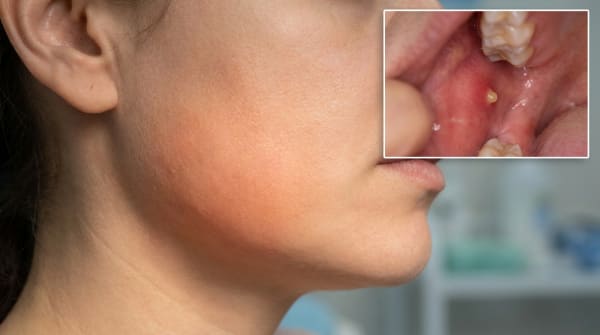
In about half of patients with Sjögren's, the parotid (the largest salivary gland, sitting in front of each ear) glands (the largest salivary glands, sitting in front of each ear) become enlarged, often on both sides.
Who tends to get it?
Sjögren's syndrome is far more common in women than in men, with about nine female cases for every one male case. It usually appears between the ages of 40 and 60, though it can begin earlier or later. It is one of the more common autoimmune conditions, affecting an estimated half a percent of the adult population.
People who already have another autoimmune disease, particularly rheumatoid arthritis or lupus, have a higher chance of developing secondary Sjögren's.
What causes it?
The underlying cause is not fully understood, but several factors play a role:
Genetics. Certain HLA tissue types are more common in patients with Sjögren's, and the condition can cluster within families.
Hormones. The strong female predominance suggests that female sex hormones such as oestrogen play a role in setting up the immune environment that allows Sjögren's to develop.
Viruses. Several viruses, including Epstein-Barr virus, have been suggested as possible triggers.
Immune misdirection. In susceptible people, immune cells called lymphocytes (immune cells that drive autoimmune attacks) infiltrate the salivary and lacrimal glands and gradually destroy the cells that make saliva and tears.
The blood of most patients contains autoantibodies (antibodies the immune system has produced against the body’s own tissues), antibodies the immune system has produced against the body's own tissues. The two most useful in diagnosis are anti-SSA/Ro and anti-SSB/La antibodies.
How does it develop?
The disease is gradual. In the early years, mild dryness may come and go and is often blamed on medicines, stress or ageing. Over time the dryness becomes constant and starts to interfere with eating, swallowing and speaking.
Inside the salivary glands, lymphocytes accumulate around the small ducts and gradually replace the cells that make saliva. Tear glands undergo a similar change. As more gland tissue is lost, less saliva and fewer tears are produced.
Beyond the glands, Sjögren's can affect:
Joints, aching joints similar to mild rheumatoid arthritis.
Skin, dry skin, occasional rashes.
Lungs and kidneys, uncommon but recognised.
Lymphoid tissue, the most important systemic complication, as Sjögren's patients have a significantly higher risk of developing lymphoma compared with the general population. Estimates suggest the risk is several-fold to dozens-of-fold higher, depending on the study, which is why ongoing medical review matters.
What might you notice?
In the mouth and around the face, common features include:
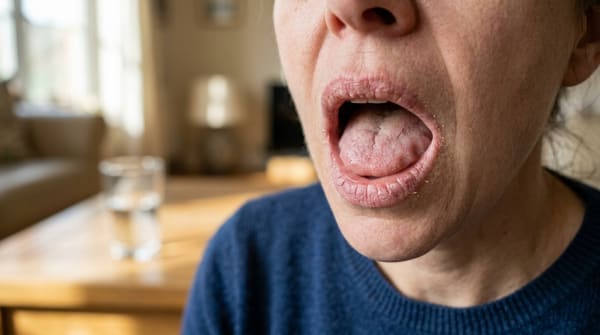
Persistent dry mouth. A feeling that the mouth is always sticky, the tongue clings to the palate, and a glass of water is needed to swallow dry food.
Difficulty swallowing dry foods like crackers, biscuits or bread without sipping liquid.
Changes in taste, food may taste blander, saltier or just different.
A burning or sore tongue.
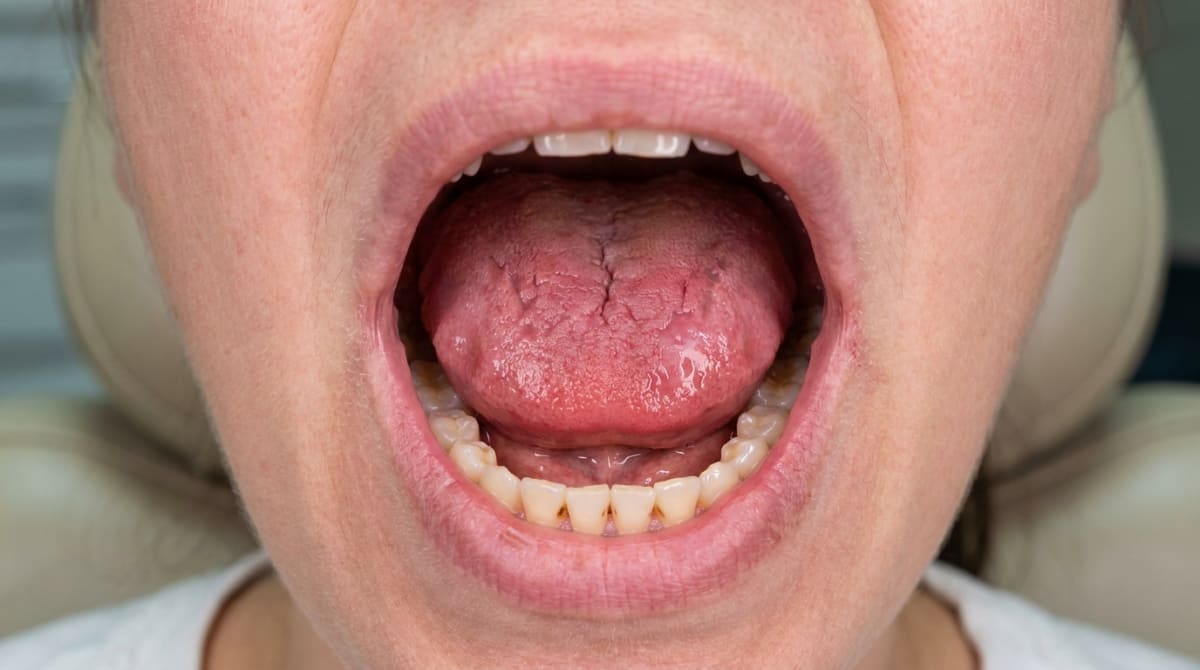
A smooth, glossy, fissured tongue that has lost its normal carpet of small papillae.
Cracked, dry lips and angular cheilitis, sore cracks at the corners of the mouth.
Frequent oral thrush (a creamy or red fungal infection), because saliva is no longer there to keep yeasts in check.
Rapid tooth decay, often appearing on areas usually spared, such as the gum line and the biting edges of front teeth.
Bilateral swelling of the parotid glands in front of the ears, sometimes mistaken for "puffy cheeks".
Outside the mouth, dry eyes (gritty, burning, light-sensitive), dry skin, joint aches, and unexplained fatigue are common.
What an X-ray might show
X-rays are not used to diagnose Sjögren’s. Dental X-rays do play a role in tracking the accelerated tooth decay that goes with chronic dry mouth, particularly at the gum line and the biting edges of front teeth.
What happens at the dentist?
For someone with Sjögren's, a regular dental check-up is one of the most important steps in keeping the mouth comfortable and the teeth intact. At ArtSmiles, a typical visit involves:
A thorough oral examination, with attention to the tongue surface, lips, palate, gums and the salivary gland openings.
A careful caries (decay) check, including areas that are often spared in healthy mouths, the gum line, the cusps and the biting edges of front teeth.
A discussion of symptoms and medications, since many common medicines (antidepressants, blood pressure tablets, antihistamines, some pain medicines) can add to dryness.
An oral hygiene plan, high-fluoride toothpaste, daily flossing, gentle interdental brushes, and (when needed) prescription fluoride gel or rinse.
Saliva substitutes and stimulants, sprays, gels, lozenges and chewing-gum recommendations to keep the mouth comfortable through the day and night.
Decay-prevention strategies, sealants, fluoride varnishes, and short recall intervals (usually every three to four months).
Coordination with your GP, rheumatologist or oral medicine specialist if the diagnosis has not been confirmed yet, since Sjögren's is a multidisciplinary condition.
We do not diagnose Sjögren's at the dental chair, that is the job of your medical doctor and rheumatologist, but we can be the first to suspect it from oral signs and arrange a referral.
Is this serious?
Sjögren's is a chronic disease, but for most patients it is manageable rather than dangerous. Day-to-day, the biggest issues are comfort (dry mouth and eyes) and dental health (rapid decay if not actively prevented).
Two reasons make ongoing medical follow-up important:
Lymphoma risk. Sjögren's patients have an increased risk of developing a type of lymphoma, particularly in the salivary glands. Any persistent, hard, painless swelling of a salivary gland that does not settle should be reviewed by a specialist.
Other autoimmune disease. Some patients go on to develop additional autoimmune conditions such as lupus or thyroid disease, so regular review is wise.
Could it be something else?
Many other conditions can cause a dry mouth or salivary gland swelling. Considerations include:
Medication-induced dry mouth. Hundreds of medicines reduce saliva flow, including many common antidepressants, blood pressure tablets, antihistamines and sleep medicines.
Diabetes. Poorly controlled diabetes commonly causes dry mouth.
Radiotherapy to the head and neck. This can permanently damage salivary tissue.
Sialadenitis. Bacterial or viral infection of a salivary gland (such as mumps).
Sialolithiasis. A salivary gland stone causing intermittent swelling and pain at meal times.
Sarcoidosis. A different inflammatory disease that can affect salivary glands.
HIV salivary gland disease.
IgG4-related disease. A more recently recognised condition that can mimic Sjögren's.
Anxiety and dehydration. Both can produce real but often reversible dryness.
A combination of medical history, blood tests, eye tests and (often) a minor salivary gland biopsy from the inside of the lower lip is used to tell Sjögren's apart from these. The lip biopsy is considered the gold standard test, with the result expressed as a focus score (a count of immune-cell clusters on a lip-biopsy slide; a score of 1 or higher supports a Sjögren’s diagnosis); a score of one or higher supports the diagnosis.
How is it treated?
There is no cure for Sjögren's, but a great deal can be done to relieve symptoms and protect the body. Treatment is shared between several professionals:
Rheumatologist or immunologist. Coordinates overall care, monitors lymphoma risk, and prescribes immune-modulating medicines if there are systemic features.
Ophthalmologist. Treats dry eyes with artificial tears, lubricant ointments, punctal plugs (tiny plugs placed in the tear ducts to keep tears in the eye for longer) and, when needed, prescription drops.
Dentist. Prevents and treats decay, manages oral candida, and supports the mouth with saliva-replacement strategies.
GP. Coordinates the wider care team and reviews medications that worsen dryness.
Specific helpful measures include:
Frequent small sips of water through the day.
High-fluoride toothpaste (often a 5,000-ppm prescription paste).
Sugar-free chewing gum or lozenges to stimulate any remaining saliva flow.
Saliva substitutes (gels, sprays, mouthwashes).
Avoiding alcohol-based mouthwashes that worsen dryness.
Humidifiers in the bedroom at night.
Avoidance of smoking, which dries the mouth further.
Prescription saliva-stimulating tablets (such as pilocarpine) where appropriate.
What's the long-term outlook?
For most people, Sjögren's syndrome is a long-term but manageable condition. Symptoms can wax and wane, and many patients live full and active lives with good control of dryness and dental health. With a strong dental partnership, accelerated tooth decay can be largely prevented, and that is the area where your dentist can make the biggest difference.
If you have been told you might have Sjögren's, please let us know at your next visit so we can tailor your care plan. If you simply have unexplained, persistent dry mouth and dry eyes, an early conversation with your GP and dentist is the right place to start.
A note on this article
This article is for educational purposes only and does not constitute a clinical diagnosis. Please consult a registered dental practitioner for assessment and treatment advice.
The cover image above is an AI-generated illustration based on the most common visible features of this condition described in clinical pathology references. It is not a photograph of a real case and should not be used to diagnose or rule out the condition in your own situation. If you are concerned about something you have noticed, please book an assessment with a registered dental practitioner.
References
Neville, B. W., Damm, D. D., Allen, C. M., & Chi, A. C. (2016). Oral and maxillofacial pathology (4th ed., Ch. 11: Salivary Gland Pathology, Sjögren Syndrome, pp. 470 to 475). Elsevier.
Cawson, R. A., & Odell, E. W. (2017). Cawson's essentials of oral pathology and oral medicine (8th ed., Ch. 20: Salivary Gland Disease). Elsevier.
Regezi, J. A., Sciubba, J. J., & Jordan, R. C. K. (2017). Oral pathology: clinical pathologic correlations (7th ed., Ch. 8: Salivary Gland Diseases). Elsevier.
Laskaris, G. (2006). Pocket atlas of oral diseases (2nd ed.). Thieme.
Frequently asked questions
What is Sjögren's syndrome?
Sjögren's syndrome is an autoimmune condition in which the immune system attacks the body's moisture-producing glands, particularly the salivary and tear glands. The classic features are persistent dry mouth (xerostomia) and dry eyes (keratoconjunctivitis sicca). It most often affects women in middle age.
How does Sjögren's affect dental health?
Reduced saliva means much higher risk of rapid tooth decay (especially at the root surfaces and around fillings), oral thrush, painful tongue and difficulty wearing dentures. Frequent dental check-ups, fluoride and saliva substitutes are central to dental management.
How is Sjögren's diagnosed?
Diagnosis combines symptoms with blood tests (anti-Ro/SSA and anti-La/SSB antibodies), measured tear and saliva flow, and sometimes a small lip biopsy that looks for the typical immune infiltrate in minor salivary glands. A rheumatologist usually coordinates the work-up.
How is Sjögren's syndrome treated?
There is no cure, but symptoms can be controlled. Treatment includes frequent sips of water, sugar-free gum or lozenges to stimulate saliva, prescription saliva substitutes, fluoride toothpaste, in-office fluoride applications, eye drops for dry eyes, and immunomodulating drugs prescribed by a rheumatologist for severe disease.