Compiled from clinical pathology references. Medically reviewed by Dr Cristian Dunker, Principal Dentist, ArtSmiles Cosmetic Dentistry.
The liver is one of the busiest organs in the body. It clears toxins, makes most of the proteins that control bleeding, processes most prescription medicines, and produces bile to help digestion. When the liver is unwell, whether from hepatitis, alcohol-related disease, fatty liver disease, an autoimmune condition or another cause, the effects can show up well beyond the abdomen, including in the mouth.
This article from the team at ArtSmiles, reviewed by Dr Cristian Dunker, explains the oral signs of liver disease, why bleeding and medicines need extra thought, and how to keep dental visits safe.
Quick summary
At a glance | Detail |
|---|---|
Also called | Liver disease and the mouth; hepatic oral manifestations |
How urgent? | 🟡 Worth discussing at every dental visit, dental plans depend on liver status, bleeding risk and current medications |
Common or rare? | Common in chronic alcohol-related, hepatitis B and C, fatty liver, and autoimmune liver disease |
Who it affects | Adults with chronic hepatitis, alcohol-related liver disease, fatty liver disease, autoimmune liver disease, or after liver transplant |
Who treats it | Coordinated care, dentist working with your GP, hepatologist or transplant team |
Based on | Neville, Cawson, Regezi |
What is it?
The oral manifestations of liver disease are not a single condition, they are a group of related findings that may appear together or separately, depending on the type and severity of liver disease:
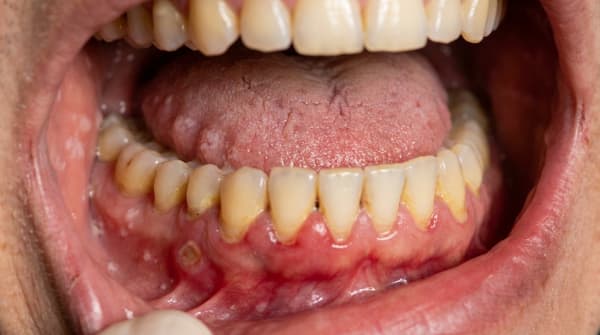
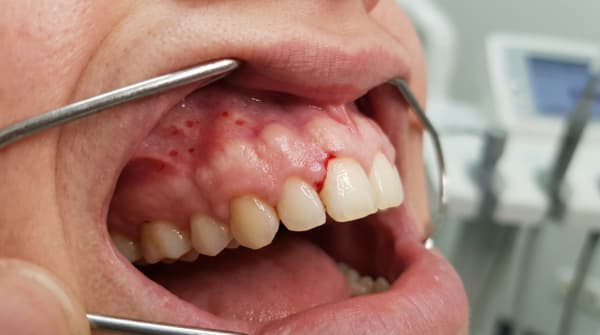
Bleeding tendencies, gum bleeding, bruising, prolonged bleeding after extractions.
Bilateral parotid gland swelling, known as sialadenosis (a painless, non-inflammatory enlargement of the saliva glands), often seen in chronic alcohol-related liver disease and other causes of cirrhosis (scarring of the liver).
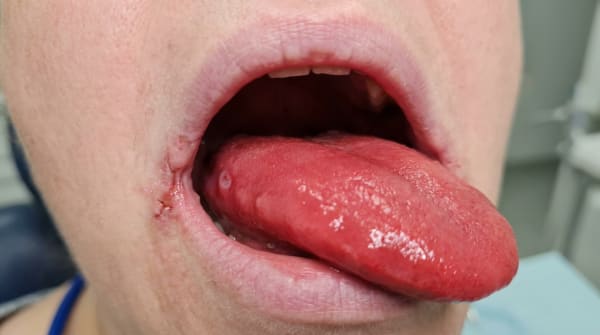
Glossitis, a smooth, red, sore tongue, often related to nutritional deficiencies that accompany chronic liver disease.
Angular cheilitis, sore cracks at the corners of the mouth.
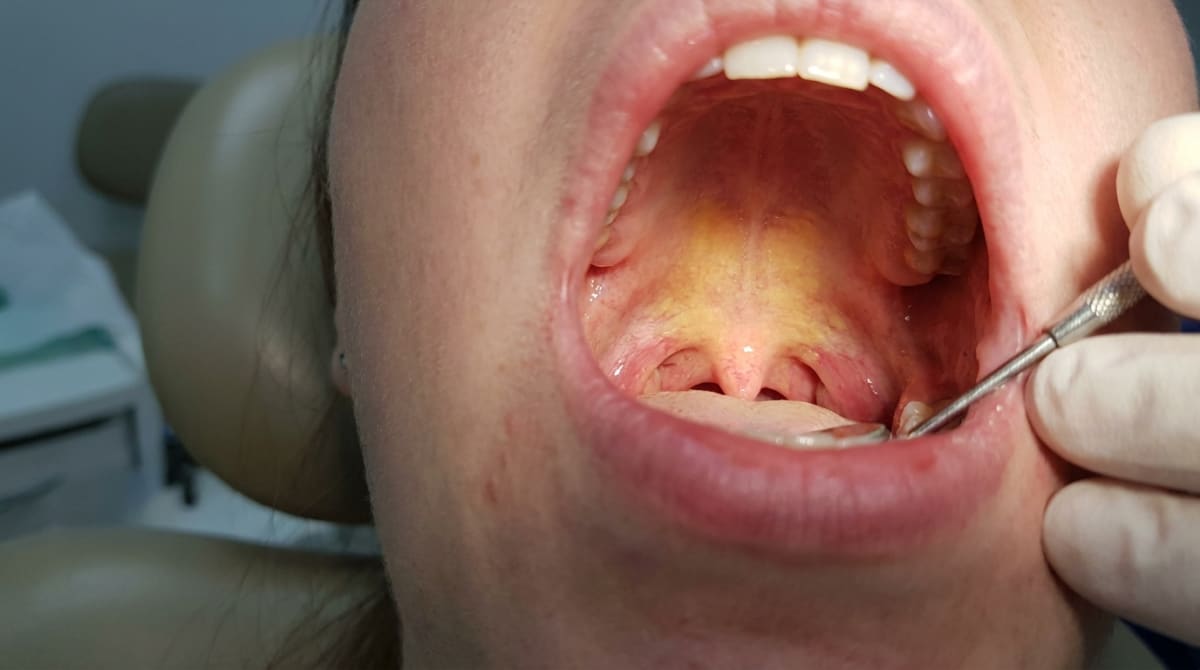
Jaundice (icterus) of the soft palate, icterus is the medical term for the yellow tinge produced when bile pigments build up in tissue, and the soft palate is sometimes the first place it is visible.
Oral lichen planus, chronic immune-mediated inflammation associated with hepatitis C infection in some patients.
Foetor hepaticus, a sweet, musty breath odour in advanced liver failure caused by sulphur-containing compounds that the failing liver cannot clear.
Sialadenitis or dry mouth in primary biliary cholangitis and similar autoimmune conditions.
Increased risk of opportunistic infections in advanced liver disease.
Who tends to get it?
Oral changes related to liver disease are seen most often in:
Patients with chronic alcohol-related liver disease.
Patients with chronic hepatitis B or C infection.
Patients with non-alcoholic fatty liver disease, which is becoming increasingly common.
Patients with autoimmune liver disease (autoimmune hepatitis, primary biliary cholangitis, primary sclerosing cholangitis).
Patients after liver transplant, who are usually on long-term immunosuppression.
Patients with acute hepatitis during the active phase of illness.
Not every patient with liver disease has obvious oral signs, but the more advanced the liver disease, the more likely some signs will be present.
What causes the oral changes?
Several mechanisms contribute:
Reduced clotting protein production. The liver makes most of the proteins involved in clotting. When function falls, bleeding takes longer to stop.
Low platelet counts. In cirrhosis, the spleen often becomes overactive and removes platelets faster, lowering the platelet count further.
Reduced drug clearance. Many medicines are processed by the liver and stay in the body longer when liver function is impaired.
Immune disturbance. Particularly in chronic hepatitis C, immune-mediated conditions such as lichen planus appear more often than in the general population.
Nutritional deficiencies. Patients with chronic liver disease often have low levels of B vitamins, iron and folate, contributing to glossitis and angular cheilitis.
Salivary gland enlargement. Chronic alcohol use and cirrhosis can lead to bilateral parotid swelling (sialadenosis).
Bile pigments in tissues. Jaundice gives a yellow tinge to mucous membranes, often visible on the soft palate.
How does it develop?
Most oral findings develop gradually as liver disease progresses:
Early liver disease may produce no obvious oral signs.
As inflammation continues, mild changes appear, easier gum bleeding, occasional bruising, dryness.
With nutritional deficiency, the tongue becomes smoother and redder, and angular cheilitis may appear.
With more advanced disease, parotid swelling, palatal jaundice and oral candidiasis become more likely.
In end-stage liver failure, breath odour, marked bleeding tendency and infection susceptibility are common.
What might you notice?
Common things people notice include:
Bleeding gums with brushing or flossing, more than would be expected from gum disease alone.
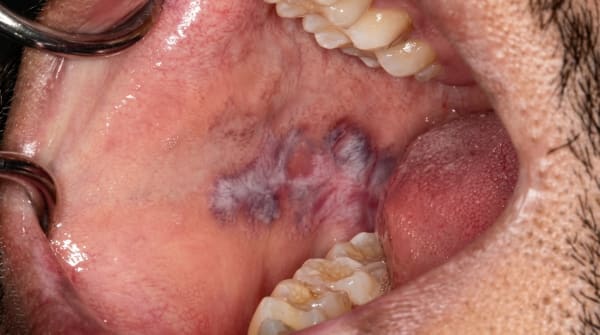
Bruising of the lip lining or palate after minor knocks.
A smooth, red, sore tongue that is sensitive to spicy or hot food.
Cracks at the corners of the mouth.
Bilateral fullness of the cheeks just in front of the ears (parotid enlargement).
A yellow tinge of the lining of the mouth or the white of the eye.
Persistent bad taste or unusual breath, including a sweet, musty smell in advanced cases.
Frequent oral thrush in patients with reduced immunity or after liver transplant. See Pseudomembranous Candidiasis for what oral thrush looks like.
What happens at the dentist?
When a patient with liver disease attends ArtSmiles, the visit usually involves:
A detailed medical history, type of liver disease, severity, medicines, recent blood tests, and any planned procedures.
Communication with your GP or hepatologist (a doctor who specialises in liver disease) when needed, to confirm the safest plan and to clarify bleeding risk.
A thorough oral examination, with attention to bleeding tendency, gland swelling, tongue surface, palatal colour and any candidiasis.
Pre-treatment investigations when appropriate, a recent platelet count, INR (International Normalised Ratio, a measure of how long blood takes to clot) or other coagulation tests for advanced liver disease, particularly before extractions or surgery.
Drug-dose adjustment. We are conservative with medicines processed by the liver, including many local anaesthetics, sedatives and pain relief medicines.
Local measures for bleeding, careful suturing, oxidised cellulose, tranexamic acid mouth rinse (an antifibrinolytic rinse that helps stabilise clots), instead of relying on systemic clotting.
Infection prevention. Excellent hygiene, antifungal advice for candidiasis, and antibiotic prophylaxis only where clinically indicated.
A staged plan, short, comfortable appointments with priority on infection control and bleeding management.
Is this serious?
🟡 Oral findings on their own are usually not life-threatening, but they matter for several reasons:
Bleeding can be problematic during dental procedures and needs to be planned for.
Liver disease severity can be reflected in oral findings, a sudden change in bleeding pattern, for example, may signal worsening disease.
Drug toxicity is a real concern, common dental medicines can cause harm in liver failure.
Infection risk increases in advanced disease and after liver transplant, raising the importance of preventive dental care.
Quality of life, dry mouth, sore tongue and bad breath all affect everyday comfort.
In short, the dental and medical teams need to work together for the best outcome.
Could it be something else?
Some of the findings can have other causes:
Easy bleeding gums can be due to gingivitis, leukaemia, vitamin C deficiency or anticoagulant medicines, not only liver disease.
Smooth, sore tongue can come from iron, B12 or folate deficiency without liver disease.
Parotid swelling can be caused by Sjögren's syndrome, sialolithiasis, sialadenitis, mumps, sarcoidosis or salivary gland tumours.
Yellow tinge to the palate can rarely come from carotenoid pigments in food, but a true yellow sclera or palate prompts liver evaluation.
Lichen planus can occur unrelated to hepatitis C in many patients. See Oral Lichen Planus.
A combination of medical history, blood tests and (when appropriate) biopsy clarifies the picture.
How is it treated?
There is no single treatment, care is shaped to the underlying liver condition and the specific oral finding:
Bleeding management, local measures, careful technique, and pre-procedure blood tests rather than routine medication changes.
Drug selection, preference for medicines with less liver impact, lower doses and shorter courses where possible.
Nutritional support, referral to GP or dietitian for B-vitamin, iron and folate replacement when relevant.
Treatment of candidiasis, topical or oral antifungal medicines, with attention to drug interactions.
Care for parotid sialadenosis, treatment of underlying liver disease and alcohol cessation; the swelling may improve with sustained sobriety.
Long-term follow-up with regular cleanings and short recall intervals.
Liaison with the liver team for any complex procedure, especially surgery or extractions.
A particular issue is the use of paracetamol, safe in standard doses for many patients but potentially harmful in advanced liver disease. Always check current dose limits with your medical team.
What's the long-term outlook?
The long-term outlook depends much more on the underlying liver disease than on the oral findings. With well-managed liver disease, most oral changes are manageable. Patients listed for or after liver transplant typically have an excellent dental outlook with regular care, though the immunosuppression they take after transplant raises the importance of preventive dentistry and infection control.
If you have any liver condition, including chronic hepatitis, fatty liver disease, cirrhosis or post-transplant care, please let us know at every visit. The safest dental care is the one based on your most recent liver picture.
A note on this article
This article is for educational purposes only and does not constitute a clinical diagnosis. Please consult a registered dental practitioner for assessment and treatment advice.
The cover image above is an AI-generated illustration based on the most common visible features of this condition described in clinical pathology references. It is not a photograph of a real case and should not be used to diagnose or rule out the condition in your own situation. If you are concerned about something you have noticed, please book an assessment with a registered dental practitioner.
References
Neville, B. W., Damm, D. D., Allen, C. M., & Chi, A. C. (2023). Oral and maxillofacial pathology (5th ed.). Elsevier. Chapter 11, Salivary Gland Pathology: Sialadenosis.
Cawson, R. A., & Odell, E. W. (2017). Cawson's essentials of oral pathology and oral medicine (8th ed.). Elsevier. Chapter 31, Medical Emergencies and Liver Disease.
Regezi, J. A., Sciubba, J. J., & Jordan, R. C. K. (2017). Oral pathology: Clinical pathologic correlations (7th ed.). Elsevier. Chapter 5, Connective Tissue Lesions; Chapter 8, Salivary Gland Diseases.
Frequently asked questions
How does liver disease show up in the mouth?
Liver disease can cause jaundice (yellowing of the lining and palate), enlarged parotid glands in alcohol-related liver disease, bleeding gums and prolonged bleeding after surgery from impaired clotting and low platelets, oral lichen planus (especially associated with hepatitis C), dry mouth and bad breath (fetor hepaticus) in advanced disease.
Why is bleeding worse in liver disease?
The liver makes most of the clotting factors and removes drugs that affect platelets. In liver failure, clotting factors fall and platelet function is impaired, leading to easy bruising and prolonged bleeding after extractions or gum treatment. INR and platelet count are usually checked before significant procedures.
Are there specific oral signs of viral hepatitis?
Oral lichen planus is more common in people with hepatitis C than in the general population. Hepatitis B can be transmitted by needlestick injury in dentistry, which is why staff are vaccinated and infection control is standard. Modern testing and direct-acting antivirals have made hepatitis C curable in most patients.
What does my dentist need to know if I have liver disease?
Tell your dentist the type and stage of liver disease, your current liver function tests, INR and platelet count if checked recently, all medications (especially anticoagulants and immunosuppressants), and any alcohol use. Many common dental medications (paracetamol, NSAIDs, sedatives, some antibiotics) need dose adjustment or substitution in liver disease.