Compiled from clinical pathology references. Medically reviewed by Dr Cristian Dunker, Principal Dentist, ArtSmiles Cosmetic Dentistry.
The thyroid is a small butterfly-shaped gland in the front of the neck, but its hormones reach almost every cell in the body. Both an underactive thyroid (hypothyroidism, meaning low thyroid hormone) and an overactive thyroid (hyperthyroidism, meaning high thyroid hormone) can affect bone, soft tissues, healing and the heart's response to stress, and all of these matter when planning dental care.
This article from the team at ArtSmiles, reviewed by Dr Cristian Dunker, explains how thyroid disease can show up in the mouth and how a careful dental visit fits into the wider picture.
Quick summary
At a glance | Detail |
|---|---|
Also called | Thyroid disease and the mouth; oral effects of hypothyroidism and hyperthyroidism |
How urgent? | 🟡 Worth discussing at every dental visit, dental planning depends on current thyroid status and medications |
Common or rare? | Common, about 1 in 20 adults has some degree of thyroid disease over a lifetime |
Who it affects | Mostly women and adults over 40; children with congenital hypothyroidism; patients with autoimmune disease (Hashimoto's, Graves'), on lithium or amiodarone, or after head and neck radiotherapy |
Who treats it | Coordinated care, dentist working with your GP or endocrinologist |
Based on | Neville, Cawson, Regezi |
What is it?
The oral manifestations of thyroid disease are a group of related findings, depending on which way the gland is misbehaving:
Hypothyroidism (underactive thyroid):
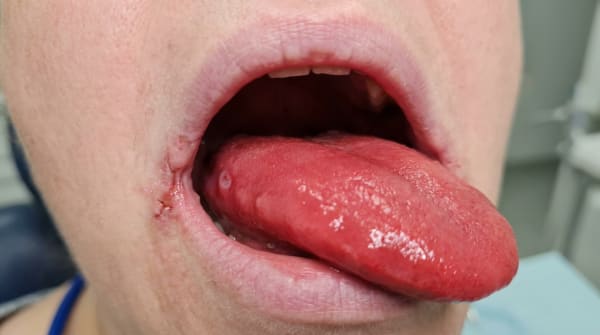
Macroglossia, an enlarged, sometimes scalloped tongue.
Delayed eruption of baby and adult teeth in children.
Thickened lips and coarse facial features.
Dry mouth and altered taste.
Slow healing of any minor procedure.
Increased risk of periodontal disease.
Hyperthyroidism (overactive thyroid):
Accelerated tooth eruption in children.
Increased dental caries, particularly when combined with frequent intake of soft drinks or sugary food during the higher metabolism.
Periodontal bone loss related to overall bone turnover changes.
Burning mouth sensation in some patients.
Tremor and anxiety that may make long appointments uncomfortable.
A particular emergency to know about is thyroid storm, a rare, life-threatening worsening of hyperthyroidism that can be triggered by infection, surgery or severe stress in a patient whose disease is not controlled. It is uncommon in well-managed patients but is the key reason why thyroid status is asked about at every visit.
Who tends to get it?
Thyroid disease is common, about 1 in 20 adults in many populations has some degree of thyroid disease over a lifetime. The dental relevance is greatest in:
Women, who are several times more likely to have thyroid disease than men.
Adults aged 40 and over, where hypothyroidism in particular becomes more common.
Children with congenital hypothyroidism (now usually identified through newborn screening).
Patients with autoimmune disease, including Hashimoto's thyroiditis (the most common cause of hypothyroidism in developed countries) and Graves' disease (the most common cause of hyperthyroidism).
Patients on lithium for psychiatric conditions, which can produce hypothyroidism.
Patients after neck radiotherapy for head and neck cancer, who can develop hypothyroidism over time.
Patients on amiodarone (a heart-rhythm medication) for heart rhythm disturbances, which can produce either over- or underactive thyroid.
What causes the oral changes?
Thyroid hormones influence many tissues in the mouth and jaw:
Bone metabolism. Thyroid hormone speeds up bone turnover. Too much over many years contributes to osteoporosis; too little slows growth in children.
Tooth eruption. Underactive thyroid delays eruption; overactive thyroid speeds it up.
Soft-tissue growth. Underactive thyroid leads to fluid accumulation in the soft tissues, including the tongue and lips.
Saliva. Some patients with hypothyroidism report dry mouth, contributing to dental decay. See Living with Dry Mouth for the patient-side response.
Drug clearance. Many medicines used in dentistry (local anaesthetics, sedatives, pain medicines) are processed differently in poorly controlled thyroid disease.
Heart response to adrenaline. Hyperthyroidism amplifies the heart's response to adrenaline, including the small amount in dental local anaesthetic.
How does it develop?
Most thyroid disease develops gradually. Hypothyroidism often comes from autoimmune destruction of the thyroid gland over years; hyperthyroidism most often comes from autoimmune stimulation (Graves' disease). The oral findings appear as the disease progresses:
Children with untreated hypothyroidism may show delayed eruption, an enlarged tongue and a typical coarse facial appearance.
Adults with hypothyroidism may notice dry mouth, gradual change in voice (deeper, slower), and thicker lips.
Adults with hyperthyroidism may notice rapid weight loss, palpitations, sweating, more decay than usual, and possibly a fine tremor.
After treatment, many oral findings improve as thyroid hormone levels return to normal, though some changes (eruption timing in children, bone density in older adults) may not fully reverse.
What might you notice?
Common things people notice include:
A bigger-than-usual tongue with tooth indentations along its sides.
Thicker lips and a coarser face in long-standing untreated hypothyroidism.
Persistent dry mouth.
Slow healing of minor mouth injuries.
Frequent dental decay despite the same hygiene routine.
Children who are getting their teeth later or earlier than expected.
Easy bruising of the mouth lining.
A tremor or shaking noticed during fine tasks.
Burning mouth sensation without an obvious cause.
What happens at the dentist?
When a patient with thyroid disease attends ArtSmiles, the visit usually involves:
A detailed medical history, type of thyroid disease, medicines, dose changes, last blood test result.
Communication with your GP or endocrinologist (a doctor who specialises in hormone-related conditions) when needed, particularly before complex procedures or in unstable disease.
A thorough oral examination, with attention to tongue size, lip thickness, oral hygiene, decay rate, gum health and any burning or dryness.
Vital signs check, pulse and blood pressure, particularly in hyperthyroidism.
Conservative use of adrenaline in active hyperthyroidism, the dose is lowered and aspiration is careful.
Stress reduction, short, calm appointments with breaks as needed.
Standard infection control and safe local anaesthetic choices.
Active decay prevention, fluoride support, dietary advice, frequent recall.
We will never recommend stopping or changing thyroid medicines unilaterally, these decisions are medical and stay with your GP or endocrinologist.
Is this serious?
🟡 The oral findings are usually not life-threatening on their own. Thyroid disease itself can be serious if poorly controlled:
Severe hypothyroidism can lead to slow heart rate, hypothermia and, rarely, myxoedema coma (a life-threatening state of severe low thyroid function with reduced consciousness).
Severe hyperthyroidism can lead to high heart rate, atrial fibrillation (an irregular fast heart rhythm) and, rarely, thyroid storm.
Long-term hyperthyroidism raises the risk of osteoporosis, including in the jaws.
Children with untreated hypothyroidism can have growth and developmental consequences if not picked up.
For the great majority of patients with controlled thyroid disease, dental care is safe and routine.
Could it be something else?
Some of the oral findings can have other causes:
Macroglossia can be from amyloidosis, acromegaly or congenital syndromes, not only thyroid disease.
Delayed tooth eruption has many causes including hypopituitarism (low function of the pituitary gland), Down syndrome, rickets and ectodermal dysplasia.
Burning mouth sensation is often idiopathic burning mouth syndrome (a chronic burning sensation without a clear cause).
Increased decay rate can be from dry mouth (Sjögren's syndrome, medicines), high-frequency snacking or reduced fluoride exposure.
Tremor can be due to anxiety, alcohol withdrawal, Parkinson's disease or medication side-effects.
A combination of medical history, physical examination and blood tests sorts these out. The dentist's role is to recognise the picture, refer for medical review when needed, and adjust dental care to keep visits safe.
How is it treated?
Treatment of the underlying thyroid disease sits with your GP or endocrinologist:
Hypothyroidism, usually managed with daily levothyroxine (a synthetic form of the missing thyroid hormone), with periodic blood tests to fine-tune the dose.
Hyperthyroidism, managed with antithyroid medicines, radioactive iodine therapy or surgery, depending on the cause and severity.
Lithium-related hypothyroidism, sometimes managed with thyroid hormone replacement alongside lithium.
Postoperative or post-radioiodine hypothyroidism, usually permanent, managed with daily replacement.
Dental management focuses on what we can do safely while the medical team manages the thyroid:
Stress reduction for anxious or hyperthyroid patients.
Care with adrenaline in active hyperthyroidism.
Decay-prevention support, fluoride, sealants, dietary advice.
Saliva substitutes for dry mouth.
Special attention to children's eruption patterns with paediatric referral when appropriate.
Coordination of timing for any planned dental surgery, ideally when thyroid blood tests are stable.
What's the long-term outlook?
For most patients with well-managed thyroid disease, the long-term oral outlook is excellent. Tongue enlargement, dry mouth and coarse facial features in hypothyroidism often improve with hormone replacement. Children with treated hypothyroidism usually catch up in eruption timing. Patients with treated hyperthyroidism can largely avoid the increased decay and bone-loss risks once the gland is settled.
If you have any thyroid condition or are taking thyroid medicine, please mention it at every appointment. Even small changes in your dose or a recent blood test can shape the safest plan for your visit.
A note on this article
This article is for educational purposes only and does not constitute a clinical diagnosis. Please consult a registered dental practitioner for assessment and treatment advice.
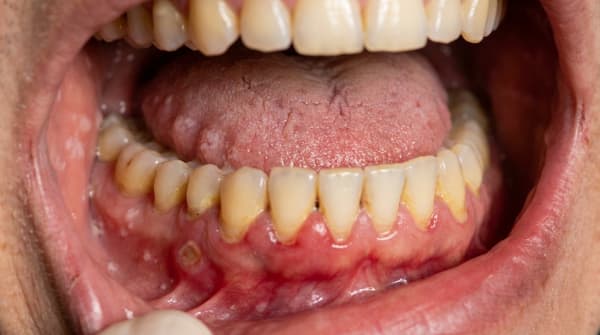
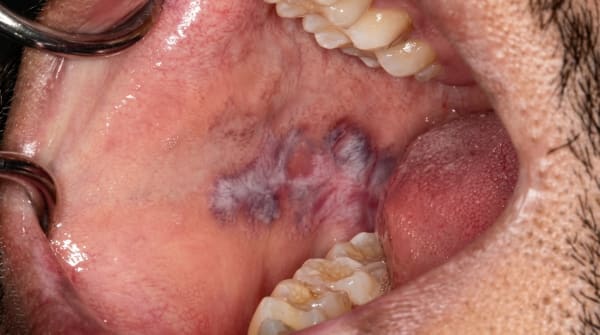
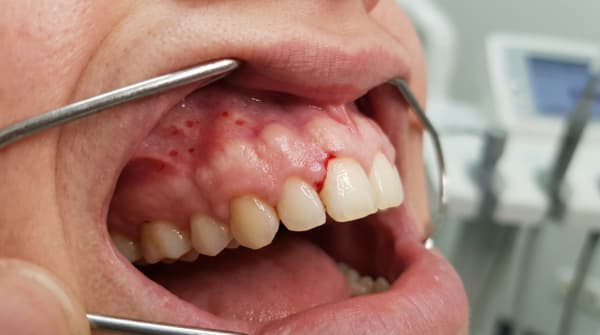
The cover image above is an AI-generated illustration based on the most common visible features of this condition described in clinical pathology references. It is not a photograph of a real case and should not be used to diagnose or rule out the condition in your own situation. If you are concerned about something you have noticed, please book an assessment with a registered dental practitioner.
References
Neville, B. W., Damm, D. D., Allen, C. M., & Chi, A. C. (2023). Oral and maxillofacial pathology (5th ed.). Elsevier. Chapter 2, Abnormalities of Teeth: Eruption Disturbances.
Cawson, R. A., & Odell, E. W. (2017). Cawson's essentials of oral pathology and oral medicine (8th ed.). Elsevier. Chapter 31, Medical Emergencies and Endocrine Disease.
Regezi, J. A., Sciubba, J. J., & Jordan, R. C. K. (2017). Oral pathology: Clinical pathologic correlations (7th ed.). Elsevier. Chapter 16, Abnormalities of Teeth; Chapter 5, Connective Tissue Lesions.
Frequently asked questions
How does thyroid disease affect the mouth?
Hypothyroidism can cause macroglossia (enlarged tongue), delayed tooth eruption in children, slow healing, dry mouth and burning mouth sensations. Hyperthyroidism can produce premature tooth eruption in children, accelerated jaw growth, increased decay risk from anxiety-driven snacking, and rapid bone turnover that can complicate dental implants.
What is congenital hypothyroidism?
Untreated congenital hypothyroidism (now rare due to newborn screening) causes severe macroglossia, severely delayed tooth eruption, malocclusion, enamel hypoplasia and craniofacial growth retardation. Universal screening means early diagnosis and lifelong thyroxine replacement prevent these complications.
Are dental procedures safe in thyroid disease?
Yes, when the thyroid is well controlled. Untreated severe hyperthyroidism increases the risk of thyroid storm with stress or surgery — elective treatment is best deferred until controlled. Severe untreated hypothyroidism increases the risk of myxoedema coma. Local anaesthetic with adrenaline is generally safe in stable thyroid disease.
What should I tell my dentist?
Tell your dentist about any thyroid diagnosis, current medication (e.g., levothyroxine, carbimazole), latest TSH and any history of thyroid surgery or radioactive iodine therapy. Many patients on thyroxine are unaware their dose may need adjustment with significant weight change, pregnancy or new medications — your GP/endocrinologist manages this.