Compiled from clinical pathology references. Medically reviewed by Dr Cristian Dunker , Principal Dentist, ArtSmiles Cosmetic Dentistry.
Quick summary
Also called | Persistent idiopathic facial pain (PIFP), psychogenic facial pain, atypical facial pain (AFP) |
How urgent? | 🟡 Worth a check-up, pain is real and deserves assessment, but it is not a medical emergency |
Common or rare? | Uncommon, but not rare, a recognised cause of long-standing facial pain |
Who it affects | Adults, mainly women aged over 30 (often middle-aged or older) |
Who treats it | A team, your dentist, your GP, and often a pain specialist or psychologist |
Based on | Regezi, Neville, Cawson |
What is it?
Atypical facial pain, now more commonly called persistent idiopathic facial pain, is a long-lasting, dull, aching pain in the face that does not match any other recognised dental, neurological, or sinus condition. Examination, X-rays, and scans all come back normal, yet the pain is genuine and often distressing. It is a diagnosis of exclusion, meaning it is given only after every other likely cause has been carefully ruled out.
Who tends to get it?
Atypical facial pain mostly affects women over the age of 30, with middle-aged and older adults most commonly involved. It can occur at any age in either sex, but the typical patient is a woman in her 40s, 50s, or 60s. Up to half of people with this condition also have an underlying anxiety disorder or depression, although the exact relationship between mood and pain is still not fully understood. Many people have a long history of repeated dental visits and even tooth extractions or root canals that did not bring lasting relief, a pattern that is so common it has become one of the recognised features of the condition.
What causes it?
The honest answer is that no one fully knows. The cause is described in the textbooks as unknown, and several factors are thought to contribute rather than one single trigger.
Known contributors and associations include:
Mood and emotional factors. Depression and anxiety frequently sit alongside this type of pain. Sometimes the pain itself causes the low mood; sometimes the low mood appears to amplify the pain. The two are deeply intertwined.
Previous dental or surgical treatment. A long history of dental work, fillings, root canals, extractions, that did not relieve the pain is a classic feature. The treatment did not cause the condition, but a procedure may sometimes be the moment the persistent pain began.
Nerve sensitisation. Research increasingly points to changes in how the brain and nervous system process pain signals from the face, so that signals that would normally fade keep being interpreted as pain.
Stress and life circumstances. Difficult work situations, grief, or prolonged stress can be present in the background.
It is important to be clear: the pain is not imagined and it is not the patient's fault. The textbooks describe it as causing real suffering, and modern understanding sees it as a genuine pain disorder.
How does it develop?
A helpful way to think about atypical facial pain is to compare the nervous system to a smoke alarm. Normally, a smoke alarm only sounds when there is real smoke. In atypical facial pain, the alarm has become oversensitive, it goes off even when there is no fire. The face's pain pathways keep sending signals to the brain even though nothing in the teeth, jaw, sinuses, or nerves is actually damaged or inflamed.
Doctors and dentists call this central sensitisation (a state where the nervous system amplifies pain signals even after the original cause has settled). The peripheral tissues (the teeth, gums, skin, and bone) look entirely normal on examination and on imaging, but somewhere along the pathway between the face and the brain, the volume on the pain signal has been turned up. This explains why dental treatment aimed at "finding the cause" usually fails: there is no fire to put out, only an alarm that has learned to keep ringing.
What might you notice?
What it looks like
Nothing, and that is part of what makes this condition so frustrating. The face, mouth, gums, and teeth all look entirely normal. There is no swelling, no redness, no ulcer, no broken tooth, no obvious cause that anyone can point to.
What it feels like
The pain has a fairly characteristic personality:
A constant, dull, aching, gnawing, or boring pain. Not the sharp electric-shock pain of trigeminal neuralgia and not the throbbing pain of an infected tooth.
Poorly localised. People often struggle to point to exactly where it is. The most common site is one side of the upper jaw, but it can move around or cross the midline. Crossing anatomical boundaries, for example, the pain travelling from the upper jaw to the lower jaw, or from one side to the other, is actually a useful clue, because most pain from a true dental or nerve problem stays neatly within one anatomical zone.
Present every day. From the moment of waking until going to sleep, the pain tends to be there.
Does not usually wake you from sleep. This is a useful distinguishing feature, pain from an abscess or pulpitis often does wake people up.
Not triggered by hot, cold, or chewing. Unlike a cracked tooth or pulpitis, eating and drinking usually do not set it off.
Often described in unusual ways. People may describe it as gripping, drawing, or simply unbearable, sometimes in language that does not match any clear neurological pattern.
Bothering, but life still goes on. Despite being described as severe, sleep and eating are often unaffected, and ordinary painkillers tend not to help.
Many people also notice low mood, poor sleep with early-morning waking, tiredness, or a sense that they are constantly searching for someone who can finally explain what is wrong.
What an X-ray might show
Nothing of note. Dental X-rays, panoramic films, sinus images, and even CT or MRI scans are typically normal. Imaging is still important, it is part of how the diagnosis is made, but the role of imaging here is to rule things out rather than to find the cause.
What happens at the dentist?
Because atypical facial pain is a diagnosis of exclusion, the assessment is unusually thorough. At ArtSmiles, the aim is to make sure nothing else is missed before settling on this diagnosis. A typical pathway looks like this:
A careful history. Your dentist will ask about when the pain started, what it feels like, what makes it better or worse, any previous dental treatment, your general health, mood, sleep, and stressors. Honesty here genuinely helps.
A thorough clinical examination. Teeth are checked for cracks, decay, pulp vitality (whether the nerve inside the tooth is alive), and tenderness. The gums, tongue, palate, throat, jaw joints, and chewing muscles are examined. The nerves of the face are tested for normal sensation. The salivary glands and lymph nodes are felt.
Targeted X-rays. Dental X-rays of the affected region, and sometimes a panoramic X-ray (a wide view of the whole jaw) or a cone-beam CT (a detailed 3D dental scan), are taken to exclude hidden decay, abscess, cyst, or jaw disease, usually as part of an ArtSmiles general dental assessment.
Further imaging if indicated. A CT or MRI scan may be recommended to rule out a growth or mass at the base of the skull, sinus disease, or a problem along the trigeminal nerve (the main face nerve). This is especially important if the pain is one-sided, if there are any neurological signs, or if the examination of the nerves of the face and head (the cranial nerve examination) is at all unusual.
Referral and a team approach. Because this condition rarely sits with one practitioner alone, referral to your GP, a pain specialist, an oral medicine specialist, or a clinical psychologist is often part of the plan. Specialist input helps confirm the diagnosis and guide treatment.
A particularly important part of the assessment is the dentist's restraint. The textbooks are very clear that arbitrary extraction of teeth, repeated re-treatment of root canals, or speculative dental procedures should be avoided when there is no objective sign of disease. Doing more dental work to a normal mouth almost never helps, and it can sometimes make matters worse.
Is this serious?
🟡 It is serious in its impact, but not dangerous to your physical health.
Atypical facial pain is not life-threatening. It does not turn into cancer, it does not damage the teeth or jaws, and it does not progress to something more sinister. In that sense, it is reassuring.
What it can do, however, is wear people down. Living with daily pain that no one can explain is exhausting. It can fuel anxiety, deepen depression, disturb sleep, strain relationships, and lead to a long trail of unsuccessful treatments. The condition is also notable for being remarkably resistant to simple painkillers, which adds to the frustration.
The other consideration is that, very rarely, a hidden cause, for example, an early tumour infiltrating a facial nerve, can mimic atypical facial pain in its early stages. This is exactly why imaging and ongoing review matter, and why any change in symptoms (new numbness, weakness, swelling, or a clearly neurological pattern) should always be reassessed.
If facial pain has been bothering you most days for more than two weeks, or if your pain has changed in character, it is worth booking an assessment.
Could it be something else?
A long list of conditions can produce facial pain, and part of the reason atypical facial pain is diagnosed only after careful exclusion is that several of the conditions below need different treatment. The textbooks identify these as the main differentials:
Trigeminal neuralgia, Like atypical facial pain, it produces severe one-sided face pain. A dentist tells them apart by the character: trigeminal neuralgia is sharp, electric-shock or stabbing pain lasting only seconds, set off by light touch or shaving, with pain-free intervals, quite unlike the constant dull ache of atypical facial pain.
Temporomandibular disorders (TMD), Jaw-joint and chewing-muscle problems can produce a dull, persistent ache in the face. They are distinguished by tenderness in the jaw muscles or joint, clicking or limited opening, and pain that is clearly worse with chewing or jaw movement.
Cracked tooth syndrome, A hairline crack in a tooth can cause poorly localised, dull pain that confuses everyone. It is distinguished by sharp pain on biting or with cold, and by being reproducible when the suspect tooth is loaded with a bite stick.
Irreversible pulpitis (a dying nerve in a tooth), Can cause severe, poorly localised aching. It is distinguished by lingering pain to hot or cold, often waking the patient at night, and by clear findings on pulp testing and X-ray.
Dental abscess, Infection at the root of a tooth can cause a deep ache. A dentist tells them apart by tenderness on tapping the tooth, swelling, raised temperature, and clear changes around the root on X-ray.
Maxillary sinusitis, Sinus inflammation can mimic upper-jaw toothache. It is distinguished by nasal congestion, post-nasal drip (mucus dripping down the back of the throat), tenderness over the cheekbones, pain worse on bending forward, and changes on a sinus image.
Postherpetic neuralgia, Persistent pain after a shingles outbreak in the face. It is distinguished by the previous history of the rash, residual scarring or pigmentation, and a burning or shooting quality limited to the affected nerve area.
Burning mouth syndrome, A close cousin of atypical facial pain, but the pain is a burning sensation in the tongue, lips, or palate rather than a deep ache in the face. The two conditions overlap in many features and treatments.
Atypical odontalgia (phantom tooth pain), Closely related to atypical facial pain but localised to a single tooth or a healed extraction site that is clinically and radiographically normal. It is essentially the same disorder confined to a tooth.
Giant cell arteritis (temporal arteritis), Inflammation of arteries in the head and neck, mainly in people over 60. It is distinguished by new severe headache, scalp tenderness, jaw pain when chewing that eases with rest (jaw claudication), visual disturbances, and a raised inflammatory blood marker (ESR). This one is urgent, untreated, it can cause blindness.
Salivary gland disease, Stones, infections, or tumours of the parotid or submandibular glands can cause facial pain. They are distinguished by swelling of the gland, pain that flares with eating, or a lump that can be felt.
Cluster headache (migrainous neuralgia), Severe one-sided pain around the eye and upper jaw. It is distinguished by short, intense attacks (often at the same time each day), watering eye, blocked nostril on the same side, and cluster patterns rather than constant daily pain.
Getting the diagnosis right matters because each of these conditions is treated differently.
How is it treated?
Treatment of atypical facial pain is rarely about one tablet or one procedure. It is about a team and a long view.
What you can do at home and day-to-day
Keep a simple pain diary. Note when the pain is better or worse, what you were doing, your sleep, and your mood. Patterns can guide treatment.
Look after sleep, gentle exercise, and stress where you can. None of these are cures, but they are part of how the nervous system calms down.
Avoid asking for further dental procedures unless your dentist has identified a clear new problem. The textbooks specifically warn against repeated, speculative dental treatment because it tends not to help and can make things worse.
What a dentist may do
Confirm there is no untreated dental cause by examination and X-rays.
Treat any genuine dental disease that is found, but without expecting it to resolve the facial pain.
Avoid extracting teeth or re-treating fillings and root canals when there is no objective sign of disease.
Coordinate with your GP and, where appropriate, a specialist.
What medical treatment may include
Tricyclic antidepressants (TCAs). Low-dose tricyclics such as amitriptyline or dothiepin are described in the textbooks as the mainstay of treatment, even when the patient is not depressed. They are used here for their pain-modifying effect on the nervous system, not as antidepressants in the usual dose. The dose is started small and built up slowly, and a trial of at least six months is usually recommended.
Selective serotonin reuptake inhibitors (SSRIs) or serotonin and noradrenaline reuptake inhibitors (SNRIs). These newer-generation antidepressants are sometimes used as alternatives, particularly when tricyclics cause side effects such as a dry mouth.
Cognitive behavioural therapy (CBT) and pain psychology. Working with a psychologist who understands chronic pain helps the brain learn to dial down the pain signal. This is not about the pain being "in your head", it is about retraining the nervous system that is genuinely producing the pain.
Multidisciplinary pain management. A pain specialist may add other approaches such as anticonvulsant medications, mindfulness-based pain programmes, anticonvulsant medications (originally developed for epilepsy, also used to calm overactive nerves), or physical therapy.
Treatment may take months to show its full effect, and patience is part of the prescription. Honest communication with your team, about what is helping, what is not, and how you are coping, is often what makes the difference.
What's the long-term outlook?
Atypical facial pain is generally a chronic condition. For some people, it slowly fades over months or years, especially with a combination of medication and psychological support. For others, it persists for a long time and becomes something to be managed rather than fully cured. Outcomes vary considerably from person to person.
The most encouraging point is that this condition does not damage the face, the teeth, or general health. It is a benign condition in the medical sense of the word, even though it can feel anything but benign to live with. With the right team, careful avoidance of unhelpful dental procedures, appropriate medication, and a long-term view, many people experience meaningful improvement and regain a much better quality of life.
If you have been living with daily face pain and feel that no one has been able to put a name to it, you are not alone, and there is a path forward that does not involve more dental work to a normal mouth.
A note on this article
This article is for educational purposes only and does not constitute a clinical diagnosis. Please consult a registered dental practitioner for assessment and treatment advice.
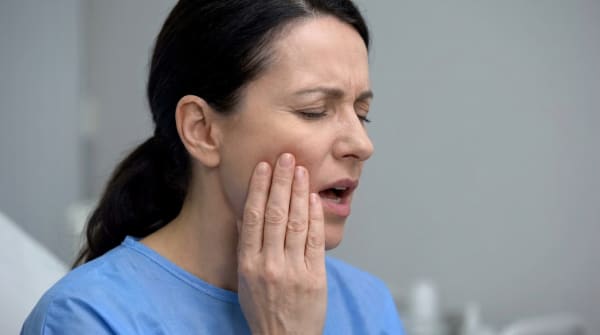
The cover image above is an AI-generated illustration based on the most common visible features of this condition described in clinical pathology references. It is not a photograph of a real case and should not be used to diagnose or rule out the condition in your own situation. If you are concerned about something you have noticed, please book an assessment with a registered dental practitioner.
References
Regezi, J. A., Sciubba, J. J., & Jordan, R. C. K. (2017). Oral pathology: Clinical pathologic correlations (7th ed.). Elsevier. Chapter 4, Red-Blue Lesions, Atypical Facial Pain and Atypical Odontalgia, pp. 130 to 131.
Neville, B. W., Damm, D. D., Allen, C. M., & Chi, A. C. (2023). Oral and maxillofacial pathology (5th ed.). Elsevier. Chapter 18, Facial Pain and Neuromuscular Diseases, Head and Neck Pain (Box 18.1) and Burning Mouth Disorder, pp. 862 to 870.
Cawson, R. A., & Odell, E. W. (2017). Cawson's essentials of oral pathology and oral medicine (8th ed.). Elsevier. Chapter 34, Pain, Anxiety, Neurological and Psychogenic Disorders, Psychogenic (Atypical) Facial Pain, pp. 437 to 438.