Reviewed by Dr Cristian Dunker, BDSc.
This article is general educational information from the ArtSmiles Dental Library. It is not individual clinical advice and isn't a substitute for an in-person assessment.
Tooth decay is the most common chronic disease in Australian adults and is the leading reason adults visit the dentist for treatment. Almost every cavity is the end of a process that took months or years to develop, and almost every cavity could have been prevented with small, consistent changes. The work of decay prevention is not glamorous, and it is mostly daily. Done well, it makes the difference between dental visits that involve a clean and a chat, and visits that involve a drill.
This article walks through the four pillars of decay prevention (clean teeth, fluoride, sensible diet, and professional care), and the small daily habits that genuinely lower cavity risk for most people.
Table of Contents
A short version of how decay happens
Sugar in the mouth is fermented by the bacteria in dental plaque (the soft, sticky film of bacteria on the tooth surface) into acid. The acid drops the pH at the tooth surface and dissolves calcium and phosphate from enamel (the hard outer layer of the tooth). This process is demineralisation. Saliva and fluoride then re-deposit those minerals back into the tooth surface in a process called remineralisation.
If acid attacks are infrequent, the remineralisation outpaces the demineralisation, and the tooth stays stable. If acid attacks are frequent, the loss outpaces the repair, and a cavity slowly forms. See Sugar, Acid and Your Teeth for the full chemistry.
Every prevention strategy in this article supports one of two goals: reduce the frequency or duration of acid attacks, or speed up remineralisation.
Pillar 1: clean the teeth
The mechanical removal of plaque is the foundation. A small daily routine matters more than any complex one.
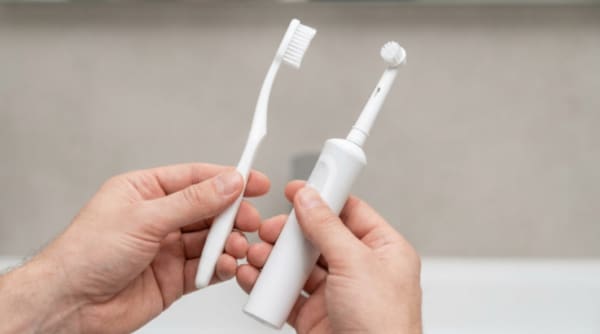
Brush twice a day for two minutes with a soft-bristled brush and fluoride toothpaste. Hold the brush at a 45 degree angle to the gumline (the edge where your gums meet your teeth) so the bristles slip slightly into the gum sulcus (the tiny groove where the gum tucks against the tooth). Use small circular or short back-and-forth motions. Do not press hard. The night-time brush is more important than the morning one, since saliva flow drops during sleep.
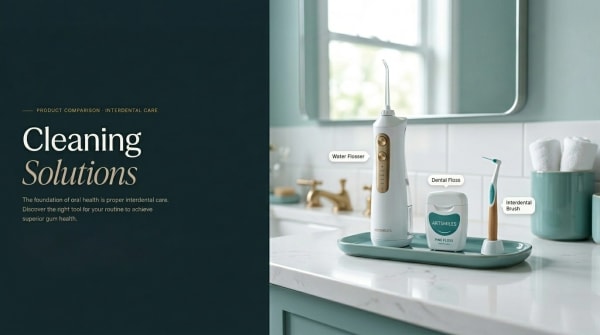
Clean between the teeth daily with floss, interdental brushes (small bottlebrush-style cleaners), or a water flosser. The toothbrush cannot reach the surfaces between teeth, and these are where many cavities start.
Spit, do not rinse, after brushing. Leave a small amount of fluoride toothpaste on the teeth so the fluoride keeps working.
Pillar 2: fluoride
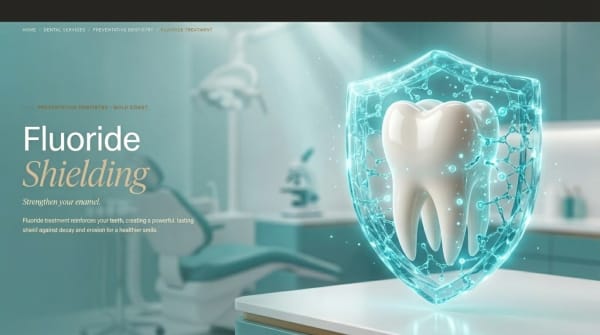
Fluoride is the most important prevention compound available, and it works through several mechanisms at once.
Fluoride toothpaste delivers a high concentration to the tooth surface twice a day. The 2003 Cochrane review on fluoride toothpaste found a substantial reduction in cavities, an effect that has held up across thousands of subsequent trials. Higher concentrations within the standard adult range (1,000 to 1,450 parts per million) provide more protection than lower ones.
Fluoridated tap water provides constant low-level exposure between meals, which supports remineralisation. Most Australian municipal water supplies are fluoridated at decay-protective levels. Drinking water from the tap, rather than bottled water, takes care of this without effort.
Professional fluoride varnish is applied at routine visits, particularly for children and higher-risk adults, and provides an extra layer of protection.
High-fluoride toothpastes (5,000 ppm) are prescription products for adults with high decay risk, dry mouth, exposed root surfaces, or recent multiple cavities. Talk to your dentist if you have had a run of new fillings.
For more on fluoride, see Fluoride Explained and Toothpaste Explained for age-specific amounts.
Pillar 3: diet
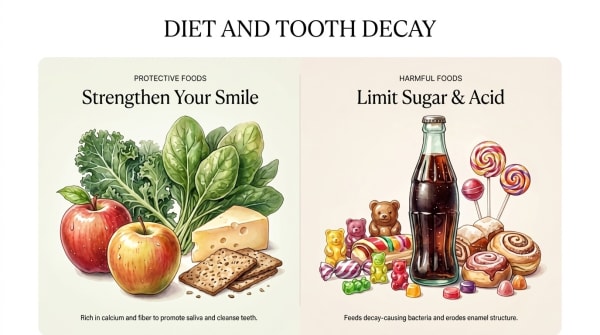
The most useful single principle is that frequency of sugar exposure matters more than the total amount.
A whole bag of lollies eaten in one sitting causes one acid attack. The same bag eaten one lolly at a time across the afternoon causes ten or twenty. The teeth do not care how many grams of sugar; they care how often they are exposed.
Practical changes, in rough order of impact.
Concentrate sweet foods at meal times. Dessert with dinner is one acid attack. Lollies through the afternoon is many.
Drink water as the default between meals. Tea or coffee at meals is fine. Sweet drinks (soft drinks, juice, sports drinks, sweetened coffee) only at meal times, and finished quickly rather than sipped across hours.
Replace sticky sugary snacks with cheese, nuts, fresh fruit, or vegetables. Same pattern, much less acid attack.
Rinse with water after sweet or acidic food and drink. Brushing immediately after acidic exposure scrubs softened enamel; wait 30 minutes.
Chew sugar-free xylitol gum for ten minutes after meals if brushing is not possible.
Limit sports drinks to genuine endurance situations. Plain water serves most exercise needs.
Read the label on drinks. "No added sugar" can still mean acidic. "100% fruit juice" still contains free sugars.
The Diet and Tooth Decay article covers this in more depth, including the foods that protect teeth.
Pillar 4: professional care
A few specific dental steps cover the rest of prevention.
Routine examinations and cleans, every six months for most adults, more often for higher-risk patients. The visit catches early decay while it is still small enough for a routine restoration, removes tartar (the hardened, calcified version of plaque) from areas the toothbrush cannot reach, and includes a soft-tissue cancer screen.
Bitewing x-rays at risk-based intervals. These show decay between teeth that the dentist cannot see by direct examination. Typical intervals are 12 to 24 months for low-risk adults and 6 to 12 months for higher-risk patients.
Fissure sealants, particularly for children. These are thin protective coatings placed on the deep grooves of the new permanent molars at around age six, and again on the second molars around age twelve. The Cochrane review on fissure sealants showed substantial reductions in decay in those grooves. They are quick, painless, and one of the more cost-effective preventive interventions in dentistry.
Personalised risk assessment. A short conversation about your eating, drinking, medications, dexterity, and family history identifies which prevention strategies will give your mouth the most benefit. Generic advice rarely produces the same result.
Targeted interventions for higher risk. Custom fluoride trays, antimicrobial rinses, prescription-strength fluoride toothpaste, and sealant placement on at-risk surfaces of adult teeth are all options when the standard prevention pillars are not enough.
Specific situations that change the prevention plan
A few situations need closer attention than baseline.
Children under six. Adult-supervised brushing, low-fluoride children's toothpaste, fissure sealants on the new molars, and minimising sweet snacks and bottle-fed sweet drinks at sleep time.
Pregnancy. Pregnancy gingivitis (the early reversible inflammation of the gums) is common; cleaning matters more, and a check-up early in the second trimester is the standard recommendation.
Adolescents in orthodontic treatment. Cleaning around brackets is harder; three- to four-monthly check-ups and a fluoride mouthwash usually help.
Adults with dry mouth. Saliva is the natural decay-protective fluid; reduced saliva needs replacement (saliva substitutes, xylitol gum, frequent water sips) plus higher fluoride exposure. See Living with Dry Mouth.
Adults with exposed root surfaces from gum recession. Root surfaces decay much faster than enamel; targeted fluoride application and a careful diet pattern matter more.
Older adults on multiple medications. Many medications cause dry mouth as a side effect. Closer monitoring and, sometimes, a high-fluoride toothpaste.
People with diabetes. Higher decay risk, particularly when blood sugar is poorly controlled.
Smokers and vapers. Higher gum disease and decay risk, and shorter recall intervals are reasonable.
Common mistakes to avoid
Brushing immediately after acidic food or drink. Wait 30 minutes.
Using whitening toothpaste daily on teeth that already have wear. Higher abrasivity, particularly at the gumline.
Sipping sugary drinks across hours. Sugar in a single quick drink with a meal is far less damaging than the same sugar sipped slowly.
Skipping the back teeth. Most cavities start in the back of the mouth.
Treating mouthwash as a substitute for cleaning. It is not. See Mouthwash, When It Helps.
Skipping check-ups when nothing hurts. Decay is silent until it is advanced.
Bottom line
Tooth decay is the result of frequent acid attacks outpacing the daily repair work of saliva and fluoride. The four pillars of prevention (clean teeth, fluoride exposure, sensible diet patterns, and professional care) are simple to describe and harder to do consistently. Done consistently, they are highly effective: most cavities are preventable, and the people who have very few cavities across their lives are mostly the people who do these unglamorous things every day.
If you have had several recent cavities, a worsening dental history, or you would like a tailored prevention plan, our team at ArtSmiles can review your habits, examine for early decay, and build a routine that fits your mouth. Prevention is the cheapest, simplest dentistry available.
Frequently asked questions
What is the single most important habit to prevent decay?
Twice-daily brushing with fluoride toothpaste, spit do not rinse. Across thousands of trials, this is the most evidence-supported single intervention available.
Does fluoride in tap water really work?
Yes. Australian municipal water fluoridation has been shown to reduce caries by around 25 to 35% across populations. Fluoride in water provides constant low-level exposure that supports re-mineralisation between meals.
Can I reverse a cavity?
Early enamel demineralisation (a white-spot lesion before the surface has broken down) can re-mineralise with fluoride and reduced sugar exposure. Once the surface has broken down into a cavity, the tissue is not regenerated and a filling is needed.
Are fissure sealants worth it?
Yes, particularly on the deep grooves of newly erupted permanent molars in children. The Cochrane review on fissure sealants found a substantial reduction in decay in those grooves. They are quick, painless, and cost-effective.
Does cheese really protect teeth?
Modestly. Cheese raises the mouth pH, contains calcium and phosphate that support remineralisation, and ends a meal on a tooth-friendly note. A small piece after a sweet dessert is one of the simpler decay-protective habits.
How often should I see the dentist for prevention?
Six months is a reasonable default for most adults. Higher-risk patients (recent cavities, dry mouth, orthodontic treatment, smokers) often benefit from three- to four-monthly visits.
References
Marinho, V. C. C., Higgins, J. P. T., Sheiham, A., & Logan, S. (2003). Fluoride toothpastes for preventing dental caries in children and adolescents. Cochrane Database of Systematic Reviews, 1, CD002278.
Walsh, T., Worthington, H. V., Glenny, A. M., Marinho, V. C. C., & Jeroncic, A. (2019). Fluoride toothpastes of different concentrations for preventing dental caries. Cochrane Database of Systematic Reviews, 3, CD007868.
Ahovuo-Saloranta, A., Forss, H., Walsh, T., Nordblad, A., Makela, M., & Worthington, H. V. (2017). Pit and fissure sealants for preventing dental decay in permanent teeth. Cochrane Database of Systematic Reviews, 7, CD001830.