Reviewed by Dr Cristian Dunker, BDSc.
This article is general educational information from the ArtSmiles Dental Library. It is not individual clinical advice and isn't a substitute for an in-person assessment.
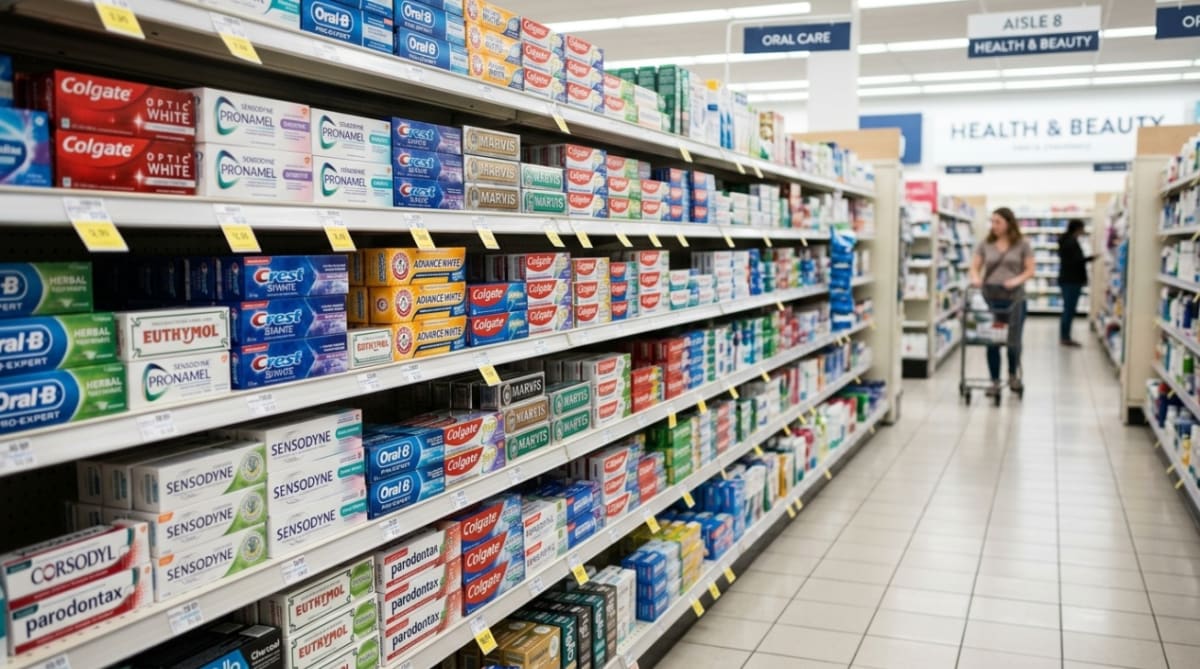
The toothpaste aisle is overwhelming. Whitening, sensitivity, gum care, charcoal, fluoride-free, herbal, kids' flavours, professional-strength. Most of the marketing differences between products matter less than the few specific ingredients that genuinely change what the toothpaste does. This article walks through what is actually in toothpaste, what each category on the shelf is doing, and how to pick the right one for adults, children, sensitive teeth, or whitening goals.
Table of Contents
What is actually in toothpaste
Almost every standard toothpaste contains the same handful of ingredient classes.
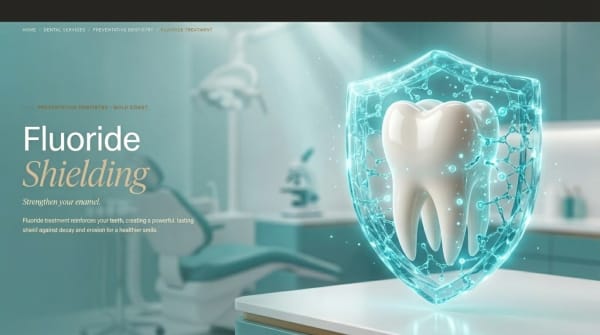
Fluoride is the single ingredient most responsible for the decay protection that toothpaste provides. Forms include sodium fluoride, sodium monofluorophosphate, and stannous fluoride. The concentration is given in parts per million (ppm). For adults, 1,000 to 1,450 ppm is standard. For children under six, 400 to 550 ppm is recommended. See Fluoride Explained for the longer dose ladder.
Abrasives physically polish the tooth surface and remove plaque (the soft, sticky film of bacteria) and surface stain. Common abrasives include hydrated silica, calcium carbonate, dicalcium phosphate, and aluminium oxide. The Relative Dentin Abrasivity (RDA) value measures how abrasive a toothpaste is. RDA values under about 100 are considered safe for daily use.
Foaming agents (surfactants) help spread the toothpaste around the mouth. Sodium lauryl sulfate (SLS) is the most common. SLS-free toothpastes are preferred for patients with mouth ulcers or burning mouth syndrome.
Humectants (such as glycerin and sorbitol) keep the paste from drying out in the tube.
Thickeners and binders (such as carrageenan and cellulose gum) keep the paste cohesive.
Flavourings, usually mint, but sometimes cinnamon, citrus, or fruit flavours for children. Mild and SLS-free formulations are useful for sensitive mouths.
Sweeteners, usually saccharin, sorbitol, or xylitol. None of them are cariogenic (cavity-causing).
Specific active ingredients vary by category, listed below.
Standard fluoride toothpastes for adults
For most healthy adults, a standard fluoride toothpaste (1,000 to 1,450 ppm sodium fluoride or stannous fluoride) used twice daily is the most evidence-supported home product available. The 2003 Cochrane review of fluoride toothpaste found a substantial reduction in caries (cavities) compared with non-fluoride toothpaste, and the evidence has held up across many subsequent reviews. Higher concentrations within this range provide more protection than lower ones.
This is the daily product to use unless your dentist has specifically recommended otherwise.
A few practical points.
Pea-sized amount, twice a day.
Spit, do not rinse, after brushing. Leave a small amount on the teeth.
Replace every six months or as the use-by date suggests; older toothpastes lose some fluoride activity.
Children's toothpastes
Australian guidance is specific and consistent.
Birth to 17 months: No toothpaste. Brush with a soft small brush and water only.
18 months to 5 years: Low-fluoride children’s toothpaste (400 to 550 ppm), pea-sized amount, twice a day.
6 years and older: Standard adult fluoride toothpaste (1,000 to 1,450 ppm), pea-sized amount, twice a day.
Spit, do not rinse, at every age.
The reason for the lower fluoride concentration in young children is that children under six swallow most of what they put in their mouth. The total fluoride dose from a pea-sized amount of low-fluoride paste is safe even if some is swallowed.
Children's toothpastes are flavoured to encourage brushing. Where a child dislikes mint, fruit flavours work as well clinically.
High-fluoride toothpastes (prescription only)
Toothpastes at 5,000 ppm fluoride (sometimes labelled NeutraFluor 5000 or similar in Australia) are prescription products. They are reserved for adults with high decay risk, including:
Recent multiple cavities.
Dry mouth from medications, Sjögren’s syndrome, or after head and neck radiation. See Living with Dry Mouth.
Significant exposed root surfaces.
Active orthodontic treatment with white-spot lesions developing.
Difficulty cleaning effectively because of dexterity issues.
Use is otherwise the same as standard toothpaste: pea-sized, twice daily, spit do not rinse. Your dentist will discuss how long to continue.
Sensitivity toothpastes
Tooth sensitivity (sharp pain on cold, sweet, or air) typically comes from exposed dentine, the layer underneath the enamel that contains tiny tubules connecting to the nerve. Sensitivity toothpastes use one of two main mechanisms.
Potassium nitrate calms the nerve response in the tooth. Effects build over two to four weeks of consistent use, twice daily.
Stannous fluoride or arginine physically block the open dentine tubules at the tooth surface, reducing the fluid movement that triggers the pain.
Hydroxyapatite-based toothpastes, an emerging category, deposit synthetic mineral on the dentine surface and have shown promising results in early trials.
A few points worth knowing.
Sensitivity toothpastes work over weeks, not days. Use them as your daily toothpaste rather than occasionally.
Do not rinse after brushing.
If sensitivity persists despite consistent use, the cause may need direct treatment (a filling for a notch at the gumline, a filling for a cavity, or specific desensitising procedures by your dentist).
Whitening toothpastes
Whitening toothpastes work primarily by removing surface stain rather than by chemically lightening the tooth itself. Most contain extra abrasives, sometimes paired with a small amount of hydrogen peroxide. The result is a modest improvement in surface stain over weeks of use.
The trade-off is increased abrasivity. Whitening toothpastes typically have higher RDA values than non-whitening pastes. Used daily over years, they can contribute to enamel and dentine wear, particularly on patients with existing recession or cervical abrasion.
Practical recommendations:
Use whitening toothpaste no more than half the brushing sessions per week. Alternate with a regular fluoride toothpaste.
Avoid whitening toothpastes if you have visible cervical wear, gum recession, or a history of erosion.
For meaningful colour change, professional whitening procedures are far more effective than any over-the-counter toothpaste.
Charcoal toothpastes
Activated charcoal toothpastes have been heavily marketed but are not currently supported by strong evidence. They remove some surface stain through abrasion. Most do not contain fluoride. Some are highly abrasive. The Australian Dental Association does not recommend them as a routine choice.
Natural and fluoride-free toothpastes
Several "natural" toothpastes omit fluoride. They typically rely on calcium-based abrasives, plant extracts, and essential oils. For decay prevention, the absence of fluoride is a clear weakness, since fluoride is the most evidence-supported ingredient in any toothpaste.
Hydroxyapatite toothpastes are a separate category. Synthetic hydroxyapatite is a calcium-phosphate compound similar to natural enamel. The evidence base is growing but smaller than for fluoride. They are a reasonable alternative for patients who genuinely cannot tolerate fluoride, though that situation is rare.
For most patients, a standard fluoride toothpaste remains the more evidence-supported daily choice.
Specific situations
A short table of common questions.
Bleeding gums: standard fluoride toothpaste plus careful interdental cleaning is usually enough. Stannous fluoride formulations have an antibacterial benefit at the gumline.
Persistent bad breath: a tongue cleaner plus a standard fluoride toothpaste, with an examination to rule out a dental cause.
Frequent cavities: discuss high-fluoride toothpaste with your dentist.
Sensitive teeth: potassium nitrate or stannous fluoride sensitivity toothpaste, used consistently for at least four weeks.
Surface stain (coffee, tea, wine): professional cleaning plus occasional whitening toothpaste.
Mouth ulcers or burning mouth syndrome: SLS-free, mild-flavoured toothpaste. See Living with Burning Mouth.
Tooth wear or erosion: lower-RDA standard fluoride toothpaste.
How to actually use toothpaste
Twice a day, morning and night. The night-time brush is the more important of the two.
Pea-sized amount. More toothpaste does not clean better.
Two minutes total brushing. Most people brush for 45 to 60 seconds when they are not timing themselves.
Spit, do not rinse. Leave a small amount of toothpaste on the teeth.
Do not eat or drink for 30 minutes after brushing if possible.
Bottom line
For most adults, a standard fluoride toothpaste at 1,000 to 1,450 ppm, used twice daily and not rinsed off, covers the work that toothpaste needs to do. Children's toothpastes follow the Australian age-based guidance. Sensitivity toothpastes work over weeks of consistent use. Whitening toothpastes remove surface stain at the cost of higher abrasion. Charcoal and most "natural" toothpastes are not currently supported by strong evidence. High-fluoride and other targeted toothpastes are reserved for specific situations under your dentist's direction.
If you are not sure which toothpaste fits your mouth, or you have specific concerns about sensitivity, whitening, or wear, our team at ArtSmiles can match the right product to your situation.
Frequently asked questions
What fluoride concentration should I use?
For most adults, 1,000 to 1,450 ppm fluoride is appropriate. Children under 18 months should use water only. From 18 months to 6 years, a low-fluoride children's toothpaste at 400 to 550 ppm. From age six, regular adult toothpaste. High-fluoride toothpastes (5,000 ppm) are prescription-only and reserved for high-decay-risk adults.
Do whitening toothpastes really whiten teeth?
They remove surface stain through extra abrasivity rather than chemically lightening the tooth. The effect is modest, takes several weeks, and is mostly cosmetic. The trade-off is more enamel wear over time, particularly on people who already have abrasion.
Are charcoal toothpastes effective?
They remove some surface stain through abrasion, but most do not contain fluoride and many are highly abrasive. The current evidence does not support charcoal toothpastes as a routine recommendation. A standard fluoride toothpaste is a better daily choice.
What does sensitivity toothpaste actually do?
Most sensitivity toothpastes contain potassium nitrate, which calms the nerve response in the tooth, or stannous fluoride or arginine, which block exposed dentine tubules. Effects build over two to four weeks of consistent use. They are not a quick fix.
Are "natural" or fluoride-free toothpastes a good idea?
For decay prevention, no. Fluoride is the single most evidence-supported ingredient in any toothpaste. Hydroxyapatite-based toothpastes are an emerging alternative with growing but smaller evidence than fluoride.
Should I rinse after brushing?
No. Spit the foam out rather than rinsing with water. Leaving a small amount of toothpaste on the teeth gives the fluoride longer to work. This applies to adults and children alike.
References
Marinho, V. C. C., Higgins, J. P. T., Sheiham, A., & Logan, S. (2003). Fluoride toothpastes for preventing dental caries in children and adolescents. Cochrane Database of Systematic Reviews, 1, CD002278.
Walsh, T., Worthington, H. V., Glenny, A. M., Marinho, V. C. C., & Jeroncic, A. (2019). Fluoride toothpastes of different concentrations for preventing dental caries. Cochrane Database of Systematic Reviews, 3, CD007868.
Do, L. G., & Spencer, A. J. (2020). Guidelines for use of fluorides in Australia: Update 2019. Australian Dental Journal, 65(1), 21 to 30.