Reviewed by Dr Cristian Dunker, BDSc.
This article is general educational information from the ArtSmiles Dental Library. It is not individual clinical advice and is not a substitute for an in-person assessment.
A bottle of mouthwash on the bathroom counter feels like obvious dental care, but the reality is more specific. Some mouthwashes have strong evidence behind them and a clear clinical role. Others are mostly for fresh breath. A few are genuinely worth avoiding except in specific situations. The most useful question is not "should I use a mouthwash?" but "which mouthwash, for what purpose, and for how long?".
This article covers the main types of mouthwash, what each one is good at, when each is genuinely useful, and the situations where a rinse can do more harm than good.
A short principle
Mouthwash is an adjunct, not a substitute. Brushing scrubs plaque (the soft, sticky film of bacteria on the tooth surface) off the tooth surfaces. Flossing or interdental brushes reach between the teeth. Mouthwash can complement both but does not replace either. No rinse cleans a tooth that the toothbrush did not reach.
That principle out of the way, the right mouthwash in the right situation does add real benefit.
The four main types
Fluoride mouthwashes
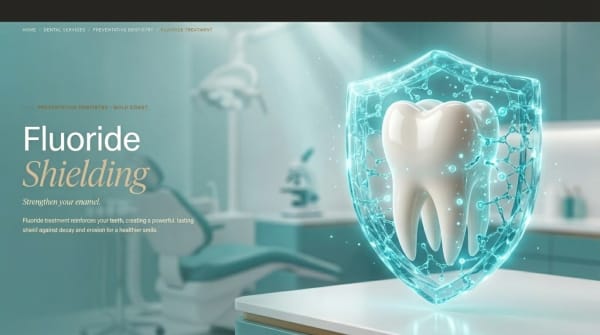
The most useful daily mouthwash for the average adult is a fluoride rinse, typically containing 0.05% sodium fluoride for daily use or 0.2% for weekly use. The fluoride helps re-mineralise enamel (the hard outer layer of the tooth) and reduces decay risk. The Cochrane review on fluoride mouthwashes in children and adolescents reported a 27% reduction in cavities with regular use, alongside fluoride toothpaste [1]. See Fluoride Explained for the wider context on how fluoride works and when extra is helpful.
Fluoride mouthwashes are particularly useful for:
People with high decay risk (frequent cavities, dry mouth, exposed root surfaces).
Patients in active orthodontic treatment.
People with multiple existing fillings or recently restored teeth.
Older adults with gum recession (where the gum has pulled back from the tooth, exposing more of the root) and root surface decay risk.
Use once a day at a different time from brushing (so the fluoride is not immediately washed away). After-school for children, before bed for adults, often works well.
Chlorhexidine mouthwashes
Chlorhexidine is a strong antiseptic rinse, usually 0.12% to 0.2%. It binds to oral surfaces and continues working for hours after rinsing. It reduces plaque and gingivitis (the early, reversible inflammation of the gums) substantially in short courses [2].
Chlorhexidine has a clear clinical role but is not a daily product. It is reserved for:
Short-term use (typically two weeks) after periodontal treatment, oral surgery, or tooth extraction.
Acute gingivitis where mechanical cleaning is temporarily difficult.
Mouth infections under medical supervision.
Long-term daily use causes brown staining of the teeth and tongue, alters taste, and disrupts the natural microbiome. The staining can be polished off, but the message is that chlorhexidine is not a maintenance product.
Antimicrobial mouthwashes (essential oils, cetylpyridinium chloride)
Several over-the-counter mouthwashes use plant-derived essential oils (eucalyptol, thymol, methyl salicylate, menthol) or quaternary ammonium compounds (cetylpyridinium chloride, often shortened to CPC). These reduce plaque and gingivitis modestly, and the effect is real but smaller than chlorhexidine.
They are reasonable as a daily adjunct for:
Patients with persistent gingivitis despite good brushing and interdental cleaning.
People with implants, bridges, or appliances who want an additional antimicrobial layer.
Smokers and vapers, where the higher background gum disease risk benefits from more intervention.
They do not replace fluoride for decay prevention or chlorhexidine for short-term post-surgical use.
Cosmetic mouthwashes
The largest category by sales. They contain mild flavouring and short-acting antibacterials, give a clean fresh feeling, and reduce mouth odour for a few hours. They have very little long-term clinical effect and are perfectly fine if you enjoy using them. They are not a treatment for any condition.
Specific situations where mouthwash helps
A short summary by patient situation.
High decay risk: daily fluoride rinse, typically 0.05% sodium fluoride.
Recent oral surgery, periodontal treatment, or extraction: short course (typically two weeks) of chlorhexidine, started about 24 hours after the procedure.
Persistent gingivitis despite good cleaning: a daily essential-oil or CPC-based rinse, with a review at the next dental visit.
Braces or aligners with bonded attachments: daily fluoride rinse to compensate for harder-to-clean areas around brackets.
Dry mouth: an alcohol-free saliva-substitute rinse rather than a regular antiseptic mouthwash. See our Living with Dry Mouth guide for the full routine.
Bad breath that has not responded to tongue cleaning and brushing: a short trial of an antimicrobial mouthwash, alongside an examination to look for a dental cause.
When mouthwash is best avoided
A few situations where rinsing is unhelpful or actively unhelpful.
Immediately after brushing. Rinsing with water or mouthwash washes away the concentrated fluoride from the toothpaste. Spit, do not rinse.
In children under six. They are likely to swallow it. Fluoride mouthwash is not recommended for daily use in this age group.
Long-term daily chlorhexidine. Unless specifically prescribed for an ongoing condition.
Alcohol-containing mouthwash for people with dry mouth. The alcohol dries the tissues further.
Alcohol-containing mouthwash in alcohol recovery. Even small amounts of swallowed alcohol can be a relapse trigger and a problem with some medications such as disulfiram.
As a replacement for flossing. It is not.
Reading a label
A few things to look for on the bottle.
Active ingredient and concentration. Is it fluoride (and at what %), chlorhexidine, essential oils, CPC, or just flavour?
Alcohol content. Alcohol-free formulations are widely available and preferable for most people.
Recommended frequency. Daily, weekly, or short-course matters.
Indicated use. A "post-surgical" rinse is not the same as a "daily fresh breath" rinse.
Sugar content. Some flavoured rinses contain sweeteners; sugar-free is the standard for daily use.
How to actually use a mouthwash
The technique is short.
Brush and clean between your teeth first. Mouthwash works on a clean mouth.
Wait at least 30 minutes if you have rinsed with water after brushing, or use the mouthwash at a different time of day.
Pour the recommended volume (usually 10 to 20 mL).
Swish vigorously around all surfaces of the mouth for 30 seconds.
Spit. Do not swallow.
Do not eat or drink for 30 minutes afterwards so the active ingredient has time to work.
Bottom line
For a healthy adult with low decay risk who brushes and flosses well, no daily mouthwash is needed. For higher-risk patients, a daily fluoride rinse is the most useful single product. Chlorhexidine is reserved for short courses after surgery or acute gum infection. Essential-oil and CPC rinses are reasonable adjuncts for persistent gingivitis. Cosmetic mouthwashes are fine but not a treatment. Alcohol-free formulations are preferred where possible, and no rinse replaces brushing and interdental cleaning.
If you have a specific condition or have been recommended a particular mouthwash and are not sure why, our team at ArtSmiles can review what you are using and adjust the recommendation to your mouth.
Frequently asked questions
Does mouthwash replace brushing or flossing?
No. Mouthwash is an adjunct, not a substitute. Brushing scrubs plaque off the tooth surfaces, interdental cleaning reaches between teeth, and mouthwash can complement both but does not replace either.
Is alcohol-based mouthwash bad for me?
Not bad in the short term for healthy adults, but worth avoiding for daily use. Alcohol dries the mouth, irritates sensitive tissues, is unsuitable for children, and is a problem for people in alcohol recovery. Alcohol-free formulations are widely available and preferred.
How long should I rinse for?
Most products recommend 30 seconds. Rinse with the recommended volume, swish thoroughly, and spit. Do not eat or drink for 30 minutes afterwards to give the active ingredients time to work.
Should I rinse with mouthwash after brushing?
Better to rinse at a different time of day. Rinsing with mouthwash immediately after brushing washes away the concentrated fluoride from the toothpaste, which reduces the cavity-prevention benefit of brushing.
Can mouthwash cause cancer?
The evidence linking alcohol-containing mouthwash to oral cancer is mixed and the effect, if real, is modest. Heavy daily use of high-alcohol products combined with smoking carries the most concern. Alcohol-free formulations remove the question. For the related question on fluoride safety, see our fluoride and cancer review.
Do natural or herbal mouthwashes work?
Some have plausible mild antibacterial activity, but the evidence base is much smaller than for fluoride and chlorhexidine. They are reasonable for cosmetic freshening if you prefer them, but should not replace evidence-based fluoride or interdental cleaning.
References
Marinho, V. C. C., Chong, L. Y., Worthington, H. V., & Walsh, T. (2016). Fluoride mouthrinses for preventing dental caries in children and adolescents. Cochrane Database of Systematic Reviews, 7, CD002284.
James, P., Worthington, H. V., Parnell, C., et al. (2017). Chlorhexidine mouthrinse as an adjunctive treatment for gingival health. Cochrane Database of Systematic Reviews, 3, CD008676.