Reviewed by Dr Cristian Dunker, BDSc.
This article is general educational information from the ArtSmiles Dental Library. It is not individual clinical advice and is not a substitute for an in-person assessment.
The single most important fact about diet and decay is that frequency matters more than amount. A whole bag of lollies eaten in one sitting causes one acid attack on the teeth. The same bag eaten one lolly at a time across the afternoon causes ten or twenty. The teeth do not care how many grams of sugar; they care how often they are exposed to it.
This article covers how sugar and acid actually cause decay, which foods raise risk, which foods genuinely help, and the practical changes that lower the chance of new cavities.
How decay actually happens
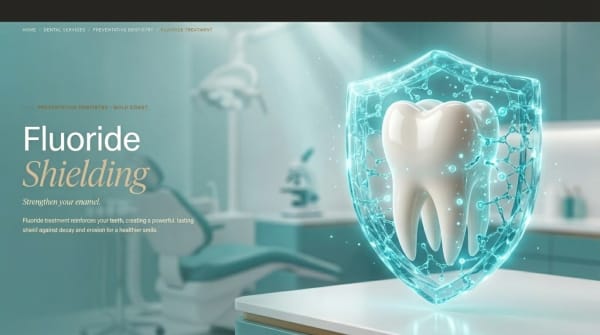
A short version of the chemistry. The bacteria that live on the teeth ferment sugars and refined carbohydrates into acids. Those acids dissolve calcium and phosphate from enamel (the hard outer layer of the tooth), a process called demineralisation. The acid attack lasts about 20 to 40 minutes after each exposure to sugar or carbohydrate. Saliva and fluoride toothpaste then re-mineralise the surface, replacing some of the lost minerals.
If exposures are infrequent, the saliva and fluoride get time to repair. If exposures are frequent (constant snacking, sipping sweet drinks across the day), the demineralisation outpaces the repair, and a cavity gradually forms.
This is why frequency dominates the calculation. Three meals a day with a treat at the end produces three acid attacks. Sipping a sugary coffee across a morning meeting can produce one continuous acid attack lasting hours. See Fluoride Explained for how the repair side works.
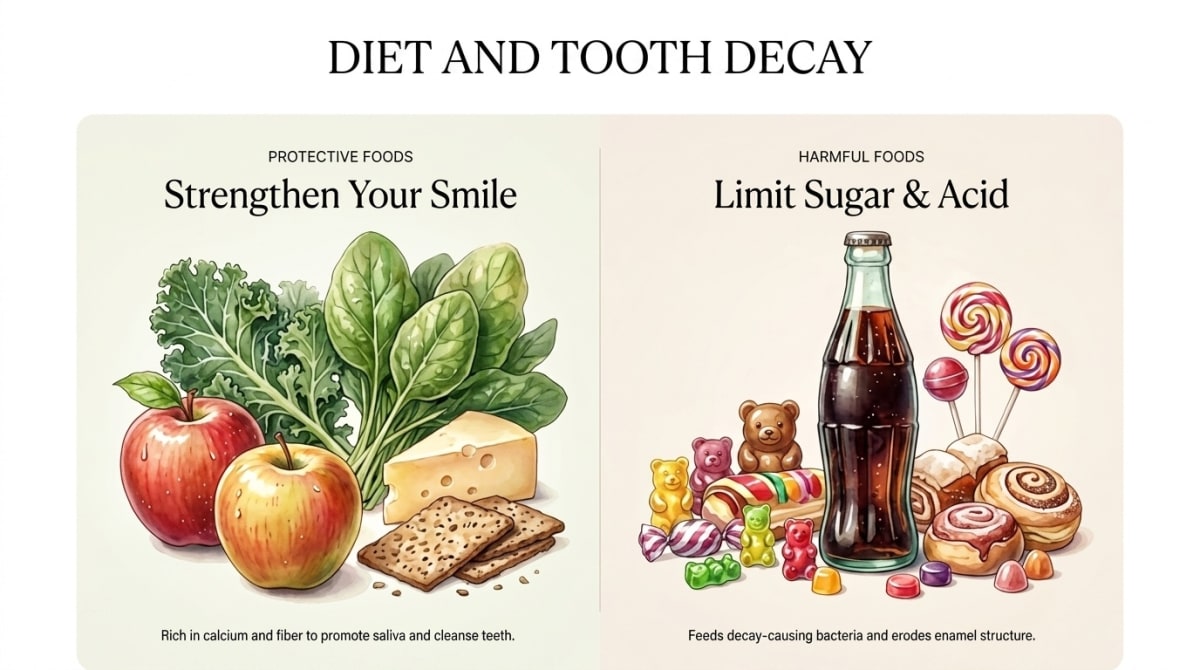
Foods that harm
Several categories of food deserve attention.
Free sugars (added sugars) in any form. Sucrose (table sugar), glucose, fructose, honey, agave, maple syrup, and the sugars in most fruit juices all behave identically as far as decay is concerned. The marketing distinction between "natural" and "refined" sugars is largely irrelevant to teeth.
Sticky sugary foods. Lollies, dried fruit, muesli bars, lollipops, toffees, jubes, and similar products are particularly damaging because they linger on the teeth. The longer the sugar contact time, the longer the acid attack.
Sweetened drinks. Soft drinks, fruit juice, cordial, sports drinks, energy drinks, sweetened tea and coffee, and flavoured milk. Drinks are often the largest source of decay risk in adolescents and young adults because they are sipped, not consumed quickly.
Refined carbohydrates that linger. Sweet biscuits, white bread, pretzels, sweet crackers, and sweetened breakfast cereals all break down into sugars quickly in the mouth and stick to the chewing surfaces.
Acidic foods and drinks. Wine, citrus, soft drinks (even sugar-free ones), sports drinks, vinegar dressings, kombucha, and apple cider vinegar all soften enamel temporarily even without the sugar component. Sipping them across hours, or finishing them with brushing on softened enamel, accelerates erosion.
Slow-release sugary medications and lozenges. Cough syrups, lozenges, and chewable vitamins often contain sugar and are designed to dissolve slowly. The combination of slow release and sticky texture is particularly damaging if taken regularly.
Diabetes-management snacks. Patients managing low blood sugar may need to eat sugary foods at specific times. They are at higher decay risk than the general population and benefit from targeted prevention strategies.
Foods that protect, or at least do not harm
Several categories support tooth health.
Cheese, plain yoghurt, and milk. Cheese in particular raises the mouth pH, contains calcium and phosphate that support enamel re-mineralisation, and ends a meal on a tooth-friendly note. A small piece of cheese after a sweet dessert is one of the simplest decay-protective habits available.
Whole fruits and vegetables (fresh, fibrous). Apples, carrots, celery, raw capsicum, and similar foods stimulate saliva flow, do not stick to teeth, and provide nutrients without prolonged sugar exposure. They are not "scrubbing" the teeth in any meaningful way (that is a popular myth) but they do replace less tooth-friendly snacks.
Nuts and seeds. Mostly fat and protein, with low decay risk and a long chewing requirement that increases saliva flow.
Water, particularly fluoridated tap water. Australian municipal water supplies typically contain fluoride at decay-protective levels. Plain water rinses food off the teeth, supports saliva, and replaces sweet drinks.
Sugar-free chewing gum, particularly xylitol-based. Chewing increases saliva flow, which buffers acid and washes the teeth. Xylitol also reduces the load of decay-causing bacteria. Ten minutes of gum after a meal is genuinely useful.
Tea (without sugar). Black and green tea contain polyphenols and small amounts of fluoride. Sweetened tea cancels the benefit.
Plain unsweetened coffee. Acidic but not sugary. Sipped across hours it can stain and erode; consumed at meals it is largely neutral to teeth.
The biggest single change most people can make
Eat or drink sugars and refined carbohydrates at meals, not between meals.
A treat with dessert at the end of dinner is one acid attack. The same treat as an afternoon snack with no other food is one acid attack on its own. The same treat sipped across an hour while working is a longer attack. Concentrating sugar exposure into meal times keeps the number of acid attacks low even if the total sugar amount is the same.
Drinks are the trap most people miss. A sugary coffee at 9 AM, finished by 9.10, is one attack. The same coffee sipped to 11.30 is a continuous attack lasting two and a half hours.
Practical, realistic changes
A short list, in rough order of impact.
Drink water as your default between-meal drink. Tea or coffee at meals is fine. Sweet drinks at meals only.
Confine sweet snacks to mealtimes. Dessert with dinner rather than lollies through the afternoon.
Replace sticky sugary snacks with cheese, nuts, fresh fruit, or vegetables. Same pattern, much less acid attack.
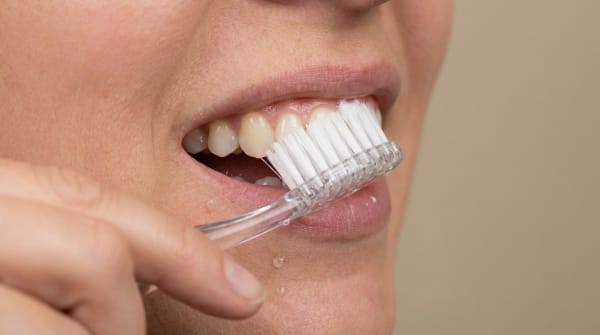
Rinse with water after sweet or acidic food and drink. Do not brush immediately after acidic exposure (wait 30 minutes); brushing immediately scrubs softened enamel.
Chew sugar-free xylitol gum for ten minutes after meals when brushing is not possible.
Read labels on drinks. "No added sugar" can still be acidic. "Natural fruit juice" still contains free sugars by the dental definition.
Use a straw for unavoidable sugary or acidic drinks to reduce contact with the front teeth.
Limit sports drinks to genuine endurance situations. Plain water serves most exercise needs.
Tell your dentist about regular medications, particularly cough syrups, vitamin gummies, lozenges, or anti-anxiety medications that cause dry mouth. Specific prevention strategies follow.
When diet matters most
A few situations where diet review becomes specifically important.
A run of new cavities at recent check-ups, particularly on smooth surfaces or root surfaces.
Children with active decay despite reasonable brushing.
Adults with reduced saliva flow, where the protective margin is smaller.
People in active orthodontic treatment, where harder-to-clean surfaces meet altered eating patterns.
Older adults with exposed root surfaces, which decay much faster than enamel.
In these situations, a short review of the daily eating and drinking pattern with the dentist or a hygienist often identifies one or two changes that move the risk substantially.
Bottom line
Frequency of sugar and carbohydrate exposure drives decay more than total amount. Concentrating sweet foods at meal times rather than across the day, replacing sweet drinks with water as the default, and finishing meals with cheese or unsweetened tea rather than dessert sippers covers most of what most people can practically change. Foods that protect teeth (cheese, vegetables, water, sugar-free gum) are mostly the same foods that support general health.
If you have had several recent cavities or want a tailored review of your eating and drinking pattern, our team at ArtSmiles can review the diet alongside the dental check and suggest specific changes for your mouth.
Frequently asked questions
What is the worst single food for teeth?
Anything sticky and sugary that stays in contact with the teeth for a long time: lollies that dissolve slowly, dried fruit, muesli bars, and lollipops are typical examples. Sugar plus duration plus frequency together do the damage, not any single food in isolation.
Are sports drinks really that bad?
Most sports drinks combine sugar with high acidity. Sipped over a long workout, they cause repeated acid attacks on softened enamel. They are appropriate for genuine endurance situations, not for general gym use, and water is the better routine choice.
Is sugar-free chewing gum actually good for teeth?
Yes. Chewing stimulates saliva flow, which buffers acid and washes away food. Xylitol-based gum also reduces decay-causing bacteria. Ten minutes after a meal is a useful time to chew a piece.
Does eating cheese after a meal really help?
Yes, modestly. Cheese raises mouth pH, contains calcium and phosphate that support remineralisation, and ends a meal on a tooth-friendly note. A small piece of cheese after a sweet dessert is one of the simplest decay-protective habits available.
What about fruit and fruit juice?
Whole fruit at meals is fine and part of a healthy diet. Fruit juice and dried fruit are dental concerns, since they concentrate sugar and remove the fibre, and dried fruit sticks to teeth. If you do drink juice, drink it quickly with a meal rather than sipping across the morning.
Should I rinse with water after every meal?
Rinsing with water after a sugary or acidic meal is helpful. Brushing immediately after acidic foods is not, since the enamel is temporarily softened. Wait at least 30 minutes before brushing after wine, citrus, soft drinks, or other acidic exposures.
References
Moynihan, P. J., & Kelly, S. A. M. (2014). Effect on caries of restricting sugars intake: Systematic review to inform WHO guidelines. Journal of Dental Research, 93(1), 8 to 18.
National Health and Medical Research Council. (2013). Australian Dietary Guidelines. Canberra: NHMRC.