Compiled from clinical pathology references. Medically reviewed by Dr Cristian Dunker , Principal Dentist, ArtSmiles Cosmetic Dentistry.
Quick summary
Also called | Necrotising gingivitis (NG), tissue-destroying (necrotising) ulcerative gingivitis (NUG), Vincent's gingivitis, Vincent's infection, trench mouth |
How urgent? | 🔴 See a dentist promptly, this is a painful, fast-moving gum infection that responds well to early treatment |
Common or rare? | Uncommon in healthy populations (less than 0.1%), but more frequent in people under physical or emotional stress |
Who it affects | Most often young and middle-aged adults, particularly smokers; can affect malnourished children in developing regions |
Who treats it | General dentist (with possible specialist input if it does not settle or if there is an underlying medical issue) |
Based on | Regezi, Neville, Cawson, and Laskaris |
What is it?
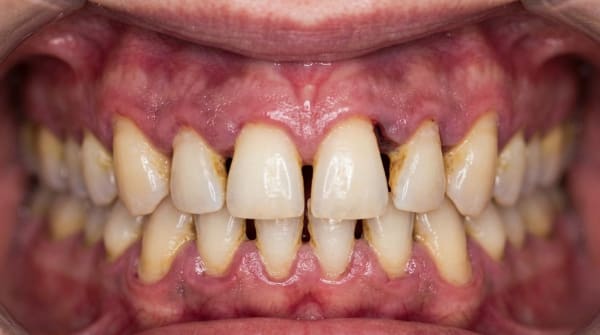
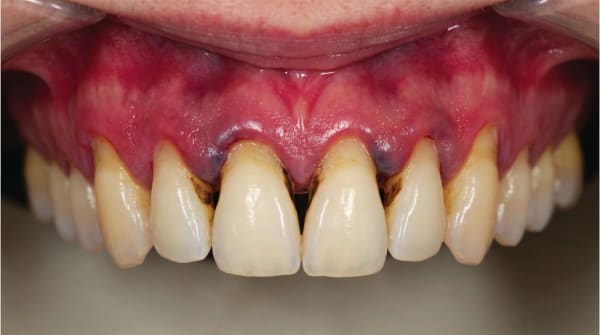
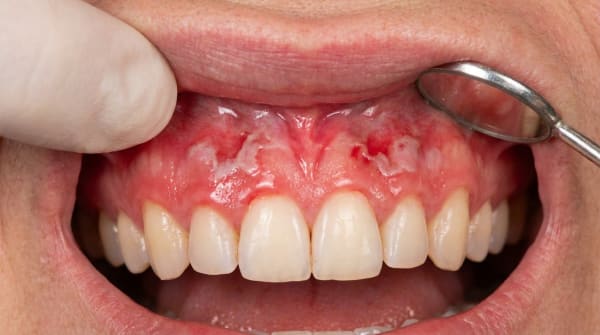
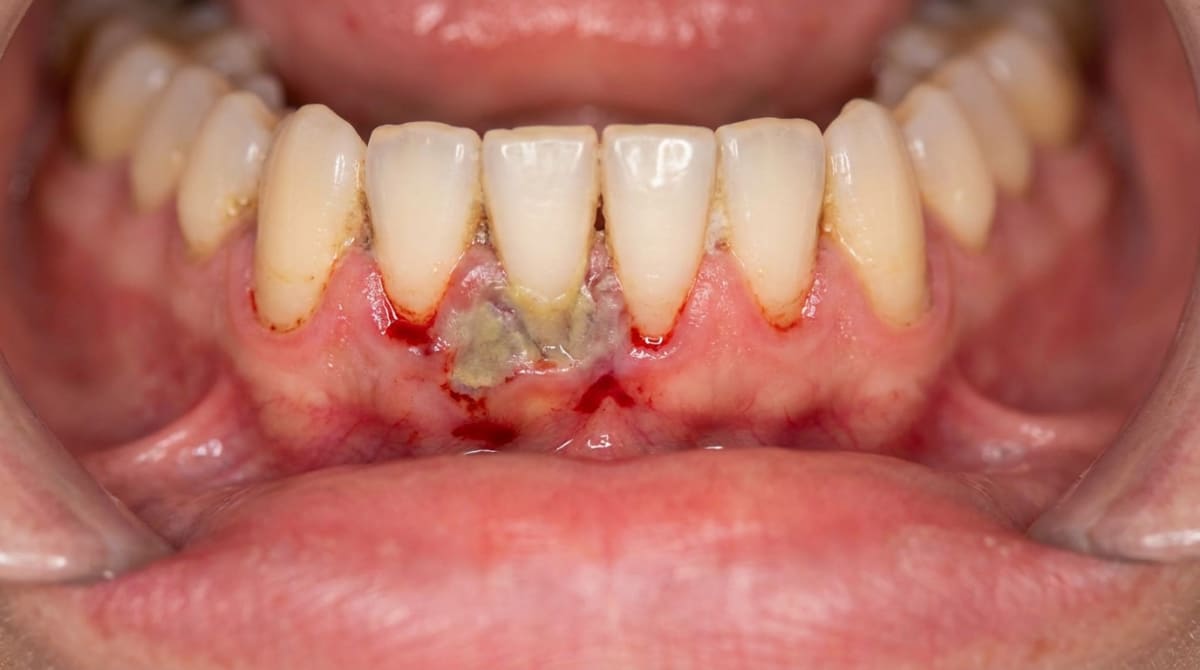
Acute necrotising ulcerative gingivitis, usually shortened to ANUG or NUG, is a sudden, painful infection of the gums. It causes the small triangles of gum between the teeth (the interdental gum tips between teeth), interdental papillae to break down and ulcerate, leaving sore, crater-like notches along the gumline. The gum surface is often coated in a greyish film and bleeds easily.
Unlike the gradual, mostly painless gum disease that builds up over years, ANUG comes on quickly and hurts straight away. It is sometimes still called Vincent's gingivitis, after the French physician who first described the bacteria involved, or trench mouth, a name dating back to soldiers in the First World War.
Who tends to get it?
In Australia and other developed countries, ANUG is now relatively uncommon. The textbooks place its prevalence at less than 0.1% in the general population, although it can climb to around 7% in highly stressed groups such as military recruits.
It is seen most often in young and middle-aged adults, with cases historically reported more frequently in young adult males, particularly cigarette smokers and people with neglected oral hygiene. In developing regions, ANUG can also affect very young children who are malnourished, where it occasionally progresses to far more serious infections.
When ANUG appears outside its usual pattern, for example, in someone who is otherwise looking after their teeth, your dentist will look carefully for an underlying reason, such as recent illness, immune problems or significant stress.
What causes it?
ANUG is a bacterial infection, but the bacteria involved live quietly in many healthy mouths. The condition only develops when the body's defences drop and the balance of mouth bacteria tips out of control. The pathology textbooks consistently list the same predisposing factors:
Smoking. Cigarette smoking is one of the strongest associations, and quitting often improves the response to treatment.
Stress and anxiety. Emotional or physical stress is a long-recognised trigger; the wartime nickname "trench mouth" reflects this.
Poor oral hygiene. Heavy plaque build-up and a generally neglected mouth give the bacteria the conditions they need.
Malnutrition. Particularly relevant in children in developing regions, but also in adults with poor diets.
Reduced immunity. This includes HIV infection, immunosuppressive medication, leukaemia and other conditions that lower the body's ability to fight infection.
Recent upper respiratory infections. Minor illnesses such as a chest infection have been linked to flare-ups.
The disease is not considered transmissible from person to person, you cannot "catch" ANUG from someone else.
How does it develop?
A healthy mouth contains a wide mix of bacteria living in balance. In ANUG, two groups in particular, fusiform bacteria (such as Fusobacterium nucleatum) and spirochaetes (including Treponema vincentii, Borrelia vincentii and Treponema denticola), multiply rapidly and dominate the gum tissue at the affected sites. Other anaerobes such as Prevotella intermedia, Porphyromonas gumis and Selenomonas sputigena are often involved as well.
Think of it like a garden bed where the weeds are normally kept in check. When stress, smoking, illness or poor cleaning weaken the soil, those weeds, the anaerobic bacteria, take over and start damaging the gum tissue beneath. Because these bacteria are anaerobes (organisms that thrive without oxygen), they tunnel into the soft, sheltered tissue between the teeth, where they cause the tips of the interdental papillae to die back.
This tissue death (necrosis) is what gives ANUG its characteristic appearance: gums that look like they have been punched out with a small hole-punch at every interdental triangle.
What might you notice?
What it looks like
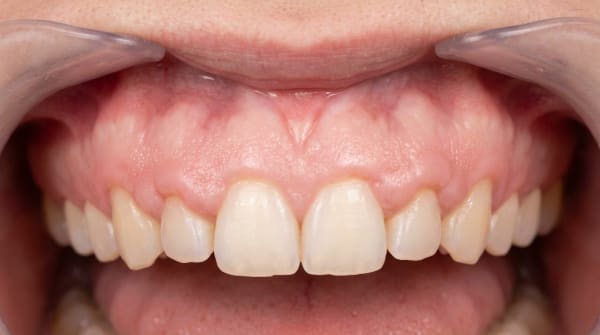
The most distinctive feature is the appearance of the gums between the teeth. Instead of the normal pointed pink triangles, the tips of the gum look as though small craters have been scooped out of them. These ulcers usually start at the very tip of the papilla and spread along the gumline. The surface is often covered by a greyish or yellowish film, known as a pseudomembrane, that wipes away to leave a raw, bleeding base. The gums beneath are bright red, swollen and friable, meaning they bleed at the slightest touch.
What it feels like
Unlike most forms of gum disease, ANUG is genuinely painful from the outset. People describe it as a constant, gnawing soreness that makes brushing and eating difficult. Other common signs include:
A foul or metallic taste in the mouth
Strikingly bad breath, sometimes described as smelling like "rotting hay"
Spontaneous bleeding from the gums, even without brushing
Increased saliva production
A general feeling of being unwell, with possible swollen lymph nodes in the neck and a low-grade fever in more severe cases
In the milder cases described in healthy adults, fever and significant systemic upset are usually absent, but the pain and the smell are almost always present.
What an X-ray might show
In straightforward ANUG that is limited to the gum surface, X-rays usually appear normal. Imaging becomes more important if your dentist suspects the infection has progressed to involve the bone supporting the teeth (a condition called necrotising periodontitis), where it can show rapid loss of bone height between the teeth.
What happens at the dentist?
In most cases, ANUG can be diagnosed from the clinical picture alone, the combination of painful, punched-out ulcers at the gum tips, a greyish slough, easy bleeding and bad breath is highly characteristic. At ArtSmiles, your dentist may:
Take a careful history, asking about smoking, stress, recent illness and oral hygiene habits
Examine the gums, paying close attention to the interdental papillae
Gently probe to assess how far the necrosis has spread and whether deeper tissues are involved
Check the lymph nodes in the neck and ask about fever or feeling unwell
Occasionally take a smear from the affected area; under the microscope, this typically shows large numbers of spirochaetes and fusiform bacteria
When ANUG appears in someone who is otherwise healthy and has no obvious risk factors, or when it is severe, recurrent or slow to settle, your dentist may recommend further investigation. This can include blood tests or referral to your GP to look for underlying conditions such as immune suppression, blood disorders or HIV infection. The textbooks specifically caution dental clinicians to look carefully for subtle signs of immunosuppression in unusual ANUG presentations.
Is this serious?
🔴 ANUG sits firmly in the "see a dentist promptly" category. While it is not usually life-threatening in otherwise healthy adults, it is painful, it can damage the gum architecture permanently, and it can occasionally progress.
If treated early, the response is typically rapid and the gums recover well. Left untreated, the consequences can include:
Permanent loss of gum contour. The pointed papillae may not regenerate fully, leaving small black triangles between the teeth.
Necrotising periodontitis. The infection can extend deeper, destroying the bone that supports the teeth, with attachment loss (the gums and bone pulling away from the tooth) reportedly three to five times faster than in typical periodontitis.
Necrotising stomatitis. In immunocompromised people, the necrosis can spread beyond the gums to the cheek, palate or other oral tissues.
Noma (cancrum oris). In severely malnourished or immunosuppressed individuals, almost exclusively in children in developing regions, the process can spread through the cheek and face. This is rare but devastating.
If you've noticed any of these signs for more than two weeks, it's worth booking an assessment.
Could it be something else?
Several other conditions can mimic the painful, ulcerated gums of ANUG. Your dentist will weigh up the differences carefully, since the treatment can be quite different.
Primary herpetic gingivostomatitis, a viral infection (usually in children or young adults) that also causes painful, red, bleeding gums, but typically produces small fluid-filled vesicles and ulcers spread widely across the lips, tongue and other mucosa, not just the gum tips. ANUG ulcers stay confined to the gum margins.
HIV-associated necrotising gingivitis or periodontitis, looks very similar to ANUG, but progresses more aggressively with rapid attachment and bone loss. Suspected when typical ANUG fails to resolve, recurs frequently, or appears with other signs of immune compromise.
Streptococcal gingivostomatitis, a bacterial throat-related infection that can inflame the gums; usually accompanied by sore throat and fever rather than localised papillary necrosis.
Acute leukaemia, can cause painful, swollen, bleeding gums with ulceration. Bruising elsewhere on the body, fatigue and abnormal blood tests help distinguish it.
Aplastic anaemia or agranulocytosis (a dangerously low white-cell count), both can cause necrotic-looking gum ulceration due to a lack of infection-fighting white cells. Blood tests are diagnostic.
Scurvy (severe vitamin C deficiency), produces swollen, spongy, bleeding gums, but lacks the punched-out interdental craters of ANUG and is paired with broader signs of nutritional deficiency.
Gonococcal stomatitis, rare oral infection that can cause foul-smelling gum ulceration, considered when typical risk factors are absent.
Erythema multiforme, an immune-mediated condition causing painful oral ulcers, usually with target-shaped skin lesions and lip crusting.
Necrotising periodontitis, really part of the same disease spectrum, but involves loss of the bone supporting the teeth, not just the gums.
Pericoronitis, infection around a partially erupted wisdom tooth that can occasionally trigger or coexist with ANUG, but is usually localised to one area of the mouth.
How is it treated?
The good news is that ANUG generally responds quickly to treatment. The textbooks describe a consistent, multi-step approach.
At the dental visit, treatment may include:
Gentle debridement. Carefully removing the soft greyish slough, plaque and calculus from around the affected gums. Local anaesthetic is often needed because the gums are so tender. Ultrasonic scalers or hand instruments may both be used.
Antibiotics. Metronidazole is the textbook first choice (typically taken for around three days), as the bacteria involved are anaerobic and respond rapidly to it. Penicillin is a recognised alternative. Antibiotics are particularly useful when there is fever or swollen lymph nodes.
Antiseptic mouth rinses. Chlorhexidine, warm salt water or diluted hydrogen peroxide rinses can support the response by reducing bacterial load.
Pain relief. Simple analgesics to keep you comfortable while the inflammation settles.
At home, helpful measures include:
Improving oral hygiene as soon as the gums can tolerate it, gentle brushing with a soft brush is usually possible within a day or two.
Stopping smoking. Smoking cessation is repeatedly highlighted as one of the most important steps for both recovery and preventing recurrence.
Rest, fluids and a soft, nutritious diet while you are sore.
Following up. Once the acute phase has settled, usually within several days of starting treatment, your dentist will book follow-up visits to bring oral hygiene to a high standard, treat any residual gum disease, and reduce the risk of the infection coming back.
If there is an underlying medical issue, such as immune suppression, addressing that is just as important as treating the gums themselves. Any unusual or unresponsive case should be reviewed by your dentist and, if needed, your GP.
What's the long-term outlook?
For otherwise healthy adults who get prompt treatment, the outlook is excellent. The pain typically settles within a few days, and the gums heal substantially over the following one to two weeks. Even with conservative therapy, the textbooks describe quick resolution as a defining feature of this condition compared with other forms of gum disease.
There are, however, two longer-term issues to be aware of:
Permanent change to the gum shape. Once the interdental papillae have been lost, they often do not regenerate fully. This can leave small "black triangles" between the teeth, usually a cosmetic concern rather than a functional one, and the altered contour can create stagnation areas where plaque collects more easily.
Recurrence. ANUG can come back, particularly if the original predisposing factors are still in play. Continuing to smoke, ongoing stress or returning to poor oral hygiene all raise that risk. This is why long-term follow-up, regular cleans and good daily home care matter so much.
With oral hygiene brought up to a high standard, smoking addressed, and any underlying health issues looked at, most patients can expect a complete and durable recovery from a single episode.
A note on this article
This article is for educational purposes only and does not constitute a clinical diagnosis. Please consult a registered dental practitioner for assessment and treatment advice.
The cover image above is an AI-generated illustration based on the most common visible features of this condition described in clinical pathology references. It is not a photograph of a real case and should not be used to diagnose or rule out the condition in your own situation. If you are concerned about something you have noticed, please book an assessment with a registered dental practitioner.
References
Regezi, J. A., Sciubba, J. J., & Jordan, R. C. K. (2017). Oral pathology: Clinical pathologic correlations (7th ed.). Elsevier. Chapter 1, Vesiculobullous Diseases (ANUG referenced in differential diagnosis of HSV) and Chapter 2, Ulcerative Conditions (noma and ANUG predisposing factors).
Neville, B. W., Damm, D. D., Allen, C. M., & Chi, A. C. (2023). Oral and maxillofacial pathology (5th ed.). Elsevier. Chapter 4, Periodontal Diseases, Necrotising Gingivitis section, pp. 151 to 152; Chapter 5, Bacterial Infections, Noma section, pp. 191 to 192.
Cawson, R. A., & Odell, E. W. (2017). Cawson's essentials of oral pathology and oral medicine (8th ed.). Elsevier. Chapter 5, Gingivitis and Periodontitis, Acute Necrotising Ulcerative Gingivitis section, pp. 92 to 93.
Laskaris, G. Pocket atlas of oral diseases. Chapter 17, Bacterial Infections, Necrotizing Ulcerative Gingivitis and Necrotizing Ulcerative Stomatitis, pp. 142 to 143.
Frequently asked questions
What does ANUG look and feel like?
ANUG (acute necrotising ulcerative gingivitis) typically produces painful, ulcerated gums with greyish 'punched-out' areas between the teeth, bleeding on the slightest pressure, a strong unpleasant taste and bad breath. Patients often feel unwell, sometimes with a low-grade fever and tender lymph nodes.
What causes ANUG?
ANUG develops when a particular mix of bacteria (including spirochaetes and fusiform organisms) overgrows in the gum tissue. Predisposing factors include heavy smoking, poor oral hygiene, severe stress, malnutrition, fatigue and conditions that lower immunity such as HIV infection.
How is ANUG treated?
Treatment starts with gentle but thorough professional cleaning to remove plaque and dead tissue, chlorhexidine mouth rinses, and pain relief. A short course of metronidazole (an antibiotic) is often added when symptoms are significant. Smoking cessation and good oral hygiene are essential to prevent recurrence.
Is ANUG contagious?
ANUG is not contagious in the way a cold or flu is. The bacteria involved are normally present in many mouths, and the disease only develops when local and general factors allow them to overgrow. Sharing utensils, kissing or close contact does not typically transmit it.