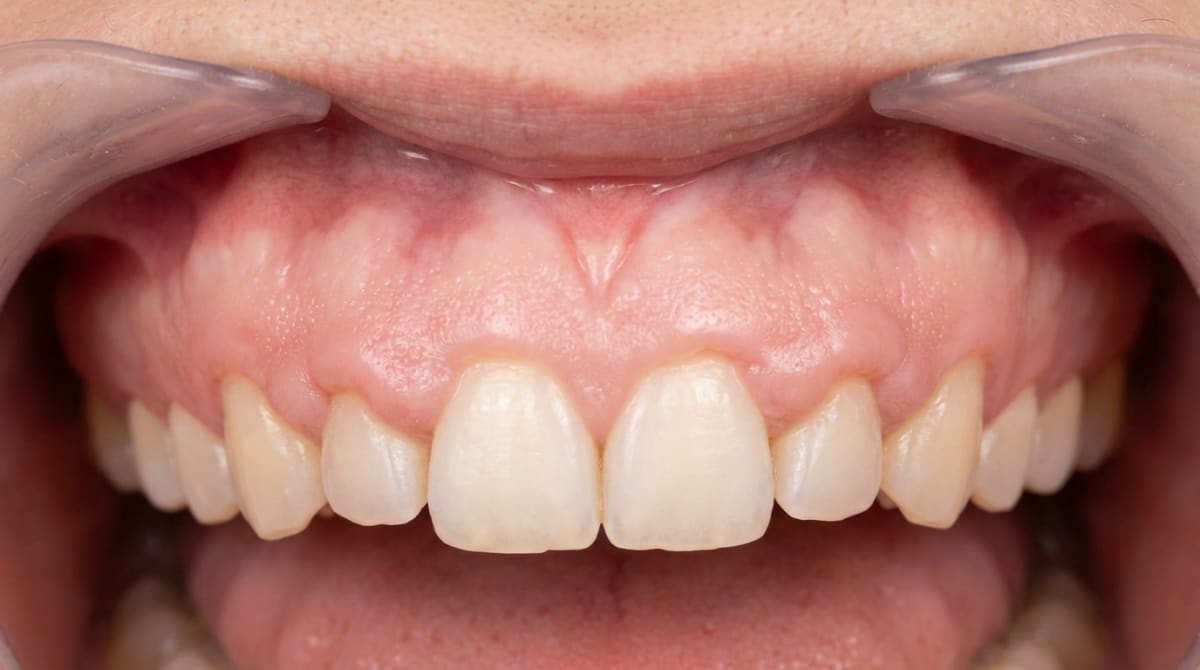
Compiled from clinical pathology references. Medically reviewed by Dr Cristian Dunker, Principal Dentist, ArtSmiles Cosmetic Dentistry.
Some prescription medicines that are essential for treating epilepsy, high blood pressure or for protecting a transplanted organ can have an unwelcome side-effect on the gums, they cause the gum tissue to grow thicker and more fibrous over time. The result is a condition called drug-induced gingival overgrowth, sometimes called drug-induced gingival hyperplasia.
This article from the team at ArtSmiles, reviewed by Dr Cristian Dunker, explains why it happens, what to look for, and how to manage it without disrupting your essential treatment.
Quick summary
At a glance | Detail |
|---|---|
Also called | Drug-induced gingival hyperplasia; drug-influenced gingival enlargement |
How urgent? | 🟡 Worth careful dental review, the gums respond well to combined hygiene, sometimes drug substitution, and (when needed) minor surgery |
Common or rare? | Common in people taking the relevant medicines, up to 50% of long-term phenytoin users |
Who it affects | Patients on phenytoin, calcium channel blockers (nifedipine, amlodipine, felodipine), ciclosporin or combinations; more often when plaque control is poor |
Who treats it | General dentist working with periodontist when surgical correction is needed; communication with the prescribing doctor |
Based on | Neville, Cawson, Regezi |
What is it?
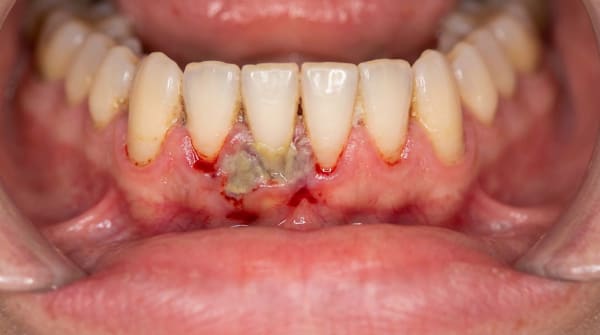
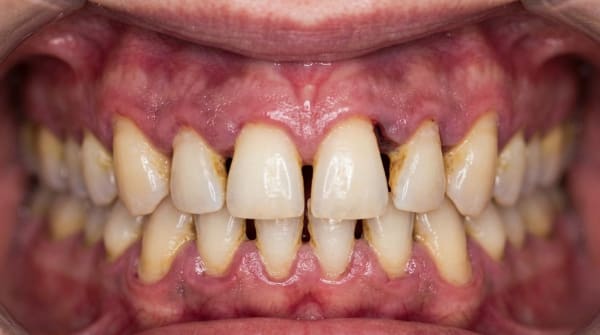
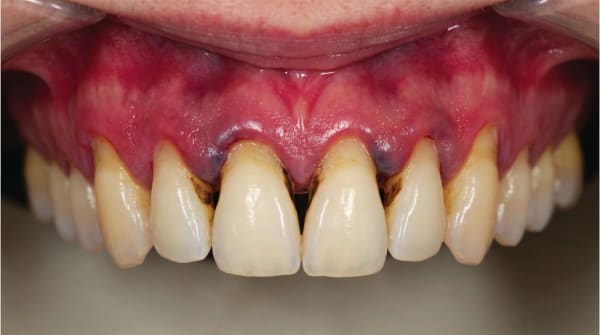
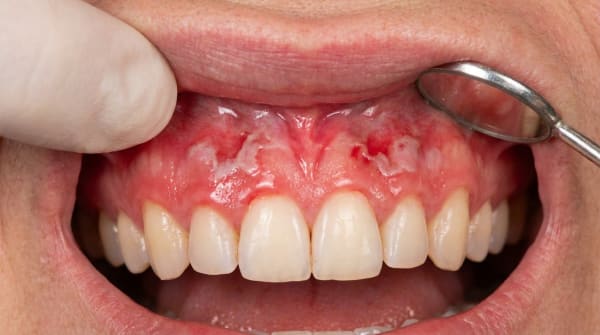
Drug-induced gingival overgrowth is an enlargement of the gum (gingiva), particularly the gum that fills the spaces between teeth (the interdental papilla, the small triangle of gum between two teeth). The tissue is:
Pink rather than bright red, because the change is fibrous rather than purely inflammatory.
Firm and bulky, with a stippled or lobulated surface.
Most pronounced between the teeth, especially at the front of the mouth.
Sometimes covers part of the crown of the teeth in advanced cases.
Worse where plaque builds up, because plaque-related inflammation amplifies the drug effect.
The condition is reactive, not cancerous. It is not contagious and not a sign of bad behaviour, it is a known reaction of the gum tissue to specific medicines, made worse by hygiene difficulties.
Who tends to get it?
It can affect anyone taking the relevant medicines, but is more common in:
Patients on phenytoin for epilepsy. Up to half of patients on long-term phenytoin develop some gum overgrowth.
Patients on calcium channel blockers for high blood pressure (especially nifedipine, amlodipine, felodipine). About 6 to 20% develop overgrowth, depending on the drug and dose.
Patients on ciclosporin (an immunosuppressant given after organ transplant). Around 25 to 30% develop gum changes.
Patients on combination therapy (for example a calcium channel blocker plus ciclosporin), where the risk is additive.
Patients with poor oral hygiene, where plaque builds up between the teeth.
Children and young adults more than older adults, particularly with phenytoin.
Mouth breathers and patients with crowded teeth, where plaque accumulates more easily.
What causes it?
The exact mechanism varies between drug groups but generally involves:
Effect on connective tissue cells of the gum (fibroblasts, the cells that produce collagen and other supporting tissue), increasing their production of collagen and reducing their breakdown of old collagen.
Reduced enzyme activity that normally clears excess collagen.
Local inflammation from plaque and calculus, which acts as a co-factor and worsens the response.
Immune effects of ciclosporin, which alter the gum response to bacteria.
Plaque alone does not cause this picture. Without the offending drug, even significant plaque produces a different inflammatory pattern. With the drug present, plaque amplifies the fibrous response and makes the overgrowth worse.
How does it develop?
The course is gradual:
The medicine is started for an essential medical reason.
Over the first three to six months, the gum begins to thicken slightly between the teeth.
Over months to years, the overgrowth becomes more pronounced and more bulky, particularly where plaque accumulates.
In severe cases, the gum can overlap large parts of the teeth, making cleaning difficult and altering appearance.
With improved cleaning, drug substitution or surgery, the picture can improve significantly, but if the original drug remains and hygiene is poor, the overgrowth tends to recur.
What might you notice?
What it looks like
A bumpy, pink, lobulated gum surface, especially the small triangle of gum between the front teeth. In advanced cases the gum may partly cover the teeth. The colour is usually pink rather than bright red unless plaque has caused added inflammation.
What it feels like
Gums that look bigger than they used to, particularly between the front teeth.
A bumpy or knobbly gum surface.
Gums that bleed when brushing.
Trouble flossing because the spaces between the teeth are filled with thick gum.
Bad breath related to plaque accumulation.
Difficulty with chewing in advanced cases.
A change in appearance of the smile.
The change is usually slow, and many patients do not realise how much has happened until a dentist points it out.
What an X-ray might show
Dental X-rays do not show the soft-tissue overgrowth directly, but periodic X-rays are taken to check whether plaque trapped under the bulky gum has caused bone loss around the teeth.
What happens at the dentist?
When a patient on a relevant medicine attends ArtSmiles, the visit usually involves:
A medical history review. We ask about all current medicines, doses and how long they have been used.
A thorough periodontal examination. Pocket depths, gum bleeding, plaque and calculus levels are recorded around every tooth.
An assessment of the overgrowth. We note where it is worst, how much of the teeth it covers, and how it affects function.
Photographs and X-rays to document the picture.
A staged plan. Most cases benefit from a careful professional cleaning and improved home care first, with surgical correction reserved for areas that do not improve.
Communication with your prescribing doctor. With your permission, we contact your GP, neurologist, cardiologist or transplant team to discuss whether a different medicine could be considered. We never recommend changing medicines unilaterally.
Personalised hygiene support. Detailed brushing and interdental cleaning instructions, sometimes with electric brushes and water flossers, make a significant difference.
Is this serious?
🟡 In most cases, drug-induced gingival overgrowth is not medically serious. The reasons it still deserves attention are:
Function. Bulky gum makes cleaning, eating and speaking harder.
Self-confidence. Visible overgrowth can affect smile aesthetics.
Periodontal health. Plaque traps lead to deeper gum disease and possible bone loss over time.
Appearance in younger patients, where the change is most noticeable.
It is rarely a medical emergency, but it can become a quality-of-life concern that needs active management.
Could it be something else?
Several other conditions can cause enlarged gums:
Plaque-related gingivitis alone, usually red and bleeding without the firm fibrous component.
Hereditary gingival fibromatosis, generalised firm overgrowth without any drug exposure.
Pregnancy gingivitis or pregnancy epulis, bright red swelling driven by hormones.
Leukaemic gum infiltration, pale, swollen, bleeding gums in patients with leukaemia.
Granulomatous conditions such as orofacial granulomatosis or Crohn's disease.
Vitamin C deficiency (scurvy), bleeding, swollen gums, now uncommon.
Localised reactive lesions such as pyogenic granuloma or peripheral ossifying fibroma.
A combination of medical history, oral examination, blood tests and (when appropriate) biopsy distinguishes these.
How is it treated?
Management is built around three steps that work together:
Optimise oral hygiene. Plaque and calculus drive the inflammatory part of the overgrowth. Excellent home care plus regular professional cleaning reduces the change significantly.
Consider drug substitution. With your prescribing doctor's agreement, a different drug in the same class may be substituted. For example, some other calcium channel blockers cause less gum change than nifedipine, and tacrolimus is sometimes used as an alternative to ciclosporin.
Surgical correction. When overgrowth persists despite hygiene and (where possible) medication change, gingivectomy or gingivoplasty (reshaping of the gum) by a periodontist provides good cosmetic and functional improvement. Recurrence can occur if the drug is unchanged and hygiene is not maintained, but careful long-term care keeps the result stable.
Recall visits every three to four months are commonly recommended for patients with this condition.
What's the long-term outlook?
The outlook is good for most patients with appropriate dental care and, where possible, drug substitution. Excellent hygiene, regular professional cleaning, and (when needed) surgery can keep the gums healthy and attractive over the long term.
Importantly, your medical treatment must come first. The dental team's role is to support your gum health while you continue the medicines that are protecting your overall health. Working together, your medical and dental teams can usually keep both sides of the picture balanced.
If you take any of the medicines linked with gum overgrowth and you have noticed a change in your gums, please book a visit. We can build a plan that respects your medical treatment and looks after your smile.
A note on this article
This article is for educational purposes only and does not constitute a clinical diagnosis. Please consult a registered dental practitioner for assessment and treatment advice.
The cover image above is an AI-generated illustration based on the most common visible features of this condition described in clinical pathology references. It is not a photograph of a real case and should not be used to diagnose or rule out the condition in your own situation. If you are concerned about something you have noticed, please book an assessment with a registered dental practitioner.
References
Neville, B. W., Damm, D. D., Allen, C. M., & Chi, A. C. (2023). Oral and maxillofacial pathology (5th ed.). Elsevier. Chapter 4, Periodontal Disease: Drug-Influenced Gingival Enlargement.
Cawson, R. A., & Odell, E. W. (2017). Cawson's essentials of oral pathology and oral medicine (8th ed.). Elsevier. Chapter 6, Periodontal Disease.
Regezi, J. A., Sciubba, J. J., & Jordan, R. C. K. (2017). Oral pathology: Clinical pathologic correlations (7th ed.). Elsevier. Chapter 5, Connective Tissue Lesions; Chapter 7, Periodontal Disease.
Frequently asked questions
Which medications cause gingival overgrowth?
The best-known offenders are phenytoin (an anti-epileptic), cyclosporine (an immune-suppressant after organ transplant) and several calcium channel blockers used for blood pressure (such as nifedipine, amlodipine and verapamil). Some other drugs occasionally have the same effect.
Should I stop taking my medication?
No, not without talking to your doctor first. Many of these medications are essential for serious conditions. The dentist usually liaises with the prescriber to discuss whether a substitute drug with less gum effect is available, while continuing to control plaque so the overgrowth is minimised.
How is drug-induced gingival overgrowth treated?
The first step is meticulous plaque control with the dentist and hygienist, including a deep clean. If the gum is still bulky and is affecting eating, speech or appearance, surgical reshaping (gingivectomy) can be done. The condition tends to recur if the medication continues, so ongoing maintenance is important.
Will the overgrowth go away if the medication is changed?
Often, partially. When the offending drug is switched, the gum gradually shrinks over weeks to months, especially with good plaque control. Some residual fibrous overgrowth may remain and need surgical reshaping for the best cosmetic and functional result.