Compiled from clinical pathology references. Medically reviewed by Dr Cristian Dunker , Principal Dentist, ArtSmiles Cosmetic Dentistry.
Quick summary
Also called | Oral findings in lung disease, dental signs of respiratory illness |
How urgent? | 🟡 Worth knowing, most oral findings are easily managed, but some can be the first sign of a more serious lung condition that needs medical attention |
Common or rare? | Common in everyday dental practice, particularly inhaler-related changes; rarer manifestations such as oral tuberculosis or granulomatosis with polyangiitis are uncommon but important |
Who it affects | People with asthma, COPD (chronic obstructive pulmonary disease, an umbrella term for emphysema and chronic bronchitis), cystic fibrosis (an inherited condition where thick mucus builds up in the lungs and digestive system), tuberculosis, sarcoidosis, granulomatosis with polyangiitis, sleep apnoea, or lung cancer |
Who treats it | General dentist for the oral findings, working closely with the patient's GP, respiratory specialist or immunologist for the underlying lung condition |
Based on | Cawson, Neville, with cross-references in Regezi |
What is it?
"Oral manifestations of respiratory disease" is the term clinicians use for the specific signs and symptoms that appear in the mouth when a person has a disease of the airways or lungs. Some changes are caused by the disease itself (for example, oral ulceration in tuberculosis, or strawberry gingivitis in granulomatosis with polyangiitis). Others are caused by the medications used to treat respiratory disease (such as oral candidiasis (oral thrush, a yeast infection of the mouth) from inhaled corticosteroids (preventer inhalers used in asthma and COPD that deliver steroid medication directly to the lungs)). The textbooks describe a range of recognisable patterns, and noticing them at the dental chair can sometimes be the first prompt for a wider medical assessment.
Who tends to get it?
Different respiratory conditions affect different groups:
People with asthma, particularly those using regular inhaled corticosteroids without rinsing the mouth afterwards.
People with COPD (chronic obstructive pulmonary disease), usually long-term smokers.
People with cystic fibrosis, a genetic condition that affects mucus and salivary secretions.
People with active or past tuberculosis.
People with sarcoidosis, a multisystem granulomatous disease that can affect the mouth.
People with granulomatosis with polyangiitis (formerly Wegener granulomatosis), a rare ANCA-associated vasculitis.
People with sleep apnoea, often middle-aged adults with snoring, daytime drowsiness and obesity.
People with lung cancer, particularly later-stage disease.
What causes it?
The oral findings come from a mixture of mechanisms:
Local effects of inhaled medication, particularly inhaled corticosteroids and bronchodilators landing on oral surfaces rather than reaching the lungs.
Direct involvement of oral tissues by disease, granulomas in sarcoidosis, ulceration in tuberculosis, strawberry gingivitis in granulomatosis with polyangiitis.
Effects on saliva, cystic fibrosis can change the consistency of saliva; chronic mouth-breathing in nasal disease can dry the mouth.
Side effects of systemic medication, long-term corticosteroids, antibiotics or chemotherapy used for respiratory disease can produce oral candidiasis, mucositis or other changes.
Habits associated with respiratory disease, particularly smoking, which is a major contributor to most oral cancers and many other oral conditions.
How does it develop?
Each condition leaves its own footprint in the mouth:
Inhaled corticosteroids deposit on the palate and tongue with each puff. Over weeks and months, the local immune defences weaken and Candida albicans, a yeast that normally lives quietly in the mouth, can multiply, producing thrush.
Cystic fibrosis, the same mucus-thickening defect that affects the lungs also affects salivary glands; the textbooks describe delayed tooth eruption, hypoplastic enamel defects and salivary gland swelling. Long courses of antibiotics in childhood (particularly tetracyclines, in the past) can produce permanent staining of teeth.
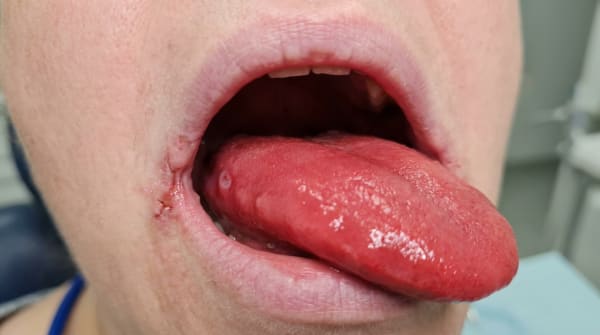
Tuberculosis, oral lesions are uncommon, but when they occur they are typically chronic, painless ulcers with rolled edges, often on the tongue, palate or floor of the mouth. They develop when Mycobacterium tuberculosis spreads from the lungs through coughed-up sputum to the mouth.
Sarcoidosis can produce non-caseating granulomas anywhere in the mouth, including the lips, tongue, palate and minor salivary glands. Salivary gland involvement may produce dry mouth, sometimes as part of the rare Heerfordt syndrome (sarcoidosis with parotid enlargement, eye involvement and facial palsy).
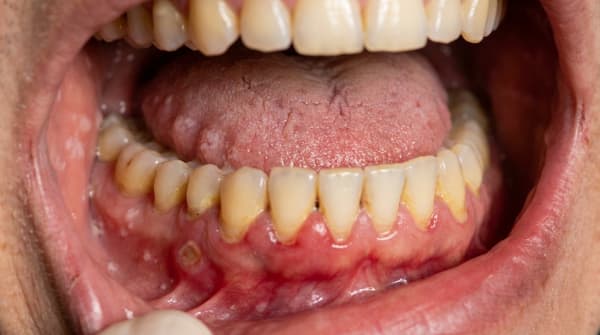
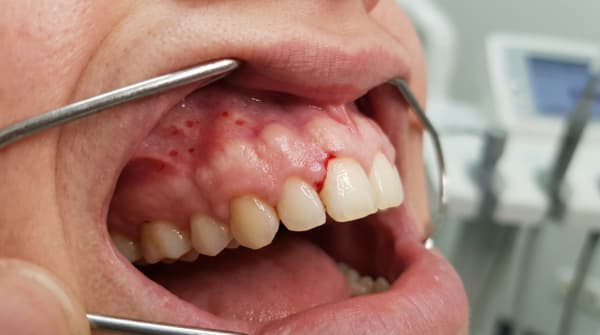
Granulomatosis with polyangiitis (Wegener granulomatosis) has a particularly recognisable oral sign, strawberry gingivitis, described by Cawson as a swollen, granular, dusky or bright red gingival enlargement that does not follow the usual plaque-related distribution. This may be the very first sign of the disease.
Sleep apnoea can show up at the dentist as worn teeth from clenching, scalloped tongue borders, and a small or crowded airway behind the soft palate.
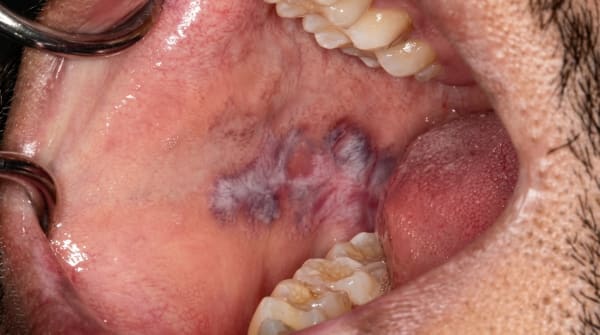
Lung cancer rarely produces specific oral signs in early disease, but in late stages can show as diffuse pigmentation of the soft palate or as metastatic deposits in the jaw.
What might you notice?
What it looks like
Common visible findings include:
Creamy white plaques on the palate or tongue that wipe off, typical of inhaler-related candidiasis.
Strawberry gingivitis, diffusely swollen, granular, bright red or dusky gums, particularly in granulomatosis with polyangiitis.
Chronic non-healing ulcer on the tongue or palate, sometimes seen in oral tuberculosis or sarcoidosis.
Generalised tooth wear with flat facets, a possible sign of clenching in sleep apnoea.
Poor breath, gum disease and discoloured teeth in long-term smokers with COPD.
Cracked lips and dry mouth in mouth-breathers with chronic nasal blockage.
Hypoplastic enamel pits or grooves in patients who had severe respiratory illnesses in childhood.
What it feels like
Symptoms vary widely:
Mild burning, soreness or altered taste, common with inhaler-related thrush.
A persistent ulcer or lump, should always be investigated.
Dry mouth or thick saliva, can occur in cystic fibrosis or as a side effect of medications.
Halitosis (bad breath), common in long-term smokers with COPD or in mouth-breathers.
Tender or swollen gums, particularly in granulomatosis with polyangiitis or pregnancy-mimic gum disease.
Daytime tiredness and morning headaches, point toward possible sleep apnoea.
What an X-ray might show
X-rays at the dentist do not directly show lung disease, but may show:
Enamel hypoplasia in childhood respiratory illness.
Tetracycline staining of teeth in patients given that drug as children.
Bone destruction in the jaw in advanced lung cancer with metastases.
Sinus involvement of the upper jaw in granulomatosis with polyangiitis.
A panoramic X-ray taken at a routine dental check-up and clean sometimes shows hints of these changes.
What happens at the dentist?
A patient with known respiratory disease can be carefully checked at routine dental visits at ArtSmiles, and patients in whom the dentist suspects an underlying lung issue can be referred appropriately. A typical assessment includes:
A medical history that asks about asthma, COPD, cystic fibrosis, sleep apnoea, smoking, recent chest infections and any current respiratory medications.
Examination of the palate and tongue for inhaler-related thrush.
Examination of the gums for atypical gingivitis that does not match the patient's plaque level.
Inspection of the lips, tongue and floor of the mouth for chronic ulcers.
Assessment of tooth wear and bite patterns that may suggest sleep apnoea.
Discussion of inhaler technique, particularly the value of rinsing or using a spacer to reduce candidiasis risk.
Targeted swabs and biopsies where infection or unusual tissue is suspected.
Onward referral to a GP, respiratory specialist, immunologist or sleep specialist when the dental findings suggest a wider issue.
Is this serious?
🟡 Most oral findings of respiratory disease are easily managed once recognised. Inhaler-related candidiasis clears with antifungal therapy and improved technique. Tooth wear from sleep apnoea benefits from a custom splint and may also lead to formal sleep assessment that improves overall health. The serious findings, chronic non-healing ulcers, strawberry gingivitis or unexplained jaw lesions, are uncommon, but they matter because catching them early can change the course of a more significant illness.
If you have a chronic respiratory condition and have noticed mouth changes, or if you have an unexplained mouth ulcer, lump or unusual gum appearance, it is worth booking an assessment so the dental and medical aspects can be addressed together.
Could it be something else?
Many of the findings discussed here have non-respiratory causes that the textbooks list as the main differentials:
Oral candidiasis, can be caused by many factors including diabetes, dry mouth, HIV, denture wear, antibiotics or chemotherapy, not only by inhalers.
Generalised gingivitis, usually plaque-related; granulomatosis with polyangiitis only accounts for a tiny fraction.
Oral tuberculosis, itself a differential of any chronic non-healing ulcer.
Recurrent aphthous ulcers, traumatic ulcers and herpes, far more common causes of mouth ulcers than respiratory disease.
Tooth wear, can also reflect daytime clenching, attrition, erosion or abrasion unrelated to sleep apnoea.
Halitosis, most often local in origin, from gum disease, plaque or caries, rather than systemic.
How is it treated?
Treatment depends on the underlying respiratory condition and the specific oral finding. The textbooks describe a range of dental and joint medical-dental approaches.
At-home measures and habits:
Rinse the mouth with water after every dose of an inhaled corticosteroid, and consider using a spacer device.
Brush twice a day with fluoride toothpaste and clean between teeth daily.
Stay well hydrated, particularly with cystic fibrosis or any condition that thickens saliva.
Stop smoking, the single most important change for almost every respiratory condition and for oral health.
Use a humidifier at night if mouth-breathing is making your mouth dry.
Professional steps your dentist may consider:
Antifungal therapy for inhaler-related candidiasis, usually a topical antifungal mouthwash for 1-2 weeks; see also the chronic hyperplastic candidiasis article.
Liaison with your GP about inhaler technique, alternative formulations, and management of any contributing medication.
Dietary advice and saliva substitutes for cystic fibrosis-related dryness.
Biopsy and onward referral for any suspicious chronic ulcer, strawberry gingivitis, or unusual gum lesion.
Custom occlusal splint for tooth wear that suggests sleep apnoea, alongside referral for a formal sleep study.
Restorative care for hypoplastic enamel defects from childhood respiratory illness.
Coordinated dental and medical care during cancer treatment, including pre-treatment dental clearance and ongoing oral support.
A patient-centred approach matters. People with chronic lung conditions have often been managing their health for a long time and may not realise that a mouth change relates back to their respiratory disease or its treatment. Open, unhurried discussion of how the two are linked is itself part of effective care, values that sit at the heart of our clinical philosophy.
What's the long-term outlook?
The outlook depends on the underlying condition. Inhaler-related candidiasis, sleep apnoea-related tooth wear and most cystic fibrosis-related oral findings respond well to combined dental and medical care and have an excellent dental outlook. Oral tuberculosis, sarcoidosis and granulomatosis with polyangiitis usually improve once the systemic disease is treated. Late-stage lung cancer carries a serious prognosis, and dental care in those situations focuses on comfort and supporting the patient through treatment. Across all of these, regular dental review and clear communication between the dental team and the medical team are the most important factors in the best long-term outcome.
A note on this article
This article is for educational purposes only and does not constitute a clinical diagnosis. Please consult a registered dental practitioner for assessment and treatment advice.
The cover image above is an AI-generated illustration based on the most common visible features of this condition described in clinical pathology references. It is not a photograph of a real case and should not be used to diagnose or rule out the condition in your own situation. If you are concerned about something you have noticed, please book an assessment with a registered dental practitioner.
References
Cawson, R. A., & Odell, E. W. (2017). Cawson's essentials of oral pathology and oral medicine (8th ed.). Elsevier. Chapter 28, Respiratory Tract Disease: Granulomatosis with polyangiitis (Wegener granulomatosis) with strawberry gingivitis, cystic fibrosis with delayed eruption and hypoplastic defects, sleep apnoea, bronchogenic carcinoma and mycoplasmal pneumonia, pp. 388 to 391; Chapter 16, Oral Premalignancy: inhaler-related candidiasis as a contributor to chronic hyperplastic candidiasis.
Neville, B. W., Damm, D. D., Allen, C. M., & Chi, A. C. (2023). Oral and maxillofacial pathology (5th ed.). Elsevier. Chapter on Bacterial, Viral and Fungal Infections: oral tuberculosis as a manifestation of pulmonary tuberculosis.
Regezi, J. A., Sciubba, J. J., & Jordan, R. C. K. (2017). Oral pathology: Clinical pathologic correlations (7th ed.). Elsevier. Chapter on connective tissue lesions: cross-reference for sarcoidosis with non-caseating granulomas in oral and salivary gland tissue.
Frequently asked questions
How do asthma and COPD affect the mouth?
Asthma and COPD inhalers (especially steroid inhalers) can cause oral thrush in the throat and tongue, dry mouth, hoarse voice and increased decay risk if reliever inhalers are sweetened. Mouth breathing during exacerbations dries the gums and front teeth. Higher cumulative steroid exposure increases candidiasis and may slow gum healing.
Why is rinsing after an inhaler important?
Steroid inhaler particles deposit in the mouth and throat. Rinsing with water (and spitting it out) immediately after using the inhaler reduces local steroid exposure and significantly lowers the risk of oral thrush. Using a spacer device also reduces local deposition.
Is there a link between gum disease and lung disease?
Yes. Bacteria from periodontal pockets can be aspirated into the lungs and contribute to chest infections, particularly in older or hospitalised patients with COPD. Good oral hygiene and periodontal treatment lower the risk of aspiration pneumonia in vulnerable patients.
What about dental treatment during a respiratory flare?
Elective treatment is best deferred until breathing is stable. Patients with severe asthma should bring their reliever inhaler to every appointment. Rubber dam is helpful for restorative work to keep the airway dry. Procedures generating aerosol may be modified. For severe COPD, semi-upright chair positioning and oxygen if used at home should be maintained.