Compiled from clinical pathology references. Medically reviewed by Dr Cristian Dunker , Principal Dentist, ArtSmiles Cosmetic Dentistry.
Quick summary
Also called | Oral findings in renal failure, oral signs of chronic kidney disease, renal osteodystrophy (changes to bone caused by long-standing kidney disease, including the jaw) of the jaws (when bone-related) |
How urgent? | 🟡 Worth assessing, most findings are manageable, but they highlight the need for careful coordination of dental care with the renal team |
Common or rare? | Common in advanced or untreated chronic kidney disease, in people on dialysis (a treatment that filters waste products from the blood when the kidneys can no longer do it), and in renal transplant recipients |
Who it affects | People with chronic kidney disease, people on haemodialysis or peritoneal dialysis, and people who have had a kidney transplant |
Who treats it | General dentist for oral care, working closely with the patient's nephrologist and GP |
Based on | Cawson, with cross-references in Neville and Regezi |
What is it?
"Oral manifestations of renal disease" is the term clinicians use for the cluster of mouth findings that develop as a result of chronic kidney disease, the medications used to treat it, dialysis, or transplantation. The textbooks describe a recognisable pattern that ranges from mucosal pallor and dry mouth in chronic kidney disease through to dramatic gum overgrowth in people on certain immunosuppressive drugs after transplantation. None of these changes is dangerous in itself, but they are a useful reminder of how closely the kidneys, the immune system and the mouth are connected, and they significantly affect how dental treatment is timed and delivered.
Who tends to get it?
The textbooks describe several distinct groups:
People with chronic kidney disease not yet receiving dialysis or transplantation.
People on regular haemodialysis or peritoneal dialysis.
Renal transplant recipients on long-term immunosuppression (a state where the immune system is deliberately or accidentally weakened, raising the risk of infections).
Children with renal failure during tooth development.
People with end-stage renal disease from any cause, including diabetic kidney disease, hypertensive nephropathy, glomerulonephritis, and hereditary kidney conditions.
The textbooks specifically note that as more people now survive renal failure thanks to dialysis and transplantation, dentists are seeing more patients with renal-related oral findings than ever before.
What causes it?
The textbooks group the causes into three broad categories:
Direct effects of chronic kidney disease, the build-up of waste products (uraemia), changes in calcium and phosphate metabolism, and anaemia from reduced erythropoietin production.
Effects of dialysis, heparinisation before dialysis, which produces a temporary bleeding tendency; the risk of infection at vascular access sites; and the accumulation of dental calculus.
Effects of medications, particularly immunosuppressants used after transplantation (ciclosporin, tacrolimus), calcium channel blockers used for hypertension (nifedipine, amlodipine), and various other drugs.
In addition, the textbooks describe several specific phenomena:
Secondary hyperparathyroidism, chronic kidney disease causes changes in calcium and phosphate that drive over-activity of the parathyroid glands. This in turn produces giant-cell lesions of the bone, including the jaws, now a more common cause of these lesions than primary hyperparathyroidism.
Oral keratosis of renal failure, a rare leukoplakia-like white plaque that resolves with effective dialysis or transplantation.
Drug-induced gingival overgrowth, particularly in transplant patients on ciclosporin combined with a calcium channel blocker.
How does it develop?
As kidney function declines, several processes converge to produce the classic oral findings:
Anaemia from reduced erythropoietin causes pale gums and lining.
Reduced saliva flow is multifactorial, fluid restriction in dialysis, medication effects, and altered electrolyte balance.
Bleeding tendency from impaired platelet function in uraemia and from heparin given for dialysis.
Bone changes in the jaws as part of renal osteodystrophy and secondary hyperparathyroidism (an overactive parathyroid gland response triggered by chronic kidney disease), sometimes producing giant-cell lesions.
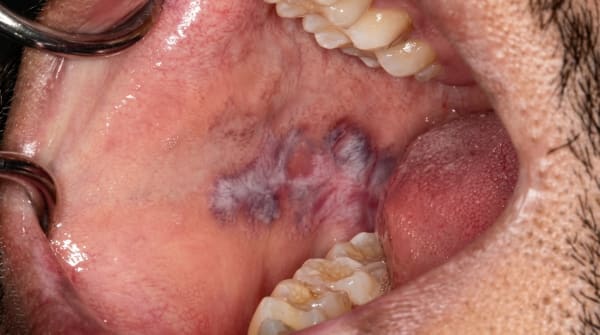
White mucosal plaques in long-standing renal failure (oral keratosis of renal failure), microscopically resembling hairy leukoplakia but without Epstein-Barr virus.
Gum overgrowth through ciclosporin-driven fibroblast proliferation, often dramatically worsened when calcium channel blockers are also taken.
Increased dental calculus in dialysis patients, partly from changes in saliva and partly from the high calcium and phosphate environment.
Enamel hypoplasia in children whose renal disease developed during tooth formation.
What might you notice?
What it looks like
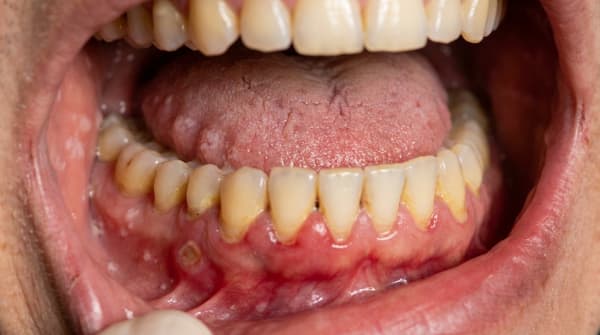
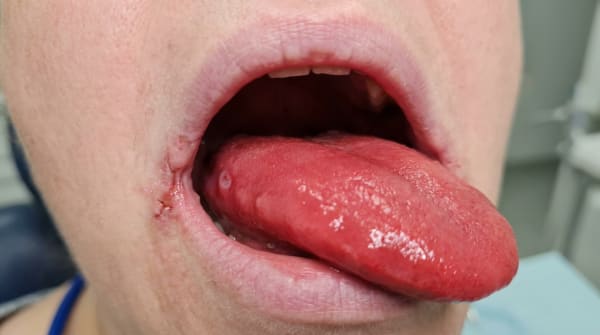
The textbooks describe a recognisable mix of findings:
Pale mucosa and gums from anaemia.
Dry mouth with thick or scant saliva.
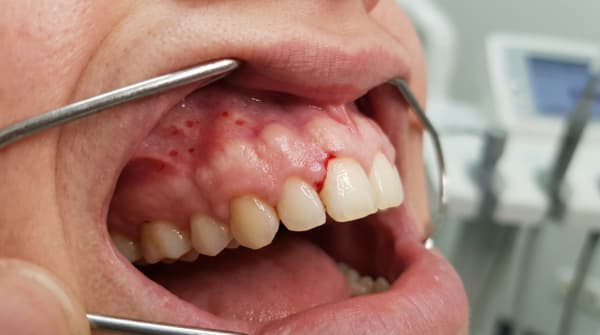
Petechiae or purpura (small bruises and pinpoint bleeding spots) from impaired platelet function or anticoagulation.
Mucosal ulceration in some patients.
Oral thrush or bacterial plaques in immunosuppressed patients.
Soft, wrinkled, leukoplakia-like white plaques of oral keratosis of renal failure, symmetrical and improving with dialysis.
Generalised firm pink gum overgrowth in transplant patients on ciclosporin (and calcium channel blockers).
Hairy leukoplakia rarely, in HIV-negative renal transplant patients on long-term immunosuppression.
Heavy calculus build-up on teeth.
Enamel hypoplasia and delayed tooth eruption in children with longstanding renal disease.
What it feels like
Symptoms vary widely:
Dry mouth, altered taste and a metallic or ammoniacal taste (the latter from urea breakdown in the mouth).
Bleeding gums when brushing, particularly during periods of poor dialysis or anticoagulation.
Soreness or burning with mucosal ulceration or thrush.
Difficulty wearing dentures comfortably as gum tissue thickens.
Self-consciousness about gum overgrowth in transplant patients.
Bone pain or jaw discomfort in advanced renal osteodystrophy.
What an X-ray might show
Imaging can reveal:
Loss of the lamina dura (the thin layer of bone visible around tooth roots on X-ray) in secondary hyperparathyroidism.
Giant-cell lesions of the jaw (similar to "brown tumours") as part of renal osteodystrophy.
Reduced bone density with a "ground-glass" appearance.
Enamel hypoplasia and delayed eruption in children.
Calcified deposits in salivary glands occasionally.
What happens at the dentist?
A dentist at ArtSmiles, typically as part of a routine dental check-up and clean, will commonly:
Take a careful medical history, including renal diagnosis, current dialysis schedule, medications and any planned transplantation.
Examine the mouth carefully under good light, looking for the typical changes described above.
Test pulp vitality and gingival health, paying particular attention to plaque, calculus and gum overgrowth.
Take X-rays when indicated, with particular attention to bony changes that might suggest renal osteodystrophy.
Coordinate timing of dental treatment with the dialysis schedule, typically the day after dialysis is preferred, when bleeding tendency is minimal.
Avoid certain drugs that are excreted through the kidneys, or adjust doses appropriately.
Take care with vascular access sites, avoiding blood pressure measurements or injections in the relevant arm.
Consider antibiotic prophylaxis for invasive dental procedures in dialysis patients with vascular access.
Liaise with the renal team for any significant procedure, particularly in transplant patients on multiple medications.
Manage drug-induced gingival overgrowth with meticulous oral hygiene and, where possible, discussion with the renal team about alternative medications.
Is this serious?
🟡 The oral findings themselves are not usually life-threatening, but they are markers of the underlying renal disease and they affect how dental care is delivered. The most important practical implications are bleeding risk, infection risk, drug interactions, and the need for very careful coordination between the dental and renal teams.
If you have chronic kidney disease, are on dialysis, or have had a transplant and have noticed mouth changes, it is worth booking an assessment so the dental aspects can be safely managed alongside your renal care.
Could it be something else?
Many of these findings have non-renal causes. The textbooks list these as the main differentials:
Oral manifestations of diabetes mellitus, many overlapping features, particularly periodontal disease and dry mouth.
Drug-induced gingival overgrowth, also caused by phenytoin (epilepsy) and calcium channel blockers in non-renal patients.
Immunosuppression-related oral candidiasis or hairy leukoplakia, also seen in HIV, organ transplant, and chemotherapy.
Anaemia-related mucosal changes, pallor, glossitis, angular cheilitis can occur in iron, B12 or folate deficiency.
Sjögren syndrome dry mouth, different cause but similar symptom.
Bisphosphonate-related osteonecrosis, sometimes seen in renal patients also taking these medications.
How is it treated?
Treatment is fundamentally about coordinated care.
At-home measures and habits:
Maintain meticulous oral hygiene with brushing twice a day and flossing daily, particularly important in transplant patients to prevent gingival overgrowth.
Use a soft-bristled toothbrush to limit gum bleeding.
Stay well hydrated within the limits of any fluid restriction.
Avoid alcohol-containing mouthwashes that can further dry the mouth.
Attend regular dental check-ups with shorter intervals during periods of active treatment or after transplantation.
Tell every clinician, including the dentist, about your renal status, dialysis schedule and current medications.
Professional steps your dentist may consider:
Coordinated dental care timing, typically the day after dialysis, with antibiotic cover in selected cases.
Careful drug selection, paracetamol over NSAIDs, dose adjustment of antibiotics excreted through kidneys, avoidance of intravenous routes where possible.
Regular professional scaling to manage the increased calculus typical in dialysis patients.
Antifungal therapy for any oral candidiasis (chronic hyperplastic candidiasis particularly in immunosuppressed patients).
Treatment of drug-induced gingival overgrowth, meticulous hygiene, occasional gingivectomy, and discussion with the renal team about alternative medications.
Management of xerostomia (the medical term for persistent dry mouth) with saliva substitutes, sugar-free gum and frequent sips of water.
Liaison with the nephrologist before any planned surgical procedure.
Specialist referral for complex jaw bone changes due to renal osteodystrophy.
A patient-centred approach matters particularly here. Patients with renal disease have a long, complex medical journey, and dental visits should fit into that journey rather than complicate it. Calm, coordinated and unhurried care is itself part of effective care, values that sit at the heart of our clinical philosophy.
What's the long-term outlook?
The outlook varies with the underlying renal condition. People who receive a successful transplant often see their renal-related oral findings improve markedly, though they then face the long-term consequences of immunosuppression. Dialysis patients can have well-managed dental health with regular professional care and meticulous home hygiene. Children with renal failure during tooth development may need life-long dental support to manage enamel hypoplasia (a developmental enamel defect with thin or pitted enamel) and other developmental effects. The single most important factor is ongoing, well-coordinated dental and renal care.
A note on this article
This article is for educational purposes only and does not constitute a clinical diagnosis. Please consult a registered dental practitioner for assessment and treatment advice.
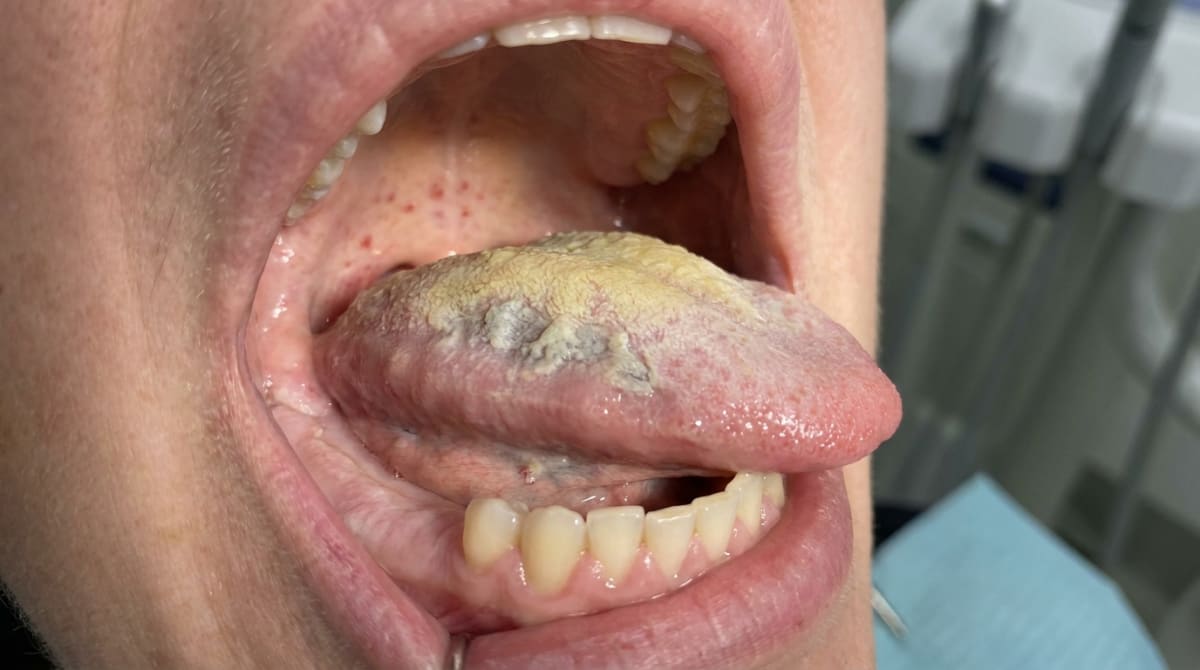
The cover image above is an AI-generated illustration based on the most common visible features of this condition described in clinical pathology references. It is not a photograph of a real case and should not be used to diagnose or rule out the condition in your own situation. If you are concerned about something you have noticed, please book an assessment with a registered dental practitioner.
References
Cawson, R. A., & Odell, E. W. (2017). Cawson's essentials of oral pathology and oral medicine (8th ed.). Elsevier. Chapter 32, Renal Disease, with Box 32.1 Aspects of renal disease, Box 32.2 Oral changes in renal failure, Box 32.3 Factors affecting dental management, RENAL OSTEODYSTROPHY AND SECONDARY HYPERPARATHYROIDISM and RENAL TRANSPLANTATION (ciclosporin gingival hyperplasia), pp. 415 to 416.
Cawson, R. A., & Odell, E. W. (2017). Cawson's essentials of oral pathology and oral medicine (8th ed.). Elsevier. Chapter 15, Soft Tissue Disease: Oral Keratosis of Renal Failure, p. 258.
Neville, B. W., Damm, D. D., Allen, C. M., & Chi, A. C. (2023). Oral and maxillofacial pathology (5th ed.). Elsevier. Cross-reference for oral manifestations of renal failure and renal osteodystrophy.
Frequently asked questions
What oral findings can renal disease cause?
Chronic kidney disease can cause pale lining of the mouth (anaemia of CKD), uraemic breath (ammonia-like odour) and uraemic stomatitis with white pseudomembranes, dry mouth, taste disturbance, increased calculus build-up, enamel defects in children with childhood-onset kidney disease, and bleeding gums. Transplant patients on ciclosporin often develop drug-induced gingival overgrowth.
How does kidney disease affect dental treatment?
Bleeding is increased because of platelet dysfunction and any anticoagulation for dialysis. Healing may be slower. Many medications (some antibiotics, NSAIDs, opioids) need dose adjustment. Dialysis days are usually avoided for elective treatment, with appointments scheduled on non-dialysis days. Transplant patients are immunosuppressed and need particular attention to oral hygiene and infection prevention.
Is dental work safe before a kidney transplant?
Yes — and recommended. A thorough dental check before transplant identifies and treats infection or potential infection (active caries, periodontal disease, unrestorable teeth). Sources of oral sepsis are best dealt with before immunosuppression begins, because infections are much harder to manage after transplant.
Do I need antibiotic prophylaxis for dental work?
Routine antibiotic prophylaxis is not recommended for dialysis access (fistulas) or for kidney transplant alone. Prophylaxis is reserved for specific high-risk situations (e.g., recent transplant on heavy immunosuppression with significant infection risk, certain vascular grafts). Your nephrologist and dentist will agree on a plan together.