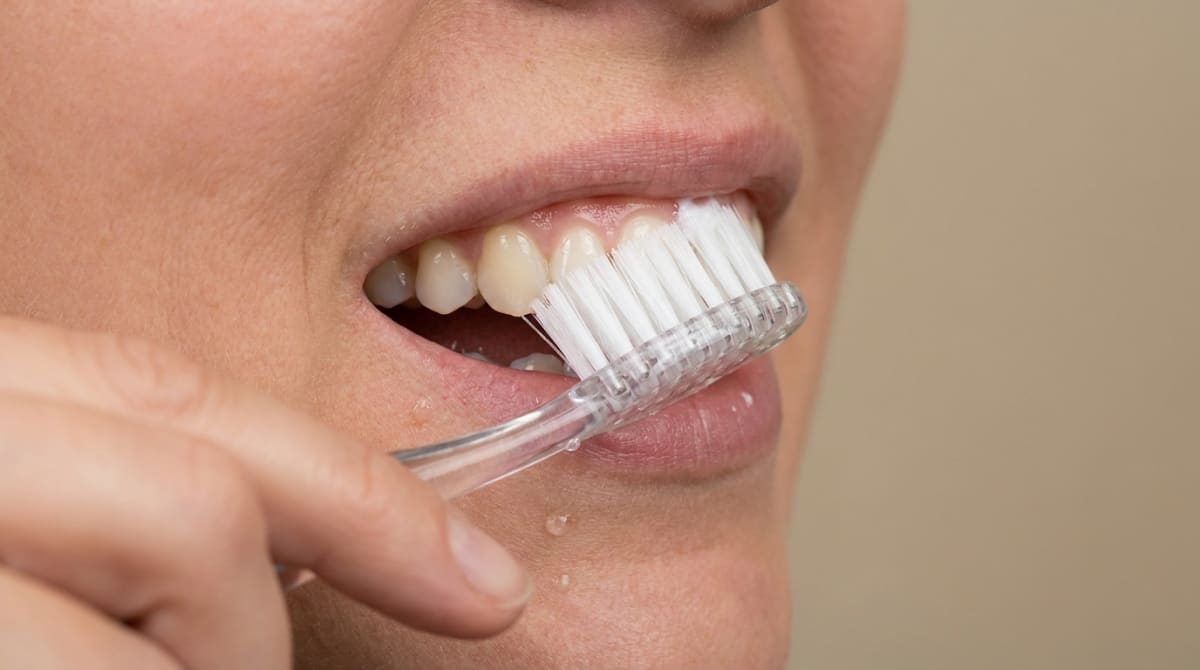
Most people brush the way they did as children, and most are doing at least one thing that's costing them enamel (the hard outer layer of the tooth) or letting plaque (the soft, sticky film of bacteria on the tooth surface) sit at the gumline (the edge where your gums meet your teeth). This guide walks through how to brush your teeth properly, lined up with current Australian guidance and current evidence. You'll learn the modified Bass technique (a brushing technique that angles the bristles into the gumline), how much fluoride (the active ingredient in toothpaste that strengthens enamel and prevents decay) toothpaste to use at each age, why you shouldn't rinse with water afterwards, and when to see a dentist. It is written for adults, with short sections for children, braces, gum disease, dry mouth, dentures, post-treatment care, and pregnancy.
Quick summary
Question | Short answer |
|---|---|
Bottom line | Twice a day, two minutes, soft brush, fluoride paste, modified Bass technique, spit don't rinse. |
Why bother | Brushing helps prevent tooth decay and gingivitis (the early, reversible stage of gum disease where the gums are inflamed but no permanent damage has happened yet). Both are bacterial diseases, not just hygiene problems. |
How often, how much | Twice daily. Pea-size standard paste from age 6, pea-size low-fluoride paste from 18 months to 6, water only under 18 months. |
Who needs to do it differently | Children, people with braces, gum disease, dry mouth, after surgery, and during pregnancy. See Section 6. |
Based on | ADA Australia guidance, Cochrane reviews, and Australian Government health resources. |
The 60-second answer
Brush twice a day for two minutes with a soft-bristled toothbrush and fluoride toothpaste. Use the modified Bass technique: angle the bristles at 45 degrees to your gumline, then use short, gentle strokes over two teeth at a time. Cover the outer, inner, and chewing surfaces, and finish by gently brushing your tongue.
When you're done, spit the excess paste out, but don't rinse with water. The thin film of fluoride left behind is what protects your enamel for the next few hours. Rinse it away and you lose most of the benefit.
Why it matters
Brushing is disease prevention, not cosmetic care. The sticky layer on your teeth is a living bacterial community called plaque. Left alone, it produces acid that softens enamel and inflammatory by-products that irritate gums. That's how dental caries (tooth decay) forms and how gingivitis starts. Both conditions are common, both are largely preventable, and both begin silently.
At ArtSmiles we see the same pattern: most early tooth decay and gum disease we treat could have been slowed or stopped with consistent, correct brushing and daily interdental (between adjacent teeth) cleaning. The Cochrane evidence base supports this preventive role: regular plaque disruption reduces gingival inflammation over time [1]. So the goal of brushing isn't a clean feeling. It's keeping the bacterial load low enough that your tissues stay healthy.
How to actually brush
Choosing a brush
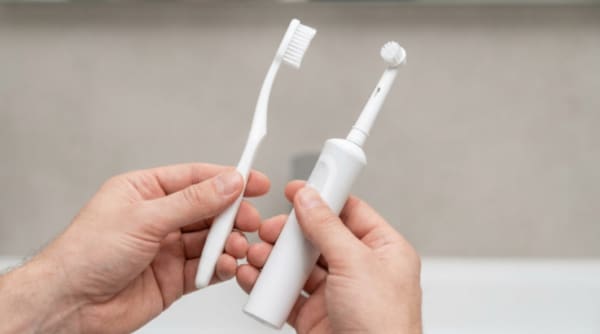
Pick a soft-bristled brush with a small head, around 25 mm long for adults, so it can reach the back teeth comfortably [3]. Hard bristles don't clean better. They wear down enamel and push gums back. Both manual and powered brushes work well when used correctly. Compared with a manual brush, powered brushes (especially oscillating-rotating ones) reduce plaque by about 11% and gingivitis by about 6% at one to three months, and around 21% and 11% beyond three months [1]. Replace your brush, or the head, every three months, or sooner if the bristles splay [3].
Choosing toothpaste
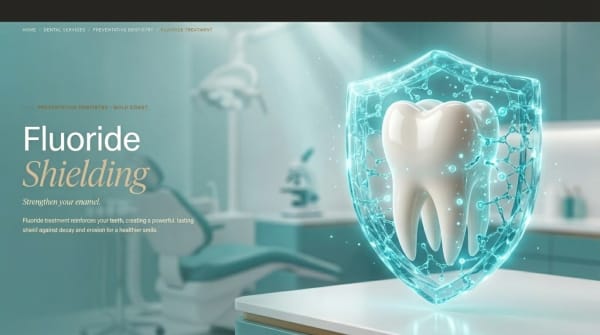
Fluoride is the active ingredient that matters. Cochrane evidence shows fluoride toothpaste reduces tooth decay compared with non-fluoride paste, with stronger benefit at higher concentrations [4]. For adults and children aged 6 and over, use a standard fluoride paste at 1,000 to 1,500 ppm. From 18 months to 6 years, use a pea-sized amount of low-fluoride children's paste and supervise brushing [5]. Under 18 months, brush with a soft children's brush and water only [5]. Some Australian guidance recommends starting low-fluoride paste from 18 months on individual dentist advice [3], so check at your child's first visit.
The 6-step technique (modified Bass)
Follow this order so you don't miss surfaces [3]:
Angle the bristles at 45 degrees to your gumline, so they sit just into the crevice where gum meets tooth.
Use short, gentle vibratory or small circular strokes over two teeth at a time, about 10 to 15 seconds per area.
Brush the outer surfaces first, working along the upper arch, then the lower.
Brush the inner surfaces. For the inside of your front teeth, tilt the brush vertically and use short up-and-down strokes.
Brush the chewing surfaces with short back-and-forth strokes.
Finish by gently brushing your tongue from back to front to reduce bacteria and freshen breath.
Pressure should feel light. If the bristles splay against the tooth, you're pushing too hard.
The video shows how to brush properly using the Bass technique. The toothbrush must be positioned in angle 45 degrees at the gum line, executing gentle short movements to remove the plaque. Avoid long movements in the outer part of the teeth, as they can cause dental recession.
Duration and frequency
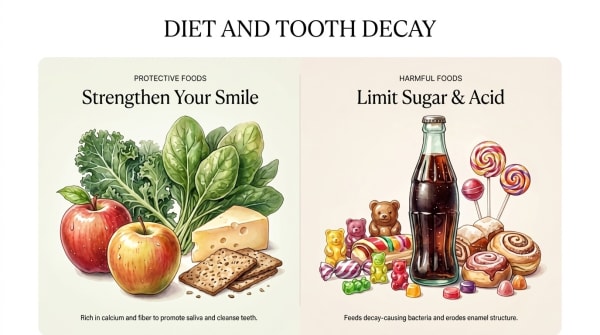
Aim for two minutes, twice a day [3]. That works out to about 30 seconds per quadrant, which is longer than most people think. The night-time brush matters more than the morning one, because saliva flow drops during sleep and protective rinsing slows down. Brush before breakfast, or wait 30 minutes after acidic food or drink so softened enamel can recover.
Spit, don't rinse
After brushing, spit out the excess foam, but don't rinse your mouth with water. Leaving a thin film of fluoride toothpaste on your enamel gives the fluoride more time to strengthen your teeth [6]. Rinsing washes that protective film straight down the sink and removes most of the benefit you just spent two minutes creating. If you like using mouthwash, use it at a different time of day, for example after lunch, so it doesn't interfere with the post-brushing fluoride layer. The "fresh feel" you get from rinsing is short-lived. The fluoride effect lasts for hours.
Common mistakes and myths
Myth: Harder brushing cleans better. Reality: Plaque is loose and removed by contact, not force. Heavy pressure causes gum recession and abrasion of the tooth surface near the gumline.
Myth: If my gums bleed, I should brush less. Reality: Bleeding usually means inflammation from plaque. Gentle, thorough brushing and daily interdental cleaning typically settles it within 7 to 14 days.
Myth: Mouthwash can replace brushing. Reality: No rinse can remove a biofilm (a thin sticky layer of bacteria that organises itself on surfaces, including tooth surfaces). Plaque has to be physically disrupted by a brush and an interdental tool [2].
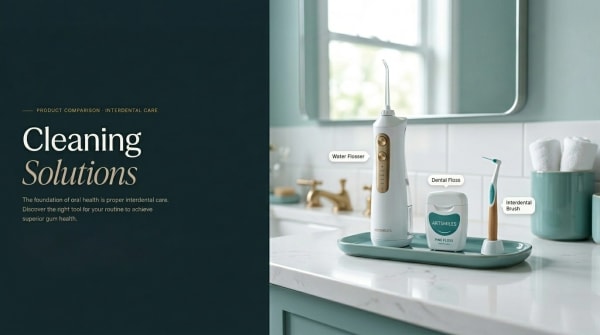
Myth: Brushing alone is enough. Reality: A toothbrush can't reach the surfaces between teeth. Daily interdental cleaning is required, which is why brushing alone is not enough [2].
Myth: Whitening toothpaste replaces fluoride paste. Reality: Most whitening claims rely on abrasives, not bleaching. Choose a fluoride paste first. Whitening is a separate decision.
Myth: Rinsing with water gives a cleaner finish. Reality: It washes away the fluoride film. See the spit-don't-rinse note above.
Who needs to do this differently
Children (0 to 6, 6 to 12). Under 18 months: brush with water on a soft children's brush, no paste. From 18 months to 6: pea-sized low-fluoride paste, supervised. From 6 onward: pea-sized standard fluoride paste [5]. Adults should brush for a child or supervise until manual dexterity is reliable, around age 8.
Braces and clear aligners. Brush after every meal where possible. With braces, angle bristles above and below each bracket. With aligners, brush before reinserting them so you don't trap sugar against the enamel.
Gum disease (gingivitis or stable periodontitis (advanced gum disease, where the bone supporting the tooth is being lost)). Use a soft brush, modified Bass technique, and add daily interdental cleaning. If you've been treated for periodontitis, regular periodontal maintenance appointments are part of staying stable.
Dry mouth (xerostomia). Reduced saliva raises caries risk. Brush twice daily, consider a higher-fluoride paste on dentist advice, and sip water often. Avoid alcohol-based mouthwashes.
Denture wearers. Brush any remaining teeth as usual. Clean dentures with a denture brush and mild soap, not regular toothpaste, which is too abrasive. Soak overnight in a denture-cleaning solution.
Post-treatment (extraction, implant, periodontal therapy). Follow the specific instructions you were given. Usually that means avoiding the surgical site for the first 24 hours, then brushing very gently around it.
Pregnancy gingivitis. Hormonal changes make gums more reactive. Don't reduce brushing. Stay gentle, keep up interdental cleaning, and tell your dentist you're pregnant.
When to see a dentist
Some signs mean home care alone won't be enough. Book an appointment if you notice any of the following, and see oral health red flags for the full list.
Gums that bleed for more than two weeks despite gentle, regular brushing.
Persistent bad breath or a bad taste that doesn't shift.
Tooth sensitivity that lasts more than a few days.
Visible tartar (the hardened, calcified version of plaque) (hard yellow or brown deposits at the gumline).
Loose teeth, gum recession, or pus around a tooth. These are urgent and may indicate gum disease.
Concerned about bleeding gums or sensitivity? If your gums have been bleeding for more than two weeks despite gentle brushing, or a tooth's been sensitive for days, a short check-up looks for early decay, gum disease, or a technique issue. Book an assessment
Frequently asked
How long should I brush my teeth?
Two minutes, twice a day [3]. That's roughly 30 seconds per quadrant of your mouth: upper right, upper left, lower left, lower right. Most people brush for around 45 to 60 seconds without realising, so a timer or the built-in timer on a powered brush helps. The night brush is the one that matters most, because saliva flow drops during sleep and bacteria have a longer window to cause damage.
Should I use an electric or manual toothbrush?
Both work well when used correctly. Compared with a manual brush, the Cochrane evidence shows powered brushes (especially oscillating-rotating ones) reduce plaque by about 11% and gingivitis by about 6% at one to three months, rising to about 21% and 11% beyond three months [1]. If you find it hard to brush for a full two minutes, struggle with technique, or have braces or limited dexterity, a powered brush often helps. A soft manual brush, used properly, still does the job.
How often should I replace my toothbrush?
Every three months, or sooner if the bristles start to splay or look frayed [3]. Worn bristles don't conform to tooth surfaces and can be rougher on gums. Replace your brush, or your powered brush head, after a cold or flu so you're not reintroducing bacteria. If your brush looks worn well before three months, you may be pressing too hard. Try a lighter grip and let the bristles do the work.
Why shouldn't I rinse with water after brushing?
Because rinsing washes away the fluoride that protects your teeth. After you brush, a thin film of fluoride toothpaste stays on the enamel, and Australian guidance is to leave it there so the fluoride has more time to strengthen your teeth [6]. Spitting removes the excess foam without removing that protective layer. Rinsing with water, or with mouthwash straight after, washes the layer down the sink. If you want to use mouthwash, use it at a different time, such as after lunch.
Should I brush before or after breakfast?
Generally, brush before breakfast, or wait at least 30 minutes after eating. Acidic foods and drinks (citrus, juice, coffee, sparkling water) temporarily soften enamel. Brushing straight away can wear that softened layer down. Brushing before breakfast also clears the overnight bacterial build-up before it meets food. If you prefer brushing after breakfast, rinse with water first and wait half an hour, so enamel has time to reharden.
A note on this article
This article is general educational information from the ArtSmiles Dental Library. It is not individual clinical advice and isn't a substitute for an in-person assessment. Your situation, including medical history, medications, and gum or tooth condition, may change what's right for you. If anything in this article doesn't match what your dentist has told you, follow your dentist. Reviewed by Dr Cristian Dunker, BDS, on 5 May 2026.
References
Yaacob, M., Worthington, H. V., Deacon, S. A., Deery, C., Walmsley, A. D., Robinson, P. G., & Glenny, A. M. (2014). Powered versus manual toothbrushing for oral health. Cochrane Database of Systematic Reviews, (6), CD002281. https://www.cochranelibrary.com/cdsr/doi/10.1002/14651858.CD002281.pub3/full
Worthington, H. V., MacDonald, L., Poklepovic Pericic, T., Sambunjak, D., Johnson, T. M., Imai, P., & Clarkson, J. E. (2019). Home use of interdental cleaning devices, in addition to toothbrushing, for preventing and controlling periodontal diseases and dental caries. Cochrane Database of Systematic Reviews, (4), CD012018. https://www.cochranelibrary.com/cdsr/doi/10.1002/14651858.CD012018.pub2/full
Australian Dental Association. (n.d.). Brushing teeth. teeth.org.au. https://www.teeth.org.au/brushing-teeth
Walsh, T., Worthington, H. V., Glenny, A. M., Marinho, V. C. C., & Jeroncic, A. (2019). Fluoride toothpastes of different concentrations for preventing dental caries. Cochrane Database of Systematic Reviews, (3), CD007868. https://www.cochranelibrary.com/cdsr/doi/10.1002/14651858.CD007868.pub3/full
Better Health Channel. (n.d.). Toothbrushing for children. Victorian Government. https://www.betterhealth.vic.gov.au/health/conditionsandtreatments/toothbrushing-children
Healthdirect Australia. (n.d.). Teeth cleaning. https://www.healthdirect.gov.au/teeth-cleaning
Written by Dr Cristian Dunker, BDS. Medically reviewed by Dr Cristian Dunker on 5 May 2026.