Compiled from clinical pathology references. Medically reviewed by Dr Cristian Dunker, Principal Dentist at ArtSmiles Cosmetic Dentistry.
Quick summary
Also called | Black hairy tongue, coated tongue, lingua villosa, lingua villosa nigra, lingua nigra |
How urgent? | 🟢 Not dangerous, the appearance is alarming but the condition is harmless and reversible with hygiene |
Common or rare? | Common, adult prevalence ranges from about 0.5% to 11.3% depending on the population |
Who it affects | Mostly adults, heavy smokers, people on certain antibiotics or peroxide mouthwashes, or those with reduced saliva flow |
Who treats it | General dentist, improvement usually starts at home with tongue brushing and removing the trigger |
Based on | Neville, Regezi, Cawson, Laskaris |
What is it?
Hairy tongue is a condition in which the tiny projections on the upper surface of the tongue, called the filiform papillae, become much longer than usual and accumulate keratin (the tough protein that makes up the hard surface layer of skin and the tongue's papillae), bacteria and food debris. The result is a thick, matted layer that looks and feels like fine hair. When the surface is stained brown, yellow or black by pigment-producing bacteria, tobacco or food, it is often called "black hairy tongue" (lingua villosa nigra). Despite its dramatic appearance, hairy tongue is benign, it is not an infection, not contagious, and not a sign of cancer.
Who tends to get it?
Hairy tongue is mostly a condition of adults. Children very rarely develop it. Reported prevalence in adults ranges from around 0.5% to 11.3%, depending on the population studied and the strictness of the criteria. It is more common in:
Heavy smokers, the most consistently identified group across the textbooks.
People on broad-spectrum antibiotics or systemic corticosteroids.
People who use oxygenating mouthwashes containing hydrogen peroxide, sodium perborate or carbamide peroxide.
People with poor oral hygiene or general medical debilitation.
People who have had radiotherapy to the head and neck region, especially when this leads to a dry mouth.
People recovering from a hematopoietic stem cell transplant (a bone-marrow transplant).
People who frequently use antiseptic lozenges or strong mouthwashes.
There is no clear sex predilection in the textbooks, although heavy smoking habits influence which groups are most often affected.
What causes it?
The exact cause of hairy tongue is uncertain, but the central problem is an imbalance between how fast keratin is produced on the filiform papillae and how fast it is shed. When keratin is produced faster than it is shed, or when shedding slows down, the papillae elongate, becoming a soft "fur" that traps bacteria, fungi, food and debris.
Several factors are recognised as triggers or contributors:
Smoking, particularly heavy smoking, is the single factor most consistently linked to hairy tongue.
Broad-spectrum antibiotics, especially when used for several days. The antibiotic linezolid has been specifically reported to cause transient hairy tongue.
Systemic corticosteroids.
Mouthwashes containing oxygenating agents, hydrogen peroxide, sodium perborate, carbamide peroxide. Excessive use of antiseptic mouthwashes more broadly has also been implicated.
Drugs that reduce saliva flow (causing xerostomia, a dry mouth).
Radiotherapy to the head and neck.
Poor oral hygiene and general medical debilitation.
Diet that is mostly soft and lacks abrasive mechanical cleaning of the tongue.
Emotional stress, listed in some texts as a contributing factor.
Candida albicans (a yeast that lives in small amounts in most mouths) overgrowth, sometimes co-exists with hairy tongue and may contribute.
The dark colour, when present, comes from pigment-producing bacteria and chromogenic (colour-producing) microorganisms colonising the elongated papillae, and from staining by tobacco, coffee, tea or other dark foods. It is not the tongue itself that is "going black", it is the surface biofilm (a sticky layer of bacteria coating a surface).
How does it develop?
Two changes happen at the same time. First, the filiform papillae stop shedding their normal surface keratin at the usual rate, so they grow longer over weeks or months. They can reach up to about 5 millimetres in length. Second, this thick, matted carpet of keratin traps bacteria and yeasts on its surface, especially organisms that produce dark pigments. Anything that further reduces saliva flow, alters the oral bacterial balance, or rinses normal oral defences (such as repeated peroxide mouthwashes) tips the system further toward this build-up. Under the microscope, the papillae appear markedly elongated and over-keratinised, with bacteria sitting on the surface and a mild inflammatory reaction in the deeper tissue.
What might you notice?
What it looks like
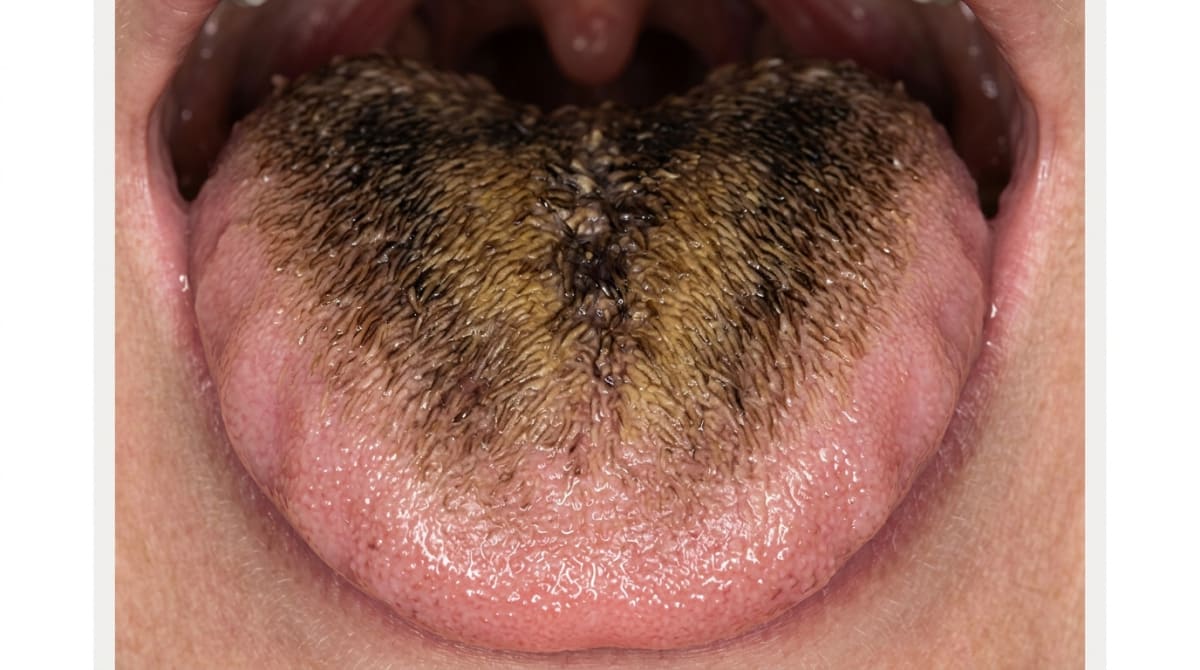
The classic appearance is a thick, hairlike or matted carpet of papillae across the central upper surface of the tongue. Key visual features:
The change is most prominent in the midline just in front of the V-shaped row of larger papillae (the circumvallate papillae) at the back of the tongue.
The lateral and anterior edges of the tongue are usually spared.
The colour can range from white through tan and brown to deep black. Darker colours come from pigment-producing bacteria, tobacco and foods.
Individual elongated papillae can sometimes be lifted with a piece of gauze or a dental instrument.
What it feels like
Most people with hairy tongue have no symptoms at all. When symptoms do occur they are usually mild:
A gagging or tickling sensation at the back of the tongue when the papillae are very long.
A bad or unpleasant taste, or bad breath (halitosis) from the trapped debris and bacteria.
A furry feel when the tongue is moved against the palate.
Pain, ulceration or bleeding are not features of hairy tongue. If those are present, the cause is likely something else.
What an X-ray might show
X-rays are not used to diagnose hairy tongue. The diagnosis is made on appearance alone.
What happens at the dentist?
Hairy tongue is usually picked up at a routine examination, often as part of a dental check-up and clean at ArtSmiles. The textbooks describe a fairly consistent approach:
Examine the tongue carefully, noting how far back the change extends, the colour, and whether the lateral borders are involved.
Take a careful history about smoking, recent antibiotics, mouthwash use, peroxide-containing whitening products, and any history of radiotherapy or chemotherapy.
Lift a few elongated papillae with gauze or a dental instrument to confirm the hairlike change.
Look for any signs of overlying yeast (candida) infection, especially if the patient is on antibiotics or has dry mouth.
Check oral hygiene and the general state of the mouth, since dry, neglected mouths are far more prone to develop hairy tongue.
Reassure, the textbooks all emphasise that one of the most useful steps is explaining that the appearance is benign and reversible.
A biopsy is almost never required because the clinical appearance is characteristic. Cytology and culture studies add little.
Is this serious?
🟢 Hairy tongue is benign. It is not a sign of cancer, not contagious, and does not progress to anything dangerous. The textbooks describe it as primarily a cosmetic problem, with bad breath being the most common functional concern. With removal of the trigger and good tongue hygiene, the tongue typically returns to normal.
Could it be something else?
Several conditions can produce a darkened, coated or hairy-looking tongue. The textbooks list these as the main differentials:
Hairy leukoplakia, a white, corrugated patch typically on the lateral border of the tongue (the side, not the centre). It is caused by Epstein-Barr virus (the virus that causes glandular fever) and usually appears in people with HIV infection or other forms of immunosuppression (a weakened immune system). Its location and inability to be wiped or brushed off distinguishes it from hairy tongue.
Pseudomembranous oral candidiasis (thrush), creamy-white plaques that can be wiped off, leaving red mucosa underneath. Hairy tongue does not wipe off.
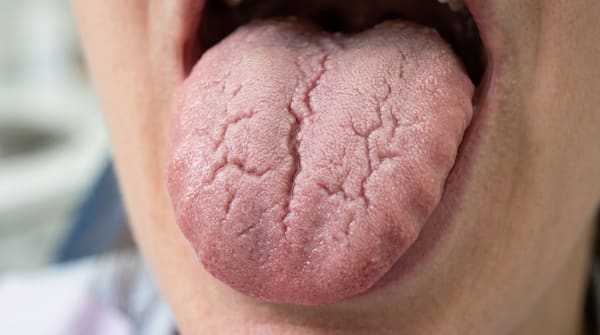
Coated tongue, desquamated (shed) cells, bacteria and food debris accumulate on the dorsum (the upper surface of the tongue), but without elongated hairlike papillae. It is often seen in people who have a sore mouth or a soft diet.
Furred tongue, a thinner whitish-yellow coating that often appears in fevers (such as scarlet fever or primary herpetic gingivostomatitis), dehydration, or where eating is painful. The papillae are only slightly elongated.
Bismuth staining, a transitory black stain on the back of the tongue from bismuth-containing stomach medicines, which fades within days of stopping the medication. There is no papillary elongation.
Black tongue from antiseptic lozenges or iron supplements, surface staining only, with normal papillae underneath.
Hyperpigmentation from medications (such as minocycline), a more even diffuse colour change, not a furry layer.
How is it treated?
The textbooks all agree on the same general approach: identify and remove the trigger, then mechanically clean the tongue. With both steps, the appearance usually clears within a few weeks.
At-home measures that may help:
Brush the upper surface of the tongue twice a day with a soft toothbrush or a tongue scraper. Reach as far back as is comfortable without provoking gagging. This is the single most important step.
Reduce or stop smoking. Smoking is the most consistently identified trigger.
Stop using oxygenating mouthwashes containing hydrogen peroxide, sodium perborate or carbamide peroxide, and review whether you really need an antiseptic mouthwash daily.
Stay well hydrated and use a saliva-substitute spray or gel if your mouth is dry.
Brush with a paste of sodium bicarbonate (baking soda) and water for a few weeks, this is suggested specifically by Regezi as a useful home measure.
Improve general oral hygiene, including brushing teeth twice a day and flossing.
Professional steps your dentist may consider:
Reviewing recent medications with your GP, especially long courses of broad-spectrum antibiotics or systemic corticosteroids, to see whether any can be changed.
Treating overlying candida with a topical antifungal such as nystatin if a yeast component is identified.
Demonstrating tongue scraping technique so you can do it effectively at home.
Managing dry mouth if reduced saliva is contributing, for example, supporting a patient with xerostomia after radiotherapy.
Avoiding harsh chemical agents, older keratolytic (substances that break down hardened skin) agents such as podophyllin have been used historically, but the textbooks specifically caution against their use in everyday practice for safety reasons.
A warm, patient-centred approach matters here too. Many people with hairy tongue arrive at the dentist worried that the dark colour signals something sinister. Clear explanation and reassurance are themselves part of effective care, values that sit at the heart of our clinical philosophy.
What's the long-term outlook?
The outlook is excellent. Hairy tongue is benign and self-limiting once the trigger is removed and the tongue is regularly cleaned. Most people see clear improvement within a few weeks of consistent tongue brushing and trigger removal. Recurrence is possible if the trigger returns, for example, if heavy smoking continues, but the condition itself does not progress to anything dangerous, and the tongue can be expected to return to its normal appearance with proper care.
A note on this article
This article is for educational purposes only and does not constitute a clinical diagnosis. Please consult a registered dental practitioner for assessment and treatment advice.
The cover image above is an AI-generated illustration based on the most common visible features of this condition described in clinical pathology references. It is not a photograph of a real case and should not be used to diagnose or rule out the condition in your own situation. If you are concerned about something you have noticed, please book an assessment with a registered dental practitioner.
References
Neville, B. W., Damm, D. D., Allen, C. M., & Chi, A. C. (2023). Oral and maxillofacial pathology (5th ed.). Elsevier. Chapter 1, Developmental Defects of the Oral and Maxillofacial Region: Hairy Tongue (Black Hairy Tongue; Coated Tongue), pp. 12-13.
Regezi, J. A., Sciubba, J. J., & Jordan, R. C. K. (2017). Oral pathology: Clinical pathologic correlations (7th ed.). Elsevier. Chapter 3, White Lesions: Hairy Tongue (Black hairy tongue), pp. 89-90.
Cawson, R. A., & Odell, E. W. (2017). Cawson's essentials of oral pathology and oral medicine (8th ed.). Elsevier. Chapter 14, Soft Tissue Disease: Hairy Tongue, pp. 248-249.
Laskaris, G. Pocket atlas of oral diseases. Thieme. Chapter 12, Diseases of the Tongue: Hairy Tongue, pp. 94-95.
Frequently asked questions
What is hairy tongue?
Hairy tongue (also called lingua villosa) is a benign condition where the small finger-like projections (filiform papillae) on the back of the tongue elongate and become discoloured, giving a furry, matted appearance. The colour can be white, yellow, brown, green or black depending on staining.
What causes black hairy tongue?
The black colour usually comes from bacterial pigments, food, drinks (coffee, tea, red wine), tobacco, and chromogenic bacteria. Triggers include poor oral hygiene, smoking, dry mouth, broad-spectrum antibiotics, soft diet without enough mechanical cleansing, mouthwashes containing oxidising agents (chlorhexidine, hydrogen peroxide), bismuth-containing products like Pepto-Bismol, and radiotherapy.
Is hairy tongue serious?
No. Hairy tongue is benign and not contagious. The main concerns are cosmetic, bad breath, an unpleasant metallic taste, and occasional gagging from elongated papillae. It is not the same as hairy leukoplakia (a different condition associated with EBV and HIV).
How is hairy tongue treated?
Treatment is by improving oral hygiene — brushing the top of the tongue twice daily with a soft toothbrush or tongue scraper, increasing water intake, eating a more fibrous diet, and avoiding the trigger products listed above. Most cases resolve in a few weeks. Severe persistent cases occasionally need topical retinoids or surgical excision of elongated papillae.