Most cavities do not start with pain.
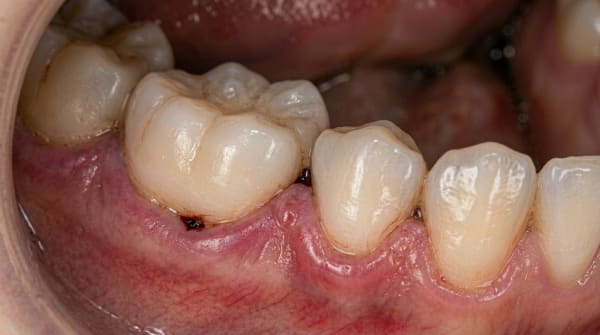
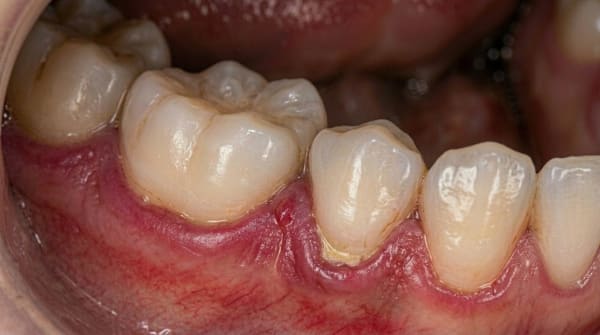
They begin quietly, often in areas you cannot easily see — between teeth, under the gumline, or beneath old fillings. Because there is no discomfort at first, many people assume nothing serious is happening.
The problem is that tooth decay does not stop on its own.
It follows a predictable path. Once it reaches deeper layers of the tooth, treatment becomes more involved, more invasive, and more costly.
This article explains how cavities develop, why they often go unnoticed, and what happens inside the tooth when decay is left untreated.
If you have noticed sensitivity, dark spots, or fillings that feel rough or worn, the team at ArtSmiles Gold Coast can help identify problems early.
How Cavities Start: The Silent Early Stage
A cavity is not simply a hole in the tooth. It is an ongoing disease process driven by bacteria.
When bacteria feed on sugars, they produce acids that slowly weaken the enamel. This happens long before any visible damage appears. Research confirms that early enamel lesions can exist for months or even years without symptoms (Selwitz et al., 2007).
In this stage:
There is no pain
The tooth often looks intact
White or chalky spots may appear
The process is still reversible
With professional fluoride application, sealants, and improved home care, early enamel damage can often be stopped or reversed (ten Cate, 1999).
Once decay moves beyond enamel, the tooth structure begins to break down.
When Decay Reaches Dentin: Progression Accelerates
Dentin is the softer layer beneath enamel. Once decay reaches this level, it spreads faster (Kidd & Fejerskov, 2004).
This happens because:
Dentin is significantly softer than enamel
It contains microscopic channels leading toward the nerve
Bacteria can spread sideways under the surface
At this stage, some people may notice:
Sensitivity to cold or sweet foods
Occasional discomfort when chewing
A dark shadow between teeth
Many patients still feel nothing at all. Dentin decay can progress silently, and by the time symptoms appear, the cavity may already be extensive.
Why Cavities Usually Do Not Hurt Until Late
The nerve of the tooth sits deep in the centre and is protected by hard tissue.
As long as decay stays away from the nerve, pain is often minimal or absent. Pain typically begins when:
Decay is very deep
Bacteria irritate the nerve
Pressure builds inside the tooth
Inflammation increases
The weakened tooth structure starts to crack
Once bacterial products reach the pulp, the body mounts an inflammatory response that can progress from reversible irritation to irreversible damage (Bergenholtz, 1990).
This is why small cavities can be treated with simple fillings, while advanced decay may require:
Pulp therapy
A crown
Extraction, if the tooth cannot be saved
Earlier treatment is always simpler and more affordable.
What Happens Inside the Tooth When You Wait
Waiting does not pause decay. Once enamel is breached, the tooth cannot repair itself.
Untreated cavities usually follow this progression:
Stage 1: Enamel decay
Silent and reversible
Stage 2: Dentin decay
Faster progression, minimal symptoms
Stage 3: Pulp irritation
Sensitivity to cold and occasional pain
Stage 4: Pulp infection
Lingering or spontaneous pain, often at night
Stage 5: Abscess formation
Severe pain, swelling, possible fever, risk of infection spread
At later stages, emergency treatment is often required. Research on managing carious lesions emphasises that earlier intervention leads to better outcomes and less tooth structure lost (Schwendicke et al., 2021).
How ArtSmiles Treats and Prevents Cavities
At ArtSmiles, cavity care focuses on early detection and conservative treatment.
Our approach includes:
Accurate diagnosis
Digital X-rays and clinical photography reveal decay not visible to the eye
Minimally invasive fillings
Decay is removed conservatively and restored with strong, aesthetic materials. Studies support that preserving as much healthy tooth structure as possible improves long-term outcomes (Bjørndal et al., 2010).
Personalised prevention
Guidance on brushing technique, flossing, and dietary habits
High-risk management
For patients prone to cavities, we may recommend:
High-fluoride toothpaste
Sealants
Saliva testing
Regular monitoring
This approach reduces future decay and protects long-term tooth health.
When to See a Dentist About a Cavity
Book a dental assessment if you notice:
Sensitivity to sweet or cold foods
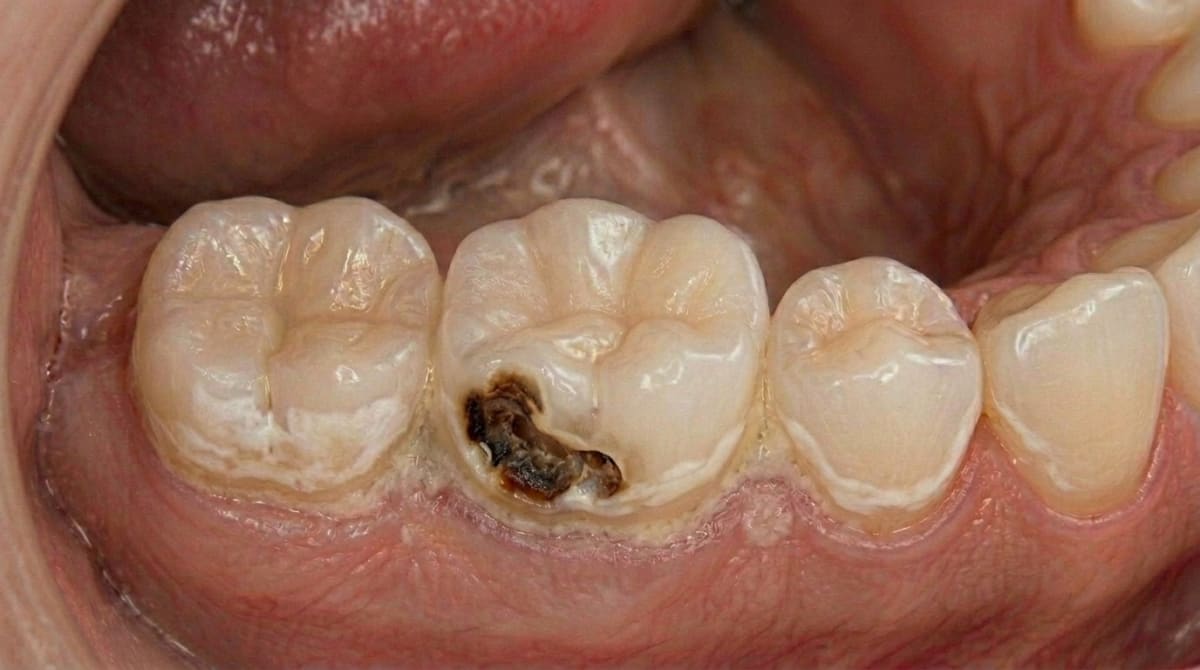
Dark spots or shadows on teeth
Rough or pitted surfaces
Persistent bad breath
Food getting trapped repeatedly
A chipped or broken filling
Even if you are unsure, checking early is always safer. Early diagnosis prevents avoidable dental emergencies.
Understanding Your Next Steps
Cavities rarely hurt until the damage is advanced. In the early stages, decay is often reversible or easy to treat. Once bacteria reach deeper layers, the tooth weakens, the nerve becomes irritated, and treatment becomes more involved.
If it has been a while since your last check-up, or you have noticed subtle changes, now is the right time to act. Book an appointment with ArtSmiles to have your teeth checked before small problems become bigger ones.
Scientific References
Selwitz RH, Ismail AI, Pitts NB. Dental caries. The Lancet. 2007;369(9555):51-59. PubMed
ten Cate JM. Fluoride mechanisms. Dent Clin North Am. 1999;43(4):713-742. PubMed
Kidd EA, Fejerskov O. What constitutes dental caries? Histopathology of carious enamel and dentin related to the action of cariogenic biofilms. J Dent Res. 2004;83(Spec No C):C35-38. PubMed
Bjørndal L, et al. Treatment of deep caries lesions in adults: randomized clinical trials. Eur J Oral Sci. 2010;118(3):290-297. PubMed
Schwendicke F, et al. Interventions for treating cavitated or dentine carious lesions. Cochrane Database Syst Rev. 2021;7:CD013039. PubMed
Bergenholtz G. Pathogenic mechanisms in pulpal disease. J Endod. 1990;16(2):98-101. PubMed