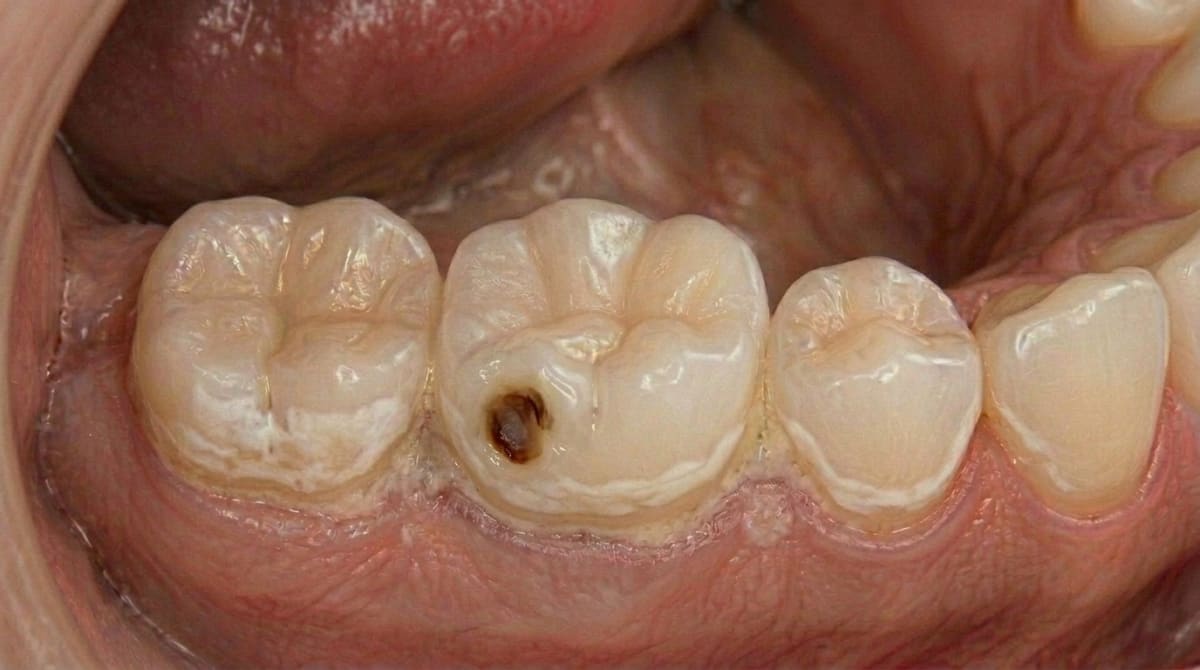
Compiled from clinical pathology references. Medically reviewed by Dr Cristian Dunker, Principal Dentist, ArtSmiles Cosmetic Dentistry.
A sip of cold water makes you wince, sharp pain in a back tooth, gone within a second. The next mouthful of food is fine. A little later, sweet food triggers the same brief jolt. This pattern of short, sharp pain to a specific stimulus is one of the classic features of reversible pulpitis, early, recoverable inflammation of the tooth nerve.
This article from the team at ArtSmiles, reviewed by Dr Cristian Dunker, explains what reversible pulpitis is, why catching it early matters, and how it is treated.
What is it?
The pulp is the soft tissue inside a tooth, nerve, blood vessels and connective tissue, sitting in the pulp chamber and root canals. Pulpitis is inflammation of this tissue. There are two main forms:
Reversible pulpitis, the pulp is irritated but can fully recover if the cause is removed.
Irreversible pulpitis, the pulp is too damaged to recover, and the tooth needs root canal treatment or extraction.
Reversible pulpitis is the early, recoverable stage, the body's signal that something is irritating the nerve.
Who tends to get it?
Reversible pulpitis can affect anyone with a tooth. It is most common in:
Patients with a small or developing cavity.
Patients with recent dental work, a new filling, crown preparation or scaling can briefly irritate the nerve.
Patients with gum recession exposing root surfaces.
Patients with bruxism (clenching or grinding).
Patients with a small crack in the tooth or filling.
Patients with high acid intake producing erosion.
What causes it?
Common causes include:
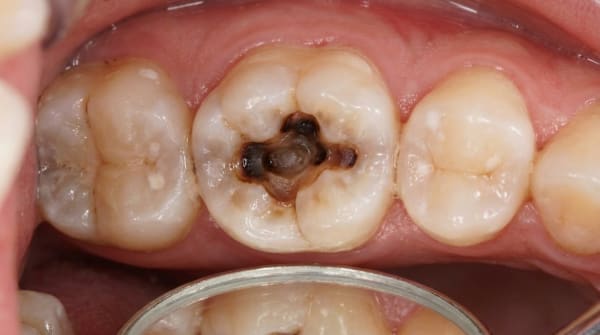
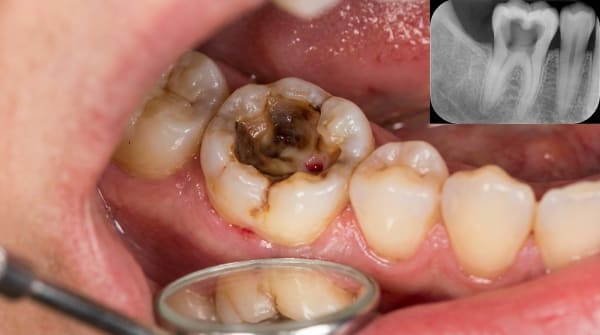
Dental decay, when bacteria reach close to the nerve, they irritate it without yet infecting it.
Recent dental treatment, filling, crown preparation, deep cleaning.
Microleakage (tiny gaps between a filling and the tooth that let bacteria seep in) around old fillings.
Exposed dentine (the softer layer under the enamel) from recession or wear.
A cracked tooth allowing fluid and pressure changes to reach the nerve.
Bruxism producing micro-cracks and exposed dentine.
Erosion from acid foods, drinks, reflux or vomiting.
Whitening in some patients (transient sensitivity).
How does it develop?
The course is gradual:
An irritation reaches the dentine close to the pulp.
Tiny dentinal tubules (microscopic channels running through dentine) transmit cold, sweet or air signals to the nerve.
The nerve becomes mildly inflamed and reacts more strongly than usual to stimuli.
The patient notices brief, sharp pain to specific triggers.
With removal of the cause, the pulp returns to normal within days to weeks.
Without treatment, the inflammation may progress to irreversible pulpitis.
What might you notice?
Common features include:
Sharp pain to cold that lasts only a second or two after the cold is removed.
Sharp pain to sweet food and drinks.
No spontaneous pain, the tooth doesn't ache by itself.
No pain on biting in most cases (bite pain suggests other diagnoses).
No pain on lying down, pain in bed suggests irreversible pulpitis.
Pain settling quickly when the trigger stops.
A tooth that has had recent dental work or a known cavity.
What happens at the dentist?
When reversible pulpitis is suspected at ArtSmiles, the visit usually involves:
A history conversation about the pattern of pain, duration, triggers, recent dental work.
A clinical examination of the suspected tooth and surrounding teeth.
A cold test, percussion test (a gentle tap on the tooth to check for tenderness), and bite test to localise the tooth and characterise the pulp response.
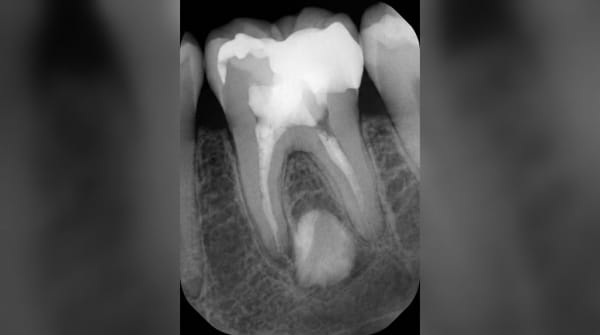
An X-ray to look for cavities, deep fillings, cracks or recession.
A treatment plan directed at the underlying cause.
Most cases respond well to simple measures, see below.
Is this serious?
Reversible pulpitis is not serious in itself, but it deserves attention because:
Untreated, it can progress to irreversible pulpitis, requiring root canal therapy or extraction.
The underlying cause (such as a cavity) needs treatment regardless.
Persistent sensitivity affects eating and quality of life.
Catching it early often saves a tooth from major treatment.
Could it be something else?
Other causes of similar symptoms include:
Irreversible pulpitis, longer-lasting pain, spontaneous pain, pain in bed.
Cracked tooth syndrome, sharp pain on biting and release.
Periapical abscess, severe pain, biting pain, swelling.
Dentine hypersensitivity, sensitivity at the gum line from exposed root surfaces.
Sinus pain referred to upper back teeth.
Recent restoration sensitivity, usually settles in days to weeks.
A careful examination, vitality testing (a quick test to check if the nerve inside the tooth is still alive) and X-rays clarify the diagnosis.
How is it treated?
Treatment is directed at the underlying cause:
Treat decay with a filling, removing the irritant.
Replace leaking fillings.
Address recession or exposed dentine with desensitising agents, fluoride varnish, or composite coverage.
Manage bruxism with an occlusal splint (a custom-fitted hard acrylic mouthguard worn at night).
Smooth or restore minor tooth wear or chips.
Reduce acidic foods and drinks in the diet.
Use sensitive toothpaste containing potassium nitrate or stannous fluoride.
Wait for recent restoration sensitivity to settle, usually within a few weeks.
Periodically reassess to ensure the pulpitis has not progressed.
If symptoms progress to constant pain, lingering pain, or pain in bed, the diagnosis shifts to irreversible pulpitis and root canal therapy or extraction is usually needed.
What's the long-term outlook?
The outlook is excellent when the cause is identified and treated early. The pulp recovers, sensitivity resolves, and the tooth carries on as normal for many years. Patients who recognise the pattern and seek early care usually avoid the more invasive treatment that comes with irreversible pulpitis.
If you have noticed brief sharp tooth pain to cold or sweet, please book a visit. Catching reversible pulpitis early is one of the simplest ways to protect a tooth long-term.
A note on this article
This article is for educational purposes only and does not constitute a clinical diagnosis. Please consult a registered dental practitioner for assessment and treatment advice.
The cover image above is an AI-generated illustration based on the most common visible features of this condition described in clinical pathology references. It is not a photograph of a real case and should not be used to diagnose or rule out the condition in your own situation. If you are concerned about something you have noticed, please book an assessment with a registered dental practitioner.
References
Neville, B. W., Damm, D. D., Allen, C. M., & Chi, A. C. (2016). Oral and maxillofacial pathology (4th ed., Ch. 3: Pulpal and Periapical Disease, Reversible Pulpitis). Elsevier.
Cawson, R. A., & Odell, E. W. (2017). Cawson's essentials of oral pathology and oral medicine (8th ed., Ch. 4: Pulpal Disease). Elsevier.
Regezi, J. A., Sciubba, J. J., & Jordan, R. C. K. (2017). Oral pathology: clinical pathologic correlations (7th ed., Ch. 3: Pulpal and Periapical Disease). Elsevier.
Frequently asked questions
What does reversible pulpitis feel like?
It usually feels like a short, sharp sensitivity to cold drinks, sweet foods or air, lasting only a few seconds after the trigger is removed. There is typically no spontaneous pain and the tooth does not throb between meals. The discomfort tends to be easy to localise to one tooth.
Can reversible pulpitis heal on its own?
Yes, often, if the underlying cause is removed. Examples include filling a small new cavity, smoothing a high spot on a recent filling, or addressing a leaky restoration. Once the source of irritation is resolved, the pulp settles and the sensitivity gradually fades over days to weeks.
How is reversible pulpitis treated?
Treatment focuses on the cause. Common steps include a new or replacement filling for a leaky restoration, removing a small area of caries, treating exposed dentine with desensitising agents, and using a high-fluoride toothpaste. A protective sedative dressing is sometimes placed if the tooth needs settling before a definitive restoration.
How is reversible pulpitis different from irreversible pulpitis?
Reversible pulpitis is short, sharp pain that stops within seconds of the trigger being removed and does not occur spontaneously. Irreversible pulpitis is longer-lasting (often minutes), can be spontaneous, may keep you awake at night, and means the pulp tissue can no longer heal. Irreversible pulpitis typically needs root canal treatment or extraction.