Veneers vs dental implants is a comparison people get tangled up in, and it's a question we field most weeks at ArtSmiles. The two treatments sound similar, and people often use the names interchangeably, but they actually solve completely different problems. One improves the look of a tooth you still have. The other replaces a tooth that's gone. Knowing which is which makes the choice a lot clearer. This guide walks through what each one does, how to tell which suits your situation, and why some people end up having both.
Are veneers and implants the same thing?
No. They're often confused, but veneers and dental implants are not the same and they aren't interchangeable.
The short version is this. A veneer works on a tooth that's still in your mouth. An implant replaces a tooth that isn't. They sit at opposite ends of the problem: one is about appearance, the other is about replacing something you've lost.
So when someone asks whether they need a veneer or an implant, the first question isn't really about either treatment. It's about the tooth. Is it still there, or is it missing?
What a veneer does
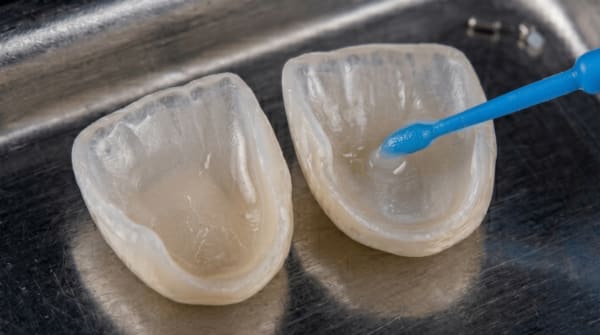
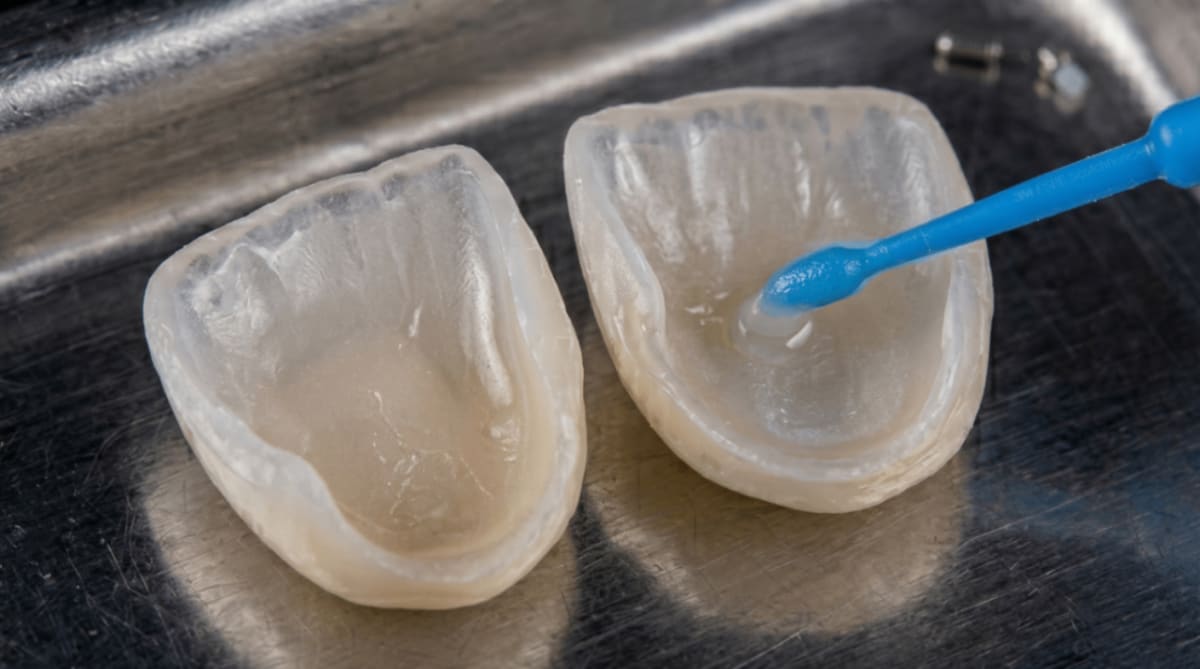
A veneer is a thin shell, usually porcelain, bonded to the front of an existing natural tooth. It changes how that tooth looks without replacing it.
Veneers are a cosmetic treatment. People choose them to improve colour, shape, small chips, minor gaps, or mild crookedness. The tooth underneath still does the work of being a tooth. The veneer just sits on the front, like a new outer surface, to refine the appearance.
There's one important condition. The tooth has to still be there and reasonably healthy. A veneer needs a natural tooth to bond to. You can't place a veneer over a gap, because there's nothing for it to attach to.
What a dental implant does
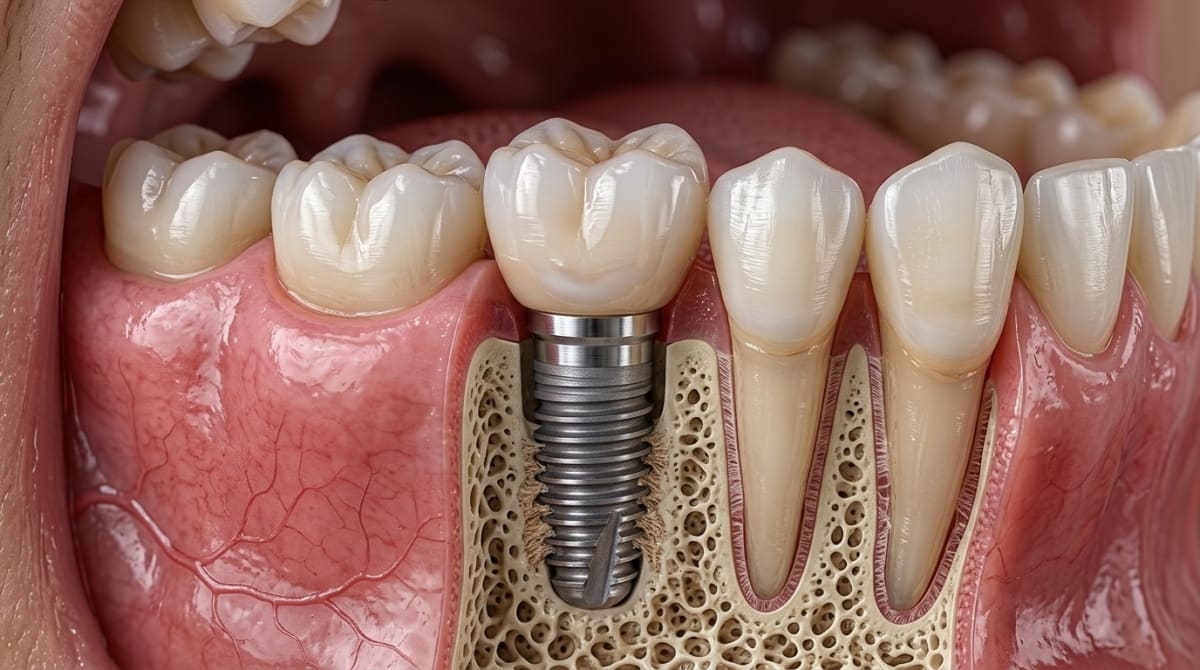
A dental implant replaces a whole tooth that's missing, including the root.
It has two main parts. The first is a small titanium post placed into the jawbone, which acts as a new tooth root. The second is a crown (the visible tooth-shaped part) that sits on top. Together they restore a complete tooth where one is gone.
Implants are used when a tooth is already missing, or when a tooth can't be saved and needs to come out. Because the post sits in the bone and takes the place of a natural root, an implant rebuilds the tooth from the ground up rather than just covering a surface.
The simplest way to tell which you need
Here's the rule that clears up most of the confusion.
If the tooth is still there but looks wrong, that's veneer territory. If the tooth is missing, or can't be saved, that's implant territory.
A veneer improves a tooth you have. An implant replaces a tooth you've lost. You cannot put a veneer on a gap, and you don't need an implant for a tooth that's healthy and simply needs a cosmetic lift. Once you know whether the tooth is present or absent, the path usually sorts itself out.
Veneer or implant for a missing tooth?
If you have an actual gap, a veneer isn't an option. There's no tooth for it to bond to.
For a missing tooth, the tooth-replacement choices are an implant, a bridge, or a denture. Each rebuilds the missing tooth in a different way, and an assessment helps work out which fits your mouth and your goals.
Veneers still have a role here, just a different one. Once the gap is dealt with, veneers can refine the look of your remaining teeth so the whole smile matches. So it's not veneer versus implant for that gap. It's an implant (or bridge or denture) for the gap, with veneers as an optional finishing touch elsewhere.
What about cost?
An implant generally costs more per tooth than a veneer. That difference makes sense once you look at what each one involves.
A veneer covers the front of a tooth that's already there. An implant replaces the entire tooth and root, and it involves minor surgery to place the post in the bone. You're paying for a complete tooth replacement rather than a surface improvement, so the figures aren't directly comparable.
Prices vary from person to person, so it's worth reading the detail. We've put together a guide on how much veneers cost in Australia and a separate one on how much dental implants cost in Australia.
Can you have both veneers and implants?
Yes, and plenty of people do. The two treatments complement each other rather than compete.
A full smile makeover might use implants to replace teeth that are missing, then veneers to refine the colour and shape of the teeth that remain. The implants handle the structural side, putting teeth back where there were gaps. The veneers handle the cosmetic side, tidying up the look of everything else.
Both are designed to be durable, long-lasting restorations with good care. One extra point worth knowing: because an implant replaces the root, it also helps preserve the jawbone in that spot, which a veneer doesn't address. That's part of why the two are often used together rather than instead of each other.
How we help you decide
The right choice comes down to one thing: whether your concern is the appearance of teeth you still have, or replacing teeth you've lost.
That's not always obvious from the mirror, especially if a tooth is damaged and you're not sure it can be saved. An assessment lets us look at the tooth, the bone around it, and your overall goals before recommending anything. From there we can talk through veneers, implants, or a combination, and explain what each would mean for your situation.
References
Healthdirect Australia. (n.d.). Dental care. healthdirect.gov.au
Australian Dental Association. (n.d.). Oral health information. teeth.org.au
A note on this article
This article is general information, not personal dental advice. What's right for you depends on your own teeth, gums, and goals, which can only be assessed in person. Please book a consultation before making any treatment decisions.
The cover image for this article was generated with AI and is for illustration only. It is not a clinical photograph of a real patient or a specific treatment result.
Frequently asked questions
Are dental implants and veneers the same?
No. They're often confused, but they do different jobs and aren't interchangeable. A veneer is a thin shell bonded to the front of a natural tooth that's still in your mouth, used to improve how it looks. A dental implant replaces a tooth that's missing or can't be saved, using a titanium post in the jawbone with a crown on top. The simple way to remember it: veneers improve a tooth you have, implants replace a tooth you've lost.
Can I get a veneer for a missing tooth?
No, a veneer isn't an option for a missing tooth. A veneer needs an existing natural tooth to bond to, so there's nothing for it to attach to across a gap. To replace a missing tooth, the usual choices are a dental implant, a bridge, or a denture. Veneers can still play a part afterwards by refining the look of your remaining teeth, but they can't fill the gap itself. An assessment helps decide which replacement option suits you.
Which costs more, veneers or implants?
An implant generally costs more per tooth than a veneer. That's because an implant replaces the entire tooth and root and involves minor surgery to place the post in the bone, while a veneer covers the front of a tooth that's already there. The two aren't really doing the same job, so comparing the prices directly can be misleading. Costs also vary from person to person. Our guides on veneer costs and implant costs in Australia go through what affects the figures.
Can you have both veneers and implants?
Yes, and it's a common combination. A smile makeover might use implants to replace missing teeth and veneers to refine the colour and shape of the teeth that remain. The implants handle the structural work of putting teeth back, while the veneers handle the cosmetic finish. They complement each other rather than compete. Because an implant also replaces the tooth root, it helps preserve the jawbone in that area, which is something a veneer doesn't address.
Written by Dr. Cristian Dunker, BDSc, MBA.
Medically reviewed by Dr. Cristian Dunker.