
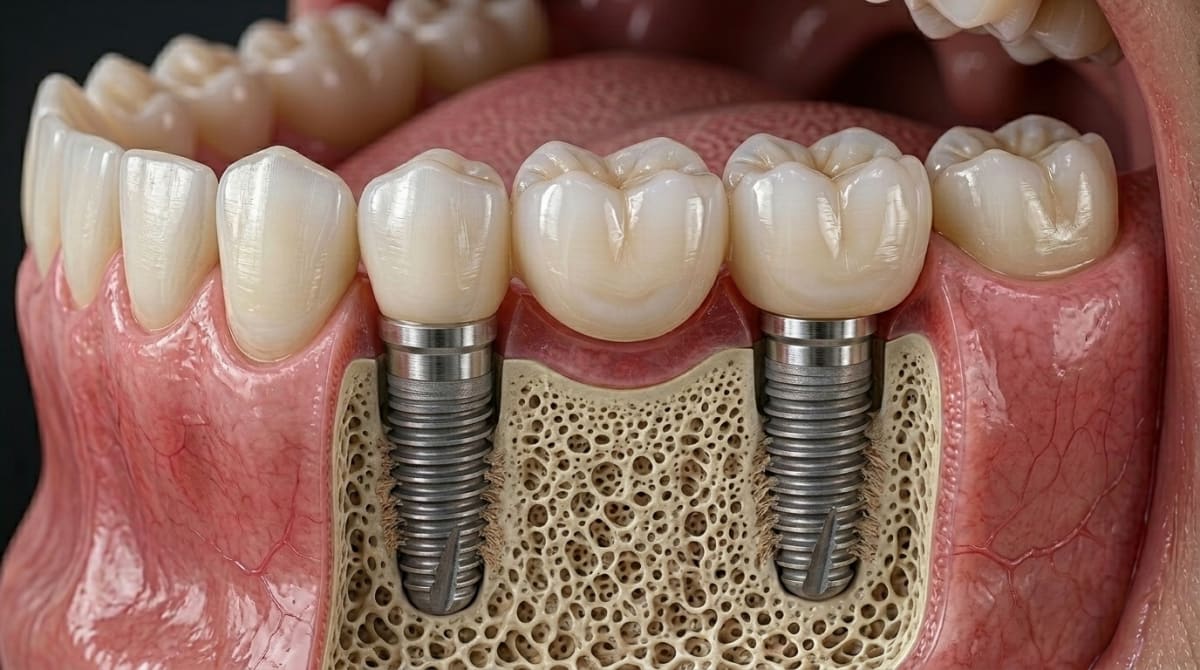
Dental implants are the gold standard for replacing missing teeth. They look natural, feel secure, and protect your jawbone from shrinking over time. But the cost can feel overwhelming without clear information.
In this guide, we break down the real cost of dental implants in Australia for 2026, explain what's included in the price, and compare every option so you can plan your treatment with confidence.
Table of Contents
How Much Do Dental Implants Cost in Australia?
The cost of a dental implant depends on the type of restoration, the number of implants, and whether additional procedures like bone grafting are needed. Here are the average ranges across Australia in 2026:
Implant Type | National Average (AUD) | What's Included |
|---|---|---|
$3,000 to $7,000 | Implant, abutment, crown | |
Implant-supported bridge (2 to 3 teeth) | $6,000 to $15,000 | 2 implants + bridge |
All-on-4 / All-on-X (full arch) | $20,000 to $40,000 per arch | 4 to 6 implants + fixed bridge |
Implant overdenture (full arch) | $8,000 to $20,000 per arch | 2 to 4 implants + removable denture |
Full mouth (both arches, fixed) | $40,000 to $80,000 | 8 to 12 implants + 2 fixed bridges |
On the Gold Coast, implant costs tend to be more competitive than in Sydney or Melbourne, while still offering the same premium materials and clinical standards.
Dental Implant Costs at ArtSmiles (Gold Coast)
At ArtSmiles in Southport, we offer transparent, all-inclusive implant pricing. Here's what each option costs:
Treatment | Starting From* | Implants Required | Type |
|---|---|---|---|
$5,068 | 1 | Fixed ceramic crown | |
$18,700 per arch | 4 to 6 | Fixed zirconia or PMMA bridge | |
$12,000 per arch | 2 to 4 | Removable clip-on denture |
*ArtSmiles Club member pricing. Final cost confirmed after clinical assessment with 3D CBCT imaging.
What's Included in the Implant Cost?
Understanding what's included helps you compare quotes accurately. At ArtSmiles, the single implant price covers the full journey:
Phase | Timing | What Happens |
|---|---|---|
Consultation | Week 1 | Clinical exam, 3D CBCT scan, personalised treatment plan. Complimentary. |
Planning | Week 3 | Digital planning, surgical guide fabrication |
Implant surgery | Week 4 | Titanium implant placement under local anaesthesia |
Healing | Weeks 4 to 18 | Osseointegration (implant bonds with bone). Temporary restoration worn. |
Crown scan | Week 18 | Digital impression for custom crown |
Crown fit | Week 20 | Final ceramic crown cemented. Bite adjusted. |
Total treatment time is approximately 4 to 6 months from consultation to final crown.
Additional Costs to Be Aware Of
Some patients need preparatory treatments before implants can be placed. These are quoted separately:
Additional Procedure | Typical Cost (AUD) | When It's Needed |
|---|---|---|
Bone grafting | $400 to $3,000 | Insufficient jawbone volume |
Sinus lift | $1,000 to $2,500 | Upper jaw implants with low sinus floor |
Tooth extraction | $250 to $500 | Removing a failing tooth before implant |
$400 to $2,500 | Active periodontal disease must be stabilised first | |
3D CBCT scan | Included at ArtSmiles | Essential for all implant planning |
At ArtSmiles, the initial consultation and 3D imaging are complimentary for implant patients, so you will know the full scope of costs before committing to treatment.
Dental Implants vs Bridges vs Dentures: Cost and Value Comparison
Implants cost more upfront, but they often save money long term. Here's how the three main options compare:
Feature | Denture | ||
|---|---|---|---|
Upfront cost (single tooth) | $5,068+ | $3,000 to $5,000 | $1,000 to $3,000 |
Lifespan | 20+ years (often longer) | 7 to 15 years | 5 to 10 years |
Adjacent teeth affected? | No | Yes (filed down) | No |
Bone preservation | Yes (stimulates jawbone) | No | No (bone continues shrinking) |
Chewing power | 95% of natural teeth | 80 to 90% | 30 to 50% |
Maintenance cost | Low (regular dental visits) | Moderate (may need replacement) | High (relining, replacement) |
Feels natural? | Yes | Mostly | No (can slip and move) |
Cost over 20 years | $5,068 (one-time) | $6,000 to $10,000 (1 to 2 replacements) | $4,000 to $9,000 (2 to 3 replacements) |
When you factor in replacements, maintenance, and the ongoing cost of bone loss with bridges and dentures, implants are often the most cost-effective solution over a lifetime. Prices and lifespan are merely reference, and each case may present different lifespan.
All on 4 Cost: Full Arch Implant Pricing
For patients missing most or all teeth in one arch, All on 4 (also called All on X) provides a complete set of fixed teeth supported by just 4 to 6 implants. It is the most transformative option for patients with dentures or failing teeth.
All on 4 pricing at ArtSmiles:
Per arch: From $18,700*
Both arches (full mouth): From $37,400*
This includes the implant surgery, temporary bridge (fitted the same day or next day), and the final bridge. The starting price includes a PMMA bridge, with zirconia available as a premium upgrade. Bone grafting is typically not required with the All-on-4 technique, as the posterior implants are angled to maximise contact with available bone.
*ArtSmiles Club member pricing for PMMA bridge. For full pricing of All on X bridge, please visit our All on X page.
Why choose All-on-4?
Fixed and permanent (no removing at night)
Provisional teeth the same day as surgery
No bone grafting in most cases
Restores facial volume and lip support
Eat anything you want, from steak to salads
How long does All-on-4 treatment take?
Most patients receive their temporary teeth within 24 hours of surgery. The full treatment timeline is usually 4 to 6 months from first consultation to final zirconia bridge: 2 to 4 weeks of planning and records, 1 surgery day, 3 to 4 months of osseointegration (where the bone fuses to the implants), then 2 to 4 appointments to fit the final bridge. During the whole period you have functional teeth.
What's the difference between All-on-4 and All-on-6?
All-on-4 uses four implants per arch to support a full bridge of teeth. All-on-6 uses six. More implants can spread biting force across a larger area and may suit patients with particular bone patterns, but they also cost more and require more surgery. For most patients with adequate bone, four implants provide enough stability. The right option depends on your CBCT scan, bone volume, and bite, which is what we work through at the planning consultation.
Is All-on-4 reversible?
The bridge itself is removable by your dentist for cleaning and maintenance, but the implants are osseointegrated into the bone and are designed to stay permanently. Before committing to All-on-4 we always review your situation carefully so you understand what's being placed and what long-term maintenance looks like.
What Affects the Cost of Dental Implants?
1. Number of implants
A single missing tooth requires one implant. A full arch requires 4 to 6. More implants means higher cost, but also greater stability and longevity.
2. Implant position
Front teeth implants can be more complex due to aesthetic demands and thinner bone. Back teeth implants may require more force consideration.
3. Bone volume
If you have been missing teeth for a long time, your jawbone may have shrunk. Bone grafting or sinus lifts add to the total cost but are essential for implant success in these cases.
4. Crown material
The crown placed on top of the implant can be porcelain fused to metal, full ceramic (e.max), or zirconia. Material choice affects aesthetics, durability, and cost.
5. Digital planning and guided surgery
At ArtSmiles, we use 3D CBCT imaging and computer-guided surgical templates to place implants with maximum precision. This technology reduces risk and improves outcomes, and is included in our pricing.
6. Implant brand
Like any medical device, implant systems vary in quality, research backing and long-term availability of matching parts. Premium systems from Switzerland and Sweden (Straumann, Nobel Biocare, Astra Tech) have decades of peer-reviewed clinical data behind them. Mid-tier systems such as Southern, Neodent, MIS and BioHorizons offer strong performance at a lower price point. Budget systems (including Osstem, MegaGen and Dentium) can be reliable in experienced hands but carry less long-term international data. At ArtSmiles we only use systems with a proven track record, because an implant that fits for life is only possible if the parts are still being manufactured in twenty years time.
Why Do Dental Implant Prices Vary So Much Between Clinics?
Two implant quotes in Gold Coast can differ by $2,000 or more for what looks like the same treatment. The gap usually comes down to five things:
Implant brand. Premium Swiss or Swedish systems like Straumann or Nobel Biocare have decades of clinical data and better long-term research. Budget implant systems may look similar but have less evidence behind them and can be harder to restore if something needs replacing years later.
Who places the implant. General dentists with advanced implant training, periodontists, and oral surgeons charge different fees. More experience and training usually costs more up front but can reduce complication rates.
Lab quality for the crown. A crown made by a local Australian lab using high-grade zirconia costs more than one outsourced overseas. Fit, aesthetics, and longevity all follow from lab quality.
Digital workflow vs freehand surgery. Clinics using 3D CBCT scans, digital planning software, and surgical guides invest in equipment that a lower-cost clinic may not have. Guided surgery typically places the implant more accurately and reduces the chance of sinus or nerve issues.
What's actually in the quote. Some quotes cover only the implant itself, with the abutment, crown, CBCT scan, and follow-ups billed separately. Always ask for an itemised written quote so you're comparing the same treatment.
A cheap implant that fails or doesn't integrate becomes the most expensive implant: you pay twice, and bone loss during failure can make the redo more complex.
What Happens if a Dental Implant Fails?
Modern dental implants have a success rate of around 95 to 98 percent over 10 years when placed and maintained properly, so failure is uncommon but not impossible. The two main reasons implants fail are early integration failure (the bone doesn't fuse to the implant in the first few months) and peri-implantitis, an infection of the gum and bone around a previously healthy implant.
If an implant fails, the typical process is:
Assessment. A clinical exam and CBCT scan to understand why it failed and how much bone is left.
Removal and healing. The failed implant is removed. The site usually needs 2 to 4 months to heal, and often a bone graft to rebuild volume before a second attempt.
Re-treatment. A new implant is placed once the site is healthy. Re-treatment in Australia typically costs $2,000 to $5,000 depending on whether grafting is needed.
At ArtSmiles we provide a written warranty on implants we place, and we monitor them with regular reviews and hygiene maintenance to catch peri-implantitis early. The biggest risk factors for failure are smoking, uncontrolled diabetes, poor oral hygiene, and grinding or clenching without a night guard. Addressing these before treatment dramatically improves long-term success.
Are Dental Implants Covered by Health Insurance?
Private health insurance with Major Dental cover may provide a partial rebate toward implant treatment. The amount varies by fund and policy level. Key points:
Most funds cover a portion of the crown, abutment, and sometimes the implant itself
Waiting periods (usually 12 months) apply for Major Dental
Annual limits typically cap benefits at $1,000 to $2,500
We process claims instantly with HICAPS at our clinic
Most major funds (Bupa, Medibank, HCF, nib, Australian Unity and HBF) include implant-related item codes under their top-tier Major Dental cover. The exact rebate for each item code varies by fund and by your specific plan, so it is worth checking your annual limit and waiting periods before committing. At ArtSmiles we can claim on-the-spot with HICAPS, so you only pay the gap at the chair.
Does Medicare cover dental implants?
Medicare generally does not cover dental implants. Rare exceptions exist for treatments linked to a medical condition or hospital admission, but these are uncommon.
Can I use my super for dental implants?
In some cases, yes. The ATO allows early release of superannuation on compassionate grounds for dental treatment that is clinically necessary. ArtSmiles can provide the clinical documentation you need to support an application. This is one of the most under-utilised funding options for implant patients.
Accessing super for dental treatment works through the ATO's compassionate release program:
Get a treatment plan and quote from us with itemised procedure codes.
Request a supporting letter from your treating dentist (and, if needed, your GP) confirming the treatment is necessary to prevent or relieve acute or chronic pain.
Apply through the ATO online. Processing typically takes around 14 business days.
Submit the ATO outcome letter to your super fund to release the funds.
Compassionate release covers treatment that is medically necessary. Purely cosmetic work is generally not eligible. In 2025, AHPRA and the ATO issued a joint warning about providers overstating clinical necessity in super release applications. Always choose a clinician who provides accurate, verifiable documentation. If you'd rather not touch your super, we also offer in-house payment plans and can refer you to finance partners such as Humm90, or use a third-party service like SuperCare that can manage the super application on your behalf.
Payment Plans and Finance Options
We offer several ways to make implant treatment more manageable:
Afterpay: 4 equal fortnightly payments, no interest
Humm (National Dental Plan): Interest-free plans, fast approval
Smile Right: Up to 60 months loan or 24 months interest-free
TLC: Flexible payment plans with early payoff
Access My Super: Early superannuation release for qualifying cases
All major credit cards accepted
ArtSmiles Club members receive preferential pricing on all implant treatments and structured ongoing care.
Are Dental Implants Worth the Cost?
Dental implants are an investment in your health, comfort, and quality of life. Here's why patients consistently say they are worth every dollar:
They last decades. With proper care, implants can last a lifetime. Most bridges and dentures need replacing every 5 to 15 years.
They protect your jawbone. Without a tooth root, the bone shrinks. Implants are the only option that stimulates the jaw and prevents further bone loss.
They feel completely natural. You can eat, speak, and smile without worrying about slipping, clicking, or adhesives.
They prevent further dental problems. Missing teeth cause neighbouring teeth to drift, leading to bite changes, increased decay risk, and more complex treatment later.
Why Patients Choose ArtSmiles for Implants
Experienced team led by Dr Cristian Dunker (BDSc, MBA)
3D CBCT imaging and digitally guided implant placement
Everything under one roof at our Southport clinic
Transparent pricing with no surprises
Complimentary initial consultation including 3D imaging
Flexible payment plans and ArtSmiles Club pricing
Serving the Gold Coast: Southport, Surfers Paradise, Main Beach, Ashmore, Benowa, Labrador, Bundall, Runaway Bay, and Broadbeach
Book Your Free Implant Consultation
The best way to find out exactly what your implant treatment will cost is with a personalised assessment. At ArtSmiles, your first implant consultation is complimentary, including 3D CBCT imaging and a detailed treatment plan.
No pressure, no obligation. Just honest guidance from an experienced implant team.
Book your free implant consultation at our Southport clinic, or call (07) 5588 3677 to speak with our team.
How to Compare Dental Implant Quotes
When you are looking at two implant quotes that differ by thousands of dollars, the difference is almost always hiding in the details. A good quote tells you exactly what you are paying for. Before you say yes to any clinic, here is what we would gently suggest you check.
Is the implant brand named? A quote that just says "titanium implant" without specifying the system (Straumann, Nobel Biocare, Neodent, Osstem) leaves you exposed if you ever need a part replaced years from now. You want to know the parts are still being made.
What is the crown or bridge material? Ceramic, zirconia, e.max, PMMA and acrylic all have different prices and different lifespans. Two quotes for "full arch bridge" can be very different if one uses PMMA and the other uses zirconia.
Is a 3D CBCT scan included in the planning? Placing an implant without a 3D scan skips valuable information about nerve position and sinus anatomy. This is a safety item, not a luxury item.
Does the quote cover the temporary teeth AND the final teeth? Some full-arch quotes include only one of the two, with the final bridge invoiced later.
What warranty comes with the implant and the crown? Ask how long the warranty runs, what it covers, and what invalidates it (such as missed hygiene visits).
Are follow-up visits and hygiene maintenance part of the price, or billed separately? Ongoing maintenance is a real part of implant care, and some practices price it into the treatment while others do not.
If a quote avoids giving you a clear answer to any of these, that is your signal to ask a few more questions. A good implant team answers every one of them comfortably, because transparency is part of the care.
Frequently Asked Questions
How much does a single dental implant cost on the Gold Coast?
At ArtSmiles, a single dental implant starts from $5,068 (ArtSmiles Club pricing). This includes the titanium implant, abutment, custom ceramic crown, and all appointments from consultation to final fit. Additional procedures like bone grafting are quoted separately if needed.
How much does All-on-4 cost in Australia?
All-on-4 full arch rehabilitation ranges from $20,000 to $40,000 per arch nationally. At ArtSmiles on the Gold Coast, All-on-4 starts from $18,700 per arch, including implant surgery, provisional teeth, and final bridge (PMMA or zirconia).
Why are dental implants so expensive?
The cost reflects premium biocompatible materials (titanium implants, ceramic crowns), advanced 3D imaging and guided surgery technology, multiple appointments over several months, and the skill required for a procedure with a 90 to 95% success rate. When compared to the lifetime cost of repeatedly replacing bridges or dentures, implants are often the more economical choice.
Can I use my superannuation for dental implants?
Potentially, yes. The ATO allows early release of super on compassionate grounds for dental treatment that your dentist confirms is clinically necessary. ArtSmiles provides the documentation you need to submit your application.
How long do dental implants last?
The titanium implant itself can last a lifetime with good oral hygiene and regular dental visits. The crown on top typically lasts 10 to 20 years before it may need replacing. This makes implants the longest-lasting tooth replacement option available.
Are dental implants painful?
Implant surgery is performed under local anaesthesia, and sedation is available for anxious patients. Most patients report mild discomfort and swelling for a few days after surgery, manageable with standard pain relief. Many say the procedure was easier than expected.
What is the success rate of dental implants?
Dental implants have a success rate above 90 to 95% in suitable candidates. Success depends on adequate bone volume, healthy gums, good oral hygiene, and avoiding smoking. Digital planning and guided surgery, as used at ArtSmiles, further improve predictability.
Do dental implants look natural?
Yes. The crown is custom-made to match the colour, shape, and size of your natural teeth. Once placed, even your closest friends will not be able to tell the difference. Implants also prevent the sunken facial appearance that occurs with missing teeth.
Is the first consultation really free?
Yes. At ArtSmiles, your initial implant consultation is complimentary, including a 3D CBCT scan. You will receive a full assessment, personalised treatment plan, and transparent pricing with no obligation to proceed.
Is it cheaper to get dental implants overseas?
Dental tourism can appear cheaper upfront, but the total cost is often comparable once you add flights, accommodation, and follow-up care back home. More importantly, if a complication arises after you return, local dentists may be reluctant to take on treatment started overseas, and revision work can be expensive. AHPRA-registered dentists in Australia are held to strict safety and materials standards. For a procedure that is permanent and load-bearing, we recommend treatment with a local clinician you can return to throughout the process.
Written by Dr. Cristian Dunker, BDSc, MBA.
Medically reviewed by Dr. Cristian Dunker.