Do dental veneers stain? It's one of the first questions people ask before committing to veneers, and it's a fair one. You're investing in a brighter smile, so you want to know it stays that way. The short answer depends on the type of veneer you choose. Porcelain and composite behave quite differently when it comes to coffee, tea, and red wine. At ArtSmiles, we want you to feel clear on what to expect, so here's how staining works and what keeps your veneers looking their best.
The short answer
Porcelain veneers are highly stain-resistant and rarely change colour. The glazed ceramic surface doesn't absorb pigment the way natural enamel can. Composite veneers are a different story. They're slightly porous, so they can pick up stain over time from food, drinks, and smoking.
The good news is that staining on composite is usually fixable at a routine visit. And one thing applies to both types: you can't whiten a veneer with bleaching gel. We'll explain why below.
Are porcelain veneers stain resistant?
Porcelain veneers are made from glazed ceramic, which is non-porous. That means the surface has no tiny gaps for pigment to settle into. So coffee, tea, curry, and red wine tend to wipe straight off rather than soak in.
In practice, the porcelain itself rarely discolours. What can pick up stain is the margin, the thin line where the veneer meets your natural tooth and the cement that holds it in place. If that edge starts to look darker over time, it's usually surface film at the join rather than the veneer changing colour. A professional clean at your dentist generally sorts that out.
Do composite veneers stain?
Yes, composite veneers can stain over time. Composite is a tooth-coloured resin, and it's slightly porous compared with porcelain. That makes it more likely to absorb colour from things like coffee, tea, red wine, and smoking.
This isn't a reason to avoid composite. It's a softer material with its own real benefits, and staining is manageable. In many cases, light surface stain can be buffed away with a polish at a routine visit, bringing the colour back. If the staining is deeper or the composite has worn, your dentist can repair or replace the affected area. Composite is designed to be touched up.
What causes veneers to stain?
A few everyday habits do most of the work. The usual culprits are:
Coffee and tea, especially throughout the day
Red wine and dark fruit juices
Smoking and vaping
Strongly coloured foods like curries and tomato-based sauces
With porcelain, these affect the margins more than the veneer face. With composite, they can dull the whole surface gradually. Plaque buildup along the gumline also makes margins look darker, which is why cleaning around the edges matters as much as the veneer itself.
Can veneers be whitened?
This is where a lot of confusion sits, so it's worth being clear. Whitening gel only works on natural tooth structure. It can't change the colour of porcelain or composite. So no, you can't bleach a veneer whiter than the shade it was made in.
If a veneer looks dull, the cause is usually one of two things. On porcelain, it's typically surface film or stain at the margin, which a professional clean addresses. On composite, it's stain that has settled into the material, which your dentist can polish, repair, or replace. The fix is mechanical, not chemical: as the Australian Dental Association notes, whitening gel will not change the colour of veneers (teeth.org.au).
Can I whiten my teeth if I have veneers?
You can whiten your natural teeth, but your veneers won't change with them. That's the catch. If you whiten and your veneers stay the same shade, you can end up with a colour mismatch.
The order matters. If you're planning both, whiten your natural teeth first, let the shade settle, then have your new veneers matched to that lighter colour. If you already have veneers and you're thinking about teeth whitening, talk to your dentist first, who can plan it so the rest of your smile still matches.
How to keep veneers white
Day-to-day care keeps both types looking fresh. A few simple habits go a long way:
Use a non-abrasive toothpaste, as harsh whitening pastes can scratch the surface over time
Floss and clean carefully along the margins, where stain and plaque collect
Ease off staining drinks where you can, or rinse with water afterwards
Avoid smoking, which stains composite and gum margins
Keep up regular professional cleans
These small steps keep the colour even. If you'd like to understand the upfront side as well, our guide to veneer cost in Australia walks through what to expect.
When to see your dentist
Book a visit if your veneers look dull, the edges seem darker, or the colour no longer matches your natural teeth. These are usually straightforward to address, and catching them early keeps the fix simple. A routine clean handles most margin staining, and your dentist can advise whether a composite touch-up is worth doing.
If you're weighing up whitening alongside veneers, a quick chat before you start saves you from a mismatch later. Your dentist can map out the right order for your smile.
References
Australian Dental Association. (n.d.). Teeth whitening. teeth.org.au
Healthdirect Australia. (n.d.). Dental care. healthdirect.gov.au
A note on this article
This article is general information only and isn't a substitute for personal dental advice. Your situation is unique, so please talk to your dentist about what's right for you before making any treatment decisions.
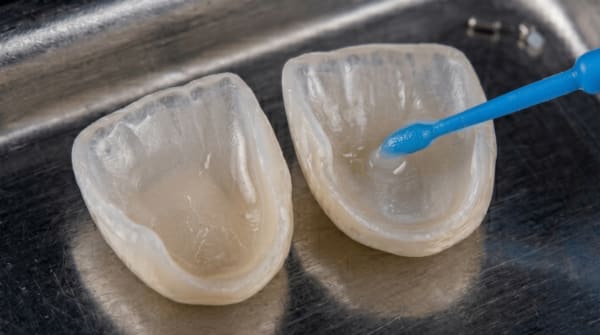
The cover image for this article was generated using AI. It's for illustration only and isn't a clinical photograph of a real patient or a specific treatment outcome.
Frequently asked questions
Do dental veneers stain?
It depends on the type. Porcelain veneers are highly stain-resistant because the glazed ceramic is non-porous, so coffee, tea, and wine tend to wipe off rather than soak in. The veneer itself rarely discolours, though the margin where it meets your tooth can pick up surface stain. Composite veneers are slightly porous and can stain over time. Composite staining is usually fixable with a polish at a routine visit, and margin stain on porcelain clears with a professional clean.
Can veneers be whitened?
No, whitening gel only works on natural tooth structure, so it can't change the colour of porcelain or composite. If a veneer looks dull, the cause is usually surface film or margin stain on porcelain, which a professional clean addresses, or stain settled into composite, which your dentist can polish, repair, or replace. The fix is mechanical rather than chemical.
Can I whiten my teeth if I have veneers?
You can whiten your natural teeth, but your veneers won't change colour with them, which can leave you with a mismatch. If you're planning both, the order matters: whiten your natural teeth first, let the shade settle, then have new veneers matched to that lighter colour. If you already have veneers, talk to your dentist before whitening so the rest of your smile still matches.
Do composite veneers stain more than porcelain?
Yes. Composite is a slightly porous resin, so it absorbs colour from coffee, tea, red wine, and smoking more readily than porcelain. Porcelain is glazed and non-porous, so the surface resists stain and the veneer itself rarely discolours. Composite staining is manageable: light surface stain can often be polished away, and deeper staining can be repaired or replaced.
Written by Dr. Cristian Dunker, BDSc, MBA.
Medically reviewed by Dr. Cristian Dunker.