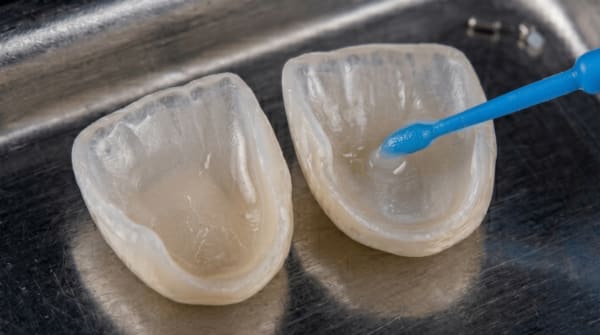
No prep veneers are a way to change the look of your smile while keeping almost all of your natural tooth. They're wafer-thin shells, usually made of porcelain, bonded to the front of your teeth with little or no enamel removed. For people who like the idea of veneers but feel uneasy about having their teeth trimmed, this gentler approach is worth understanding. Here at ArtSmiles, we believe in preserving as much healthy tooth as we can. This article walks through what no-prep veneers are, who they suit, and what to keep in mind.
What are no-prep veneers?
A veneer is a thin cover bonded to the front of a tooth to improve its shape, colour, or position. No-prep (sometimes called minimal-prep or no-grind) veneers are made so thin that they can sit on top of your tooth with little or no enamel removed first.
Enamel is the hard outer layer of your tooth. Traditional veneers usually need a thin layer of that enamel trimmed away so the veneer sits flush and doesn't look bulky. With no-prep veneers, that trimming is reduced or skipped altogether, so more of your natural tooth stays intact.
Because so little enamel is touched, this approach is more conservative. In some cases it's also more reversible than a traditional veneer, since you haven't permanently changed the tooth underneath.
How no-prep veneers differ from traditional veneers
The main difference comes down to how much of your tooth is prepared before bonding.
Traditional veneers involve removing a thin layer of enamel. That space lets the dentist place a veneer of normal thickness without the tooth looking too thick. It works well, but the enamel that's removed doesn't grow back.
No-prep veneers skip most of that step. The shell is thin enough to bond straight onto the tooth surface. This means less drilling, often no numbing injection, and more of your own tooth kept for the future. The trade-off is that the technique only works well in certain situations, which we'll cover next.
Who is a good candidate for no-prep veneers?
No-prep veneers tend to work best when you're adding a thin layer to improve the look, rather than reshaping a tooth.
Good candidates often have teeth that are slightly small, a little worn, or have small gaps. In these cases, a thin shell can fill out the shape and close the space without making the teeth look bulky. Adding to the surface suits the design, so the result still looks natural.
You'll also need healthy gums and healthy enamel underneath. The veneer bonds to your tooth, so it needs a sound surface to hold onto. A check-up helps confirm whether your teeth and gums are in good shape for this approach.
Who might not suit them?
Honesty matters here, because no-prep veneers aren't right for every smile.
They're usually not ideal for crowded, rotated, or forward-sitting teeth. Adding a shell on top of a tooth that already sits proud can make it look thick or unnatural. They also struggle to cover very dark teeth, because a thin shell may not hide the colour underneath.
In those situations, traditional veneers can give a better result, since trimming the tooth first leaves room for a veneer that looks natural. Another option is to straighten the teeth first with clear aligners, then reassess. Sometimes once teeth are in a better position, you need less treatment overall.
The benefits of a conservative approach
Keeping your natural enamel is the big advantage of going no-prep.
Enamel protects the inside of your tooth, so preserving it can mean less risk of sensitivity afterwards. It also keeps your future options open. Because the tooth underneath hasn't been permanently altered, you're not locked into one path.
The treatment itself is often more comfortable too. With little or no drilling, many people don't need a numbing injection at all. For anyone who feels nervous about dental work, that's a real plus. This tooth-preserving philosophy guides how we approach cosmetic care, taking the gentler route when it genuinely suits the result.
What about no-prep veneers cost?
A common question is whether the lighter approach costs less. In practice, no-prep veneers are generally priced similarly to other porcelain veneers, because the materials and the skill involved are much the same.
The honest answer is that cost depends on how many teeth you're treating and the level of detail in the design. Treating two front teeth is a different quote from treating eight. For that reason, we give you a written quote after an assessment, rather than a one-size-fits-all figure.
If you'd like a fuller breakdown of what affects pricing, our guide on how much veneers cost in Australia goes into more detail.
Is it right for you?
No-prep veneers are a good fit when you want a more conservative change and your teeth suit the technique. They shine for small tweaks: a little extra size, a small gap, some gentle reshaping of worn edges.
They're less suited to bigger corrections, very dark teeth, or teeth that need repositioning first. That's where a proper assessment helps, because the right plan depends on your starting point and what you're hoping to achieve.
The best next step is a chat with your dentist, where you can look at your teeth together and talk through the options.
References
Australian Dental Association. (n.d.). Oral health information. teeth.org.au
Healthdirect Australia. (n.d.). Dental care. healthdirect.gov.au
A note on this article
This article is general information only and isn't a substitute for personal dental advice. Whether no-prep veneers suit you depends on your own teeth, gums, and goals, which can only be assessed in person. Please speak with your dentist before making a decision about treatment.
The cover image for this article was generated using artificial intelligence and is for illustration only. It is not a clinical photograph of a real patient or an actual treatment result.
Frequently asked questions
What are no-prep veneers?
No-prep veneers are very thin shells, usually porcelain, bonded to the front of your teeth with little or no enamel removed first. Enamel is the hard outer layer of your tooth. Traditional veneers usually need a thin layer of that enamel trimmed away, while no-prep veneers reduce or skip that step. The result is a more conservative treatment that keeps more of your natural tooth. They work best for small changes, like slightly small or worn teeth, rather than major reshaping.
Are no-prep veneers reversible?
Because almost no enamel is removed, no-prep veneers can be more reversible than traditional veneers in some cases. You haven't permanently changed the tooth underneath, so you've kept more of your own structure and more future options. That said, it isn't always a simple undo, since the veneer is bonded to your tooth and removing it still takes care. Your dentist can explain what reversibility realistically means in your situation before you go ahead.
Who is not a good candidate for no-prep veneers?
No-prep veneers aren't ideal for crowded, rotated, or forward-sitting teeth, because a thin shell added on top can look thick or unnatural. They also struggle to cover very dark teeth, as a thin layer may not hide the colour underneath. In these cases, traditional veneers often give a better result, or straightening the teeth first with clear aligners may be worth considering. An assessment helps work out which approach suits your teeth best.
How much do no-prep veneers cost?
No-prep veneers are generally priced similarly to other porcelain veneers, since the materials and skill involved are much the same. The actual cost depends on how many teeth you're treating and the detail in the design, so there isn't a single fixed price. We provide a written quote after an assessment, which gives you an honest figure based on your own treatment plan rather than a rough estimate.
Written by Dr. Cristian Dunker, BDSc, MBA.
Medically reviewed by Dr. Cristian Dunker.