This article is general educational information from the ArtSmiles Dental Library. It is not individual clinical advice and isn't a substitute for an in-person assessment.
Most of the people who grind or clench their teeth do not realise they are doing it. They notice the consequences first: a sore jaw on waking, sensitive teeth that have gradually shortened, a dull morning headache, or a dentist pointing out the worn flat surfaces on the chewing edges. The clinical word for this activity is bruxism (the involuntary grinding, gnashing, or sustained clenching of the teeth). It is common, often harmless, and only sometimes a problem. When it is a problem, the most useful thing you can do is protect the teeth from further damage while you and your dentist look at why it is happening. This article explains what grinding and clenching are doing to your teeth, the difference between night-time and daytime bruxism, the home-care steps that genuinely help, and what your dentist can offer when home care is not enough.
What grinding and clenching actually do
Tooth enamel (the hard outer layer of the tooth) is the most mineralised tissue in the body. It is also brittle. The chewing forces of normal eating are well within what enamel can absorb. The forces produced during sustained clenching, and especially during the side-to-side grinding of bruxism, are several times higher and far more repetitive. Over months and years, that combination produces predictable damage. The biting edges of the front teeth flatten and sometimes chip. The cusps (the pointed ridges on the chewing surfaces of the back teeth) wear away into smooth shallow saucers. Tiny stress cracks appear in the enamel. Existing fillings, crowns, and veneers chip or fracture earlier than they should. The jaw muscles can become tender, and in some people the temporomandibular joint (the jaw joint, often shortened to TMJ) starts to click, ache, or lock. The teeth themselves often hurt less than you would expect, because tooth wear is gradual. The dentine (the softer layer underneath the enamel) becomes exposed, and that is when sensitivity to cold and to acidic foods often appears. By the time wear is visible to the patient in the mirror, several millimetres of tooth structure may already be lost. That tissue does not grow back.
Left unchecked over many years, that ongoing loss is one of the main reasons adults end up needing major restorative work to rebuild a bite that has been gradually ground down. Full-mouth rehabilitations with multiple crowns, onlays, and sometimes implants are common when the wear has been silent for decades. Catching grinding early and protecting the teeth is simpler, kinder to the mouth, and far less costly than trying to rebuild what has been worn away.
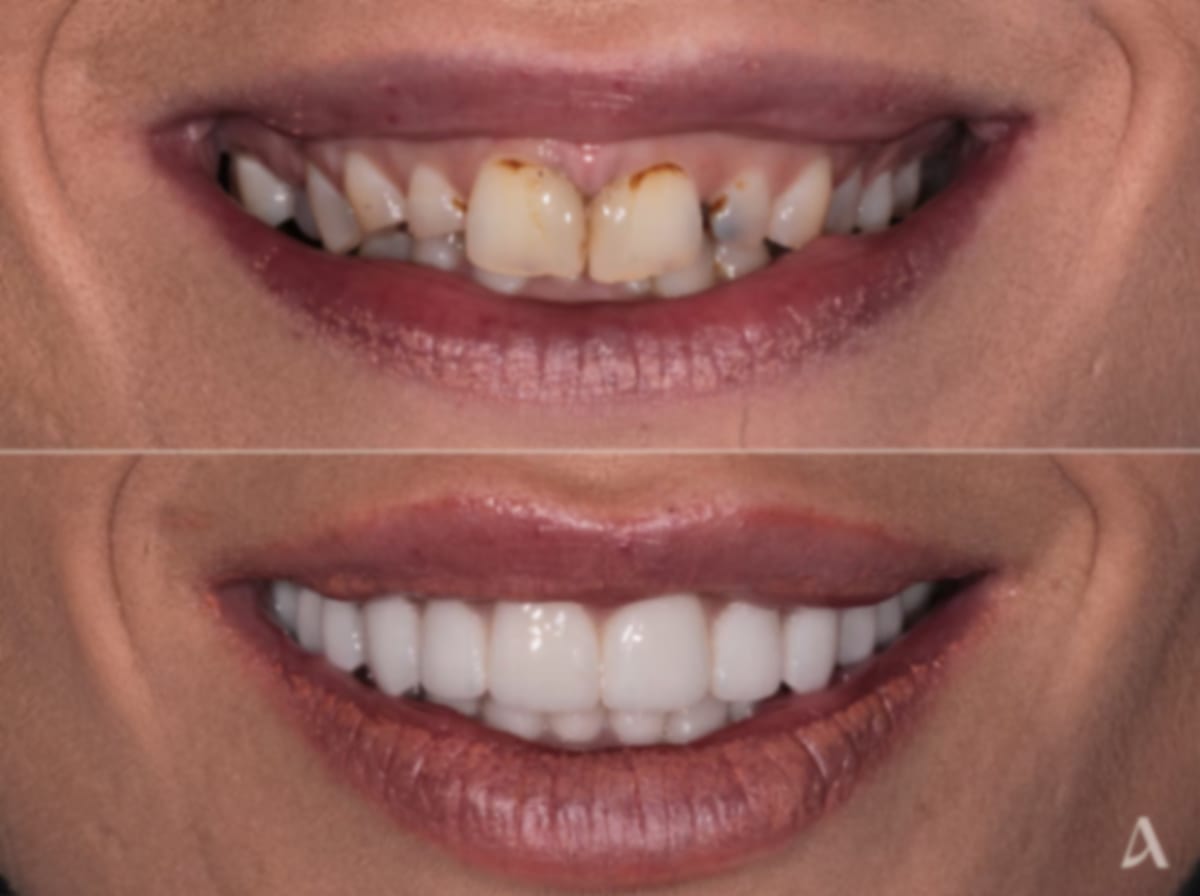
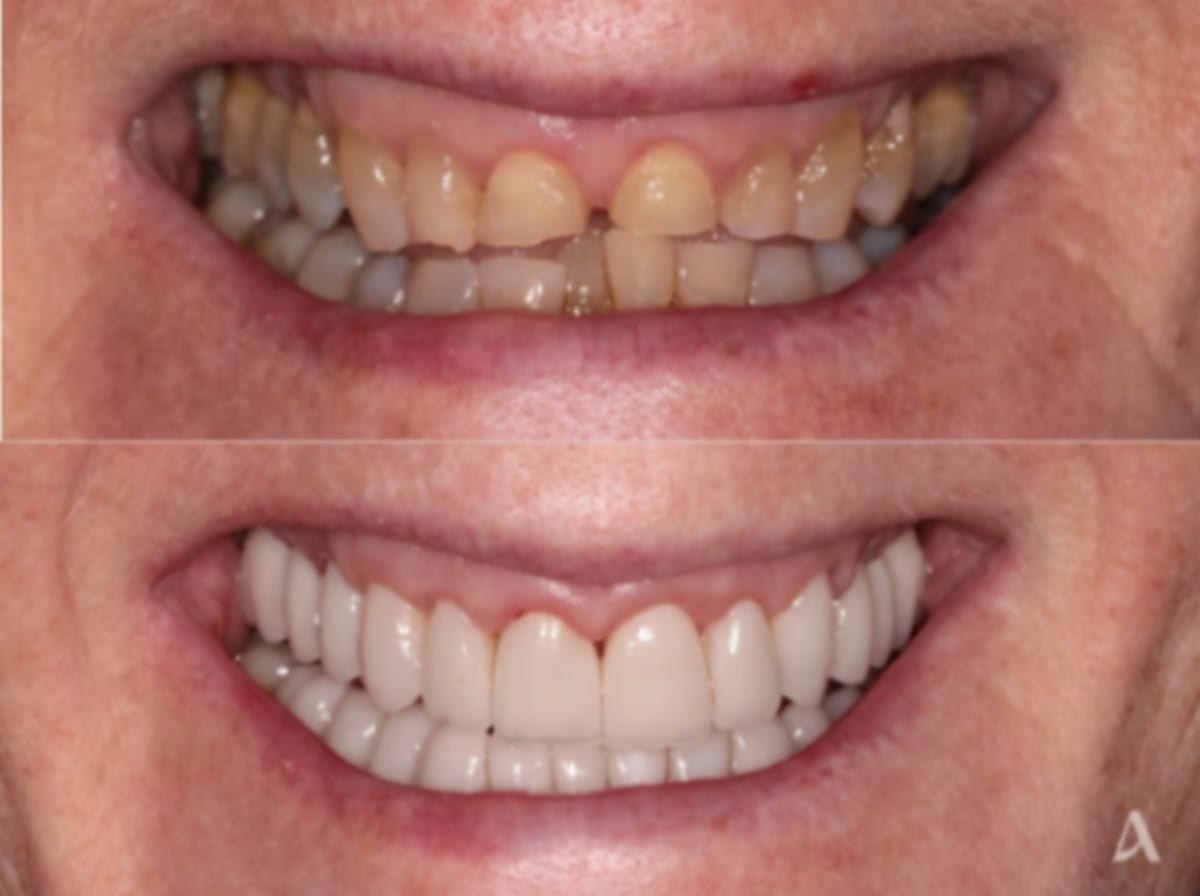
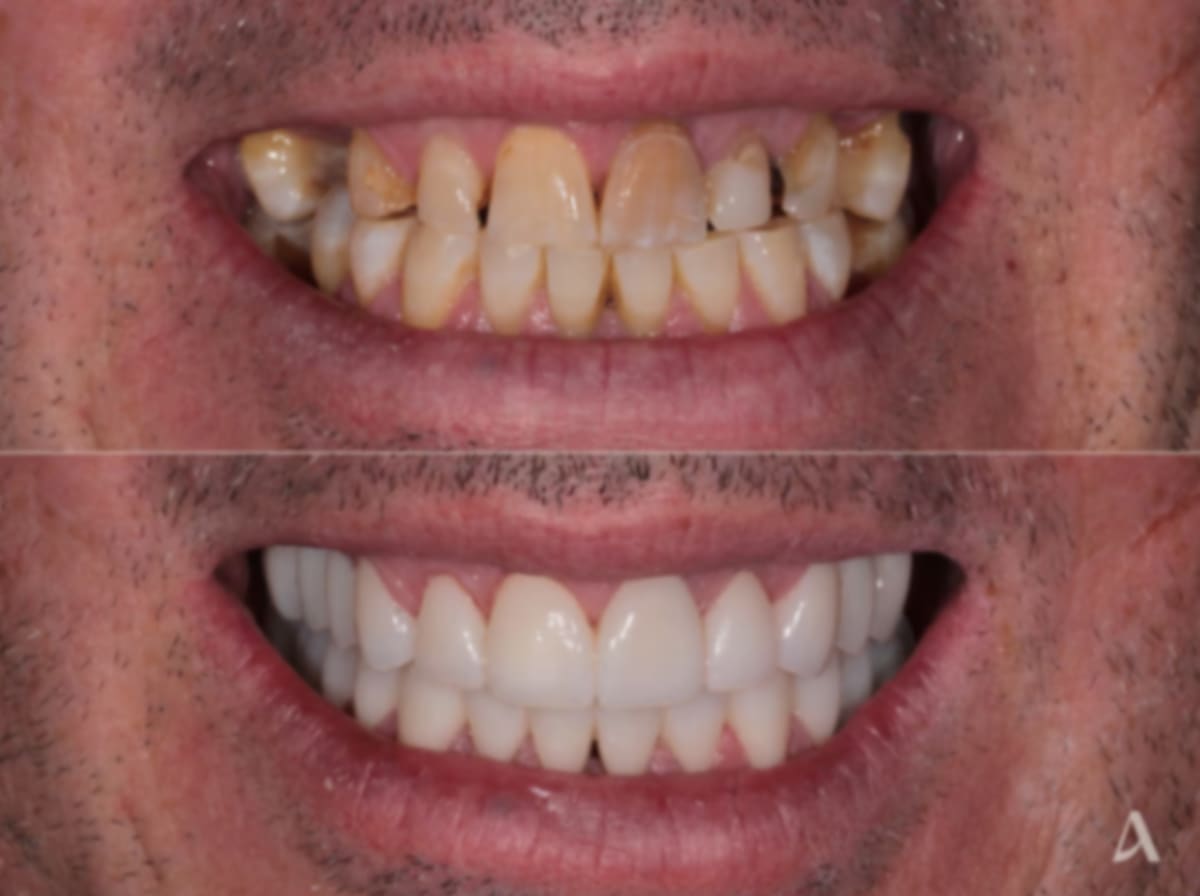
Clinical cases where grinding was the main factor for oral rehabilitation
 |  |  |
|---|
Treatment performed by Dr Cristian Dunker — Oral Rehabilitation & Cosmetic Dentistry
The wear in these cases was years in the making. Each rehabilitation shown above could have been prevented, or significantly slowed, by catching the grinding early, fitting a custom occlusal splint, and keeping up with steady oral care. A splint worn nightly plus routine dental check-ups that flag worn cusps and flattened biting edges early are the two interventions that change the outcome.
Sleep bruxism and awake bruxism are different problems
The international consensus on bruxism distinguishes two distinct activities (Lobbezoo et al., 2018). Recognising which one applies changes what you can usefully do about it.
Sleep bruxism happens during sleep, mostly in light sleep stages, and is driven by the central nervous system as part of normal sleep arousal (Carra et al., 2012). It is not a sign of stress or a personality trait. It is more common in people with snoring or obstructive sleep apnoea (where the airway narrows and breathing pauses during sleep), in people taking some antidepressants, in people who drink alcohol or use stimulants in the evening, and in some children, where it usually settles on its own. The grinding episodes themselves are involuntary and largely unconscious.
Awake bruxism is the daytime habit of clenching the teeth, bracing the jaw, or holding the lower jaw forward, often during concentration, screen work, driving, or stressful conversations. Unlike sleep bruxism, awake bruxism is closely linked to stress, anxiety, and posture, and it responds well to awareness training and habit reversal (Manfredini & Lobbezoo, 2009). People with awake bruxism are often unaware that their teeth are touching for hours at a time during the day. Many people have both. The distinction matters because the home-care strategies for each are different, even though the dental damage they cause looks similar.
Signs to watch for
A few markers point towards bruxism that is worth assessing.
Jaw soreness or tightness on waking, particularly around the angle of the jaw and the temples. The masseter muscle (the main chewing muscle on the side of the face) often feels firm to touch.
Morning headaches, especially across the temples or the top of the head.
Teeth that feel sensitive to cold or to acidic foods when they did not before.
Visible flattening or chipping of the front biting edges or the back chewing surfaces.
A partner reporting grinding sounds at night.
Repeatedly fractured fillings, crowns, or veneers.
Worn or scalloped edges along the side of the tongue, where the tongue presses against the teeth during clenching.
Any one of these in isolation is not diagnostic. Several together strongly suggests bruxism is contributing.
What you can do at home
For awake bruxism, awareness is the most useful single tool. The starting principle is "lips together, teeth apart, jaw relaxed". Healthy teeth touch only briefly during swallowing. If your teeth are touching at any other time, the jaw is being held in a tense position and the muscles do not get to rest. A few practical habits help.
Place small visual cues on your computer monitor, phone lock screen, or steering wheel. A coloured sticker is enough. Each time you see it, check whether your teeth are touching, your jaw is clenched, or your shoulders are raised. Drop the jaw and let the lips rest closed.
Notice trigger contexts. Many people clench during specific activities: driving in traffic, focused screen work, lifting at the gym, or difficult phone calls. Once you have identified your triggers, the habit is easier to interrupt.
Use the diaphragmatic breath. Breathing slowly through the nose, into the belly rather than the chest, lowers overall muscle tension and tends to release the jaw with it.
Reduce evening stimulants. Coffee in the late afternoon, alcohol, and recreational stimulants all increase the frequency of sleep bruxism episodes in the people who already do it (Bertazzo-Silveira et al., 2016).
Look at your sleep. If you snore loudly, wake unrefreshed, or have been told you stop breathing during sleep, talk to your GP about screening for sleep apnoea. Treating the airway often reduces sleep bruxism as a side effect.
Manage daytime stress directly. Bruxism that worsens in stressful periods is a useful signal that the stress itself needs attention. Counselling, exercise, and structured relaxation all help, and they help the rest of you as well.
For people whose bruxism is mild, these home steps are often enough to slow or stop further wear.
What a dentist can do
When tooth wear is already established, or home care has not been enough, several options exist.
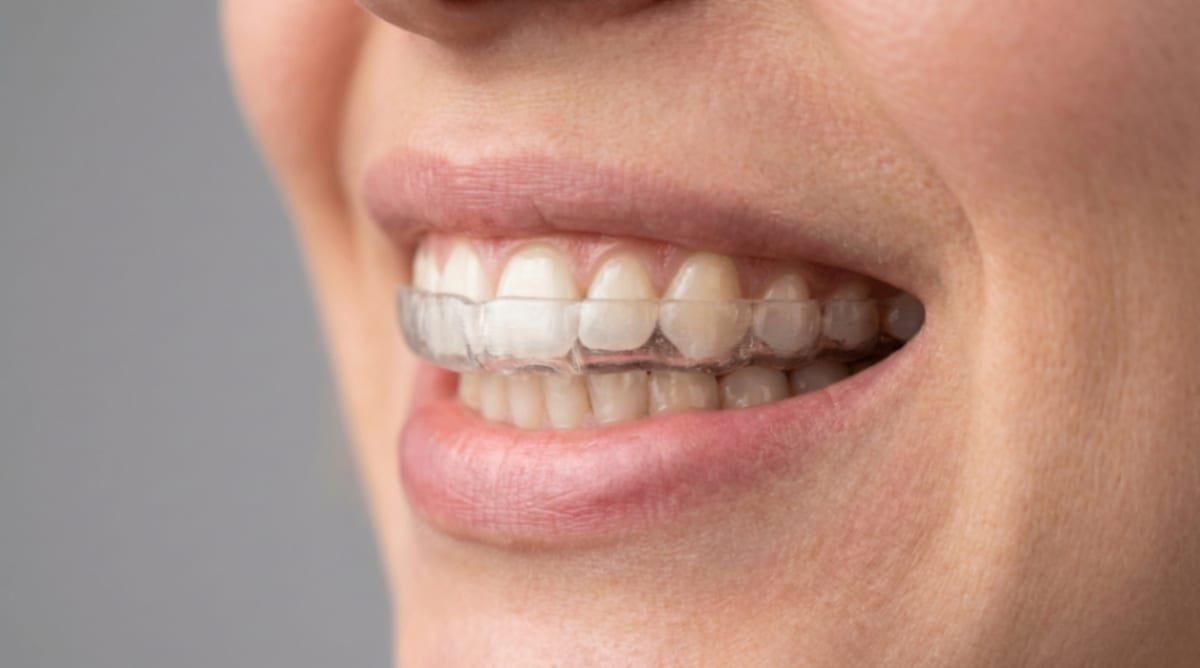
An occlusal splint (a custom-fitted hard acrylic mouthguard, usually worn at night) is the most common dental intervention. The 2007 Cochrane review on occlusal splints for sleep bruxism concluded that the evidence is mixed about whether splints reduce bruxism episodes themselves, but suggested they do offer some benefit in protecting against tooth wear. More recent systematic reviews have reached the same conclusion: a well-fitted custom splint will not necessarily stop you grinding, but it can reliably absorb the wear that would otherwise reach your teeth, and it can take pressure off the jaw muscles overnight. A custom splint is different from the soft boil-and-bite mouthguards sold in pharmacies. A soft guard tends to encourage chewing and can make some people grind harder. A hard, accurately-fitted splint is the standard recommendation.
Restoring worn teeth with porcelain (a tooth-coloured ceramic material), onlays, or full-coverage crowns becomes the right step when the wear has reached the dentine, when teeth have become sensitive, or when the bite has changed enough to affect chewing. Restorative work without addressing the bruxism is short-lived, so a splint is usually fitted at the same time to protect the new restorations.
Botulinum toxin injections to the jaw muscles are sometimes offered for severe bruxism that has not responded to other measures. The evidence is moderate at best, the effect is temporary (typically three to six months per injection), and it is not a routine first step (De La Torre Canales et al., 2017).
Referral for sleep assessment is appropriate when sleep bruxism is paired with snoring, daytime fatigue, or witnessed pauses in breathing. Treating an underlying sleep-disordered breathing problem can substantially reduce sleep bruxism on its own.
Common myths
A few ideas about bruxism are worth correcting.
"Adjusting the bite will fix bruxism." It will not. Older theories that grinding was caused by minor bite imperfections have not been supported by modern evidence. Bite adjustment is reserved for specific situations where occlusal interference is genuinely a factor, and it is no longer a routine treatment for bruxism.
"A soft mouthguard from the pharmacy is fine." It is better than nothing for occasional protection but is not a substitute for a custom splint if grinding is regular.
"Children grinding at night will damage their adult teeth." Sleep bruxism in children usually settles by adolescence and rarely causes lasting damage to permanent teeth. Most cases need observation rather than treatment.
"Bruxism is purely a stress problem." Awake bruxism has a strong stress link. Sleep bruxism is mostly driven by sleep architecture and arousal, not by daytime stress.
When to book an assessment
A short assessment is worth booking if you have noticed any of the following:
A jaw that is sore on waking most mornings.
Teeth that have visibly shortened, chipped, or become more sensitive.
A pattern of fractured fillings or restorations.
A clicking, locking, or painful jaw joint.
Snoring or unrefreshing sleep alongside any of the above.
The assessment usually involves looking at your tooth wear pattern, palpating the jaw muscles, checking the joint, and discussing your sleep and daytime habits. From there, a custom splint, restorative planning, or referral for sleep assessment can be matched to what is actually driving the wear.
Bottom line
Bruxism is common, usually involuntary, and most damaging when it goes unrecognised for years. For awake bruxism, the daily reminder of "lips together, teeth apart, jaw relaxed" plus stress and posture work is the foundation. For sleep bruxism, a well-fitted custom occlusal splint protects the teeth even if it does not stop the grinding itself, and screening for sleep-disordered breathing is worth considering. Restorative work can repair existing damage but only lasts when the underlying habit is also being managed. If you have noticed jaw soreness, sensitive teeth, or visible wear, our team at ArtSmiles can assess the wear pattern, discuss whether a splint is appropriate, and coordinate restorative or sleep-related referrals if they are needed. Please book an assessment rather than self-managing if your symptoms are interfering with sleep or with eating. For more on how we approach grinding clinically at ArtSmiles, see our bruxism treatment page.
Written by Dr. Cristian Dunker, BDSc, MBA.
Medically reviewed by Dr. Cristian Dunker.
Frequently asked questions
How do I know if I grind my teeth at night?
Common clues are jaw soreness on waking, morning headaches, a partner hearing grinding sounds, and visible flattening or chipping at the biting edges. A dental check-up is the best way to confirm, since wear patterns are characteristic.
Will a nightguard stop me grinding?
Probably not. The evidence is mixed on whether occlusal splints reduce grinding episodes, but they reliably protect the teeth from further wear and often reduce morning jaw soreness. That tooth-protection benefit is the main reason they are recommended.
Can stress cause bruxism?
Stress is closely linked to awake bruxism, the daytime clenching habit. Sleep bruxism has a different pathway driven by sleep arousal, although stressful periods can make existing sleep bruxism worse. Either way, stress management helps and is rarely the only step needed.
Is bruxism in children a concern?
Sleep bruxism in children is common and usually settles by the late teens. Most cases need observation rather than active treatment. If your child has visible wear on their permanent teeth, snores loudly, or wakes with jaw pain, an assessment is worth booking.
Will my worn teeth grow back?
No. Tooth tissue does not regenerate. Mild wear can be left alone and monitored. More advanced wear can be restored with composite, onlays, or crowns, usually paired with a splint to protect the new work.
How long does a custom occlusal splint last?
A well-made hard splint typically lasts five to ten years with daily use, depending on the severity of grinding. Severe nightly grinders may wear through one in two to three years. The dentist will check the fit and condition at each routine visit.
References
Macedo, C. R., Silva, A. B., Machado, M. A. C., Saconato, H., & Prado, G. F. (2007). Occlusal splints for treating sleep bruxism (tooth grinding). Cochrane Database of Systematic Reviews, 4, CD005514.
Riley, P., Glenny, A. M., Worthington, H. V., Jacobsen, E., Robertson, C., Durham, J., Davies, S., Petersen, H., & Boyers, D. (2020). Oral splints for patients with temporomandibular disorders or bruxism: a systematic review and economic evaluation. Health Technology Assessment, 24(7), 1-224.
Lobbezoo, F., Ahlberg, J., Raphael, K. G., Wetselaar, P., Glaros, A. G., Kato, T., Santiago, V., Winocur, E., De Laat, A., De Leeuw, R., Koyano, K., Lavigne, G. J., Svensson, P., & Manfredini, D. (2018). International consensus on the assessment of bruxism: Report of a work in progress. Journal of Oral Rehabilitation, 45(11), 837-844.
Carra, M. C., Huynh, N., & Lavigne, G. (2012). Sleep bruxism: a comprehensive overview for the dental clinician interested in sleep medicine. Dental Clinics of North America, 56(2), 387-413.
Bertazzo-Silveira, E., Kruger, C. M., Porto De Toledo, I., Porporatti, A. L., Dick, B., Flores-Mir, C., & De Luca Canto, G. (2016). Association between sleep bruxism and alcohol, caffeine, tobacco, and drug abuse: A systematic review. Journal of the American Dental Association, 147(11), 859-866.
Manfredini, D., & Lobbezoo, F. (2009). Role of psychosocial factors in the etiology of bruxism. Journal of Orofacial Pain, 23(2), 153-166.
De La Torre Canales, G., Câmara-Souza, M. B., do Amaral, C. F., Garcia, R. C., & Manfredini, D. (2017). Is there enough evidence to use botulinum toxin injections for bruxism management? A systematic literature review. Clinical Oral Investigations, 21(3), 727-734.