Compiled from clinical pathology references. Medically reviewed by Dr Cristian Dunker, Principal Dentist, ArtSmiles Cosmetic Dentistry.
Quick summary
Also called | OSMF, oral submucous fibrosis, betel-quid keratosis (related) |
How urgent? | 🔴 Important, a potentially malignant disorder (a condition that carries a real risk of progressing to cancer) with 7 to 13% lifetime risk of progression to oral cancer; needs early cessation and lifelong follow-up |
Common or rare? | Uncommon in Australia overall, but well recognised in South and South-East Asian communities where betel-quid chewing is common |
Who it affects | Adults of any age with a long-standing betel-quid (areca nut) chewing habit, including those who started in their teens or twenties |
Who treats it | General dentist for initial recognition and cessation support; oral medicine specialist or oral and maxillofacial surgeon for biopsy, intralesional (injected directly into the affected tissue) therapy and surgical release |
Based on | Neville, Cawson and Regezi |
Oral submucous fibrosis is a long-term scarring disease of the lining of the mouth. Over months to years, the cheeks, palate and lips become progressively paler, stiffer and tighter, and many patients eventually struggle to open the mouth wide enough to brush their back teeth or eat comfortably.
It is most common in parts of South and South-East Asia, but is seen worldwide wherever betel-quid chewing is part of cultural practice. In Australia, it is most often diagnosed in people from these communities or in those who have spent many years overseas.
This article from the team at ArtSmiles, reviewed by Dr Cristian Dunker, explains what the condition is, why it matters, and what good care looks like.
What is it?
Oral submucous fibrosis (OSMF) is a chronic, slowly progressive condition in which the submucosa (the connective tissue layer just under the lining), the connective tissue layer just under the lining of the mouth, becomes thickened and scarred. The medical word for this is juxtaepithelial hyalinisation (dense, glassy collagen scarring just under the surface lining), the connective tissue right below the surface lining lays down dense, hard collagen.
The result is a mouth that looks and feels different:
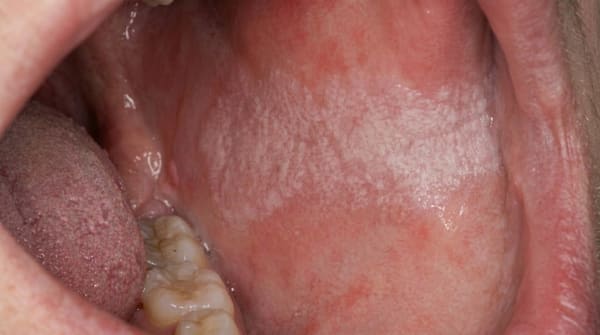
The lining looks pale and marbled, often white-streaked.
The cheeks and palate lose their normal stretch.
Vertical fibrous bands can be felt running through the cheeks.
The mouth opens less wide than it used to (a feature called trismus (restricted mouth opening)).
The tongue may also become less mobile.
OSMF is recognised internationally as a potentially malignant disorder, meaning it carries a measurable risk of progression to oral squamous cell carcinoma. That risk is what makes early recognition and follow-up so important.
Who tends to get it?
OSMF affects people of all ages, but is most often diagnosed in:
Young to middle-aged adults who have chewed betel quid (paan) for several years.
People from South and South-East Asia, the Pacific Islands and parts of East Africa, where betel quid is a traditional preparation.
Both men and women, with the pattern depending on local chewing habits.
Those who started the habit in their teens or twenties, who may develop disease earlier in life.
Those who include tobacco in their quid, who tend to have more severe disease.
In Australia, OSMF is most often diagnosed in patients of South Asian heritage. We approach the conversation with cultural awareness and without judgement, the goal is to support patients in protecting their long-term health.
What causes it?
The dominant cause is areca nut, the seed of the Areca catechu palm. Areca nut is the central ingredient in betel quid, often combined with slaked lime, betel leaf, spices, sweeteners and (commonly) tobacco. Several mechanisms contribute:
Alkaloids in areca nut, particularly arecoline (the main active alkaloid in areca nut), stimulate connective tissue cells to lay down extra collagen.
Reduced collagen breakdown allows that collagen to accumulate.
Repeated micro-injury from the rough texture of the quid kept against the cheek for hours adds further inflammation.
Capsaicin from chillies and micronutrient deficiencies (iron, vitamin B, zinc) may worsen the response.
Genetic susceptibility explains why some heavy chewers develop the disease early and others not at all.
Areca nut alone, without tobacco, is enough to cause OSMF, which is why "tobacco-free" or "lime-free" quids are not safe alternatives. The World Health Organization classifies areca nut as a Group 1 human carcinogen.
How does it develop?
The disease is gradual. A typical course is:
Burning sensation. The first symptom is often a burning feeling in the mouth when eating spicy food, sometimes with small fluid-filled blisters.
Mucosal pallor. The cheeks, palate and lips begin to look pale and marbled.
Fibrous bands. Vertical strands of scar tissue develop in the cheeks and around the lips.
Reduced mouth opening. As the bands tighten, mouth opening becomes progressively limited (trismus).
Tongue and uvula involvement. In advanced disease, the tongue becomes less mobile and the uvula may shrink.
Late changes. Some patients develop a stiff, bound-down mouth with severely limited function.
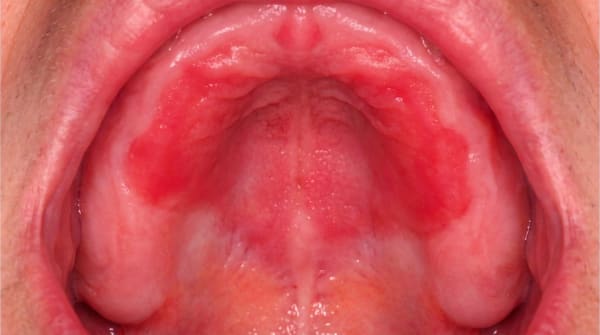
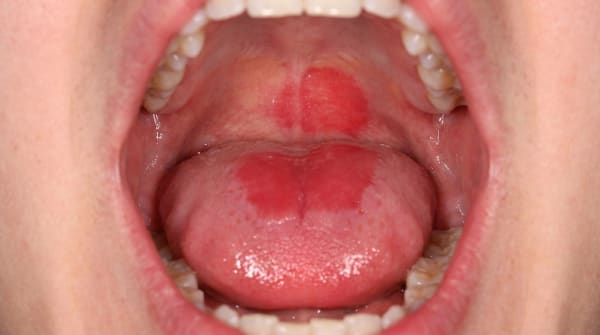
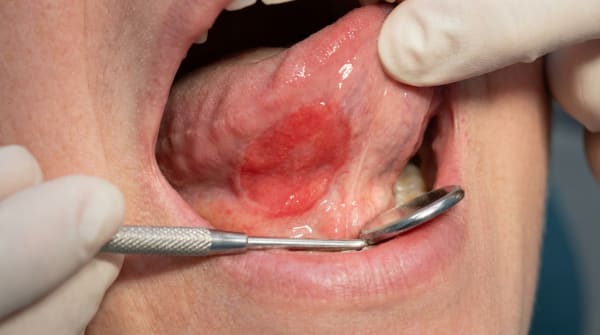
Throughout this process, the surface lining of the mouth is at risk of further changes, including white patches (leukoplakia) and, in some patients, squamous cell carcinoma. This risk is the principal reason for ongoing review.
What might you notice?
Common symptoms include:
A burning feeling when eating spicy or hot food.
Small blisters or ulcers on the cheeks or palate that take time to heal.
A feeling that the cheeks are getting tighter.
Difficulty opening the mouth, especially noticed when eating or yawning.
A pale, marble-like appearance of the lining of the mouth.
Firm, vertical strands under the lining of the cheeks, palpable with the tongue.
Reduced ability to stick the tongue out in advanced disease.
Difficulty swallowing dry food.
The pace of change is often slow enough that patients adapt without realising the change has happened.
What an X-ray might show
OSMF is a soft-tissue fibrosis and does not show on X-rays. Imaging may be relevant to assess jaw opening, evaluate the temporomandibular joints in patients with significant trismus, or rule out bone involvement if cancer transformation is suspected.
What happens at the dentist?
At ArtSmiles, a visit for someone with, or at risk of, OSMF involves:
A respectful, judgement-free conversation about chewing habits, including duration, frequency and contents of the quid.
A careful oral examination, with special attention to colour, texture, fibrous bands and mouth-opening measurement.
Documentation. We measure the maximum mouth opening (interincisal distance (the gap between upper and lower front teeth when the mouth is open)) so progression can be tracked over time, and we take photographs.
A check for related conditions, leukoplakia, lichenoid reactions, candidiasis and any suspicious areas that may need biopsy.
Coordination with an oral medicine specialist or oral and maxillofacial surgeon when appropriate, particularly for biopsy and intralesional therapy.
A long-term care plan with realistic expectations: cessation, exercises, dental care, follow-up imaging and reviews.
We will explain the link with areca nut clearly and supportively, and provide help with cessation if requested.
Is this serious?
Yes, but it is also manageable when caught early. The reasons it is serious include:
Limited mouth opening that affects eating, brushing and dental treatment.
Persistent burning that reduces quality of life.
Significantly increased risk of oral squamous cell carcinoma (around 7 to 13% over time in published studies).
Difficulty in dental treatment because of reduced access.
Need for lifelong follow-up, even if symptoms improve.
A balanced way to think about it is that the disease is preventable from getting worse if the underlying habit stops, and the cancer risk is manageable with regular review.
Could it be something else?
Some other conditions can produce similar features:
Scleroderma, a connective tissue disease that causes systemic fibrosis.
Mucosal lichen planus, particularly the atrophic form with reticular streaks.
Iron-deficiency dysphagia (Plummer-Vinson syndrome), which causes burning and a pale mucosa.
Burning mouth syndrome, a separate condition without visible mucosal change.
Generalised mucosal atrophy from systemic illness or medication.
A specialist examination, biopsy and detailed history are the main ways to tell these apart.
How is it treated?
There is no single curative therapy, but a multi-step plan can help:
Cessation of areca nut and tobacco in any form. This is the single most important step.
Dietary support. Iron, vitamin B-complex, zinc and antioxidants where appropriate.
Oral exercises. Mouth-opening exercises with simple aids reduce stiffness over time.
Intralesional injections of corticosteroids and hyaluronidase (an enzyme that helps break down scar tissue) into affected sites by an oral medicine specialist.
Other medical therapies such as pentoxifylline or lycopene have been used; evidence is mixed and decisions are individualised.
Surgical release of dense bands in advanced cases, sometimes followed by grafting.
Regular dental care to keep teeth and gums healthy with limited mouth opening.
Lifelong follow-up with regular oral examinations to detect any new white or red patches early.
We work alongside specialists for the medical and surgical aspects, and we focus on the dental care and long-term review.
What's the long-term outlook?
The outlook depends heavily on whether areca nut is stopped. Patients who stop the habit, follow exercises, attend reviews and address any new lesions early do well in most cases. Those who continue chewing are at much higher risk of progression and malignant transformation.
If you or a family member chews betel quid and is starting to feel mouth tightness or burning, please come in for an early assessment. The earlier the conversation starts, the better the long-term outcome.
A note on this article
This article is for educational purposes only and does not constitute a clinical diagnosis. Please consult a registered dental practitioner for assessment and treatment advice.
The cover image above is an AI-generated illustration based on the most common visible features of this condition described in clinical pathology references. It is not a photograph of a real case and should not be used to diagnose or rule out the condition in your own situation. If you are concerned about something you have noticed, please book an assessment with a registered dental practitioner.
References
Neville, B. W., Damm, D. D., Allen, C. M., & Chi, A. C. (2016). Oral and maxillofacial pathology (4th ed., Ch. 10: Epithelial Pathology, Oral Submucous Fibrosis). Elsevier.
Cawson, R. A., & Odell, E. W. (2017). Cawson's essentials of oral pathology and oral medicine (8th ed., Ch. 16: Premalignant Conditions). Elsevier.
Regezi, J. A., Sciubba, J. J., & Jordan, R. C. K. (2017). Oral pathology: clinical pathologic correlations (7th ed., Ch. 3: Red and White Lesions). Elsevier.
Frequently asked questions
What is oral submucous fibrosis?
Oral submucous fibrosis is a chronic, progressive scarring of the mouth lining caused by chewing areca nut (betel nut), pan or gutka. The connective tissue under the lining gradually replaces with stiff, contracted fibrous tissue, leading to a thick, leathery feel, paleness of the cheeks and progressive limitation of mouth opening.
Is oral submucous fibrosis pre-cancerous?
Yes. It is classed as a potentially pre-malignant condition with a documented rate of progression to oral squamous cell carcinoma. Long-term affected patients have a substantially higher lifetime risk of oral cancer than the general population, with the risk concentrated in the areas of greatest fibrosis.
Can oral submucous fibrosis be reversed?
Early stages can partially reverse if all areca-nut products are stopped completely. Once dense fibrosis has set in, the changes are largely irreversible. Treatments to slow progression include topical and intralesional steroids, antioxidants, lycopene, hyaluronidase injections and physiotherapy to maintain mouth opening.
How does it affect dental treatment?
Severely restricted mouth opening makes routine dental care difficult and impacts on quality of life. Endotracheal intubation for surgery becomes harder. Early diagnosis, complete cessation of areca-nut products and regular dental review with photographs are the cornerstones of management.