Compiled from clinical pathology references. Medically reviewed by Dr Cristian Dunker, Principal Dentist, ArtSmiles Cosmetic Dentistry.
Quick summary
At a glance | Detail |
|---|---|
Also called | Tic douloureux, tic, classical trigeminal neuralgia |
How urgent? | 🔴 See a dentist or doctor promptly, the pain is severe and a medical assessment is needed to rule out other causes |
Common or rare? | Uncommon (around 4 to 29 new cases per 100,000 people each year) |
Who it affects | Mostly adults over 50, with women affected about three times as often as men |
Who treats it | A general dentist may be the first to recognise it, but ongoing care usually involves a neurologist or oral medicine specialist |
Based on | Regezi, Neville, Cawson |
What is it?
Trigeminal neuralgia is a nerve pain condition that causes sudden, sharp, electric-shock-like jolts in one side of the face. The pain follows the path of the trigeminal nerve, the main sensory nerve of the face and mouth. Because the pain often feels like it is coming from a tooth, many people first visit a dentist for help.
Who tends to get it?
Trigeminal neuralgia mostly affects people in their fifties, sixties and seventies, with the average age of onset between 53 and 57. Women are affected around three times more often than men. The right side of the face is involved more frequently than the left, and only around 3 to 5 percent of people have pain on both sides.
The condition is rare in people under 40. When it does appear in someone younger, it raises the possibility of an underlying neurological condition such as multiple sclerosis, which is around 20 times more common in this group than in the general population.
What causes it?
In most cases, trigeminal neuralgia is thought to be caused by a small blood vessel pressing on the trigeminal nerve where it leaves the brain. This pressure gradually wears away the protective coating of the nerve (a process called demyelination, the loss of the insulating layer that allows the nerve to fire normally), making the nerve fire abnormally.
Less commonly, the condition can be linked to:
Multiple sclerosis, which damages the same protective nerve coating
A tumour or cyst near the nerve
An arteriovenous malformation (a tangle of abnormal blood vessels)
Rarely, a lesion in the nasopharynx, maxillary sinus, middle ear or base of the skull
When no underlying cause can be found, the condition is described as idiopathic.
How does it develop?
Think of the trigeminal nerve as an electrical cable carrying signals from the face to the brain. Normally, the cable is wrapped in insulation that keeps the signal travelling smoothly. When a blood vessel rubs against the nerve over many years, the insulation wears thin in patches. The exposed wires can short-circuit, sending a sudden burst of intense electrical activity to the brain. The brain interprets this burst as severe, stabbing pain in the area the nerve serves.
This is why even a light touch, a breeze, a shave, brushing the teeth, can set off an attack that feels completely out of proportion to the trigger.
What might you notice?
What it looks like
There is usually nothing to see. The face looks completely normal, and there are no swellings, ulcers or rashes. During an attack, however, the face may briefly grimace or twitch on the affected side, which is where the older name tic douloureux (painful jerking) comes from.
What it feels like
The classic description is a sudden, severe, sharp or stabbing pain, often described as:
An electric shock
A bolt of lightning
Being stabbed with an ice pick
Key features include:
Pain on one side of the face only, in the area supplied by one or more branches of the trigeminal nerve (most often the cheek and upper teeth, or the jaw and lower teeth)
Each attack lasts only seconds to a couple of minutes
A short refractory period (a brief window after each attack when another cannot be easily triggered) follows an attack
Specific trigger zones on the gum, chin, cheek, lip or nasolabial fold
Triggers include light touch, toothbrushing, shaving, washing the face, eating, talking or even a draft of cold air
Between attacks, there is usually complete relief, although around a quarter to half of people describe a continuous dull ache or burning between episodes
In the early stages, the pain may be milder, a twinge, dull ache or burning sensation, which can be mistaken for a toothache
What an X-ray might show
Dental X-rays are normal in trigeminal neuralgia, which is one of the clues that the pain is not coming from a tooth. A dentist or doctor may arrange an MRI scan of the head to look for blood vessels pressing on the nerve, or to rule out other causes such as a tumour or multiple sclerosis.
What happens at the dentist?
Because the pain often feels as though it is coming from a tooth, the dentist's first job at ArtSmiles is to carefully rule out a dental cause. This usually involves:
A detailed conversation about the pain, when it started, how long each episode lasts, what sets it off, and whether there are pain-free intervals
Examination of the teeth and gums, including tests to check the health of the dental nerves
Dental X-rays of the suspected area
A check of the cranial nerves and the facial muscles for any sensory loss or weakness
A helpful clue is the refractory period, the short window after an attack when the trigger zone cannot set off another episode. This is unusual for toothache, which tends to keep responding to the trigger.
If the pattern fits trigeminal neuralgia, the dentist will usually refer to a general medical practitioner, neurologist or oral medicine specialist for confirmation and ongoing management. An MRI scan is often arranged at this stage to look for an underlying cause.
A cautious dentist will avoid extracting healthy teeth or starting irreversible dental treatment when the symptoms point to a nerve cause rather than a dental cause.
Is this serious?
🔴 Trigeminal neuralgia is not life-threatening, but it is regarded as one of the most painful conditions known to medicine. It can have a serious impact on eating, sleeping, talking and mood, and is associated with significant rates of depression.
Without treatment, attacks tend to become more frequent and more severe over time. Spontaneous remissions can happen, sometimes lasting weeks or months, but the condition usually returns. Because effective treatments are available, prompt assessment is worthwhile.
If you've noticed any of these signs for more than two weeks, it's worth booking an assessment.
Could it be something else?
Several conditions can cause similar facial pain. The textbooks list these as the main considerations:
Toothache from pulpitis, an inflamed tooth nerve can cause sharp stabs of pain that mimic neuralgia in the early stages. A dentist tells them apart by examining the teeth, taking X-rays, and noting that pulpitis pain usually changes character and becomes longer-lasting, rather than staying as brief seconds-long jolts.
Pretrigeminal neuralgia, a milder, dull or aching version of the pain that can precede classical trigeminal neuralgia by weeks or months. Diagnosis is usually only made looking back, once the classic features develop.
Glossopharyngeal neuralgia, a similar lightning pain, but felt in the throat, base of the tongue, tonsil and ear rather than the face. It is typically triggered by swallowing, talking or coughing rather than touching the face.
Postherpetic neuralgia (after shingles), a persistent burning or aching pain that follows a previous shingles (herpes zoster) infection of the trigeminal nerve. The history of a previous facial rash, and often residual scarring or skin colour change, distinguishes it.
Multiple sclerosis, can produce pain that is indistinguishable from classical trigeminal neuralgia, but more often is constant, lacks clear trigger zones, or extends beyond the trigeminal area. It is suspected in younger patients and confirmed by neurological examination and MRI.
Migrainous neuralgia (cluster headache), intense, piercing pain around one eye and the upper face, often at the same time each night, accompanied by a watering eye, runny nose and facial flushing. The longer attacks (typically 15 minutes to several hours) and the autonomic features set it apart.
Migraine, throbbing, longer-lasting headache, often with visual disturbance, nausea and light sensitivity, rather than brief electric-shock jolts.
Giant cell arteritis (temporal arteritis), a vasculitis seen in older adults that causes severe headache, scalp tenderness over the temporal artery, and jaw claudication (cramping pain in the chewing muscles that builds with use and eases with rest). Blood tests showing a raised ESR and C-reactive protein, plus temporal artery biopsy or ultrasound, confirm it.
Atypical (persistent idiopathic) facial pain, a constant, dull, boring ache, usually in the upper jaw, that crosses anatomical boundaries and is often present from waking until sleep. It does not have the lightning quality or trigger zones of trigeminal neuralgia.
Atypical odontalgia, a constant dull ache localised to a tooth or recently extracted area that appears completely normal on examination and X-ray.
Burning mouth syndrome, a chronic burning sensation in the mouth, tongue or lips, usually without any visible cause. It is constant rather than paroxysmal (occurring in sudden bursts).
Trigeminal neuropathy, sensory disturbance (numbness, burning or persistent pain) caused by damage to the trigeminal nerve from surgery, trauma, tumours, or inflammatory disease. Unlike trigeminal neuralgia, there is objective sensory loss.
Bell's palsy, facial nerve weakness that can be preceded by aching pain in or near the ear, sometimes spreading to the jaw. The developing facial paralysis distinguishes it.
Acute sinusitis, pain in the cheek and upper teeth from inflamed sinuses. It is usually constant, dull and pressure-like, and confirmed by sinus X-ray or CT.
Salivary gland disease (calculi, parotitis), pain triggered by eating, due to a stone obstructing salivary flow, rather than by light touch.
Ear disease (otitis media, neoplasms), preauricular pain that can mimic jaw joint problems but is rarely confused with neuralgia on careful examination.
Temporomandibular joint disorders, jaw joint and muscle pain related to chewing, grinding and clenching, usually a dull ache rather than electric jolts.
Myocardial infarction (heart attack), rarely, cardiac pain can be felt only in the jaw. The associated chest discomfort, sweating and breathlessness usually point to a cardiac cause.
Intracranial tumours, can rarely produce pain resembling trigeminal neuralgia, but usually with associated sensory loss or other cranial nerve problems, prompting urgent imaging.
How is it treated?
There is no home remedy for trigeminal neuralgia, but recognising and avoiding personal trigger zones, for example, brushing teeth gently or shielding the face from cold wind, can reduce the number of attacks while waiting for medical care.
Professional treatment usually starts with medication, prescribed and supervised by a doctor:
Anticonvulsant medication (originally developed for epilepsy, now also used for nerve pain) is the first-line approach. Carbamazepine is the most commonly used drug, often followed or replaced by oxcarbazepine. Around 80 percent of patients experience significant pain control with this regimen, although side effects such as drowsiness, dizziness, dry mouth and nausea are common.
Other medications that may be considered, alone or in combination, include phenytoin, gabapentin, pregabalin, lamotrigine, baclofen, valproic acid, topiramate and duloxetine.
Botulinum toxin type A injections into trigger zones can be used as an additional therapy and may give lasting relief for some people.
Standard pain medications such as opioids are typically not effective for this type of nerve pain.
If medication fails or side effects become intolerable, neurosurgical procedures may be considered. These are performed by specialist surgeons and include:
Microvascular decompression, a surgical procedure that gently moves blood vessels away from the trigeminal nerve. It addresses the underlying cause without destroying nerve tissue and offers long-term relief in 62 to 89 percent of patients.
Stereotactic radiosurgery (Gamma Knife), a non-invasive but destructive technique using a focused beam of radiation to treat part of the nerve.
Percutaneous procedures such as glycerol rhizotomy, balloon microcompression and radiofrequency thermocoagulation, which selectively damage parts of the nerve.
Cryotherapy or neurectomy, older techniques used in selected cases.
All surgical options carry risks, including facial numbness, altered sensation, and a rare but serious complication called anaesthesia dolorosa (numbness combined with persistent pain). The choice of procedure is highly individual and should be discussed in detail with a specialist.
What's the long-term outlook?
Trigeminal neuralgia is a chronic condition that tends to follow a relapsing course over many years. Spontaneous remissions lasting weeks, months or occasionally years can occur, but the attacks generally return and may become more frequent and severe over time.
The outlook with treatment is encouraging. Most people respond well to anticonvulsant medication, at least initially, and surgical options can provide long-term relief when medication is no longer enough. With careful management, most patients can expect meaningful pain control and a return to normal eating, talking and daily activities. Ongoing review is important, as treatment may need to be adjusted over the years and any new neurological symptoms warrant prompt re-assessment.
A note on this article
This article is for educational purposes only and does not constitute a clinical diagnosis. Please consult a registered dental practitioner for assessment and treatment advice.
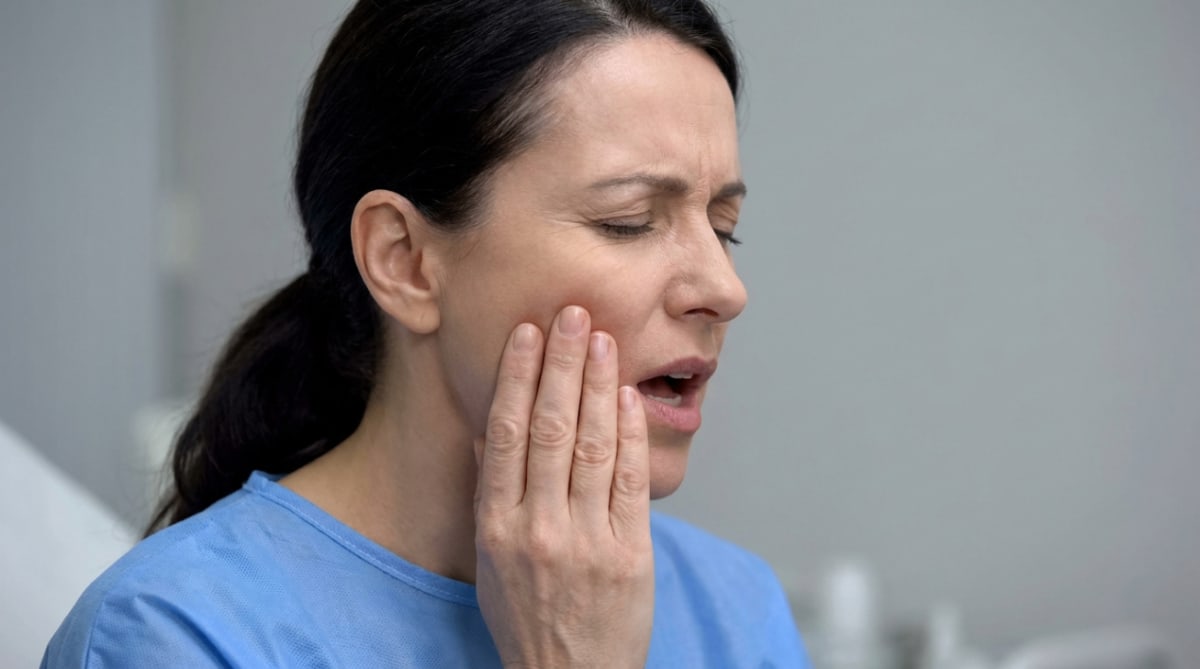
The cover image above is an AI-generated illustration based on the most common visible features of this condition described in clinical pathology references. It is not a photograph of a real case and should not be used to diagnose or rule out the condition in your own situation. If you are concerned about something you have noticed, please book an assessment with a registered dental practitioner.
References
Regezi, J. A., Sciubba, J. J., & Jordan, R. C. K. (2017). Oral pathology: Clinical pathologic correlations (7th ed.). Elsevier. Chapter 4, Red-Blue Lesions, Other Oral-Facial Pain Conditions: Trigeminal Neuralgia, pp. 128 to 130.
Neville, B. W., Damm, D. D., Allen, C. M., & Chi, A. C. (2023). Oral and maxillofacial pathology (5th ed.). Elsevier. Chapter 18, Facial Pain and Neuromuscular Diseases: Trigeminal Neuralgia, pp. 864 to 866.
Cawson, R. A., & Odell, E. W. (2017). Cawson's essentials of oral pathology and oral medicine (8th ed.). Elsevier. Chapter 34, Pain, Anxiety, Neurological and Psychogenic Disorders: Trigeminal Neuralgia, pp. 434 to 437.
Frequently asked questions
What is trigeminal neuralgia?
Trigeminal neuralgia is a chronic facial-pain condition caused by irritation of the trigeminal nerve, the main sensory nerve of the face. It produces sudden, brief, intense electric-shock-like pains in one side of the face, often triggered by light touch, chewing, brushing teeth or even a cool breeze.
What does trigeminal neuralgia feel like?
The classic features are very brief (seconds-long) episodes of severe shock-like or stabbing pain, almost always on one side, in the cheek, jaw or forehead. Pain is triggered by light stimulation of specific 'trigger zones' on the face or in the mouth. Between attacks the face usually feels normal.
How is it diagnosed?
Diagnosis is mostly clinical, based on the very characteristic pattern of attacks. An MRI scan is recommended to look for a blood vessel pressing on the nerve, multiple sclerosis or, rarely, a tumour. Dental and sinus causes are ruled out, particularly because patients often have unnecessary dental work first.
How is trigeminal neuralgia treated?
First-line treatment is medication, usually carbamazepine or oxcarbazepine, which dampen the nerve's misfiring. Most people respond well initially. For patients whose pain returns or who cannot tolerate the medication, options include microvascular decompression surgery, gamma-knife radiation or percutaneous procedures on the trigeminal ganglion. Shared care with a neurologist is the norm.