Compiled from clinical pathology references. Medically reviewed by Dr Cristian Dunker, Principal Dentist, ArtSmiles Cosmetic Dentistry.
Jaw pain, headaches, clicking when you open wide, an earache that does not match anything in the ear, these are some of the everyday symptoms of temporomandibular disorders, often shortened to TMD or sometimes called TMPDS (temporomandibular pain dysfunction syndrome). They are surprisingly common, affecting up to 1 in 10 adults at some point, and the good news is that most cases settle with simple, conservative care.
This article from the team at ArtSmiles, reviewed by Dr Cristian Dunker, explains what TMD is, why it happens, and what helps.
Quick summary
At a glance | Detail |
|---|---|
Also called | TMD, TMJ disorder, TMPDS (temporomandibular pain dysfunction syndrome), myofascial pain dysfunction |
How urgent? | 🟡 Worth seeing your dentist, the pain can affect daily life but is rarely an emergency |
Common or rare? | Common, affects up to 1 in 10 adults at some point |
Who it affects | Mostly adults 20 to 40, with a strong female predominance |
Who treats it | General dentist working with physiotherapy, pain psychology, and (rarely) an oral surgeon |
Based on | Neville, Cawson, Regezi |
What is it?
The temporomandibular joints (TMJs) are the small, complex joints just in front of each ear, where the lower jaw meets the base of the skull. They move every time you talk, eat or yawn, and they rely on a delicate disc and a network of muscles and ligaments to do so smoothly.
Temporomandibular disorders (TMD) is the umbrella term for any condition that disturbs this normal smooth function. It includes:
Myofascial pain (pain in the muscles and the fibrous tissue around them), pain in the chewing muscles, usually the most common form.
Disc displacement, the small disc inside the joint slides out of place, producing clicking and sometimes locking.
Degenerative joint disease, wear-and-tear arthritis of the joint surfaces.
Inflammatory joint disease, for example associated with rheumatoid arthritis.
Trauma-related disorders, after a blow to the jaw or whiplash injury.
Mixed presentations, most patients have features of more than one type.
Who tends to get it?
TMD is most common in:
Adults aged 20 to 40, with a strong female predominance (3:1 to 9:1 in some studies).
People under significant stress, particularly those who clench or grind during sleep.
People with anxiety or depression.
People with widespread chronic pain, fibromyalgia, chronic headaches, neck pain.
People after a recent dental procedure that involved long opening or trauma.
People with whiplash injury or a history of jaw trauma.
What causes it?
TMD is usually multifactorial (caused by several contributing factors interacting rather than a single trigger):
Bruxism (clenching or grinding the teeth), particularly at night.
Stress and anxiety that drive jaw muscle tension.
Postural factors, forward head posture, hunched neck, screen time.
Bite changes, recent crowns, fillings or extractions altering tooth contact.
Jaw injury, direct blow, whiplash, prolonged opening for a dental or surgical procedure.
Joint disease, osteoarthritis, rheumatoid arthritis.
Sleep disorders, including sleep apnoea, which can drive bruxism.
Chewing habits, gum, ice, hard sweets, nail biting.
Hormonal influences, possibly contributing to the strong female predominance.
How does it develop?
TMD typically develops gradually:
A trigger, stress, a new bite, an injury, an episode of clenching, irritates the joint or muscles.
Muscles tighten in protection, producing pain.
The disc inside the joint may slip slightly out of place, producing clicking.
Pain leads to further muscle guarding and altered jaw movement.
The cycle continues until the underlying trigger is addressed and the cycle is broken.
Without intervention, symptoms may settle on their own, persist at a low level, or progress.
What might you notice?
Common symptoms include:
Jaw pain or aching, often worse on chewing and in the morning.
Headaches, particularly in the temples.
Clicking, popping or grating noises when opening or closing the mouth.
Limited mouth opening, under 30 mm in significant cases.
A locked jaw, temporarily unable to open or close fully.
Earache without ear infection.
Tinnitus (ringing in the ears) in some patients.
Neck and shoulder pain.
Sensitive teeth from clenching.
Tired chewing muscles by the end of the day.
Worse symptoms in the morning if grinding overnight.
What happens at the dentist?
When TMD is suspected at ArtSmiles, the visit usually involves:
A detailed history about pain, clicking, locking, headaches, sleep, stress and triggers.
A clinical examination of the joint, the chewing muscles and the bite.
Measurement of mouth opening and observation of any deviation.
A check of the teeth for wear from grinding.
Photographs for the file.
Imaging in selected cases, panoramic X-ray, sometimes MRI for disc displacement, CT for bony changes.
A discussion of likely contributors specific to you.
A conservative treatment plan as the starting point.
Most patients benefit from time, education and simple measures. We do not rush to invasive treatment.
Is this serious?
🟡 TMD is not life-threatening, but it can significantly affect quality of life. Reasons it deserves attention include:
Persistent pain affecting eating, speaking, sleep and concentration.
Limited opening that makes dental treatment difficult.
Bite changes secondary to longstanding muscle imbalance.
Tooth wear from associated grinding.
Worsening anxiety as a result of chronic pain.
A small minority with structural joint disease that may need specialist input.
Could it be something else?
Several conditions can produce similar symptoms:
Dental pain referred from a tooth (such as irreversible pulpitis or a cracked tooth).
Sinusitis producing facial pressure and pain.
Trigeminal neuralgia, sharp lightning pain.
Migraines and tension-type headaches.
Ear infection or eustachian tube dysfunction (a problem with the small tube that connects the middle ear to the back of the nose).
Salivary gland disease (the parotid gland sits over the joint).
Cervical spine problems referring pain to the jaw.
Giant cell arteritis in older adults, a medical emergency.
Atypical facial pain, constant dull aching pain without a clear cause.
Tumours of the joint or surrounding tissues, uncommon but important to exclude.
A careful examination and (when needed) imaging clarifies the picture.
How is it treated?
Treatment is graded, most patients respond to conservative care:
Step 1: Education and self-care
Reassurance that most cases settle.
Soft diet for the worst phase.
Jaw rest, small, controlled movements only.
Hot or cold packs to the muscles.
Avoid hard, chewy or wide-bite foods.
Avoid wide opening, yawn against the back of the hand.
Posture awareness, head up, shoulders back.
Step 2: Simple medical and dental aids
Paracetamol or ibuprofen for short-term pain relief.
Occlusal splint (a custom-made night guard worn at night to protect the teeth and reduce muscle activity), for bruxism.
Gentle jaw stretching exercises, often guided by a physiotherapist.
Massage of the chewing muscles.
Stress management strategies.
Step 3: Specialist input for persistent cases
Physiotherapy, particularly orofacial physiotherapy.
Cognitive behavioural therapy for chronic pain.
Pharmacotherapy, short courses of muscle relaxants, low-dose tricyclic antidepressants (such as amitriptyline) for chronic pain.
Botulinum toxin injections for the chewing muscles in selected cases.
Joint injections, corticosteroid or hyaluronic acid in the joint space.
Arthrocentesis (a gentle joint washout where the joint space is flushed with sterile fluid to remove debris and free up movement), for disc-related TMD.
Surgical management, reserved for the small minority with structural joint pathology that does not respond to other care.
What's the long-term outlook?
The long-term outlook is good. Around 80% of patients improve significantly with conservative care alone. Symptoms often fluctuate over months and years, improving with attention to triggers, returning during periods of stress or after illness. With the right combination of self-care, a splint, physiotherapy and stress management, most people with TMD live full and comfortable lives.
If you have jaw pain, headaches or clicking that has been troubling you, please book an assessment. We can map out a clear, conservative plan to help you feel better.
A note on this article
This article is for educational purposes only and does not constitute a clinical diagnosis. Please consult a registered dental practitioner for assessment and treatment advice.
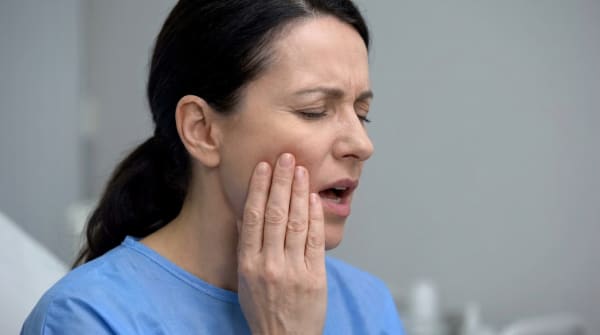
The cover image above is an AI-generated illustration based on the most common visible features of this condition described in clinical pathology references. It is not a photograph of a real case and should not be used to diagnose or rule out the condition in your own situation. If you are concerned about something you have noticed, please book an assessment with a registered dental practitioner.
References
Neville, B. W., Damm, D. D., Allen, C. M., & Chi, A. C. (2023). Oral and maxillofacial pathology (5th ed.). Elsevier. Chapter 18, Facial Pain and Neuromuscular Diseases, Temporomandibular Joint Disorders.
Cawson, R. A., & Odell, E. W. (2017). Cawson's essentials of oral pathology and oral medicine (8th ed.). Elsevier. Chapter 30, Disorders of the Temporomandibular Joints.
Regezi, J. A., Sciubba, J. J., & Jordan, R. C. K. (2017). Oral pathology: Clinical pathologic correlations (7th ed.). Elsevier. Chapter 18, Pain Dysfunction Disorders.
Frequently asked questions
What is a temporomandibular disorder (TMD)?
TMD is an umbrella term for problems with the jaw joint (temporomandibular joint or TMJ) and the muscles that move the jaw. Symptoms range from jaw pain and clicking to headaches, earache and limited mouth opening. Most cases are mild and self-limiting, but some need active management.
What causes TMD?
Common contributors include teeth grinding or clenching (bruxism), stress and muscle tension, jaw trauma, arthritis, malocclusion (uneven bite) and poor head and neck posture. Often several factors combine. Pure 'bite problems' as a sole cause are less common than once thought.
How is TMD treated?
Most cases respond well to conservative care: jaw exercises, warm or cold packs, soft diet during flares, stress management, and a custom occlusal splint worn at night. Pain relief medications, physiotherapy or muscle relaxants are used short-term. Surgery is rare and reserved for specific structural problems.
How long does TMD last?
Mild episodes often settle in weeks. Chronic TMD can wax and wane for months or years, but with the right combination of self-care, splint therapy and lifestyle changes most people significantly improve. Avoiding aggressive irreversible treatments is important, as TMD often calms down with conservative care alone.