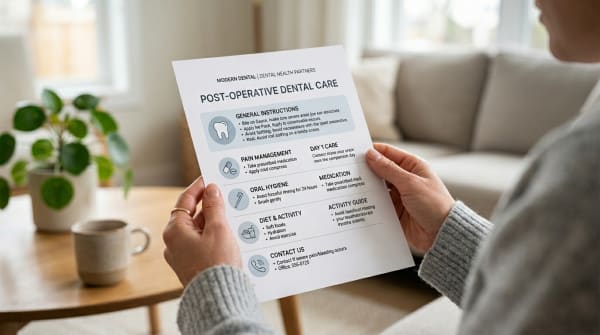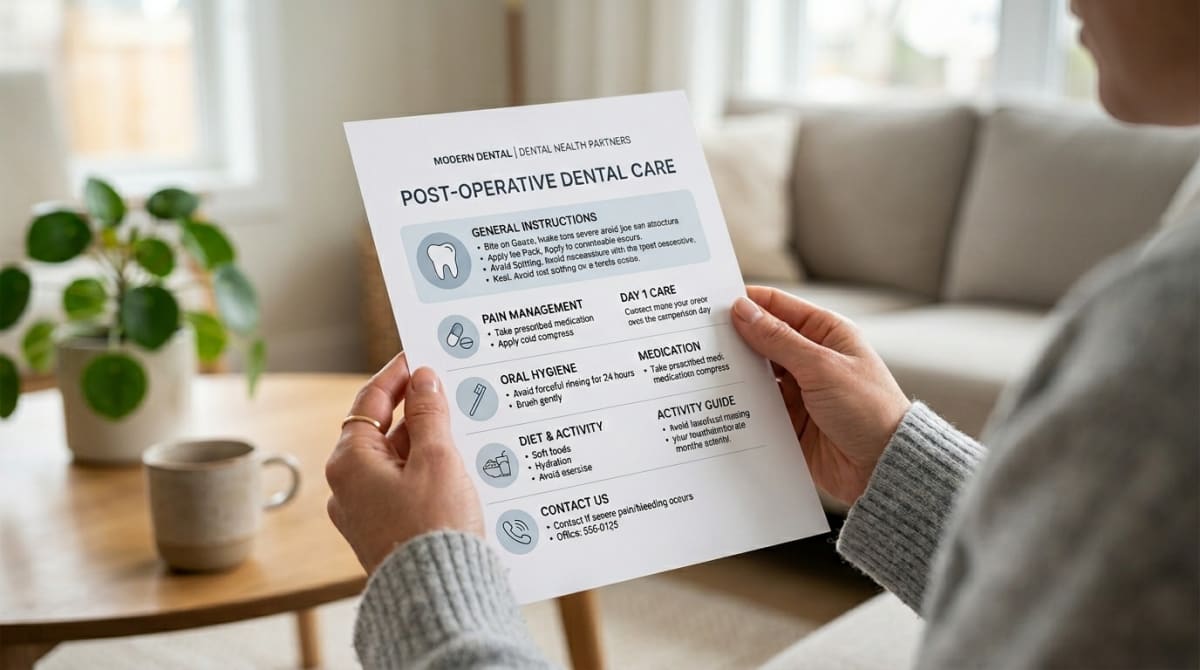
If you've just had periodontal flap surgery (or you're preparing for it), you're probably wondering what to expect over the coming days. The good news is that with the right aftercare, most patients heal comfortably and smoothly.
This guide covers everything you need to know about recovery, from managing swelling and pain to what you can eat, how to keep the area clean, and when to call us if something doesn't feel right.
What Is Periodontal Flap Surgery?
Periodontal flap surgery is a procedure that treats deep gum infection and bone loss caused by advanced gum disease. During the procedure, the gum tissue is gently lifted to access the roots and bone underneath, allowing your dentist to thoroughly clean away bacteria, smooth damaged bone surfaces, and in some cases place regenerative materials to help rebuild lost tissue.
Done well, flap surgery helps your gums settle back onto your teeth more firmly than a deep clean alone can manage (Nibali et al., 2020). The goals are simple: close the space that has opened up between gum and tooth, stop the disease getting any worse, and give the gum tissue the best chance to heal.
These discharge instructions apply whether your dentist has called the procedure periodontal flap surgery, gum flap surgery, gingival flap surgery, or simply a flap operation. The names vary, but the healing time and the aftercare rules are the same. Most patients follow the same recovery path over the first two weeks.
The First 24 Hours After Surgery
The first day is all about rest and gentle care. Here's what to expect and what to do:
Bleeding
Some light bleeding or oozing for up to 24 hours is completely normal. If it feels like more than a little spotting, bite gently on a folded piece of damp gauze for 20 to 30 minutes. Avoid spitting, rinsing, or using a straw, as these can disturb the blood clot that's forming to protect the wound.
Swelling
Swelling around the cheeks or jaw is your body's natural response to surgery. Apply an ice pack to the outside of your face (10 minutes on, 10 minutes off) during the first 24 to 48 hours. This can make a real difference in keeping swelling manageable.
Rest
Take it easy for at least 48 hours. Avoid exercise, heavy lifting, and bending over. When you sleep, try to keep your head slightly elevated with an extra pillow. This helps reduce swelling overnight.
Managing Pain and Discomfort
Most patients describe the discomfort as mild to moderate, more of an ache than sharp pain. A multicentre study by Tonetti et al. (2004) found that the majority of patients reported little post-operative pain, with only around 25% experiencing noticeable swelling and most returning to normal activities within 3 to 4 days.
Here's how to stay comfortable:
Start pain relief early. Take your prescribed pain medication before the anaesthesia wears off. This helps you stay ahead of the discomfort rather than chasing it.
Take antibiotics as directed. If you've been prescribed antibiotics, complete the full course even if you feel fine. This is important for preventing infection.
Avoid alcohol while taking medication, and do not mix pain relievers unless your dentist has said it's okay.
What to Eat (and What to Avoid)
Stick to a soft diet for the first 5 to 7 days. Your gums need time to heal, and the last thing you want is food irritating the surgical site.
Good choices:
Mashed vegetables and potato
Scrambled eggs
Soft pasta
Lukewarm soups and broths
Smoothies (without a straw)
Yoghurt
Avoid:
Crunchy or hard foods (chips, nuts, toast)
Spicy or acidic foods
Very hot food or drinks
Anything that requires vigorous chewing near the surgical area
Keeping the Area Clean
Good hygiene is important for healing, but you need to be gentle around the surgical site.
Do not brush the surgical area for 7 to 10 days. Your dentist will tell you when it's safe to start again.
Use an antimicrobial rinse (such as chlorhexidine) starting 24 hours after surgery. Rinse gently, don't swish vigorously.
Continue normal brushing and flossing in the rest of your mouth. Keeping the untouched areas clean helps prevent bacteria from spreading to the healing site.
Keeping the area clean while you heal makes a bigger difference than most patients realise. A review by Burkhardt and Lang (2014) sums it up well: be gentle with the area, let the blood clot form and stay in place, and follow the wound-care advice above. Those three habits do most of the heavy lifting.
Smoking and Healing
If you smoke or vape, avoiding it for at least 72 hours after surgery is strongly recommended, and ideally for 7 days or longer. Smoking reduces blood flow to the gums, slows healing, and significantly increases the risk of complications. If you need help with this, talk to our team. We understand it's not easy and we're here to support you.
What's Normal During Recovery
Common side effects during recovery, such as mild swelling, tenderness, and short-term sensitivity, usually peak in the first 2 to 3 days and settle on their own. It helps to know what to expect so you don't worry unnecessarily:
Minor swelling and bruising for the first few days is normal and will gradually improve
Some tooth sensitivity may occur as the gums heal and settle into their new position
Gums may appear to recede slightly as inflammation goes down. This is actually a sign that healing is progressing well
Sutures may dissolve on their own or be removed at your follow-up appointment, usually within 1 to 2 weeks
When to Call Us
While complications are uncommon, contact our team at ArtSmiles or call (07) 5588 3677 if you notice:
Bleeding that doesn't stop after applying pressure for 30 minutes
Swelling that gets worse after the third day instead of improving
Pain that increases rather than gradually easing
Signs of infection such as pus, a bad taste, or fever
A reaction to your medication (rash, nausea, difficulty breathing)
Your Follow-Up Appointments
We'll schedule a post-operative review within 1 to 2 weeks to check how everything is healing. After that, regular periodontal maintenance visits are essential to keep your gums stable and healthy long term. These visits allow us to monitor your progress, clean areas that are difficult to reach at home, and catch any early signs of recurrence.
Recovery from periodontal flap surgery is usually smoother than most patients expect. With the right care at home and ongoing support from our team, you're giving your gums the best chance to heal properly and stay healthy for years to come.
If you have any questions about your recovery, or if something doesn't feel right, don't hesitate to reach out. Our team at ArtSmiles in Southport is here to help every step of the way. Book your follow-up appointment or call us on (07) 5588 3677.
Frequently Asked Questions
How long is recovery after periodontal flap surgery?
Most patients feel noticeably better within 7 to 10 days, with sutures typically removed at the 1 to 2 week mark. The gums continue to remodel for several weeks, and full tissue maturation takes about 3 months. You can usually return to desk-based work within a day or two, but avoid strenuous exercise for the first week.
What should I eat after flap surgery?
Stick to soft, cool, bland foods for the first 24 to 48 hours: yoghurt, smoothies, mashed potato, scrambled eggs, soup that isn't hot. Avoid anything hot, spicy, acidic, crunchy, or requiring vigorous chewing. Don't use straws, and keep alcohol off the menu while you're on pain medication.
How do I manage pain and swelling after gum flap surgery?
Ice packs on the outside of the cheek (20 minutes on, 20 off) for the first 24 hours reduce swelling effectively. Take the pain medication your dentist prescribed as directed, ideally before the local anaesthetic fully wears off. Keep your head elevated with an extra pillow overnight. Mild swelling and tenderness peaks at day 2 to 3 and then steadily improves.
Can I smoke after periodontal flap surgery?
You should avoid smoking for at least 2 weeks, and ideally throughout the full healing period. Smoking constricts blood vessels, reduces oxygen delivery to the healing tissues, and is strongly associated with worse surgical outcomes and higher rates of treatment failure in periodontal patients.
When should I call the dentist after flap surgery?
Call us if bleeding hasn't settled after 30 minutes of firm pressure with gauze, if pain is getting worse after day 3 rather than better, if swelling increases after day 3, if you develop a fever, if you notice a bad taste or pus, or if a suture pulls out and the area feels exposed. These are signs of a problem that needs assessment, not something to wait out.
Written by Dr. Cristian Dunker, BDSc, MBA.
Medically reviewed on 19 April 2026 by Dr. Cristian Dunker.