
On this page
When Someone Says You Can't Have Implants
Few things feel more deflating than hearing "you're not a candidate for dental implants." You may have spent weeks or months building up the courage to ask about replacing missing teeth, only to be told that bone loss has ruled it out. It can feel like the door has closed for good.
Here's the part that often gets missed: that answer isn't always the final one. Implant techniques have shifted in the last ten years — patients we couldn't help in 2015 because of too little bone, a sinus that sat too low, or a jaw that was too narrow can often now be helped with grafting, All-on-4, or zygomatic implants. Being told "no" by one clinician doesn't always mean the answer is no everywhere.
At ArtSmiles, we regularly welcome patients on the Gold Coast and in Southport who have been turned away elsewhere. Some arrive feeling quite hopeless. And while we can never promise that every case is treatable, we can promise a thorough assessment and an honest conversation about what's possible.
This article is for anyone who has experienced bone loss and wants to understand the full picture before giving up on implants altogether.
Understanding Dental Bone Loss
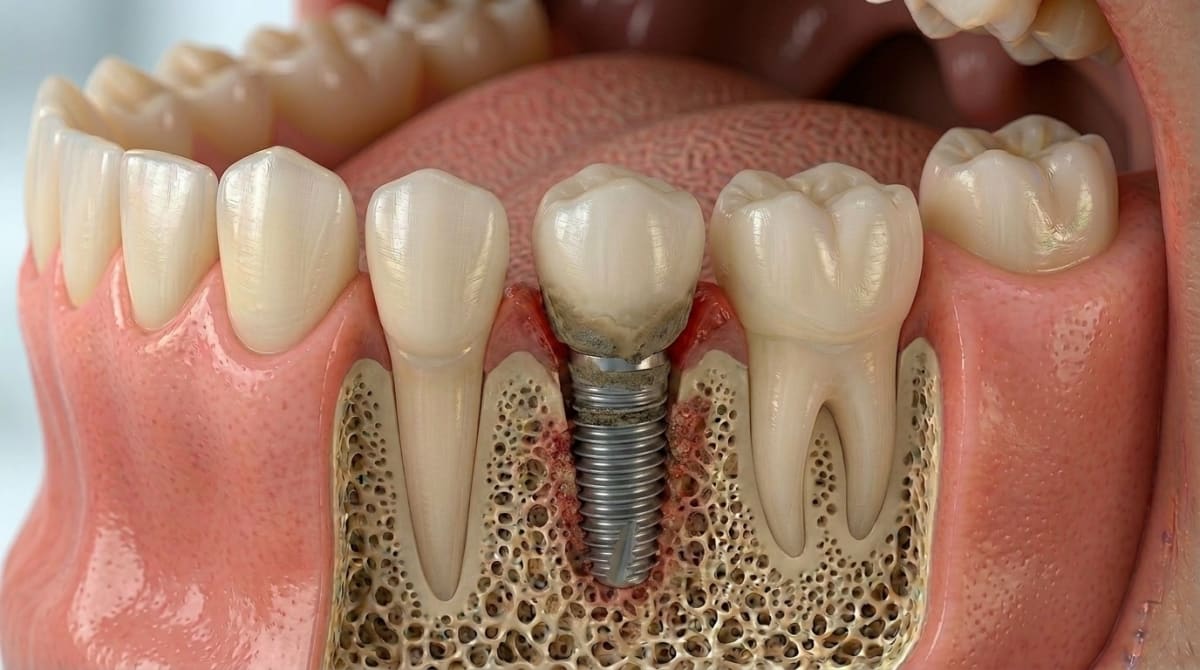
Your jawbone stays healthy partly because your teeth stimulate it every time you bite and chew. When a tooth is lost, that stimulation disappears, and the bone in that area begins to shrink. This process is called resorption, and it can begin within months of losing a tooth.
Several factors can accelerate or worsen bone loss:
Periodontal (gum) disease is the most common cause. Long term infection gradually destroys the bone that supports your teeth. If you'd like to learn more, our periodontal treatment page explains how gum disease affects the jawbone.
Wearing dentures for many years can place pressure on the ridge of bone beneath them, causing it to flatten over time.
Delayed replacement of missing teeth allows resorption to continue unchecked.
Medical conditions and medications such as osteoporosis, diabetes, or long term steroid use can affect bone density and healing.
The degree of bone loss matters. Mild to moderate loss may still allow implant placement with some adjustments. Severe loss typically requires a bone building procedure first, or an alternative implant approach that works with the bone you still have.
How Bone Loss Is Assessed
A standard dental X-ray gives a general picture, but it doesn't tell the whole story. A 3D CBCT scan (cone beam computed tomography) provides a detailed, three dimensional view of your jawbone, showing exactly how much bone remains in terms of height, width, and density. This is the gold standard for implant planning, and it's one reason why an assessment at a practice equipped with this technology can sometimes produce a different answer than one without it.
Spotting bone loss in teeth early makes a real difference. On a dental X-ray, your dentist can compare before and after images over time and measure how much support has been lost around each tooth. Bone loss in the mouth is usually described as horizontal bone loss, where the level drops fairly evenly, or vertical bone loss, where it dips more steeply alongside a single tooth. Knowing the pattern and the amount also answers the question many people ask, which is whether bone loss is reversible: early changes can often be stabilised, while more advanced loss is rebuilt with grafting rather than truly reversed.
Dental Bone Loss Treatment: Rebuilding What's Been Lost
If your bone loss is significant, there are well established procedures that can rebuild the foundation needed for implants. These aren't experimental techniques. They've been refined over decades and are performed routinely in practices that focus on implant dentistry.
Bone Grafting
Bone grafting involves placing bone material into the area where volume has been lost. The graft acts as a scaffold — your own bone cells migrate into it and replace it with new bone over four to nine months, depending on the site and graft type. The material can come from different sources: your own bone (autograft, taken from another site in the mouth), donor bone (allograft), animal-derived bone (xenograft), or synthetic alternatives (alloplast). Your clinician will recommend the best option based on your specific situation.
Grafting is commonly used when one or two implant sites need additional support. It does add time to the overall treatment, usually four to nine months of healing before implants can be placed, but it can make the difference between being a candidate and not.
Sinus Lift
When upper back teeth are missing, the sinus cavity often expands downward into the space where bone used to be. A sinus lift (also called sinus augmentation) gently raises the sinus membrane and places bone graft material beneath it. This creates enough vertical bone height to support implants in the upper jaw. It's one of the most predictable bone augmentation procedures available, with research showing high success rates even in patients with significant bone loss.
Ridge Expansion
Sometimes the jawbone ridge is tall enough but too narrow to support an implant. Ridge expansion (or ridge splitting) widens the bone using specialised instruments, and graft material is placed to fill the expanded area. This can sometimes be done at the same time as implant placement, which reduces the overall treatment timeline.
Implant Solutions Designed for Bone Loss
Not every patient needs bone grafting. In many cases, the right implant strategy can work with the bone you already have.
All on X (Full Arch) Implants
For patients who have lost most or all of their teeth and have experienced widespread bone loss, All on X implants can be a remarkable solution. This approach uses four to six strategically angled implants to support a full arch of teeth. The posterior implants are tilted to engage areas of the jaw where bone is naturally denser and more plentiful, often avoiding the need for bone grafting entirely.
Many patients who have worn dentures for years and been told they have "too much bone loss" find that All-on-4 was designed specifically for jaws like theirs. Since the technique was published in the late 1990s, it has expanded the range of patients who may be suitable for fixed implant-supported teeth, although candidacy is always determined case by case after a CBCT review. For a deeper comparison of full-arch and single-tooth options, see our guide to All-on-4 vs traditional implants.
Zygomatic Implants
In cases of severe upper jaw bone loss where even angled implants can't find enough support, zygomatic implants anchor into the cheekbone (zygoma) instead of the jawbone. These longer implants bypass the deteriorated jaw entirely and provide a stable foundation for a full set of upper teeth. This is a more complex procedure, but it can be the only option for patients with extreme resorption who would otherwise face multiple grafting surgeries over many months.
Short and Narrow Implants
Systematic reviews of short-implant outcomes have shown that short implants, when properly planned and placed, can achieve survival rates comparable to standard length implants.
What Makes the Difference: Technology and Experience
Two clinicians can reach different conclusions about implant candidacy depending on the diagnostic tools available, the techniques in their scope of practice, and their experience with complex cases. A CBCT-based second opinion is one way to confirm whether your situation has been fully explored.
At ArtSmiles, we use 3D CBCT imaging and digital implant planning software to map out every case before treatment begins. This allows us to identify pockets of good bone that might be missed on a standard X-ray, and to plan implant positions with millimetre precision. For patients with bone loss, this level of planning is essential.
We also believe that managing expectations honestly is just as important as the technical skill. Not every case of bone loss can be overcome, and if we feel that implants aren't the safest or most predictable option for you, we'll explain why and discuss alternatives such as well fitting dentures or implant supported overdentures.
What to Expect from an Assessment
If you've been told you can't get implants with bone loss and you're considering a second opinion, here's what a thorough assessment typically involves:
Detailed medical and dental history review to understand the cause and timeline of your bone loss.
3D CBCT scan to measure your remaining bone in all three dimensions.
Discussion of all viable options including grafting procedures, alternative implant approaches, and non implant solutions.
A clear treatment plan with realistic timelines, expected outcomes, and costs.
There's no pressure and no obligation. The goal is simply to give you accurate information so you can make the best decision for your health and your quality of life.
Frequently Asked Questions
Can you get dental implants with bone loss?
In many cases, yes — but it depends on how much bone has been lost and where. A small amount of resorption can often be managed at the time of implant placement. Moderate to severe loss usually needs to be addressed first, either with a bone graft or by selecting an implant approach that works around the deficit. The starting point is a CBCT scan, which lets your dentist measure the bone in three dimensions and decide whether grafting, sinus lifting, or a tilted-implant technique is the more suitable path for you.
Can you have dental implants with severe bone loss?
Often yes, but the route is different from straightforward cases. Severe loss typically calls for either a bone graft to rebuild the foundation, or an implant approach designed to bypass the deficit altogether — for example tilted full-arch implants or zygomatic implants that anchor in the cheekbone. A CBCT scan reveals which option is realistic for your specific anatomy. Some cases of very advanced resorption do remain unsuitable for implants, and an honest assessment will tell you so.
Will I need a bone graft before implants?
Not always. A graft is recommended when there isn't enough height or width of bone to hold an implant securely, or when the sinus floor sits too low for an upper back tooth. If your CBCT shows adequate bone, your dentist may proceed directly with placement. When grafting is needed, the material can come from your own body, a tissue bank, or a synthetic source — each option has different healing characteristics. The decision is made case by case, based on the volume of bone required and the long-term position of the planned tooth.
Is All-on-4 a dental implant option if I have bone loss?
Often yes. All-on-4 is designed to use the bone you still have rather than rebuilding what is missing. The two posterior implants are tilted to engage denser bone toward the front of the jaw, which often avoids the need for a sinus lift in the upper arch. That said, it is not a universal solution. Very advanced resorption, poor bone quality, or specific anatomical limits may still require grafting or a different prosthetic plan such as zygomatic implants. A CBCT-based assessment determines whether the bone you have is sufficient for the tilted-implant approach.
Can dental bone loss be reversed?
Once jawbone has been lost, the body does not regrow it on its own. The good news is that further loss can be slowed or halted by treating the underlying cause (most commonly periodontal disease) and replacing missing teeth promptly so the bone keeps receiving stimulation. To restore lost bone height or width, surgical options such as bone grafting or guided bone regeneration are needed. So while "natural reversal" is not realistic, modern dentistry offers reliable ways to rebuild bone where it is needed.
What does a CBCT scan show about my bone?
A CBCT (cone beam CT) produces a three-dimensional image of your jaws at a much lower radiation dose than a medical CT. For implant planning, it shows the height, width, and density of bone in each potential implant site, the position of the sinus floor in the upper jaw, and the path of the inferior alveolar nerve in the lower jaw. It also reveals hidden findings such as cysts, infections, or root fragments. This level of detail allows the implant position to be planned digitally before any surgery, which improves predictability and reduces intra-operative surprises.
You Deserve a Complete Answer
Bone loss is a real challenge, but it's rarely an absolute barrier to dental implants anymore. Whether the solution involves rebuilding bone, using an implant approach designed for low bone volume, or a combination of both, options exist that may not have been discussed with you before.
If you've been living with missing teeth or struggling with dentures because you were told implants weren't possible, it may be worth exploring further. At ArtSmiles in Southport, we offer complimentary implant consultations — consultation only, with any imaging or treatment quoted separately — so you can get a clear, honest picture of what's achievable for your individual situation. You can book online or call our team to arrange a time that works for you.
Whatever you decide, wanting a better answer for your missing teeth is a fair thing to ask for — a CBCT-based second opinion takes about an hour.
Written by Dr. Cristian Dunker, BDSc, MBA
Medically reviewed by Dr. Cristian Dunker, BDSc, MBA.