Teeth are not meant to move. If you notice even slight movement when chewing, brushing, or touching a tooth with your tongue, it usually means something is happening beneath the surface that needs attention.
In adults, loose teeth are most commonly caused by bone loss linked to gum disease. According to a classification framework by Tonetti, Greenwell, and Kornman (2018), periodontitis is staged partly based on the degree of tooth mobility and bone loss present — meaning mobility is a recognised clinical marker of disease severity.
Because gum disease often progresses without pain, many people are caught off guard when a tooth begins to feel loose. In many cases, tooth movement is the first clear sign that damage has been building silently for some time.
Why Teeth Become Loose
Each tooth is held in place by bone and a specialised ligament called the periodontal ligament. Together, these structures keep the tooth stable during chewing and biting.
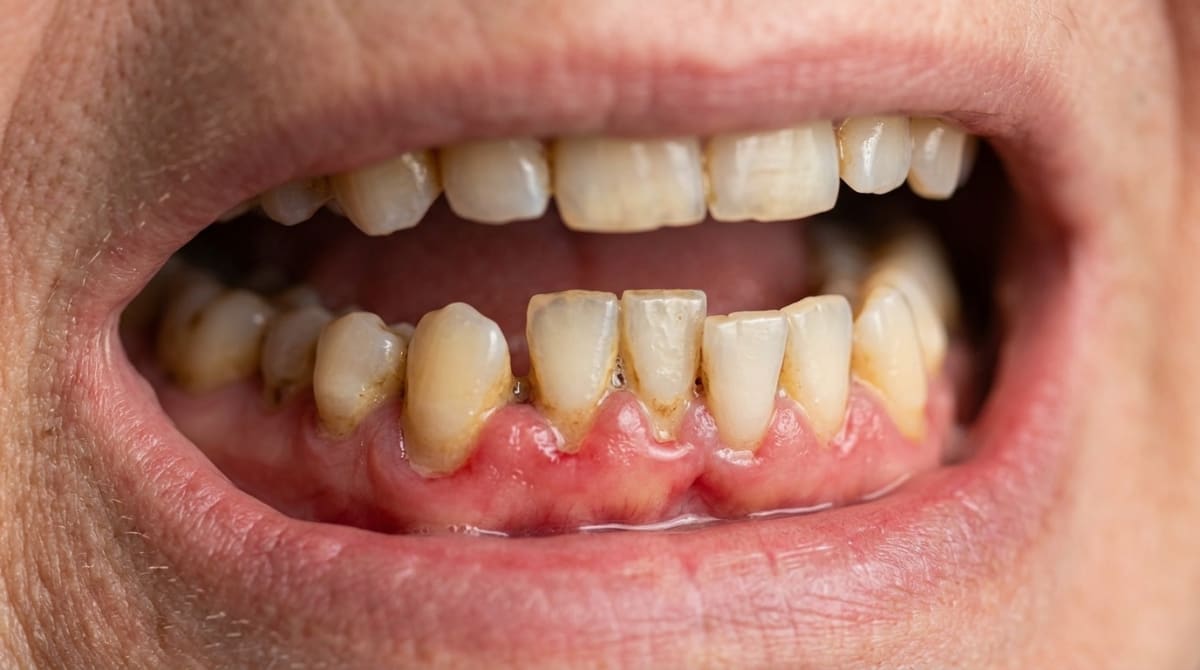
When gum disease becomes advanced, chronic inflammation slowly destroys this supporting bone. As the bone shrinks, the tooth loses its foundation and begins to move. This is the most common cause of tooth mobility in adults.
A review by Heitz-Mayfield (2005) identified several factors that influence how quickly periodontal disease progresses, including smoking, diabetes, and genetic susceptibility — all of which can accelerate bone loss and increase the risk of tooth mobility.
Mobility may feel like:
A slight wiggle when you touch the tooth
A shift when biting down
A tooth that suddenly feels longer or sits differently
Movement you can feel with your tongue
Even mild movement can indicate advanced underlying disease.
Why Loose Teeth Often Appear Without Pain
Gum disease rarely causes pain until its very late stages. Bone has no nerve endings, so bone loss happens silently. Many patients say they had no warning at all until a tooth started to feel loose.
Below the gumline, the process typically follows this pattern:
Bacteria build up in deep pockets around the tooth
Chronic inflammation weakens the periodontal ligament
Bone slowly resorbs over months or years
The tooth gradually loses its support
This is why mobility often seems to appear suddenly, even though the underlying problem has been developing for years.
Other Causes of Loose Teeth
While gum disease is the leading cause, other factors can contribute to tooth mobility. Nunn (2003) outlined several risk factors for periodontal breakdown, many of which can accelerate or compound the problem:
Grinding and clenching: Excessive forces overload the supporting tissues, especially when bone is already weakened
Bite imbalance: Heavy contact on one tooth can accelerate damage to its supporting structures
Trauma or injury: Impact can stretch or damage the periodontal ligament
Deep infection from decay: An abscess at the root tip can temporarily cause movement
General health factors: Smoking, uncontrolled diabetes, and some medications increase the risk of bone loss
Any tooth movement should always be assessed by a dentist, regardless of the suspected cause.
What Is Happening Under the Gums
When a tooth becomes mobile, harmful bacteria are actively breaking down the structures that hold it in place. This leads to:
Loss of collagen fibres that anchor the tooth
Breakdown of the periodontal ligament
Progressive bone loss around the root
Increased movement under normal chewing forces
The earlier this process is interrupted, the greater the chance of stabilising the tooth and preserving the remaining bone.
Can Loose Teeth Be Saved?
In many cases, yes — especially when treated early. Research by Fleszar et al. (1980) demonstrated that tooth mobility can improve following periodontal therapy, particularly when treatment effectively reduces pocket depth and controls bacterial infection.
At ArtSmiles, stabilising a mobile tooth may involve:
Deep periodontal cleaning to remove bacteria from below the gumline
Splinting teeth together for added stability
Bite adjustment to reduce excessive forces on specific teeth
Managing grinding with a custom night guard
Ongoing maintenance every few months to prevent recurrence
In cases of severe bone loss, Cortellini and Tonetti (2015) have shown that regenerative periodontal procedures can help rebuild lost tissue in specific types of bone defects, offering additional treatment options for suitable candidates.
The goal is always to stop disease activity and protect whatever bone remains.
What to Do If a Tooth Feels Loose
Do not wait. Tooth mobility is an urgent sign that the supporting tissues need professional attention.
Avoid touching or wiggling the tooth
Avoid hard or sticky foods
Do not chew on the affected side
Book a periodontal assessment as soon as possible
Frequently Asked Questions
Can a loose adult tooth tighten back up on its own?
A loose adult tooth rarely tightens on its own. If the looseness is caused by recent trauma and the supporting bone is still intact, splinting may allow the tooth to firm up over weeks. If the cause is bone loss from gum disease, the tooth will not stabilise without periodontal treatment. The earlier you have it assessed, the more options remain.
What does it mean if all my teeth feel loose?
If multiple teeth feel loose at once, the cause is usually generalised periodontitis where bone loss has reached several teeth simultaneously. Less commonly it can be linked to severe bruxism, certain medications affecting bone density, or systemic conditions that influence collagen and bone metabolism. A full periodontal assessment is needed to identify the cause.
Can loose teeth from periodontal disease be fixed?
Yes, many loose teeth from periodontal disease can be stabilised when treatment starts before the bone loss is severe. Deep cleaning to remove infection, splinting where appropriate, and ongoing maintenance can hold a tooth in place for years. Once the bone loss exceeds about 60 to 70 percent, however, the tooth usually cannot be saved.
How long does a loose tooth take to fall out?
There is no fixed timeline. A tooth with mild mobility from gum disease may stay in place for years if the inflammation is managed. A tooth with severe mobility and ongoing infection can loosen further within months. Trauma-related looseness usually resolves or worsens within the first few weeks. Have it assessed to know which path you are on.
When should I see a dentist about a loose tooth?
As soon as you notice it. Early intervention preserves more options, including splinting, deep cleaning, or selective extraction with replacement planning. Waiting until pain develops usually means the surrounding bone has already lost critical support, narrowing what can be done.
Can a tooth become loose without pain?
Yes. The most common cause of loose teeth in adults, chronic periodontitis, is largely painless because bone has no pain receptors. The first signs are often subtle: a tooth that feels different when biting, slight movement when you brush, or food packing in a new spot. Pain tends to arrive only when an abscess forms or the ligament becomes acutely inflamed.
Take the Next Step
Loose teeth are rarely a surface problem. They usually signal hidden bone loss caused by gum disease that has been progressing silently. With early diagnosis and proper periodontal care, many loose teeth can be stabilised and saved.
If you have noticed any movement in your teeth, the team at ArtSmiles Gold Coast can assess the cause and help protect your long-term oral health. Book an appointment online or get in touch to discuss your concerns.
Written by Dr. Cristian Dunker, BDSc, MBA. Medically reviewed by Dr. Cristian Dunker.