If your dentist has told you that you are a "high-risk" patient, it is natural to feel a little uneasy about the word. It can sound like a warning, or like something has gone seriously wrong. It is not meant that way.
At ArtSmiles, a risk rating is a clinical tool, not a judgement. It describes how likely you are to develop a particular dental problem in the near future, based on your own mouth and your own circumstances. It is also a snapshot of today rather than a permanent label, and for most people it can be improved. Knowing your risk early is one of the most useful things we can do together, because it lets us act while problems are still small or even reversible.
Here is what the rating actually means, the science behind it, and what happens next.
Why we measure risk at all
Most people grew up with the idea that everyone should see the dentist every six months. We take a more individual view, and so does the wider evidence. A large Cochrane review found no good evidence that a fixed six-monthly recall suits everyone, and supported tailoring the interval to each person's risk instead [26]. In practice that means some people are safe to come less often, while others benefit from being seen more frequently.
So at every check-up and clean, we measure the things that drive decay and gum disease, and rate your risk from them. The goal is to reduce the chance of new issues developing and to protect work that has already been done. To keep this consistent and evidence-based, we draw on three established clinical frameworks:
CAMBRA (Caries Management By Risk Assessment) for decay
BPE/PSR (Basic Periodontal Examination / Periodontal Screening and Recording) and the Periodontal Risk Assessment for gum health [27]
The CariesCare 4D approach for minimally invasive, prevention-first care
Most of it is part of the check-up itself: a few questions, and measurements we take anyway.
The two things we assess
Your risk rating looks at two separate areas of your mouth, and you are scored on each one independently.
1. Tooth decay risk (caries). How likely you are to develop new cavities.
2. Gum disease risk (periodontal). The health of the gums and bone that support your teeth.
Because the two are scored separately, you can be high risk in one and low in the other. Your gums might be healthy while your decay risk is high, or the reverse. Below we explain each one, and what pushes it higher.
How we measure it
Plaque: shown with a disclosing dye and counted tooth by tooth.
Gum bleeding: checked at six places on every tooth. Healthy gums bleed at fewer than 1 in 10 of them.
Gum pockets: screened in six areas of your mouth with a fine, ball-ended probe.
Decay: looked for on clean, dry teeth, with X-rays when they are due.
A few questions: how often you have something sweet or acidic between meals, your toothpaste, a dry mouth, smoking, and diabetes.
Saliva: measured when there is a reason, such as a new medication or a dry mouth.
Understanding tooth decay (caries) risk
It helps to know that decay is not a sudden event that simply leaves a hole. It is an ongoing process. Bacteria in dental plaque turn the sugars and starches in your food and drink into acid, and that acid draws minerals out of the tooth surface [1][2]. The reassuring part is that your mouth repairs this damage too: minerals from saliva, helped by fluoride, are deposited back into the tooth, a process called remineralisation [1]. Decay only develops when, over time, the loss outpaces the repair.
Because of this back and forth, dentists think of decay as a balance. The widely used CAMBRA framework describes a "caries balance" between factors that drive the disease (acid-producing bacteria, frequent sugars, and reduced saliva) and factors that protect against it (enough saliva, fluoride, and a good diet) [3]. When we assess your caries risk, we are weighing those two sides for you as an individual.
What pushes decay risk higher
A higher rating simply means more of the disease-driving factors are present right now, or the protective ones are reduced. Common reasons include:
Active decay or several recent fillings. Existing or recently treated decay is one of the strongest signs that the conditions for decay are currently active in your mouth, and it reliably predicts how much new decay tends to follow [3].
Frequent sugar or snacking. It is not only how much sugar you have, but how often. Every time sugar reaches the plaque, the bacteria produce another acid attack, so constant snacking and sipping leaves the tooth less time to recover between attacks [1][3]. The World Health Organization recommends keeping free sugars below 10% of your energy intake, and ideally under 5%, calling them the most common risk factor for decay [6].
Visible plaque and inconsistent cleaning. More plaque means more acid-producing bacteria working on the tooth [2][3].
Dry mouth (xerostomia). Saliva washes away food, neutralises acid and supplies the minerals for repair, so when it is reduced, decay risk rises [2][4]. Dry mouth is commonly caused by certain medications and by some medical treatments [4].
Exposed roots, deep grooves and braces. Root surfaces and deep fissures are harder to clean and less mineralised than enamel, and orthodontic appliances create extra spots for plaque to gather [3].
Each of these raises risk for the same underlying reason: it either increases acid attacks or weakens the mouth's natural defences.
The good news about decay
The measures that tip the balance back towards protection are among the best-evidenced in all of dentistry:
Fluoride toothpaste. Cochrane reviews show that brushing with fluoride toothpaste reduces decay, that twice-daily use increases the benefit, and that standard-strength pastes (around 1000 ppm fluoride and above, which covers most adult toothpastes in Australia) are effective [5][7].
Professional fluoride varnish. The thin coat a dentist paints onto the teeth is associated with a meaningful reduction in decay in trials [8]. This is why higher-risk patients are often offered it more often.
Diet. Reducing how often free sugars reach your teeth lowers the number of daily acid attacks [6].
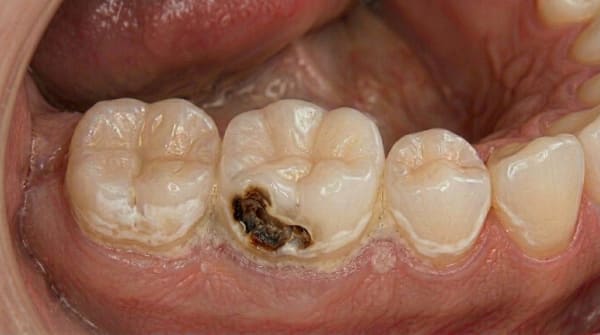
Catching early damage in time. Early, non-cavitated lesions (often seen as chalky white spots) do not always need a filling. They can frequently be stopped or even reversed with fluoride and better cleaning rather than a drill [1][9]. This is the heart of minimally invasive dentistry, and it is far more achievable when high-risk patients are seen regularly enough to catch changes early.
Understanding gum disease (periodontal) risk
Gum disease begins when plaque builds up along the gumline and the surrounding tissue becomes inflamed [10]. At your visits we screen for this using a fine, ball-ended probe that gently measures the small space (or "pocket") between tooth and gum and notes where the gums bleed [11]. Shallow pockets with no bleeding suggest healthy gums; deeper pockets, bleeding or hardened deposits (calculus) point to inflammation and a need for closer assessment [11].
There are two broad stages, and the difference between them matters:
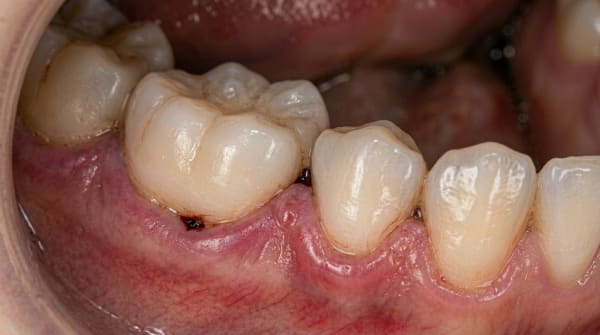
Gingivitis is the early, reversible stage. The gums become red, swollen or tender and may bleed when brushed, but no permanent damage has happened yet, and it can usually be turned around [12].
Periodontitis is the more advanced stage, where the deeper tissue and bone that hold teeth in place are affected. This damage cannot be reversed, although it can be controlled and stabilised [10][13].
What pushes gum disease risk higher
Plaque and calculus (tartar). When plaque is not removed it hardens into calculus, which only a professional clean can remove and which gives bacteria even more to cling to [10][13].
Smoking. Smoking is one of the most significant risk factors. Smokers have roughly double the risk of gum disease, and smoking can make the gums slower to heal and treatment less effective [13][14].
Diabetes. The relationship runs both ways: diabetes can make gum disease more likely and harder to control, and gum disease can in turn make blood sugar harder to manage, especially when diabetes is poorly controlled [15][16].
Family history, age, stress, some medications and hormonal changes. Each of these can increase susceptibility or how strongly the gums react to plaque [13][17]. In Australia, the share of adults with moderate or severe gum disease rises steadily with age [18].
Why gum health matters beyond your mouth
Researchers have studied links between gum disease and several general health conditions, and it is important to describe these accurately as associations, not proven cause and effect. Periodontitis is associated with conditions including cardiovascular disease, poorer diabetes control and some adverse pregnancy outcomes, but a direct causal link has not been established, and shared risk factors such as smoking and inflammation may explain part of the picture [19][20]. There is reasonable evidence that treating gum disease can help improve blood-sugar control in people who have both diabetes and periodontitis [21]. We mention this not to alarm you, but because healthy gums are part of your overall health, not separate from it.
The good news about gum disease
Gum disease is manageable, and the early stage is reversible. Professional cleaning removes the plaque and calculus you cannot reach at home, including below the gumline [10][22]. Day to day, brushing twice with fluoride toothpaste and cleaning between the teeth is the foundation of keeping it under control [22][23]. If you smoke, stopping is one of the most effective single changes you can make, and it improves the results of gum treatment [24]. After initial treatment, regular maintenance visits help keep things stable, which is exactly why higher-risk patients are seen more often [26]. And because gum disease is often painless until it is advanced, these routine checks are frequently what catch it first [25].
What "low", "moderate" and "high" actually mean
Each area is rated separately, on a simple three-point scale.
Low risk means there is no decay today and your teeth are well protected, and your gums rarely bleed, with no deeper pockets. The focus is on routine check-ups and early detection.
Moderate risk means there is no decay today, but two or more things are tipping the balance towards it — frequent sugar, a dry mouth or exposed roots, say — or, for gums, a couple of things are raised, such as more bleeding than there should be or a deeper pocket. Here we see you more often and add measures such as professional fluoride.
High risk means a problem is active or likely right now. For decay, that means decay is active in your mouth today — even one early spot — or you have needed a filling for decay in the last three years. For gums, it means several things together: bleeding in many places, deeper pockets, smoking or diabetes, or gum disease you are already being treated for. At this level, the priority shifts to stopping the disease from progressing and getting your mouth back to a stable, healthy baseline.
What happens next if you are high risk
A high-risk rating is the point where prevention becomes more active. Rather than waiting and watching, we put a plan in place. Depending on your situation, that can include:
Check-ups and cleans every three months, so changes are caught early
Treatment to stabilise any active decay or gum inflammation first
For deeper gum pockets: detailed measurements, and an appointment with the dentist to plan treatment
For decay: fluoride varnish at your visit and 5,000 ppm fluoride toothpaste twice a day, and SmileShield (custom overnight fluoride trays) when there is a particular reason, such as a dry mouth
Practical advice on the specific things raising your risk, from snacking habits to dry mouth to smoking
Ongoing monitoring, so we can see whether your risk is trending down over time
The most important word here is time. Risk is not fixed. As the factors change, when a medication is reviewed, sugar frequency drops, cleaning improves or smoking stops, your risk can fall with them. Many patients move from high risk to moderate or low. The rating is a starting point, not a sentence.
How this links to the ArtSmiles Club
Because higher-risk mouths benefit from more structured, consistent care, we may suggest the ArtSmiles Club. It is a membership built around your individual risk rather than a generic six-monthly schedule, which fits the evidence on tailoring recall intervals [26].
The Club matches your tier to your needs. The Club High Risk tier (currently $13 per week) is designed for patients at high risk of decay or gum disease, and includes structured preventive visits, professional cleans, X-rays as clinically indicated, and regular monitoring to catch changes early. Lower tiers exist for patients at lower risk, so your level of support reflects where you actually are. Your risk is reviewed at every check-up and clean, and if a different tier would suit you better, our reception team will get in touch. Membership is optional. It simply makes the more frequent, structured care that high-risk patients benefit from easier to keep up with. (Please note a three-month waiting period applies before your first dental clean after joining.)
The bigger picture
Our philosophy is to make decisions based on function, longevity and what is genuinely right for you. A risk rating is part of that. It lets us treat the cause of problems rather than only the symptoms, and protect your teeth for the long term instead of reacting once damage is already done.
So if you have been classified as high risk, try to think of it less as bad news and more as a clear plan. We know where the pressure points are, and we know what to do about them. From here, the aim is simple: bring your risk down, and keep your smile stable and healthy for years to come.
Frequently Asked Questions
Does being high risk mean I am going to lose my teeth?
No. It means you are more likely to develop decay or gum problems if nothing changes. The whole point of identifying it is to act early and prevent that outcome. Early decay can often be reversed, and gum disease can be controlled [1][9][10].
Can my risk rating change?
Yes. Risk is based on your current circumstances, so it can improve with treatment, better daily care and regular professional support. Many patients move to a lower risk level over time [3].
Why am I high risk when my teeth feel fine?
Both decay and gum disease are often painless in the early stages [25]. A risk assessment is designed to pick up the warning signs before you notice any symptoms.
Is gum disease really linked to the rest of my health?
Gum disease is associated with conditions such as heart disease and diabetes, but these are associations rather than proven cause and effect, and shared risk factors play a part [19][20]. Keeping your gums healthy is still a sensible part of looking after your overall health.
Do I have to join the ArtSmiles Club because I am high risk?
No. The Club is optional. It is offered because more structured, regular care suits high-risk patients well, and if a tier would suit you, our reception team will talk it through with you.
How is my risk actually measured?
At your check-up and clean we measure your plaque, check your gums at six places on every tooth, look for decay, and ask a few questions. From those we rate decay with CAMBRA and gum health with the Periodontal Risk Assessment — separately, each low, moderate or high.
References
National Institute of Dental and Craniofacial Research. Tooth Decay. US National Institutes of Health. https://www.nidcr.nih.gov/health-info/tooth-decay
Healthdirect Australia. Tooth decay. https://www.healthdirect.gov.au/tooth-decay
Featherstone, J. D. B., & Chaffee, B. W. (2018). The Evidence for Caries Management by Risk Assessment (CAMBRA). Advances in Dental Research, 29(1), 9-14. https://doi.org/10.1177/0022034517736500
Olver, I. N. (2006). Xerostomia: a common adverse effect of drugs and radiation. Australian Prescriber, 29, 108. https://australianprescriber.tg.org.au/articles/xerostomia-a-common-adverse-effect-of-drugs-and-radiation.html
Marinho, V. C. C., et al. (2003). Fluoride toothpastes for preventing dental caries in children and adolescents. Cochrane Database of Systematic Reviews, CD002278. https://www.cochrane.org/evidence/CD002278_fluoride-toothpastes-preventing-dental-caries-children-and-adolescents
World Health Organization. Sugars and dental caries (fact sheet). https://www.who.int/news-room/fact-sheets/detail/sugars-and-dental-caries
Walsh, T., et al. (2019). Fluoride toothpastes of different concentrations for preventing dental caries. Cochrane Database of Systematic Reviews, CD007868. https://www.cochrane.org/evidence/CD007868_fluoride-toothpastes-different-strengths-preventing-tooth-decay
Marinho, V. C. C., et al. (2013). Fluoride varnishes for preventing dental caries in children and adolescents. Cochrane Database of Systematic Reviews, CD002279. https://www.cochrane.org/evidence/CD002279_fluoride-varnishes-preventing-dental-caries-children-and-adolescents
Hayashi, M., et al. (2020). Evidence-based consensus for treating incipient enamel caries in adults by non-invasive methods. Japanese Dental Science Review, 56(1), 155-163. https://doi.org/10.1016/j.jdsr.2020.09.005
Healthdirect Australia. Gum disease. https://www.healthdirect.gov.au/gum-disease
British Society of Periodontology. (2016). Basic Periodontal Examination (BPE). https://www.bsperio.org.uk/assets/downloads/BPE_Guidelines_2016.pdf
Healthdirect Australia. Gingivitis. https://www.healthdirect.gov.au/gingivitis
National Institute of Dental and Craniofacial Research. Periodontal (gum) disease. https://www.nidcr.nih.gov/health-info/gum-disease
Centers for Disease Control and Prevention. Smoking, gum disease, and tooth loss. https://www.cdc.gov/tobacco/campaign/tips/diseases/periodontal-gum-disease.html
European Federation of Periodontology. Perio & diabetes. https://www.efp.org/for-patients/gum-disease-general-health/perio-diabetes/
Stohr, J., et al. (2021). Bidirectional association between periodontal disease and diabetes mellitus. Scientific Reports, 11, 13686. https://pmc.ncbi.nlm.nih.gov/articles/PMC8249442/
Centers for Disease Control and Prevention. About periodontal (gum) disease. https://www.cdc.gov/oral-health/about/gum-periodontal-disease.html
Australian Institute of Health and Welfare. Periodontitis prevalence. https://www.aihw.gov.au/reports/dental-oral-health/national-oral-health-plan-2015-2024/contents/our-oral-health-a-national-perspective/periodontitis-prevalence
Lockhart, P. B., et al. (2012). Periodontal disease and atherosclerotic vascular disease (AHA scientific statement). Circulation, 125(20), 2520-2544. https://pubmed.ncbi.nlm.nih.gov/22514251/
World Health Organization. Oral health (fact sheet). https://www.who.int/news-room/fact-sheets/detail/oral-health
Simpson, T. C., et al. (2022). Treatment of periodontitis for glycaemic control in people with diabetes mellitus. Cochrane Database of Systematic Reviews, CD004714. https://www.cochranelibrary.com/cdsr/doi/10.1002/14651858.CD004714.pub4/full
National Health Service (UK). Gum disease. https://www.nhs.uk/conditions/gum-disease/
Worthington, H. V., et al. (2019). Home use of interdental cleaning devices, in addition to toothbrushing. Cochrane Database of Systematic Reviews, CD012018. https://www.cochranelibrary.com/cdsr/doi/10.1002/14651858.CD012018.pub2/full
Leite, F. R. M., et al. (2019). Impact of smoking cessation on periodontitis. Nicotine & Tobacco Research, 21(12), 1600-1608. https://pubmed.ncbi.nlm.nih.gov/30011036/
American Academy of Periodontology. Gum disease information. https://www.perio.org/for-patients/gum-disease-information/
Fee, P. A., et al. (2020). Recall intervals for oral health in primary care patients. Cochrane Database of Systematic Reviews, CD004346. https://www.cochranelibrary.com/cdsr/doi/10.1002/14651858.CD004346.pub5/full
Lang, N. P., & Tonetti, M. S. (2003). Periodontal risk assessment (PRA) for patients in supportive periodontal therapy (SPT). Oral Health & Preventive Dentistry, 1(1), 7-16. https://pubmed.ncbi.nlm.nih.gov/15643744/
Written by the clinical team at ArtSmiles Cosmetic Dentistry. Medically reviewed by Dr Cristian Dunker. This article is general information only and is not a substitute for an individual assessment. If you would like to understand your own risk rating, please speak with your dentist at your next visit.