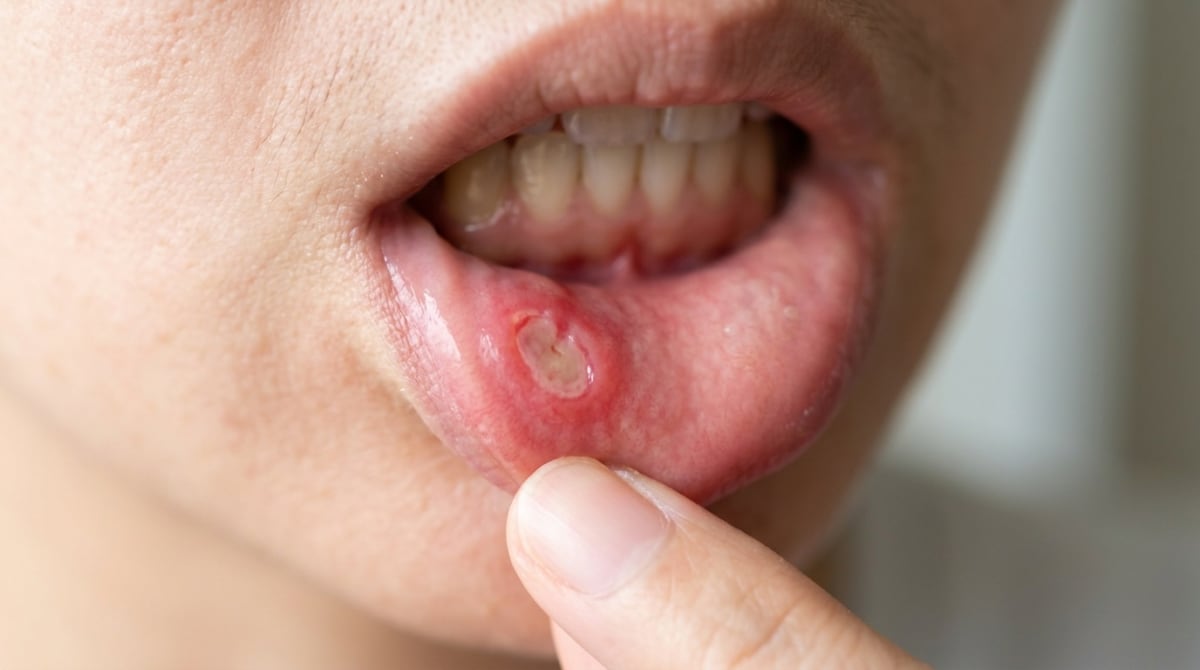
You're eating dinner, you bite the inside of your cheek, and three days later there's a painful white spot that catches on every sip of orange juice. Most of us have been there. Mouth ulcers are one of the most common reasons people search for dental advice online, and the good news is that the vast majority heal on their own within a week or two.
This guide walks you through what mouth ulcers actually are, what causes them, and the mouth ulcer treatment options that genuinely help, from saltwater rinses through to Australian pharmacy products. We'll also cover the warning signs that mean it's time to book a proper dental review at ArtSmiles.
On this page
What Are Mouth Ulcers?
A mouth ulcer is a small break in the lining of your mouth, usually round or oval, with a white or yellow centre and a red border. They sit on soft tissue: the inside of your cheek, your lips, the underside of your tongue, the floor of your mouth, or the soft palate at the back.
The most common type is the aphthous ulcer (often called a canker sore). Aphthous ulcers come in three forms. Minor aphthous ulcers are the everyday kind, smaller than 1cm, and they heal in 7 to 14 days without scarring. Major aphthous ulcers are larger than 1cm, deeper, more painful, and can take up to six weeks to heal. Herpetiform ulcers are tiny pinpoint ulcers that appear in clusters of ten or more, usually in adults.
It's worth clearing up one thing early. Mouth ulcers are not the same as cold sores. Cold sores are caused by the herpes simplex virus (HSV-1), they appear on the lip or around the mouth, and they're contagious. Aphthous ulcers are not viral and not contagious, according to healthdirect Australia.
What Causes Mouth Ulcers?
For most people, mouth ulcers come down to a mix of physical irritation, diet, and what's going on with the rest of your body. Often it's more than one thing at once.
Trauma and irritation
This is the everyday cause. You bite the inside of your cheek while eating, or you catch your tongue on a sharp edge of a tooth. A rough filling, a chipped molar, an ill-fitting denture, or a bracket from your braces can rub the same spot day after day. Hot food can scald the lining, and aggressive brushing can scrape it.
Diet and toothpaste triggers
Acidic and spicy foods often set off ulcers in people who are prone to them. Common culprits include citrus fruits, tomatoes, pineapple, vinegar, chillies, and chocolate. Toothpaste can also play a role. Sodium lauryl sulfate (SLS) is the foaming agent in many toothpastes, and there's reasonable evidence that it triggers ulcers in some people. SLS-free options available in Australia include Sensodyne ProEnamel, Colgate Sensitive Pro-Relief, and Grants of Australia.
Stress and hormonal changes
Exam periods, work deadlines, and poor sleep all correlate with ulcer outbreaks. Many women notice ulcers around their menstrual cycle, and hormonal shifts during pregnancy can also play a part.
Nutritional deficiencies
Recurrent ulcers are sometimes the first clue that something's missing in your diet. The usual suspects are vitamin B12, iron, folate, and zinc. A simple blood test can pick these up, and correcting them often reduces how often ulcers come back.
Underlying health conditions
Less commonly, persistent or unusual ulcers point to a broader health issue. Behçet's disease, coeliac disease, Crohn's disease, and ulcerative colitis can all show up as recurring mouth ulcers. Some medications also contribute, including non-steroidal anti-inflammatory drugs (NSAIDs) and nicorandil, a heart medication. If you've started a new medication and noticed ulcers, mention it to your prescriber.
Other types of mouth ulcers
Most mouth ulcers are the common aphthous kind described above. But "mouth ulcer" is a catch-all term — several distinct conditions can look similar at first glance, and a few of them need very different care. If your ulcer doesn't fit the usual pattern (looks unusual, comes with other symptoms, won't heal, or keeps recurring in unexpected ways), it's worth knowing what else it might be.
Recurrent aphthous stomatitis — the clinical name for the common canker sore most of this article covers. Round, white-yellow, painful, and recurs in some people for life.
Traumatic ulcer — caused directly by physical damage (a bite, a sharp tooth, an orthodontic bracket, or an ill-fitting denture). Usually heals quickly once the source of friction is removed.
Drug-induced oral ulceration — some medications, especially chemotherapy agents, nicorandil, NSAIDs, and bisphosphonates, can trigger ulcers as a side effect. Often resolves when the medication is changed or paused.
Erythema multiforme — a sudden, severe form where mouth ulcers appear alongside crusted, bleeding lips. Typically triggered by a drug or an infection. Needs prompt clinical assessment.
Mucous membrane pemphigoid and pemphigus vulgaris — autoimmune conditions where the immune system attacks the lining of the mouth, creating chronic, blistering ulcers. Both need specialist care and ongoing management.
Chemical or thermal burns — from a too-hot drink, an aspirin held against the gum, or contact with a strong mouthwash. Painful but usually self-limiting.
Oral squamous cell carcinoma — the most important one to be aware of. A non-healing ulcer, a painless ulcer, or one with hardened or rolled edges should always be examined to rule out oral cancer. This is the reason for the 14-day rule covered below.
If any of these descriptions match what you're seeing more than the everyday canker sore, book a dental review rather than waiting two weeks.
How to Treat a Mouth Ulcer
Most mouth ulcers heal on their own. The aim of treatment is to ease the pain, protect the area while it heals, and reduce the chance of secondary infection.
Simple home care
A warm saltwater rinse is the cheapest and one of the most effective options. Mix one teaspoon of salt into a cup of warm water, swish for 30 seconds, then spit. Repeat three or four times a day, particularly after meals. Switch to a soft-bristled toothbrush so you're not scrubbing the sore area. Avoid spicy, acidic, salty, and very crunchy foods until the ulcer heals. Cool drinks and soft foods like yoghurt, mashed potato, and smoothies are easier on the tissue.
Australian pharmacy options
Several products are available over the counter in Australian pharmacies. Each works a bit differently.
Bonjela contains choline salicylate, which acts as a mild anti-inflammatory and pain reliever. Bonjela should not be used in children under 16 because of the salicylate content, which carries a small risk of Reye's syndrome.
SM-33 is a long-standing Australian product that combines salicylic acid with a mild anaesthetic. Apply with a cotton bud directly to the ulcer.
Difflam (benzydamine) is an anti-inflammatory rinse or spray. It's useful when ulcers are widespread or hard to reach with a gel.
Kenalog in Orabase is a topical corticosteroid (triamcinolone) in a sticky paste that adheres to the ulcer. It can shorten healing time and is often recommended for more painful or persistent ulcers, but availability has varied in Australia, so check with your pharmacist.
OralMedic is a single-use applicator that creates a protective film over the ulcer using sulfonated phenolics. It stings briefly on application, then numbs the area.
If you're pregnant or breastfeeding, ask your pharmacist before using any of these. Some chlorhexidine rinses are considered safe in pregnancy, but salicylate-based products like Bonjela should be checked first.
When the dentist gets involved
If a sharp tooth or rough filling is causing repeated ulcers in the same spot, the fix is mechanical. Your dentist can polish the rough edge, adjust a denture, or smooth a brace bracket so the trauma stops. For ulcers that are large, painful, or recurrent, your dentist may prescribe a chlorhexidine mouthwash or a stronger topical corticosteroid. In some cases, silver nitrate or laser cautery is used to seal a stubborn ulcer and ease the pain quickly.
How to Prevent Recurring Mouth Ulcers
If you get ulcers more than three or four times a year, it's worth taking a closer look at why. Switching to an SLS-free toothpaste is a low-effort first step that helps a meaningful number of people.
Keep a simple food and ulcer diary for two weeks. Note what you ate, how stressed you felt, where you were in your menstrual cycle if relevant, and when ulcers appeared. Patterns often jump out within a fortnight. Common triggers worth watching for include citrus, tomatoes, chocolate, nuts, and very salty foods.
Manage stress where you can. Sleep, exercise, and time away from screens all help. If your diet is restricted (for example, vegan, vegetarian, or limited by coeliac disease), ask your GP about checking your B12, iron, folate, and zinc levels. Regular dental check-ups also help, because your dentist can spot and smooth any rough teeth or restorations that might be causing repeated trauma.
When to See a Dentist
Most ulcers don't need professional attention. But some do, and knowing the difference matters.
The 14-day rule. Any ulcer that hasn't healed within two weeks should be assessed by a dentist. This is the single most important rule in this article. Persistent ulcers can occasionally be the first sign of oral cancer, and early assessment makes a real difference to outcomes.
Book a review sooner if you notice any of these red flags:
An ulcer larger than 1cm
An ulcer that doesn't hurt (painless ulcers are more concerning than painful ones)
Hardened or rolled edges around the ulcer
Numbness in the area, or a lump you can feel underneath
An ulcer that bleeds easily or grows over time
You smoke, drink alcohol regularly, or are over 50
You're getting a fresh crop of ulcers every few weeks
At the appointment, your dentist will examine the ulcer and the surrounding tissue, ask about your medical history and medications, and check for sharp teeth or restorations. For recurrent ulcers, blood tests are often arranged: a full blood count, ferritin, vitamin B12, folate, zinc, and a coeliac screen. If anything looks suspicious, your dentist may take a biopsy or refer you to an oral medicine clinic for further assessment.
If you're on the Gold Coast and not sure whether to wait it out, our team at ArtSmiles General Dentistry is happy to take a look. A short appointment is often all it takes to either reassure you or set up a clear plan.
Frequently Asked Questions
What causes mouth ulcers?
Most mouth ulcers are caused by minor trauma (cheek bites, sharp teeth, dentures, braces), acidic or spicy foods, sodium lauryl sulfate in toothpaste, stress, hormonal changes, or low levels of B12, iron, folate, or zinc. Less commonly, recurrent ulcers point to underlying conditions like coeliac disease, Crohn's disease, or Behçet's disease, or to medications such as NSAIDs and nicorandil. For most people it's a combination of two or three of these factors rather than a single cause.
How can I get rid of a mouth ulcer fast?
There's no instant cure, but a few steps speed things up. Rinse with warm salt water (one teaspoon per cup) three to four times a day. Apply an Australian over-the-counter product such as SM-33, Bonjela (adults only), or OralMedic to numb the area and form a protective layer. Avoid spicy, acidic, and crunchy foods. Switch to an SLS-free toothpaste while it heals. If the ulcer is large or unusually painful, your dentist can prescribe a topical corticosteroid that shortens healing time.
Is a mouth ulcer a symptom of something serious?
Most mouth ulcers are not a sign of anything serious. They're usually a response to local irritation, diet, stress, or a minor nutrient gap. However, recurrent ulcers can be linked to coeliac disease, inflammatory bowel disease (Crohn's, ulcerative colitis), Behçet's disease, or low iron, B12, folate, or zinc. A single ulcer that hasn't healed in two weeks, or one that's painless with hardened edges, should be assessed by a dentist to rule out oral cancer. The 14-day rule is the safest guide.
Are mouth ulcers contagious?
No, regular mouth ulcers (aphthous ulcers, also called canker sores) are not contagious. You can't pass them to someone else through kissing, sharing drinks, or sharing utensils. People sometimes confuse them with cold sores, which look similar but are caused by the herpes simplex virus and are contagious. Cold sores typically appear on the outside of the lip rather than inside the mouth. If you're unsure which you're dealing with, your dentist or GP can usually tell on a quick examination.
Can children get mouth ulcers?
Yes, children get mouth ulcers, often from cheek bites, hot food, or knocks during play. Triggers in children also include viral infections like hand, foot and mouth disease, and occasionally low iron or B12. For pain relief in children, stick to saltwater rinses (if old enough to spit), soft cool foods, and paediatric paracetamol if needed. Bonjela is not recommended for children under 16 because of its salicylate content. If your child has ulcers along with fever, refuses to eat or drink, or the ulcers last more than two weeks, see your dentist or GP.
When should I worry about a mouth ulcer?
Book a dental review if any ulcer hasn't healed in 14 days. See a dentist sooner if the ulcer is larger than 1cm, painless, has hardened or rolled edges, bleeds easily, or sits alongside numbness or a lump. Other reasons to act early include a sudden increase in ulcer frequency, ulcers that keep returning to the same spot, or ulcers that appear after starting a new medication. If you smoke, drink regularly, or are over 50, the threshold for getting checked should be lower.
Booking an Assessment with ArtSmiles
If you've had a mouth ulcer for more than two weeks, or you're getting them often enough that they're affecting how you eat and talk, a short dental appointment is the next sensible step. Our team can examine the ulcer, check for any sharp teeth or restorations contributing to the problem, and arrange blood tests or onward referral if recurrent ulcers warrant it.
To book an assessment with our general dentistry team at ArtSmiles on the Gold Coast, you can book online at a time that suits you, or call the practice directly.
Written by Dr. Cristian Dunker, BDSc, MBA.
Medically reviewed by Dr. Cristian Dunker, BDSc, MBA.