
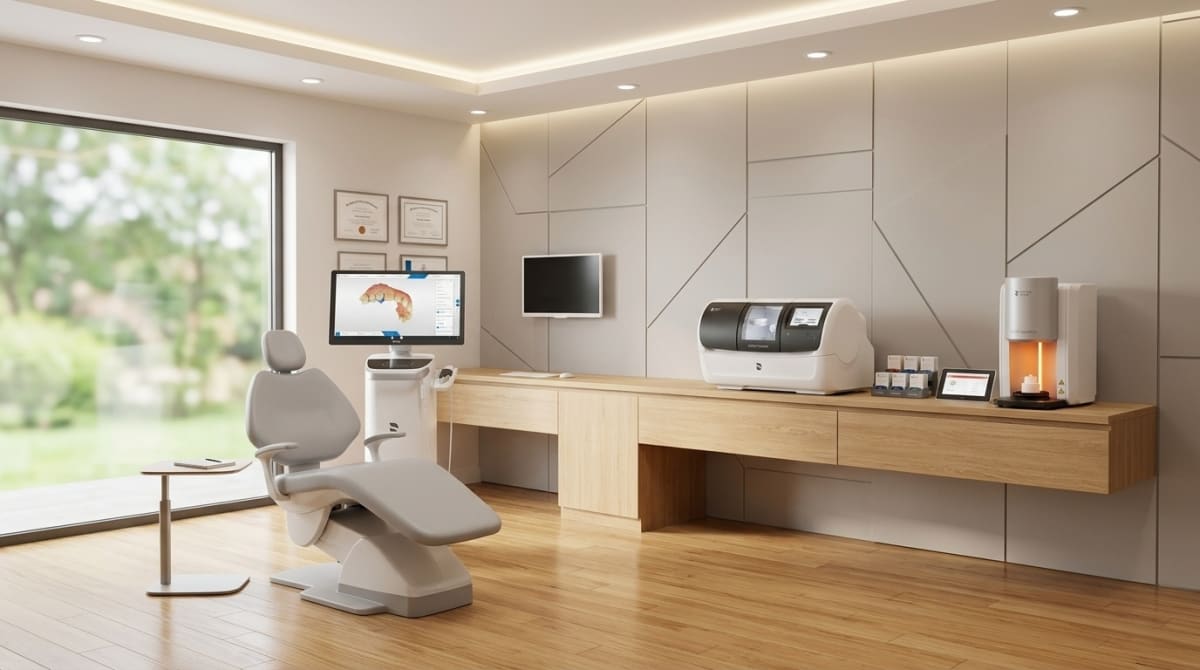
Dentistry has changed more in the past decade than in the previous fifty years. Advances in digital technology, material science, and minimally invasive techniques have reshaped nearly every aspect of treatment — from diagnosis and planning through to final restoration.
For patients, this translates into shorter appointments, less discomfort, fewer visits, and outcomes that look and function better than ever before. This article explains six key innovations that have transformed the modern dental experience.
1. Digital Scanners: Precision Without the Discomfort
Traditional dental impressions — the ones involving trays of paste pressed against your teeth — were often uncomfortable and triggered gagging in many patients. Digital intraoral scanners have largely replaced this process.
A handheld scanner captures thousands of data points per second, building a precise 3D model of the teeth and gums on screen in real time. A systematic review published in the Journal of Prosthetic Dentistry confirmed that digital impressions provide accuracy comparable to or better than conventional methods, with significantly improved patient comfort (Ahlholm et al., 2018).
What patients notice:
No trays, no paste, no gagging
Fast, clean scanning — often completed in under two minutes
Instant 3D preview on screen so you can see what your dentist sees
Better communication between patient and clinician
2. Same-Day Dentistry with CAD/CAM Technology
Computer-aided design and manufacturing (CAD/CAM) allows restorations like crowns, onlays, and in some cases veneers to be designed and milled in-house during a single appointment.
Instead of wearing a temporary restoration for two to three weeks while a laboratory fabricates the final piece, the entire process — scan, design, mill, bond — happens in one sitting. Research in Clinical Oral Investigations has shown that CAD/CAM ceramic restorations demonstrate excellent marginal fit and long-term survival rates exceeding 95 per cent at 10 years (Ahlholm et al., 2018).
Benefits for patients:
Fewer appointments — often just one visit instead of two or three
No temporary restorations that can dislodge or cause sensitivity
Fewer injections overall
High-strength ceramic materials designed with digital precision
Better fit, which means longer-lasting results
3. 3D Printing and Guided Surgery for Safer Implants
Placing dental implants once relied heavily on the clinician's manual skill and two-dimensional X-rays. Today, cone beam computed tomography (CBCT) provides a full 3D view of the jawbone, nerves, and sinus cavities. From this data, implant positions are planned digitally and transferred to a 3D-printed surgical guide.
A meta-analysis in the International Journal of Oral and Maxillofacial Implants found that guided implant surgery significantly reduces angular and positional deviations compared to freehand placement, improving both safety and predictability (Tahmaseb et al., 2018).
What this means for patients:
More precise implant positioning, reducing risk near nerves and sinuses
Shorter surgical times
Faster recovery with less post-operative swelling
More predictable long-term outcomes
For complex cases such as All-on-X full-arch rehabilitation, guided surgery has become the standard of care.
4. Modern Anaesthesia and Minimally Invasive Techniques
Fear of injections and pain remains one of the primary reasons people avoid dental care. Modern anaesthesia delivery systems have addressed this directly.
Computer-controlled local anaesthetic devices deliver solution at a slow, consistent rate that dramatically reduces the pressure and sting associated with traditional syringes. Combined with topical numbing gels and smaller-gauge needles, most patients report little to no discomfort during injection.
Minimally invasive techniques further reduce treatment intensity:
Micro-drills and air abrasion remove less healthy tooth structure during fillings
Laser-assisted treatments can reduce bleeding and accelerate healing in soft tissue procedures
Ultrasonic instruments used in deep cleaning are gentler on gum tissue than traditional hand instruments
The result is a treatment experience that is considerably more comfortable than what most patients remember from years past.
5. High-Strength Ceramics for Natural, Long-Lasting Results
Material science has advanced significantly. Modern dental ceramics — particularly lithium disilicate and zirconia — combine strength with optical properties that closely replicate natural tooth enamel.
What these materials offer:
Natural translucency and colour layering that blends with surrounding teeth
High fracture resistance suitable for both anterior and posterior teeth
Thinner preparations that preserve more natural tooth structure
Excellent long-term performance — studies report survival rates above 95 per cent at 10 years for lithium disilicate restorations (Linhares et al., 2020)
These materials are used in porcelain veneers, crowns, bridges, and full mouth rehabilitations — delivering results that are both aesthetic and durable.
6. Digital Planning, Safety Protocols and Sedation Options
Three pillars of contemporary dentistry work together: predictability, safety, and comfort.
Digital Planning
Smile simulations, digital wax-ups, and virtual treatment planning allow patients to preview outcomes before any clinical work begins. This improves communication and ensures expectations are aligned with what is clinically achievable.
Enhanced Infection Control
Modern practices invest in Class B autoclaves, waterline purification systems, and HEPA air filtration — exceeding standard regulatory requirements and providing an additional layer of safety for every patient.
Sedation for Anxious Patients
For patients who experience dental anxiety, sedation options range from nitrous oxide (happy gas) for mild relaxation to oral sedation and, where appropriate, intravenous sedation. These options allow nervous patients to receive the care they need in a calm, controlled setting.
Conclusion
Modern dentistry bears little resemblance to the experience many patients associate with their last visit — particularly if that visit was years ago. Digital scanners, same-day CAD/CAM restorations, guided implant surgery, advanced ceramics, and gentler anaesthesia techniques have collectively created a treatment environment that is faster, more precise, and significantly more comfortable.
If you have been putting off dental care, it may help to know that the technology and approach have fundamentally changed. Booking a consultation is a good first step toward understanding what modern treatment looks and feels like.
References
Ahlholm, P., et al. (2018). Digital versus conventional impressions in fixed prosthodontics: a review. Journal of Prosthodontics, 27(1), 35–41. PubMed
Tahmaseb, A., et al. (2018). Computer technology applications in surgical implant dentistry: a systematic review. International Journal of Oral and Maxillofacial Implants, 33(suppl), s35–s42. PubMed
Linhares, L.A., et al. (2020). Lithium disilicate and zirconia-based ceramics for fixed prostheses: a clinical review. Journal of Prosthodontic Research, 64(1), 3–11.