When Grinding Takes a Toll You Can See and Feel
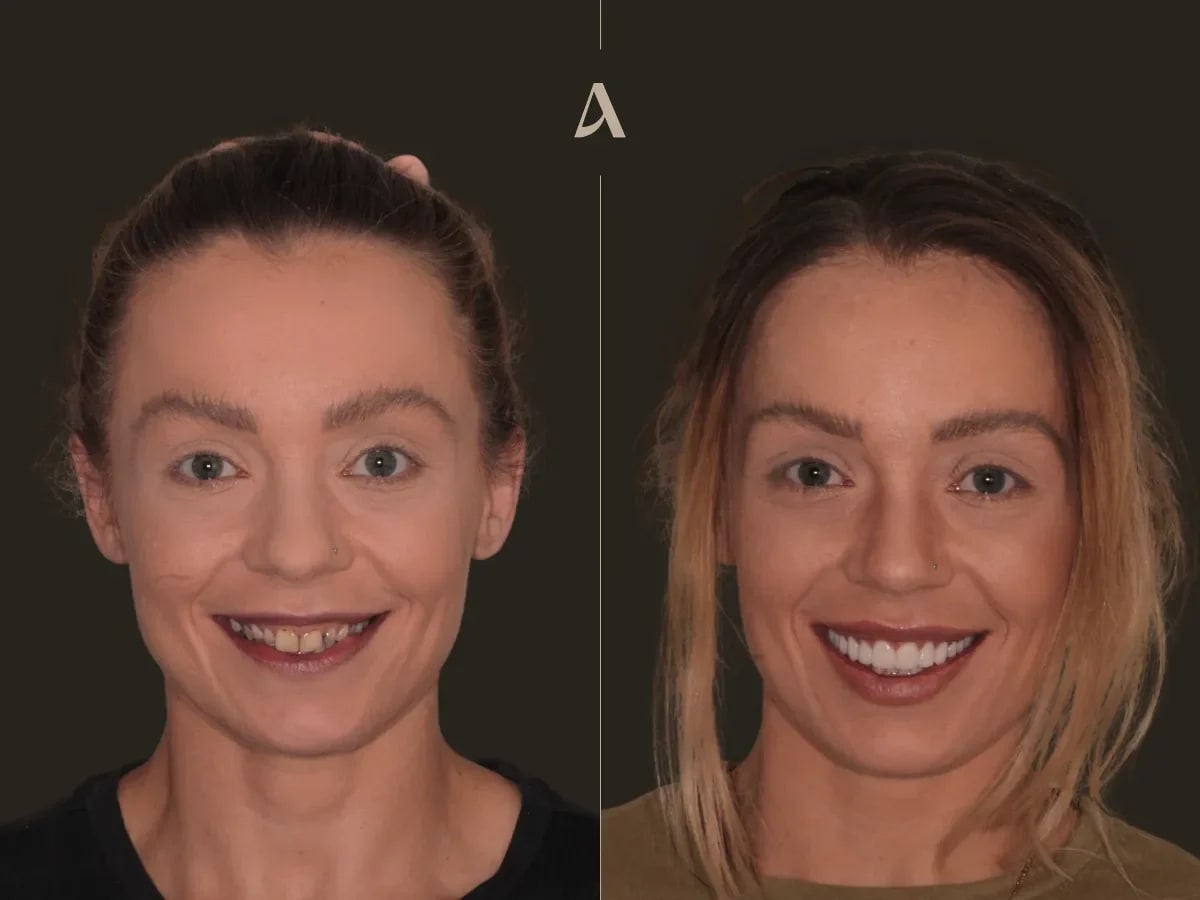
She was young, but more than a decade of teeth grinding had left its mark. Her teeth were visibly worn down, some nearly to the gum line. Her bite had collapsed, meaning her upper and lower jaws were sitting closer together than they should. And the effect on her face was impossible to ignore.
Her lower face looked sunken. Her jaw was constantly tense. She dealt with headaches, discomfort, and a tiredness that never seemed to go away. Over time, the physical changes fed into something deeper. She felt self-conscious, withdrawn, and unlike herself.
When she came to ArtSmiles, she told us she had looked into cosmetic procedures like fillers and even surgical options to address the changes in her face. But the root cause was dental, and that is where the solution needed to start.

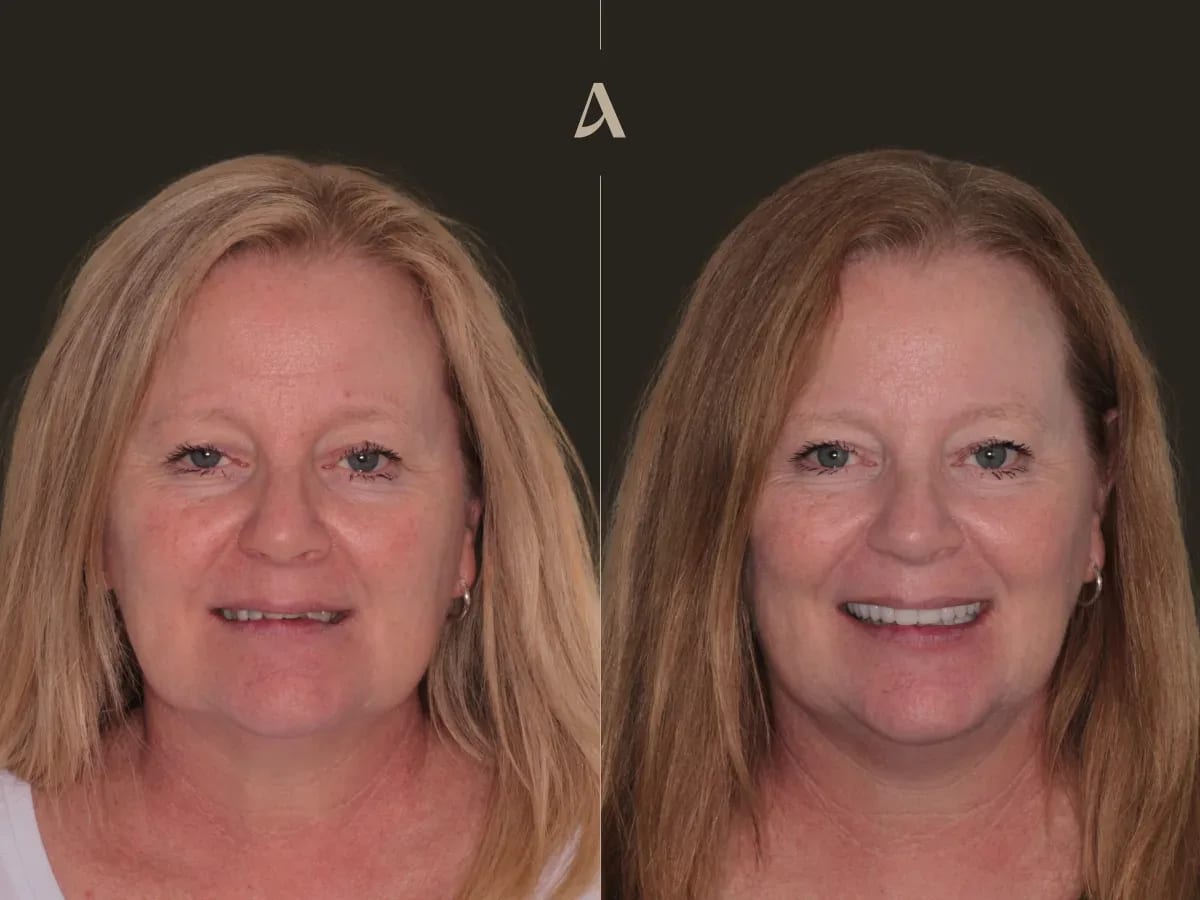
Facial aspect before initiating the treatment.
Understanding the Problem: More Than Cosmetic
Teeth grinding, also known as bruxism, does not just damage the surface of your teeth. Over time, it can wear down the tooth structure so significantly that the entire bite collapses. When the bite height drops, it affects the proportions of the face, particularly around the lower third.
This is why some people with long-term grinding notice changes that look like premature ageing. The lower face shortens, the lips lose support, and the jawline can appear less defined. It is a dental problem with very real cosmetic consequences.
For our patient, the goal was twofold: restore the teeth and restore the facial proportions that had been lost.
The Treatment Plan: Rebuilding from the Ground Up
We designed a non-surgical full mouth rehabilitation that addressed every aspect of the damage.
1. Opening the Bite by 4mm
The most important structural change was restoring the vertical height of her bite. By opening it by 4 millimetres, we could give the teeth the space they needed and allow the lower face to return to a more natural proportion. This single change had a dramatic effect on her facial appearance.
2. Gum Recontouring (Crown Lengthening)
Because her teeth had worn down so much, there was not enough tooth structure visible above the gum line to support new restorations. A minor gum surgery, called crown lengthening, gently reshaped the gum tissue to expose more of each tooth.
3. Veneers, Crowns, and Bridges
With the bite height established and the gums prepared, we placed a combination of zirconia and ceramic veneers and crowns and bridges across her mouth. Each restoration was custom-designed to rebuild the natural shape, strength, and appearance of every tooth.
The shade selected was BL2, a bright and clean white that suited her age and complexion while still looking natural.
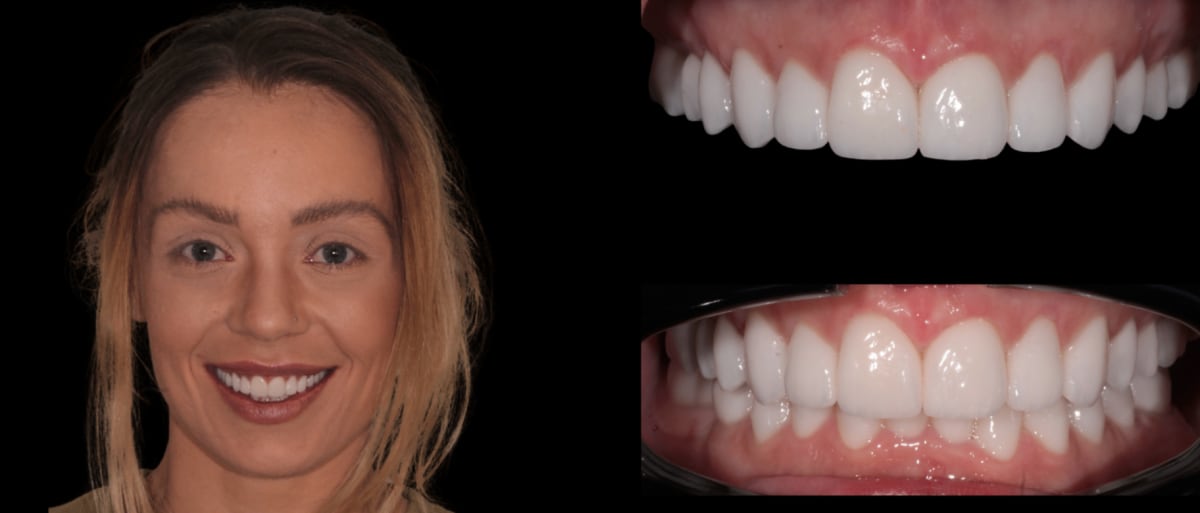
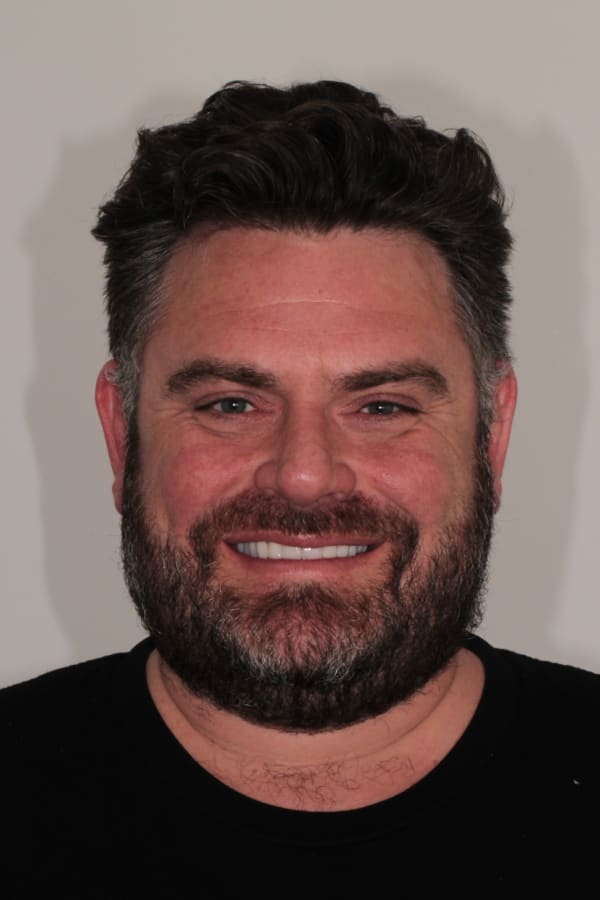
Close-up of the result
4. Bruxism Protection with a Custom Splint
Restoring the teeth was only half the job. Without protection, grinding could damage the new restorations over time. We created a custom occlusal splint, a precisely fitted night guard, designed to absorb the forces of grinding and protect her investment for the long term.
Try Smile Studio
Curious how a new smile might look on you before you commit to anything? Try Smile Studio, our free online tool. Upload a photo of your smile and preview different tooth shapes and shades right in your browser, in your own time and with no pressure. It works best on a computer or laptop, so open it on a desktop rather than your phone for the easiest experience. It is a simple way to explore the look you are after and bring those ideas to your consultation, so we can talk through what is realistic for your teeth. Keep in mind it is a visual guide to spark the conversation, not a treatment plan or a promise of results.
The Results: A Change People Noticed
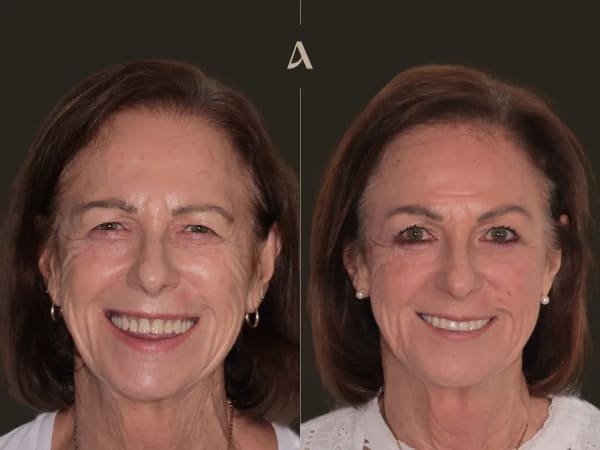
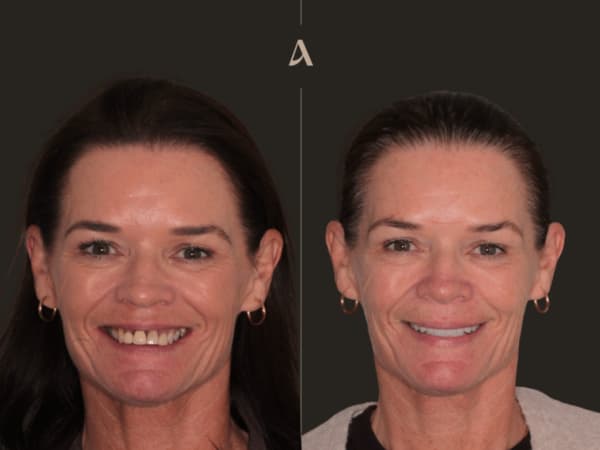
When the final restorations were placed, the transformation was striking. But what stood out most was not the teeth themselves. It was her face.
Facial fullness was restored. The lower third of her face looked naturally lifted and more proportionate, almost like a mini facelift, but achieved entirely through dental treatment.
Jaw tension eased. With a properly balanced bite, the chronic muscle strain that had been causing headaches and discomfort began to resolve.
Confidence came back. She started smiling openly again. She felt comfortable in social settings. She told us she finally recognised herself.
Dental Restoration vs. Cosmetic Surgery
It is worth noting that our patient had considered cosmetic surgery before exploring dental treatment. While procedures like fillers or facelifts can address surface-level concerns, they do not fix the underlying cause when bite collapse is driving the changes.
A full mouth restoration treats the source of the problem. By rebuilding the teeth and restoring the correct bite height, the facial changes often reverse naturally, without any surgical intervention. For younger patients especially, this can be a far more effective and longer-lasting approach.
Could This Be the Answer You Have Been Looking For?
If you have been living with worn-down teeth, a collapsing bite, or facial changes you cannot explain, the cause may be dental. Bruxism affects millions of people, and many do not realise the extent of the damage until it becomes visible.
The good news is that even significant wear can often be reversed with the right treatment plan. No surgery required.
If this story sounds familiar, our team at ArtSmiles is here to help. Book a consultation and we will take the time to understand your situation and explore what is possible for you.
Disclaimer
This article documents one patient's treatment at ArtSmiles. It is shared for educational purposes with the patient's written consent. Individual results vary and depend on factors including oral health, bone and gum condition, general medical history, and how well the restoration is maintained after treatment. Nothing in this article is a guarantee of outcome, a substitute for a clinical examination, or advice specific to your case. Any treatment carries risks and potential complications, which will be explained to you at consultation.
Before starting any dental treatment, book a consultation so we can assess your teeth, gums, and bone in person, take the imaging we need, and discuss the options, timelines, and costs that apply to your situation.
Case executed by Dr Cristian Dunker
General Dentist
AHPRA DEN0002257085
ArtSmiles, Southport, Gold Coast