
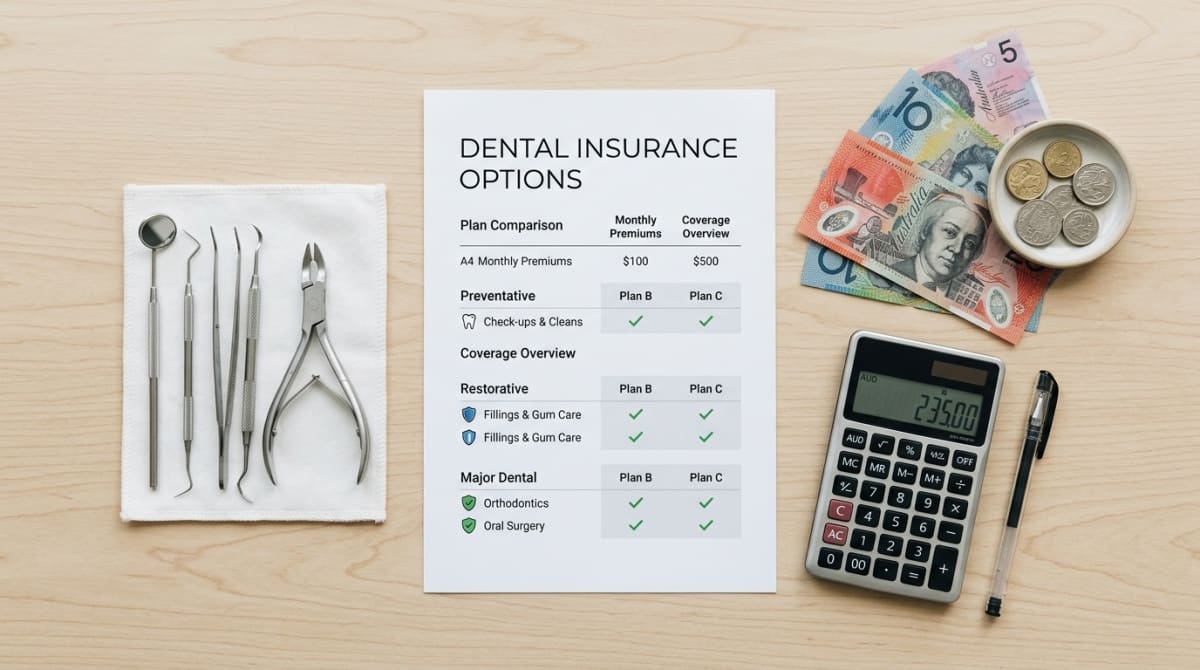
Choosing dental health insurance can feel overwhelming. There are so many plans, so many exclusions, and so many fine print details that it's hard to know if you're actually getting good value. As dentists, we see the impact of insurance choices every day, from patients who are well covered and get preventive care regularly, to those who thought they were covered only to find out their plan doesn't include what they need.
This guide is written from a dentist's perspective to help you understand what really matters when choosing dental insurance in Australia, so you can make a decision that protects your health and your wallet.
What Does Dental Health Insurance Actually Cover?
In Australia, dental cover is part of private health insurance "extras" (also called general treatment or ancillary cover). It's separate from hospital cover and is designed to help with the cost of dental visits.
Most dental insurance plans divide services into categories:
General dental (preventive): Check-ups, cleans, X-rays, fluoride treatments. These are the everyday visits that catch problems early.
General dental (basic): Fillings, simple extractions, root canals, gum treatments. These are treatments you might need when a problem is found.
Major dental: Crowns and bridges, dental implants, dentures, orthodontics. These are more complex treatments that tend to have higher out-of-pocket costs.
The level of cover varies significantly between plans. Some will pay a set percentage of the fee (say 60% for general dental), while others offer a fixed dollar amount per service. Understanding which model your plan uses is one of the most important things you can do before signing up.
Five Things to Look for When Choosing a Plan
1. Think About What You Actually Need
If your teeth and gums are generally healthy and you mainly need check-ups and the occasional filling, a basic extras plan may be all you need. But if you know you'll need crowns, implants, or orthodontic work in the coming years, a higher level of cover will usually save you money in the long run.
Take a moment to think about your recent dental history. Have you needed fillings? Are any teeth showing signs of wear? Do you have gum concerns? Your dentist can help you anticipate what might be coming.
2. Check What's Included (and What's Not)
Not all plans cover the same things. Some exclude specific treatments like teeth whitening, cosmetic procedures, or implants. Others include them but with long waiting periods (sometimes 12 months or more for major dental).
Always read the fine print. The cheapest plan isn't always the best value if it doesn't cover the treatments you're most likely to need.
3. Understand the Limits
Most plans have an annual limit, which is the maximum amount the fund will pay toward your dental care in a given year. If your limit is $500 and you need a crown that costs $1,500, you'll be paying the difference yourself.
Some plans also have sub-limits, meaning they cap how much they'll pay for specific services within the overall limit.
4. Check if Your Dentist Is in the Network
Some health funds have preferred provider networks. Visiting a dentist within the network often means higher rebates or no-gap payments on certain services. If you already have a dentist you trust, check whether they're a preferred provider before committing to a plan.
At ArtSmiles, we process claims from all major health funds on the spot using HICAPS, so you only pay the gap at the time of your visit.
5. Look at the Total Cost, Not Just the Premium
A lower monthly premium might seem attractive, but it often comes with lower rebates, higher gaps, and more exclusions. Compare the total annual cost (premiums plus estimated out-of-pocket expenses) rather than just the monthly payment.
Common Mistakes People Make
Choosing based on price alone: The cheapest plan often provides the least useful cover
Not checking waiting periods: If you need treatment soon, a 12-month waiting period for major dental defeats the purpose
Forgetting about annual limits: A $400 annual cap won't go far if you need anything beyond a check-up and clean
Not using your benefits: Many Australians pay for dental cover but don't actually visit the dentist. Use your preventive benefits, they're there to keep small problems from becoming big ones
Assuming everything is covered: Cosmetic procedures, some orthodontic treatments, and certain implant-related costs are often excluded or only partially covered
What If You Don't Have Insurance?
Not having dental insurance doesn't mean you can't access quality care. Many dental practices, including ours, offer payment plans that let you spread the cost of treatment over time.
At ArtSmiles, we also offer the ArtSmiles Club, a membership program for patients without insurance. Members receive up to 30% off treatments, priority booking, and a structured preventive care schedule. For many patients, this works out more cost-effective than an extras policy.
What the Data Actually Says About Dental Cover
Before you sign up for extras, it helps to know how the numbers stack up. General dental is the single most-claimed extras service in Australia, which is why most funds set the tightest annual limits there. Major dental benefits are smaller relative to actual treatment cost: the Australian government's official health insurance comparison tool makes it easy to check exactly what each policy rebates per item number before you commit.
A few details that surprise most patients:
Premiums generally rise each April, but your annual limits stay fixed, so cover becomes relatively less generous over time unless you actively upgrade.
Most funds reset annual limits on 1 January, not on your policy anniversary, which means mid-year sign-ups often mean losing half your first-year allowance.
Industry data from Private Healthcare Australia shows the average extras claim covers roughly 50% of the fee for non-preferred providers, rising to 75 to 100% at preferred-provider clinics, but only on specific item numbers.
These details matter more than the headline monthly premium when you're choosing between funds.
The Bottom Line
Dental health insurance can be a worthwhile investment, but only if you choose the right plan for your situation. Take the time to compare what's covered, understand the limits, and think about what you'll actually need over the next few years.
And regardless of whether you have insurance or not, the most important thing is to keep up with regular dental visits. Preventive care is always cheaper than treatment, and catching problems early is the best way to protect both your health and your budget.
If you'd like personalised advice on making the most of your dental cover, or if you're looking for affordable care without insurance, our team at ArtSmiles in Southport is happy to help. Book an appointment or call us on (07) 5588 3677.
Frequently Asked Questions
Is dental insurance worth it in Australia?
It depends on how much dental work you actually need. If you're only having six-monthly check-ups and cleans, the premiums you pay over a year will usually exceed the rebates you get back, and saving the same amount yourself often works out better. Dental extras cover starts making sense when you need regular restorative work, have children in orthodontic treatment, or are planning major treatment that falls within the annual limits.
What is the difference between general and major dental on extras cover?
General dental covers check-ups, cleans, simple fillings, and fluoride treatments. Major dental covers crowns, bridges, root canals, extractions with a surgical component, dentures, and sometimes implants. Major dental almost always has a longer waiting period (usually 12 months) and a separate annual limit, so the line between the two categories matters a lot when you compare funds.
How long are the waiting periods for dental cover?
General dental typically has a two-month waiting period. Major dental and orthodontic treatment typically have a 12-month waiting period. Some funds waive or reduce waiting periods during special offers or when you transfer from another fund at the same level of cover.
Does dental insurance cover veneers, implants, or cosmetic work?
Rarely in full. Most cosmetic procedures, including veneers and full teeth whitening, are excluded from extras cover because they're considered elective. Implants sit in a grey zone: some funds include them under major dental with significant limits, some exclude them, and some only rebate the crown portion. Always check the fund's product disclosure statement for the exact item numbers covered before committing to treatment.
Should I go to a preferred provider dentist?
Preferred provider arrangements can reduce your out-of-pocket costs on specific items, but they also limit which clinicians you can see and sometimes which treatments are offered. The savings only matter if the dentist and the treatment plan are right for you. It's worth asking any fund how its rebates compare across preferred and non-preferred providers for the specific treatments you're likely to need.
Written by Dr. Cristian Dunker, BDSc, MBA.
Medically reviewed on 19 April 2026 by Dr. Cristian Dunker.