
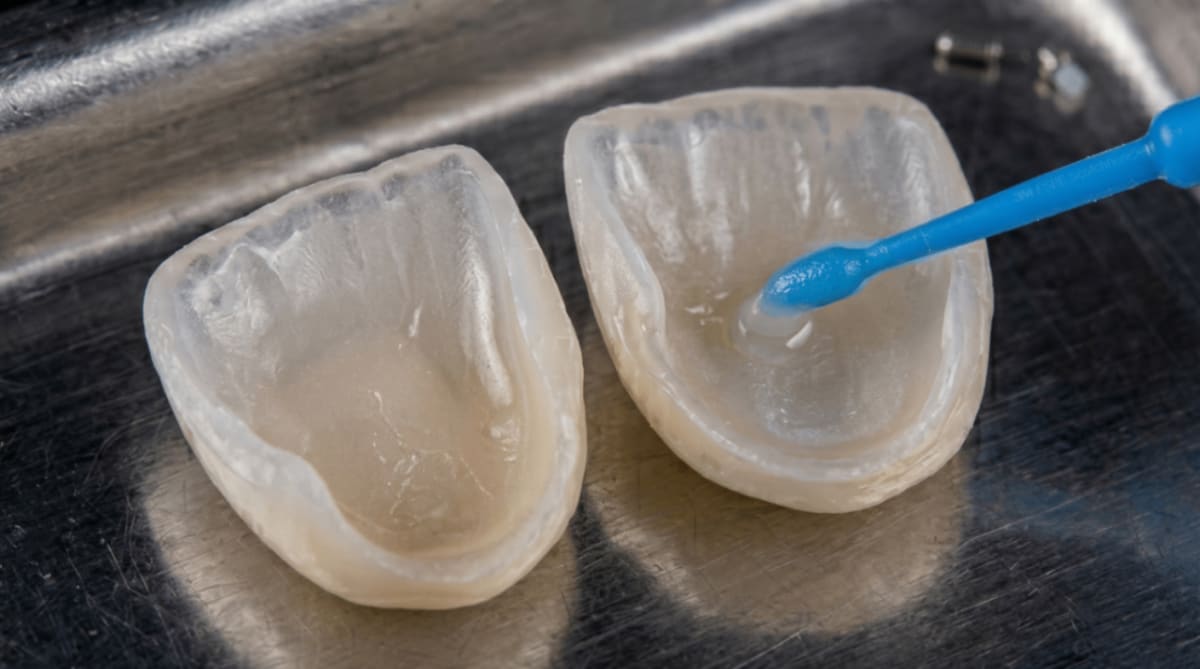
Dental veneers have transformed cosmetic dentistry, offering patients the opportunity to achieve aesthetically pleasing smiles. With various veneer materials available, understanding their properties is essential for making informed decisions. This guide explores the characteristics of different veneer materials, supported by scientific evidence.
Table of Contents
1. Composite Veneers
Overview: Composite veneers are crafted from resin-based materials applied directly to the tooth surface.
Aesthetics: They provide a natural appearance but are more prone to staining over time compared to ceramic options.
Durability & Lifespan: Studies indicate a lifespan of approximately 5–7 years with proper care.
Wear Resistance: Moderate resistance; more susceptible to chipping and wear than ceramics.
Maintenance: Require regular polishing and maintenance to retain appearance.
Biocompatibility: Generally well-tolerated, though some individuals may experience sensitivity.
2. Hybrid Ceramics (e.g., Cerasmart, Vita Enamic)
Overview: Hybrid ceramics combine ceramic and resin components, aiming to merge the benefits of both materials.
Aesthetics: Offer good translucency and colour stability, closely mimicking natural teeth.
Durability & Lifespan: Clinical evaluations suggest a lifespan of 5–7 years, depending on usage and care.
Wear Resistance: Enhanced resistance compared to composites, suitable for moderate bite forces.
Maintenance: Less prone to staining; occasional polishing may be necessary.
Biocompatibility: High compatibility with oral tissues, minimising adverse reactions.
3. Feldspathic Ceramic Veneers
Overview: Crafted from layered porcelain, feldspathic veneers are known for their superior aesthetics.
Aesthetics: Highly translucent, offering a lifelike appearance that closely resembles natural enamel.
Durability & Lifespan: With meticulous care, they can last over a decade (Peumans et al., 2004).
Wear Resistance: Suitable for areas with minimal bite stress; less durable than other ceramic options.
Maintenance: Resistant to staining; routine dental check-ups recommended to monitor integrity.
Biocompatibility: Excellent tissue compatibility, reducing the risk of irritation.
4. Glass-Ceramic Veneers (e.g., Lithium Disilicate)
Overview: Lithium disilicate veneers combine strength and aesthetics, making them a popular choice for both anterior and posterior applications.
Aesthetics: Provide a balance of translucency and strength suitable for visible and functional areas.
Durability & Lifespan: Clinical studies report a lifespan ranging from 10 to 15 years (Zarone et al., 2011).
Wear Resistance: High resistance to wear, accommodating various bite forces.
Maintenance: Minimal maintenance required; resistant to chipping and staining.
Biocompatibility: Highly biocompatible, ensuring comfort and safety for patients.
Try Smile Studio
Curious how a new smile might look on you before you commit to anything? Try Smile Studio, our free online tool. Upload a photo of your smile and preview different tooth shapes and shades right in your browser, in your own time and with no pressure. It works best on a computer or laptop, so open it on a desktop rather than your phone for the easiest experience. It is a simple way to explore the look you are after and bring those ideas to your consultation, so we can talk through what is realistic for your teeth. Keep in mind it is a visual guide to spark the conversation, not a treatment plan or a promise of results.
5. Multilayer Zirconia Veneers
Overview: Multilayer zirconia veneers consist of multiple layers with varying translucency, enhancing their natural appearance.
Aesthetics: Improved over traditional zirconia, closely mimicking the gradation of natural teeth.
Durability & Lifespan: Studies indicate a lifespan exceeding 15 years with appropriate care (Heintze & Rousson, 2010).
Wear Resistance: Exceptional resistance, suitable for patients with significant bite forces.
Maintenance: Low maintenance; highly resistant to wear and staining.
Biocompatibility: Excellent compatibility, minimising the risk of allergic reactions or sensitivities.
6. Monolithic Zirconia Veneers
Overview: Fabricated from a single block of zirconia, these veneers offer unparalleled strength.
Aesthetics: While less translucent than multilayer options, advancements have significantly improved their visual appeal (Sulaiman et al., 2015).
Durability & Lifespan: Capable of lasting over 20 years, making them one of the most durable options available.
Wear Resistance: Highest among veneer materials; ideal for patients with heavy bite forces or bruxism.
Maintenance: Minimal maintenance required; highly resistant to fractures and wear.
Biocompatibility: Outstanding tissue compatibility, ensuring long-term comfort.
Comparative Summary
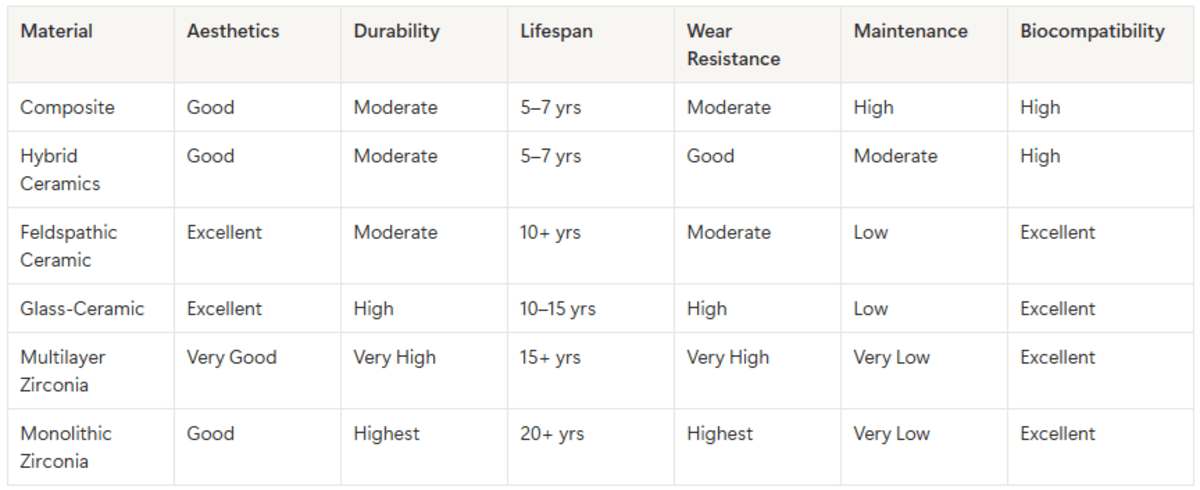
Choosing the Right Veneer Material
If you are weighing up porcelain vs composite veneers, the short version is that composite costs less and can often be done in a single visit, while porcelain options (including glass-ceramic and zirconia) are stronger and more stain-resistant over the long term. Hybrid veneers, made from hybrid ceramics, sit between the two and can be a sensible middle ground. There is no single best veneer material for everyone: the right pick depends on your enamel, your bite, your budget and the look you are after, which is what this veneer materials comparison and a consultation are there to help you work out.
Selecting the appropriate veneer material is a multifaceted decision that should consider individual patient needs, aesthetic goals, functional requirements, and budget.
While composite veneers offer a cost-effective solution with satisfactory aesthetics, they may require more frequent maintenance. Ceramic options, particularly zirconia-based veneers, provide superior durability and longevity, albeit at a higher investment.
Advancements in dental materials have significantly enhanced the performance and appearance of veneers. The development of multilayer zirconia has addressed previous aesthetic limitations, offering a more natural look without compromising strength. Similarly, hybrid ceramics aim to combine the best attributes of resin and ceramic materials, though long-term studies are needed to fully understand their performance.
Patients who grind or clench their teeth (bruxism) may benefit from stronger materials like zirconia, while those prioritising aesthetics in visible areas may prefer porcelain veneers for their lifelike translucency.
Ultimately, a thorough consultation with a dental professional is essential to determine the most suitable veneer material, ensuring optimal outcomes in both function and appearance.
Frequently Asked Questions
What is the most natural-looking veneer material?
Feldspathic ceramic and glass-ceramic (lithium disilicate) veneers are known for the most lifelike translucency, closely mimicking natural enamel. They allow light to pass through in a way that other materials cannot, making them a top choice for patients who want veneers that look indistinguishable from natural teeth.
How long do dental veneers last?
Veneer longevity depends on the material and how well you care for them. Porcelain and ceramic veneers typically last 10 to 20 years, while composite veneers generally last 5 to 7 years before needing replacement or touch-ups. Zirconia veneers are extremely durable and can last 15 to 25 years with proper care.
Are composite veneers a good option for my smile?
Composite veneers are a solid choice if you want a same-day result at a lower cost. They are placed directly on your teeth without lab fabrication and can be repaired easily if chipped. However, they are less translucent than ceramic options and may stain over time, requiring polish or replacement sooner.
What is the difference between porcelain and zirconia veneers?
Porcelain veneers (including feldspathic and glass-ceramic types) are valued for their superior aesthetics and light-transmitting properties. Zirconia veneers are significantly stronger, making them better suited for patients with bruxism or who need to cover back teeth. Zirconia is less translucent but more resistant to chipping and fracture.
Can I get veneers if I grind my teeth?
Yes, veneers are possible even if you grind your teeth (bruxism), but material selection matters. Zirconia veneers are the most resistant to grinding forces and are often recommended for bruxers. A custom night guard is also typically advised to protect your veneers and natural teeth from wear over time.
Book a Veneer Consultation
At ArtSmiles in Southport on the Gold Coast, our team specialises in a full range of veneer materials — from composite to zirconia. We assess each patient's bite, lifestyle, and aesthetic goals to recommend the best option.
If you would like to explore your veneer options, you can book a consultation with our team.
References
Peumans, M., De Munck, J., Fieuws, S., et al. (2004). A prospective ten-year clinical trial of porcelain veneers. Journal of Adhesive Dentistry, 6(1), 65–76.
Giordano, R., McLaren, E. A. (2010). Ceramics overview: Classification by microstructure and processing methods. Compendium of Continuing Education in Dentistry, 31(9), 682–684.
Zarone, F., Ferrari, M., & Mangano, F. (2011). Minimally invasive restorations with lithium disilicate: A literature review. Journal of Adhesive Dentistry, 13(5), 411–418.
Gracis, S., Thompson, V. P., et al. (2015). A new classification system for all-ceramic and ceramic-like restorative materials. The International Journal of Prosthodontics, 28(3), 227–235. doi:10.11607/ijp.4244
Kaleli, N., Sarac, D., et al. (2018). Evaluation of surface properties and flexural strength of various restorative materials. Journal of Prosthodontic Research, 62(4), 483–487.
Stawarczyk, B., Özcan, M., et al. (2010). Two-body wear rate of CAD/CAM resin blocks and human enamel. Dental Materials Journal, 29(8), 843–851.
Preis, V., Behr, M., et al. (2012). Wear performance of dental ceramics after grinding and polishing treatments. Journal of the Mechanical Behavior of Biomedical Materials, 10, 13–22.
Heintze, S. D., & Rousson, V. (2010). Survival of zirconia- and metal-supported fixed dental prostheses: A systematic review. The International Journal of Prosthodontics, 23(6), 493–502.
Sulaiman, T. A., et al. (2015). Optical properties and light irradiance of monolithic zirconia at variable thicknesses. The Journal of Prosthetic Dentistry, 114(5), 735–739.
Mormann, W. H., et al. (2006). Effects of preparation design and ceramic thickness on fracture resistance of monolithic lithium disilicate crowns. Journal of Prosthetic Dentistry, 95(6), 524–529.
Written by Dr. Cristian Dunker, BDSc, MBA.
Medically reviewed by Dr. Cristian Dunker.