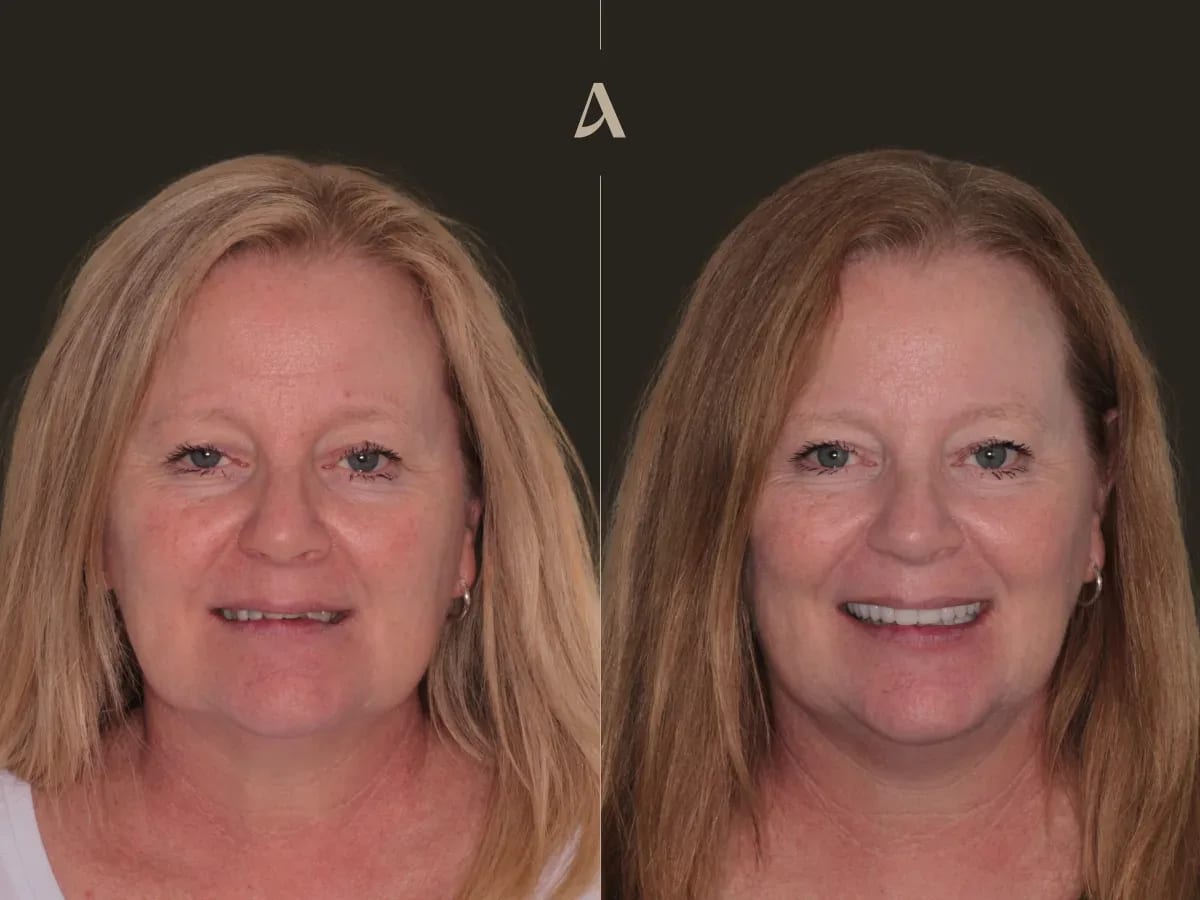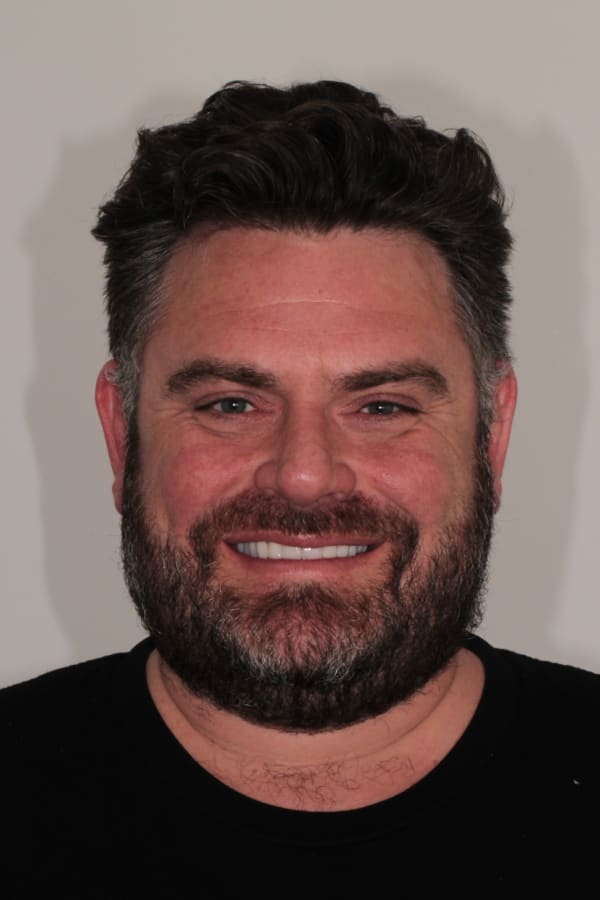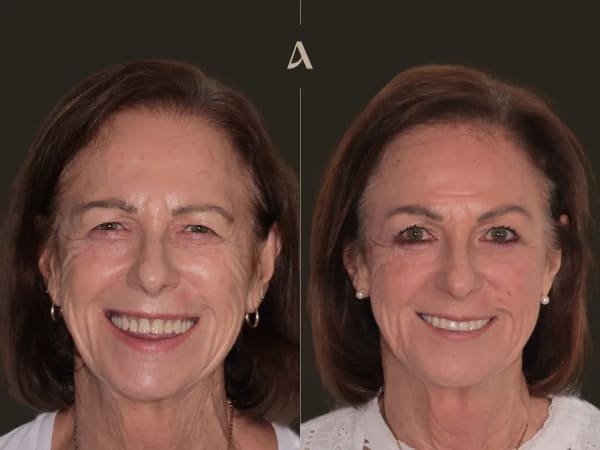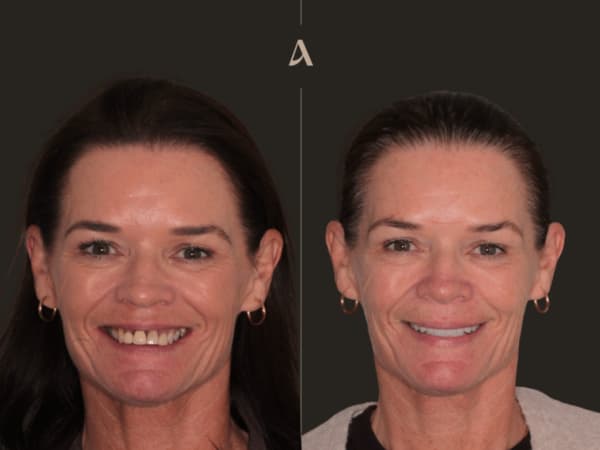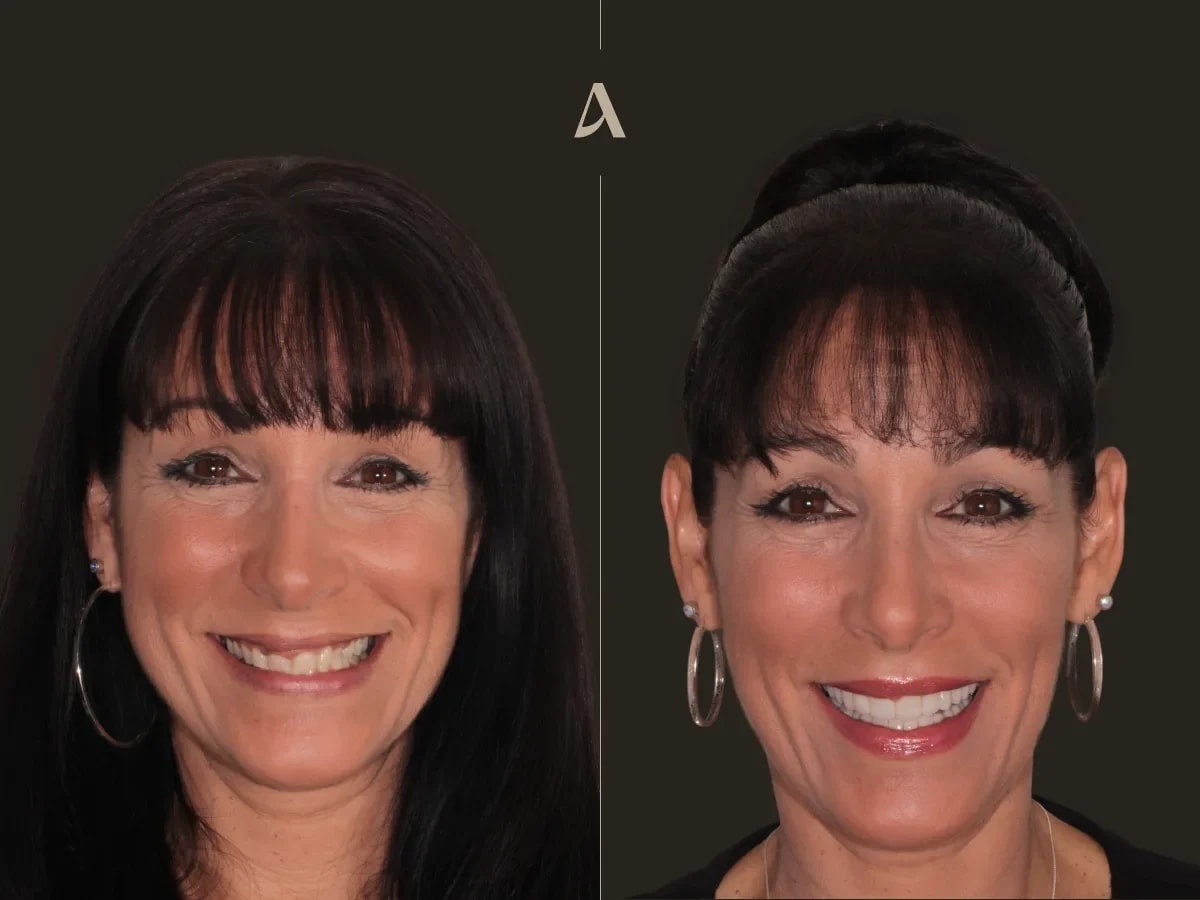
Sometimes a dental concern runs much deeper than it first appears. A patient may come in thinking they need a few veneers or a whitening treatment, only for us to discover that years of grinding have quietly changed the shape of their teeth, their bite, and even their face.
This is the story of one such patient at ArtSmiles, and how full mouth rehabilitation gave her back not just her smile, but her sense of self.
The Problem: More Than Just Worn Teeth
When this patient first visited our clinic, she was experiencing persistent tooth sensitivity that made eating uncomfortable, visible gaps between her teeth from uneven wear, and a sunken appearance around her mouth and jaw that made her look older than she felt.
She had stopped smiling in photos. She avoided social situations. She told us she felt like her appearance no longer reflected the person she was inside.
After a thorough assessment, we found the root cause: bruxism, or chronic teeth grinding.
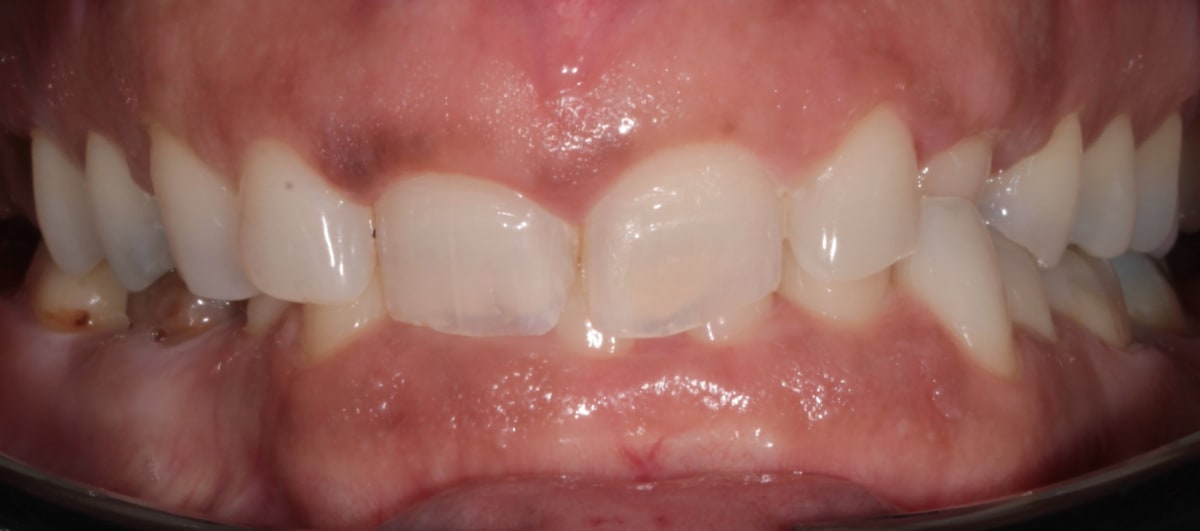
Aspect intraoral before rehabilitation
What Bruxism Does Over Time
Bruxism is one of those conditions that can go unnoticed for years because it usually happens during sleep. But over time, the damage adds up. Teeth become shorter and flatter. Enamel wears away, exposing the softer dentine underneath and causing sensitivity. The bite collapses, reducing the vertical space between the upper and lower jaws.
This loss of what dentists call "vertical dimension of occlusion" (VDO) doesn't just affect your teeth. It changes the proportions of your face. Lips lose support, nasolabial folds deepen, and the lower face can take on a sunken or aged appearance.
A case report in the Journal of Dental Research, Dental Clinics, Dental Prospects describes this phenomenon clearly: the correct assessment of VDO and its restoration is one of the most critical factors in achieving successful rehabilitation outcomes in patients with severely worn teeth.
The Solution: Full Mouth Rehabilitation
Full mouth rehabilitation is a carefully planned treatment that addresses both the functional and aesthetic damage caused by bruxism. Rather than treating individual teeth in isolation, the entire bite is restored as a single, coordinated system.
For this patient, the treatment plan included:
Bite correction to restore the lost vertical dimension and bring her jaw back to its ideal position
Ceramic veneers on the front teeth to rebuild natural shape, colour, and proportion
Zirconia crowns on the back teeth for strength and durability in the areas most affected by grinding
Dental bridges to replace missing teeth and close gaps
An observational study by Levartovsky et al. (2019) followed ten bruxism patients treated with zirconia restorations at an increased vertical dimension. Over a mean observation period of 28 months, no biological complications were recorded, supporting the reliability of this approach for long-term rehabilitation.
Try Smile Studio
Curious how a new smile might look on you before you commit to anything? Try Smile Studio, our free online tool. Upload a photo of your smile and preview different tooth shapes and shades right in your browser, in your own time and with no pressure. It works best on a computer or laptop, so open it on a desktop rather than your phone for the easiest experience. It is a simple way to explore the look you are after and bring those ideas to your consultation, so we can talk through what is realistic for your teeth. Keep in mind it is a visual guide to spark the conversation, not a treatment plan or a promise of results.
Step by Step: How We Planned and Delivered the Treatment
Step 1: Evaluating the Bite and Planning the New Smile
Before any treatment began, we needed to understand exactly how much vertical dimension had been lost and what the ideal tooth dimensions should be. Using digital scans, facial photography, and functional analysis, we mapped out a complete treatment plan. The patient could see a preview of her new smile before we started, which gave her confidence in the process.
Research by Lee et al. (2019) demonstrated how digital smile design can be used effectively in bruxism cases, combining conventional and digital methods to achieve satisfactory function and aesthetics in patients with severely worn teeth.
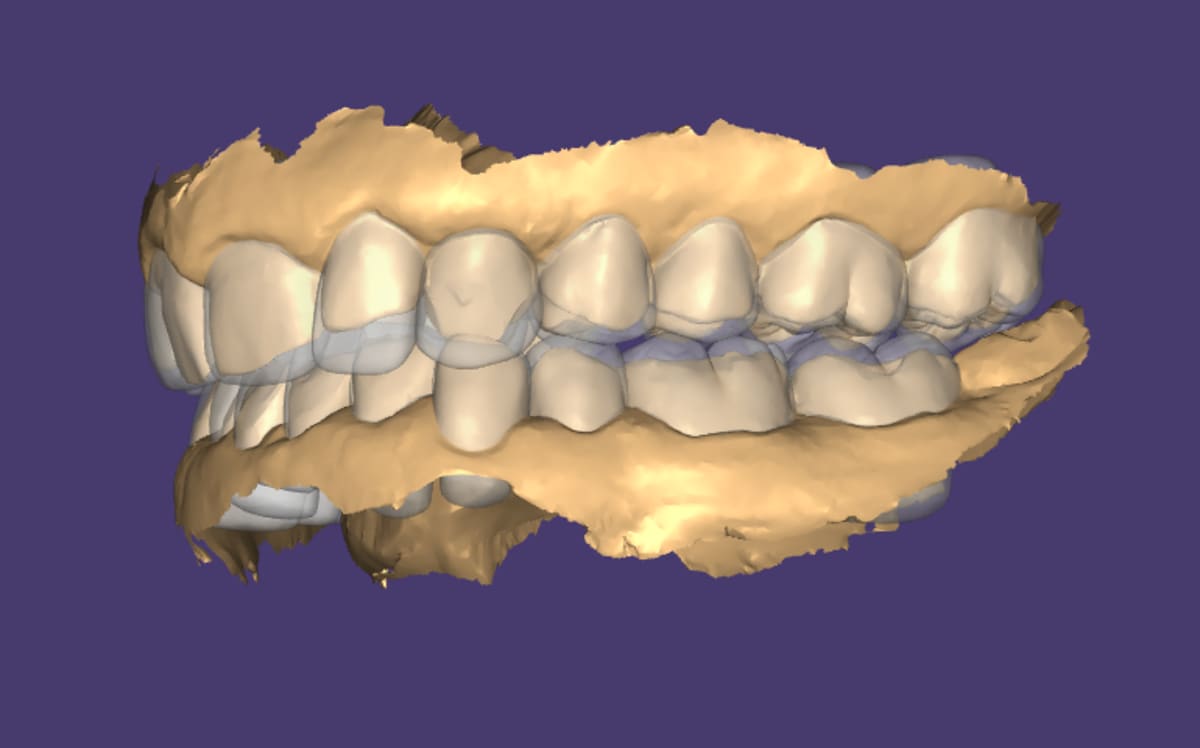
Image of digital wax-up, the planning done for this case, showing increase in vertical dimension and repositioning of the teeth.
Step 2: Rebuilding with the Right Materials
Material choice matters enormously in bruxism cases. The front teeth received ceramic veneers for their lifelike appearance, while the heavily loaded back teeth were restored with monolithic zirconia crowns, chosen for their exceptional strength and wear resistance.
Every restoration was handcrafted to match the patient's unique features, including shade, shape, and facial proportion. The goal was a result that looked completely natural and could withstand the forces of grinding.
A 4-year follow-up study by Moreira et al. (2019) confirmed that combining ceramic veneers with zirconia crowns for occlusal stabilisation can produce durable, aesthetically pleasing results in patients with bruxism and severe wear.
The Results
The transformation went far beyond her teeth:
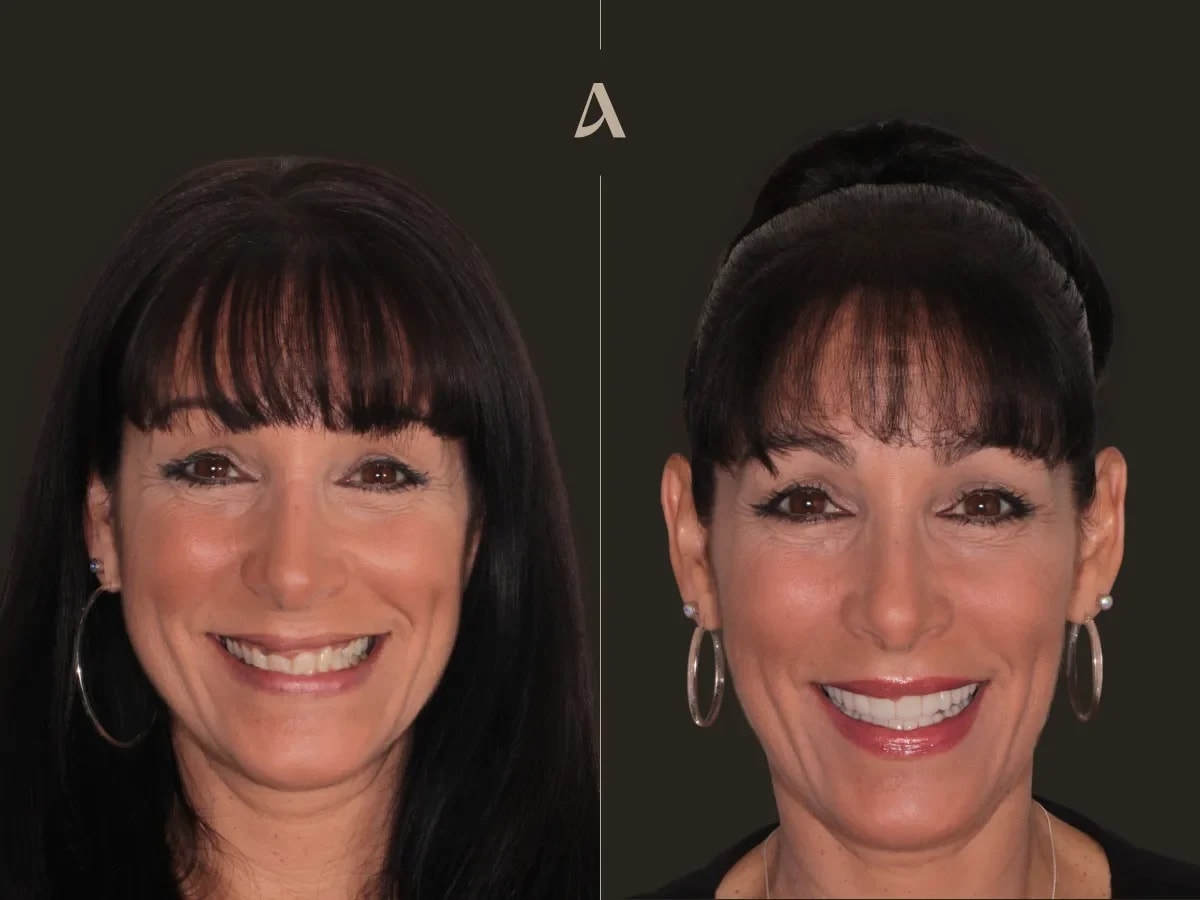
Before treatment:
Collapsed bite and shortened facial proportions
Deep nasolabial folds with unsupported lips
Severe tooth sensitivity preventing normal eating
Avoidance of smiling or being photographed
After treatment:
A lifted, balanced lower face from the restored vertical dimension
Bright, natural looking teeth that properly support the lips and cheeks
No more sensitivity, with comfortable chewing restored
The confidence to smile freely again
The Emotional Side of Smile Rehabilitation
What moved us most about this case was the emotional change. This patient told us that she started wearing lipstick again. She began going out more. She let friends take photos of her without turning away.
These might sound like small things, but they represent something much bigger. When your smile feels like yours again, everything else shifts too.
Is Full Mouth Rehabilitation Right for You?
If you're experiencing any of the following, full mouth rehabilitation may be worth exploring:
Multiple teeth that are worn, broken, or sensitive
A lower face that looks aged or sunken
Jaw pain, headaches, or tension from grinding
A combination of functional and aesthetic concerns that feel overwhelming to address individually
At ArtSmiles in Southport, we focus on restoring smiles that have been affected by years of wear and grinding. Every plan is designed around your face, your bite, and your goals.
If this story resonates with you, we'd love to have a conversation about what's possible. Book your complimentary consultation and let's take the first step together.
Disclaimer
This article documents one patient's treatment at ArtSmiles. It is shared for educational purposes with the patient's written consent. Individual results vary and depend on factors including oral health, bone and gum condition, general medical history, and how well the restoration is maintained after treatment. Nothing in this article is a guarantee of outcome, a substitute for a clinical examination, or advice specific to your case. Any treatment carries risks and potential complications, which will be explained to you at consultation.
Before starting any dental treatment, book a consultation so we can assess your teeth, gums, and bone in person, take the imaging we need, and discuss the options, timelines, and costs that apply to your situation
Case executed by Dr Cristian Dunker
General Dentist
AHPRA DEN0002257085
ArtSmiles, Southport, Gold Coast