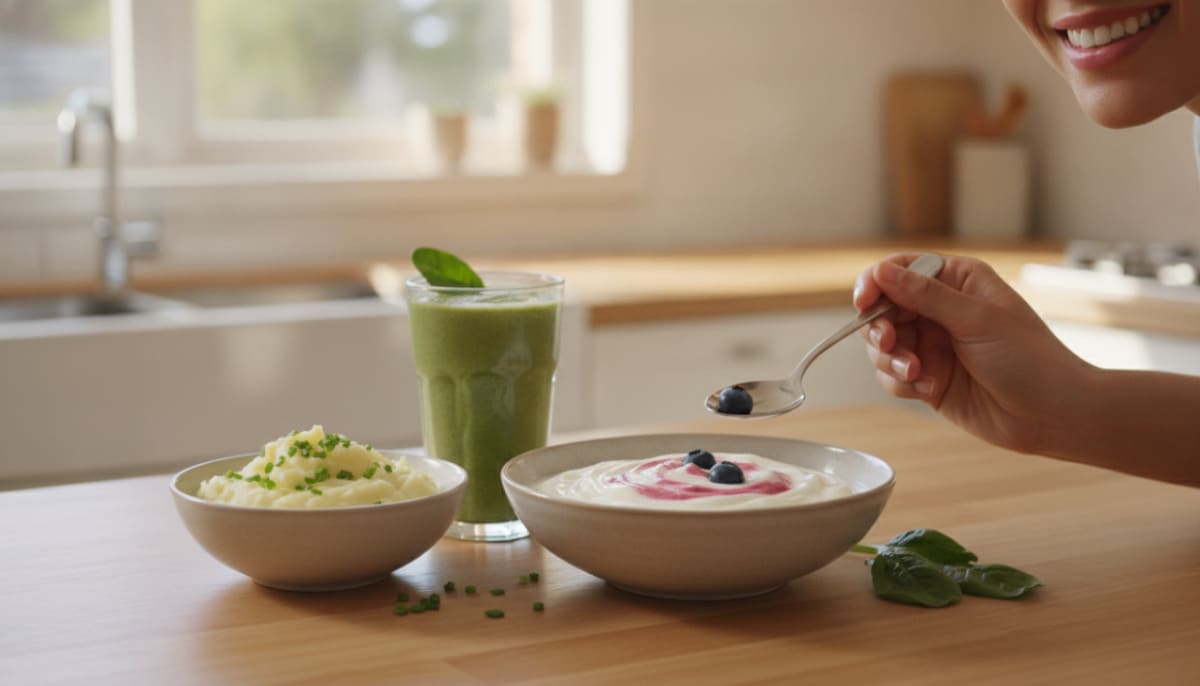
Knowing what to eat after a tooth extraction makes the first few days far more comfortable. Once a tooth comes out, your body forms a small blood clot in the socket to protect the area while it heals. Soft, gentle foods help keep that clot in place, they're easier to manage while your mouth is tender, and they lower the chance of complications. Below you'll find 50 soft foods to eat after a tooth extraction, grouped so they're easy to scan, plus a clear list of what to avoid and a few practical tips from the team at ArtSmiles.
Why soft foods matter after an extraction
After your tooth is removed, a blood clot forms in the empty socket. Think of it as a natural plug. It protects the bone and nerve underneath while new tissue grows.
Soft foods matter because they don't disturb that clot. They're gentle to chew, they don't get stuck, and they let you eat without putting pressure on the healing area.
If the clot is lost too early, you can develop a painful condition called dry socket (where the bone is left exposed). Eating carefully in the first few days is one of the simplest ways to lower that risk. It also helps you stay nourished, which supports healing.
What to eat in the first 24 hours
The first day is when the clot is most fragile, so stick to liquids and very soft foods and skip anything that needs chewing.
Stick to cool or lukewarm liquids and very soft foods.
Avoid hot food and drinks. Heat can soften the clot and trigger bleeding.
Don't drink through a straw. The suction can pull the clot straight out of the socket.
Skip alcohol while you're healing, as it can interfere with the clot and any medication you're taking.
Good first-day choices include smooth yoghurt, custard, cool soup, a spooned smoothie, or jelly. Let anything warm cool down before it touches the socket. If you feel up to a little more, a soft scrambled egg or some mashed potato works well too.
50 soft foods to eat after a tooth extraction
Here are 50 soft foods, grouped by type. Pick whatever appeals, keep them lukewarm or cool, and chew on the side away from the socket.
Dairy and smooth
Greek yoghurt
Custard
Cottage cheese
Soft cream cheese
Milkshakes (spooned, no straw)
Smoothies (spooned, no straw)
Rice pudding
Ricotta
Kefir
Plain milk drinks
Soups and broths (lukewarm, not hot)
Chicken broth
Vegetable soup
Pumpkin soup
Pureed soups
Miso soup (cooled)
Bone broth
Blended lentil soup
Eggs and soft protein
Scrambled eggs
Soft-boiled eggs
Silken tofu
Hummus
Mashed or refried beans
Smooth nut butters
Soft baked fish (flaked)
Well-cooked dhal
Soft carbohydrates
Mashed potato
Well-cooked pasta
Macaroni cheese
Oatmeal or porridge
Soft rice or congee
Polenta
Soft pancakes
Soft bread without hard crusts
Couscous (soft)
Instant noodles (cooled and soft)
Fruit and vegetables (soft or cooked)
Mashed banana
Avocado
Applesauce
Stewed or poached apple or pear
Mashed pumpkin
Mashed sweet potato
Steamed soft carrot
Well-cooked spinach
Ripe peach (peeled and soft)
Seedless melon
Cool and soothing treats
Jelly
Ice cream (eaten with a spoon)
Sorbet
Smooth pudding
Soft-set yoghurt
Blancmange
Foods and things to avoid
Some foods are likely to disturb the clot, lodge in the socket, or simply hurt. It's worth giving these a miss for the first week or so.
Crunchy or hard foods: nuts, chips, crusty bread, raw vegetables.
Chewy foods: steak, lollies, chewing gum.
Spicy foods, which can sting the wound.
Acidic foods like citrus fruit and juice.
Very hot food and drinks, which can soften the clot.
Small seeds, grains and bits: rice grains, popcorn, sesame, quinoa. These lodge in the socket easily.
A few habits matter just as much as food. Avoid alcohol, don't drink through a straw, and don't smoke or vape. All three can dislodge the clot or slow your healing. If you'd like to know what discomfort is normal versus a sign of a problem, our guide on pain after a tooth extraction explains what to expect.
Tips for eating comfortably while you heal
A few small adjustments make eating much easier in those first few days.
Chew on the opposite side from the socket so nothing presses on the healing area.
Keep meals lukewarm or cool. Let hot dishes sit until they're no longer steaming.
Choose nutrient-rich foods. Eggs, yoghurt, soft fish and well-cooked vegetables give your body what it needs to repair.
Stay hydrated by sipping water through the day. Drink straight from the glass, not a straw.
Take your time. Small, slow mouthfuls are kinder to a tender mouth than rushing a full meal.
These are general suggestions. Always follow the specific instructions your dentist gives you, as your situation may differ.
When can you eat normally again?
Most people gradually add more texture from around days 2 to 4, easing back toward a normal diet over about a week as comfort allows.
Recovery can take a little longer after surgical removals or wisdom tooth removal, where the socket is larger and the gum may have stitches. There's no need to rush. Let comfort be your guide, and step up the texture only when chewing feels easy.
If pain gets worse after a few days, or you notice a bad taste, an empty-looking socket, or throbbing that spreads to your ear, these can be signs of dry socket and are worth a call to your dentist. For detailed aftercare, see our post-operative instructions for wisdom tooth removal. If something feels urgent, our emergency dentist team can help.
References
Healthdirect Australia. (n.d.). Dental care. healthdirect.gov.au
Australian Dental Association. (n.d.). Oral health information. teeth.org.au
A note on this article
This article is general information only and isn't a substitute for personal dental advice. Your dentist knows the details of your extraction and can give you instructions suited to your situation. If you have questions or concerns about your recovery, please get in touch with your dental team.
The cover image for this article was generated using AI and is for illustration only. It isn't a clinical photograph of a real patient.
Frequently asked questions
What can I eat after a tooth extraction?
For the first day or two, stick to soft, cool or lukewarm foods that don't need much chewing. Good choices include yoghurt, custard, smooth soup, mashed potato, scrambled eggs, smoothies eaten with a spoon, and jelly. These are gentle on the socket and won't disturb the healing clot. From around days 2 to 4, you can gradually add more texture as your mouth feels comfortable. Chew on the side away from the extraction, and let anything warm cool down first.
What foods should I avoid after a tooth extraction?
Avoid anything crunchy or hard, like nuts, chips, crusty bread and raw vegetables, since these can disturb the clot. Skip chewy foods such as steak, lollies and chewing gum. Spicy and acidic foods (like citrus) can sting the wound, and very hot food and drinks can soften the clot. Steer clear of small seeds and grains, including rice, popcorn, sesame and quinoa, as they easily lodge in the socket. It's also best to avoid alcohol, straws, and smoking or vaping while you heal.
Can I eat ice cream after a tooth extraction?
Yes, ice cream is a popular choice and can feel soothing on a tender mouth. Eat it with a spoon rather than through a straw, since the suction from a straw can dislodge the clot. Plain, smooth flavours are best, so avoid anything with nuts, hard chips, biscuit pieces or crunchy mix-ins that could get stuck in the socket. Sorbet and jelly work well too. Just don't let it be your only food, as your body needs nutrient-rich meals to support healing.
How long do I need to eat soft foods after an extraction?
Most people stick to soft foods for the first few days, then gradually return to a normal diet over about a week as chewing becomes comfortable. Recovery can take a little longer after surgical or wisdom tooth extractions, where the socket is larger. There's no fixed deadline, so let comfort guide you and add firmer textures only when they feel easy. If chewing still hurts after a week or two, or your pain is getting worse, check in with your dentist.
Written by Dr. Cristian Dunker, BDSc, MBA.
Medically reviewed by Dr. Cristian Dunker.