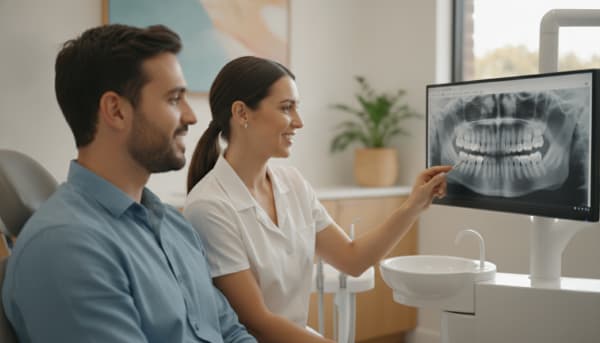
If the thought of a dental visit makes your stomach tighten, you're far from unusual. Dental anxiety is one of the most common reasons people put off care, and it can range from a flutter of nerves in the waiting room to a deep fear that keeps someone away for years. There's nothing to be embarrassed about, and there's no judgement here. The good news is that nervous feelings can be managed, and small, practical steps before and during your appointment can make a real difference to how you feel.
What is dental anxiety?
Dental anxiety is the worry or dread that comes with dental treatment. For some people it's mild, just a bit of unease the day before. For others it's much stronger and tips into dental phobia, an intense fear that leads people to avoid the dentist altogether, sometimes for years.
It's common. Lots of people feel it, including those who look perfectly calm in the chair. So if you've been carrying this quietly, please know it's a normal response, not a personal failing.
At ArtSmiles, we'd much rather you tell us you're nervous than try to hide it. Once we know, we can slow right down and work at a pace that suits you.
Why we get anxious about the dentist
There's usually a reason behind the fear, and naming it often helps. Common ones include:
A past bad experience, sometimes from childhood, that left a lasting impression.
A fear of pain, or a fear of needles in particular.
The sounds and smells of a dental practice, which can trigger that uneasy feeling on their own.
Feeling a loss of control while lying back in the chair.
Worry about gagging.
Embarrassment about the state of your teeth.
Any of these is valid. You don't need to justify your fear to anyone, and understanding where it comes from can make it feel less overwhelming.
Why it's worth not avoiding care
This is the gentle, honest part. When we put off dental care, small problems tend to grow into bigger, more involved ones. A tiny bit of decay that could've been a quick filling can turn into something that needs more time and treatment later. And here's the tricky bit: a harder appointment can deepen the fear, which makes the next visit feel even more daunting. It becomes a cycle.
We're not saying this to pile on guilt. We're saying it because catching things early usually means simpler, quicker visits. A gentle check-up and clean is a calm place to start, with no pressure to do everything at once.
How to manage dental anxiety before your appointment
A lot of the work happens before you even sit in the chair. These steps can help you feel more prepared:
Tell the practice when you book. Just letting us know you're anxious means we can plan a little extra time and care.
Choose an anxiety-friendly dentist. Look for someone who listens, explains things clearly, goes at your pace, offers breaks, and doesn't make you feel judged.
Book a low-stress time. A morning slot can be easier, so you're not dreading it all day.
Bring a support person if having a familiar face nearby helps you feel settled.
Plan some calming techniques. Slow breathing, a podcast or music through headphones, or a stress ball to squeeze can all give your mind something to hold onto.
Go easy on caffeine beforehand, since too much can make jitters worse.
Eat something before you come, if that's appropriate for your appointment, so you're not light-headed on top of nervous.
Staying in control during your appointment
Feeling in control is one of the biggest things that eases dental anxiety, and there's a lot you can do here.
Tell your dentist you're nervous as soon as you arrive. Then agree on a clear stop signal together, like raising your hand, so you can pause things any time you need to. That signal puts you back in charge, and knowing you can use it is often reassuring all on its own.
You can also ask your dentist to talk you through each step as they go, or to stay quiet if you'd rather not know the details. Either is fine. For most treatment, a local anaesthetic (a numbing injection) numbs the area so the tooth and gum don't feel pain. And if you need a breather at any point, just say so. Breaks are completely okay.
Sedation and comfort options
If your anxiety runs higher, sedation may be worth discussing. These are options to explore with your dentist, not promises, and what suits you depends on your health and the treatment planned. They include:
Relaxing gas, breathed in through a small mask to help you feel calmer, which wears off quickly afterwards.
Oral sedation, a tablet taken beforehand to take the edge off.
IV sedation (medication given through a vein) for higher anxiety or more involved treatment, where available.
The right approach is a conversation, and your dentist will talk you through what's suitable for your situation. None of this is decided without you.
Help for stronger dental phobia
If your fear is strong enough that you've avoided the dentist for a long time, please be kind to yourself. Stronger dental phobia is real, and there's genuine help for it.
Gradual exposure, where you build up slowly from easier visits to longer ones, can help your mind learn that the dentist is safe. Psychological support such as cognitive behavioural therapy (CBT, a talking therapy that helps you change unhelpful thought patterns) can also make a real difference, and it's worth chatting to your GP about. Over time, a calm and trusting relationship with one dentist you've come to know is one of the most effective ways to ease ongoing fear.
Finding an anxiety-friendly dentist
When you're nervous, the practice you choose matters as much as the treatment. Look for a dentist who gives you unhurried appointments and doesn't rush you out the door. They explain things in plain language, offer comfort options and breaks, and never make you feel judged about the state of your teeth. Most of all, they help you build trust over time, so each visit feels a little easier than the last.
If you've been putting off something like an implant because you're worried it'll hurt, it can help to read about what's actually involved first. Our piece on whether dental implants hurt walks through that calmly. And when you feel ready, you can book online at a time that suits you, and let us know you're nervous so we can look after you.
References
Healthdirect Australia. (n.d.). Dental care. healthdirect.gov.au
Australian Dental Association. (n.d.). Oral health information. teeth.org.au
A note on this article
This article is general information only and isn't a substitute for personal advice from a dentist or doctor. Everyone's situation is different, so please speak with a qualified health professional about your own circumstances.
The cover image for this article was generated using AI. It's an illustration to set the tone and is not a clinical photograph of a patient or a real treatment.
Frequently asked questions
What is dental anxiety?
Dental anxiety is the worry, dread or fear that comes with going to the dentist. It sits on a scale: for some people it's mild nerves before an appointment, while for others it's a strong fear that leads them to avoid the dentist for years, which is sometimes called dental phobia. It's common and nothing to feel embarrassed about. The reassuring part is that it can be managed with the right preparation, a dentist who works at your pace, and comfort options when you need them.
How can I calm my nerves before a dental appointment?
A few simple steps help. Tell the practice you're nervous when you book, so they can allow extra time. Choose an early appointment so you're not dreading it all day, and bring a support person if that settles you. Plan some calming techniques, such as slow breathing, music or a podcast through headphones, or a stress ball to squeeze. Go easy on caffeine beforehand, and eat something first if that suits your appointment. Knowing you have a plan often takes a lot of the edge off.
What sedation options help with dental anxiety?
For higher anxiety, sedation can be worth discussing with your dentist. Options may include relaxing gas breathed in through a small mask, oral sedation taken as a tablet beforehand, or IV sedation (medication given through a vein) for more involved treatment, where available. These are things to explore together rather than promises, and what suits you depends on your health and the treatment planned. Your dentist will talk you through what's appropriate, and nothing is decided without you being part of the conversation.
Is it normal to be scared of the dentist?
Yes, completely. Being scared of the dentist is one of the most common worries people have, and plenty of calm-looking patients feel it too. The fear often comes from a past experience, a worry about pain or needles, the sounds and smells, or simply feeling out of control in the chair. None of that is something to be embarrassed about. The important thing is to tell your dentist, because once they know, they can slow down, agree a stop signal with you, and help you feel safe.
Written by Dr. Cristian Dunker, BDSc, MBA.
Medically reviewed by Dr. Cristian Dunker.