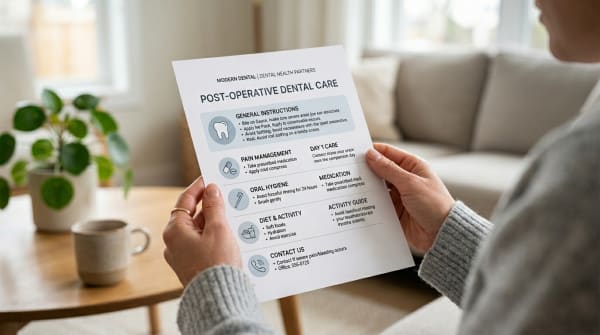
Immediately After Dental Implant Surgery (First 24 Hours)
Dental implant surgery is a controlled surgical procedure. Proper post-operative care significantly improves healing, supports osseointegration, and protects the long-term stability of your implant.
Managing Bleeding
Bite firmly on the gauze provided for 30 to 60 minutes after surgery.
Mild oozing is normal for the first 24 hours.
If bleeding continues, apply fresh gauze with firm pressure for another 30 minutes.
Avoid spitting or vigorous rinsing, as this can dislodge the blood clot.
Reducing Swelling
Apply ice externally (10 minutes on, 10 minutes off) for the first 24 to 48 hours.
Swelling usually peaks at 48 to 72 hours before gradually improving.
Rest and Activity
Rest for the remainder of the day after surgery.
Avoid strenuous activity for at least 48 hours.
Keep your head slightly elevated when resting to help reduce swelling.
Medications After Implant Surgery
Take prescribed antibiotics exactly as directed and complete the full course.
Begin pain medication before the numbness wears off for better comfort management.
Use anti-inflammatory medication as advised to control swelling.
Do not exceed recommended dosages.
If you experience signs of an allergic reaction (rash, breathing difficulty, swelling of lips or throat), seek urgent medical care.
Diet After Dental Implant Placement
For the first 2 to 3 days, follow a strict soft food diet to protect the surgical site.
Recommended foods: yoghurt, scrambled eggs, smoothies (eaten with a spoon), lukewarm soup.
Avoid: hot foods and drinks for the first 24 hours, crunchy or hard foods, spicy or acidic foods, and anything requiring heavy chewing at the surgical site.
Stay well hydrated throughout recovery.
Do not use straws, as suction pressure can disturb the healing site.
If you have a temporary implant bridge or denture, follow the specific dietary restrictions provided by your dental team.
Oral Hygiene After Implant Surgery
First 24 Hours
Do not brush the surgical site.
Do not rinse aggressively.
From Day 2 Onwards
Gently rinse with warm salt water (one teaspoon of salt in a glass of warm water) after meals.
Resume brushing other teeth carefully, avoiding direct contact with stitches unless instructed otherwise.
Good oral hygiene is essential to prevent infection around the healing implant.
If Your Surgery Included Bone Grafting or Sinus Lift
Do not blow your nose for two weeks.
If you need to sneeze, do so with your mouth open to avoid pressure changes in the sinus.
Avoid heavy lifting during the initial healing phase.
Small bone graft granules appearing in your mouth can be normal.
Mild sinus pressure may occur temporarily.
If you experience persistent nosebleeding or fluid passage between your mouth and nose, contact your dentist promptly.
What Is Normal After Implant Surgery
Mild bleeding or oozing for up to 24 hours
Swelling peaking around Day 2 to 3
Bruising appearing after 2 to 3 days
Mild to moderate discomfort managed with prescribed medication
Sutures present for 2 to 3 weeks (dissolvable unless otherwise advised)
When to Contact Your Dentist Immediately
Heavy bleeding that does not reduce with pressure
Severe or increasing pain after 3 to 4 days
Swelling that worsens after Day 3
Fever or chills
Pus discharge from the surgical site
Persistent numbness beyond 24 hours
Any sensation of implant movement
Smoking and Implant Healing
Smoking and vaping significantly reduce blood supply and impair the bone healing process critical for osseointegration. For optimal implant success, avoid smoking for at least 72 hours and ideally throughout the entire healing period. Research consistently shows that smoking is a significant risk factor for implant failure (Chrcanovic et al., 2015).
Temporary Teeth (If Provided)
Do not bite into hard foods with temporary restorations.
Avoid applying excessive pressure.
Report any looseness immediately to your dental team.
Temporary restorations are designed for aesthetics and protection during healing, not heavy chewing.
Follow-Up Appointments
Scheduled review appointments are essential to monitor healing, remove sutures if required, assess implant stability, and plan the next phase of treatment. Please attend all scheduled appointments.
If you are unsure about anything during your recovery, contact ArtSmiles on the Gold Coast. We are here to support you throughout your implant journey.