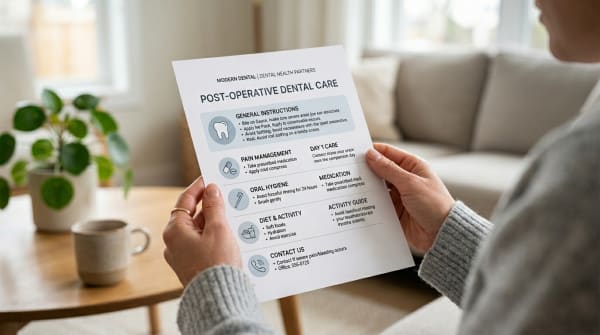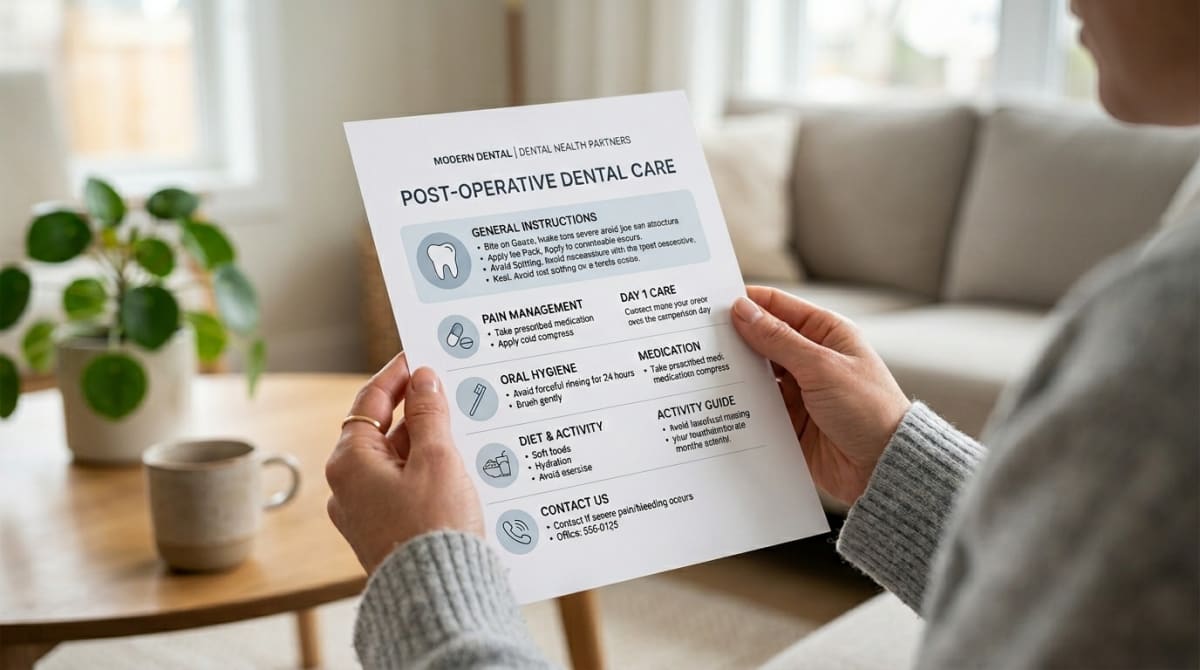
Understanding Your All-on-X Temporary Bridge
Your temporary bridge is fixed to newly placed implants. Although it feels solid, the implants underneath are still healing and integrating with your jawbone through a process called osseointegration. Strict care during this phase is essential to prevent implant movement or failure.
First 48 Hours After Surgery
Rest and Recovery
Rest for a full 48 hours after placement.
Keep your head elevated when lying down to help reduce swelling.
Avoid heavy lifting, bending, or strenuous physical activity.
Managing Swelling
Apply cold packs externally, 20 minutes on and 20 minutes off, for the first 24 to 48 hours.
Swelling typically peaks around Day 2 to 3 and gradually improves.
Bruising may appear after a couple of days and is completely normal.
What to Avoid
No rinsing for the first 24 hours.
No straws (suction pressure can disturb healing).
No alcohol for 5 to 7 days.
No smoking or vaping for at least 7 days. Longer avoidance is strongly recommended, as smoking significantly increases implant failure risk (Chrcanovic et al., 2015).
Diet During Implant Healing
For the first 6 to 8 weeks, follow a strict soft diet. This is one of the most important factors in protecting your healing implants. Excessive chewing forces can cause microscopic implant movement and compromise osseointegration.
Cut food into small pieces and chew gently, distributing forces evenly.
Avoid heavy biting with your front teeth.
Recommended foods: scrambled eggs, soft pasta, mashed vegetables, yoghurt, soft fish, smoothies (no straw), soft rice, bananas.
Avoid completely: crusty bread, tough meats, raw vegetables, nuts, ice, hard lollies, chewing gum, and sticky foods.
Oral Hygiene With a Temporary Bridge
Good oral hygiene prevents infection around healing implants while being gentle enough not to disturb the surgical site.
First 24 hours: Do not brush or rinse.
From Day 2: Rinse gently with warm salt water (one teaspoon of salt in a cup of warm water) three to four times daily.
Use any prescribed antimicrobial mouth rinse as instructed.
Brush gently with a soft toothbrush around the bridge.
Do not use water flossers or interdental brushes around implants unless specifically advised by your dentist.
Caring for Your Temporary Bridge
The temporary bridge is a transitional restoration and is not designed for full bite force.
Do not test its strength or bite into hard objects.
Minor speech changes are normal and improve with time.
Do not press on or check the bridge with your fingers.
Report any looseness, clicking, cracking, or change in bite immediately.
What Is Normal After Placement
Swelling peaking around Day 2 to 3
Mild bleeding or oozing from the surgical site
Bruising around the cheeks or jaw
Tightness in cheeks or lips
Mild difficulty speaking initially
When to Contact Your Dentist Immediately
A loose, broken, or clicking bridge
Increasing pain after Day 3
Swelling that worsens instead of improving
Fever or chills
Pus discharge or a foul taste
Persistent numbness beyond 48 hours
Follow-Up and Next Steps
A review appointment will be scheduled within 7 to 10 days.
Continue the soft diet throughout the healing period.
Your final bridge will be placed after confirmed osseointegration, typically 3 to 6 months after surgery.
Protecting your temporary bridge protects your implants. If you have any concerns during your healing period, contact ArtSmiles on the Gold Coast for guidance.