Quick summary
Also called | Dry mouth, hyposalivation, salivary gland hypofunction, sicca symptoms |
How urgent? | 🟡 Worth a check-up. Persistent dryness can quietly drive rapid tooth decay and infection |
Common or rare? | Very common, particularly in older adults and people on multiple medications |
Who it affects | Adults of any age, although prevalence rises sharply after middle age; reported in around 25% of older adults |
Who treats it | General dentist, often together with the patient’s GP or specialist physician |
Based on | Neville, Cawson, Regezi and Laskaris |
What is it?
Xerostomia is the feeling of having a dry mouth. It is a symptom rather than a single disease, and it usually reflects a drop in the amount of saliva your mouth is producing. Some people feel mild stickiness; others find their mouth so dry that talking, chewing and swallowing become genuinely difficult.
Saliva does a lot of quiet work. It lubricates the mouth, helps with taste and digestion, and protects teeth and soft tissues from decay and infection. When salivary flow drops, the whole oral environment shifts.
Who tends to get it?
Dry mouth is one of the more frequent oral complaints in adult dentistry. Around one in four older adults reports symptoms, but it can affect any age group. In the past, dryness was often blamed on getting older. The textbooks now suggest that healthy ageing alone produces only modest changes in salivary flow, and that the increase in dry mouth seen in older people is mostly explained by other factors, particularly medications and underlying systemic conditions.
When xerostomia appears as part of Sjögren syndrome, women are affected far more often than men, with a roughly 9:1 female-to-male ratio reported in the literature, and most cases beginning in middle age.
What causes it?
The sources group the causes of xerostomia into several categories.
Medications. This is the single most common driver of dry mouth in everyday practice. More than 500 drugs have been reported to reduce salivary flow, including 63% of the 200 most frequently prescribed medicines in one large review. Common culprits include:
Antihistamines and decongestants
Antidepressants, including tricyclic, SSRI and atypical agents (for example amitriptyline, citalopram, duloxetine, fluoxetine, paroxetine, sertraline, bupropion)
Antipsychotic and sedative medications (for example phenothiazines, haloperidol, quetiapine, diazepam, lorazepam, alprazolam)
Antihypertensives (some older agents, calcium channel blockers, beta-blockers such as metoprolol)
Diuretics (for example chlorothiazide, furosemide)
Anticholinergic and antimuscarinic agents (atropine, scopolamine, oxybutynin, solifenacin, tolterodine, ipratropium, hyoscine)
Opioid analgesics
Muscle relaxants
Sympathomimetics (decongestants, bronchodilators, appetite suppressants)
The likelihood of dry mouth also rises with the total number of medications a person takes, regardless of whether each one is individually known to cause dryness.
Autoimmune and systemic disease. Sjögren syndrome, rheumatoid arthritis, systemic lupus erythematosus, systemic sclerosis (scleroderma), primary biliary cirrhosis, sarcoidosis and IgG4-related disease can all reduce salivary output. Sjögren syndrome is the classic example: a chronic autoimmune disorder in which lymphocytes infiltrate and damage the salivary and lacrimal glands, producing both dry mouth and dry eyes.
Cancer therapy. Radiation therapy to the head and neck is one of the most predictable causes of severe, long-term dry mouth. Salivary glands are highly sensitive to radiation, and changes can begin within the first week of treatment, with a dramatic drop in salivary flow over the first six weeks. The parotid glands, which produce serous (watery) saliva, are particularly vulnerable. Mucous glands tend to recover partially. Chemotherapy and radioactive iodine treatment for thyroid disease can also reduce salivary flow.
Infections. HIV infection, hepatitis C and cytomegalovirus have all been linked to salivary gland dysfunction. Mumps usually causes a transient dryness during the active phase.
Other systemic and metabolic conditions. Diabetes mellitus, diabetes insipidus, end-stage renal disease, amyloidosis, iron deposition (haemochromatosis, thalassaemia), graft-versus-host disease and protein or vitamin deficiencies are all listed in the textbooks.
Dehydration. Reduced fluid intake, blood loss, persistent vomiting or diarrhoea, and uncontrolled fever can all reduce saliva.
Psychogenic factors. Anxiety, depression and acute stress can produce a transient or persistent feeling of dryness, sometimes without a measurable drop in flow.
Local and lifestyle factors. Mouth breathing, smoking, heavy caffeine intake and alcohol (including alcohol-containing mouthwashes) all tend to make dryness worse.
Developmental. Rare congenital conditions such as salivary gland aplasia and ectodermal dysplasia can produce lifelong reduced flow.
How does it develop?
Think of saliva as a constant background mist that washes over the teeth and mucosa. It buffers acid, dilutes sugars, sweeps away food debris, carries antibacterial proteins, and keeps surfaces gliding comfortably.
When saliva drops, several things shift at once. The mucosa loses its protective film and starts to feel sticky, sore or burning. The bacterial mix in the mouth changes, often allowing more cariogenic species and more candida (the yeast that causes thrush) to take hold. Plaque accumulates more easily because there is less of the natural rinsing action. Without saliva's buffering, acids from food and drink linger longer on the enamel.
A reduction of more than around 50% of normal salivary flow is generally needed before symptoms become noticeable. This is why some people have measurable hyposalivation but no dry-mouth complaint, while others feel persistently dry on what looks like reasonably normal flow.
In drug-induced dry mouth, the medication usually reduces the gland's secretory signal. For example, anticholinergic agents block the nerve messages that tell the glands to release saliva. In Sjögren syndrome, lymphocytes physically infiltrate the gland tissue and gradually destroy the secretory cells, so the loss of function tends to be permanent. In radiation-induced dry mouth, the gland tissue itself is injured, with serous (parotid) gland damage often irreversible after higher doses.
What might you notice?
What it looks like
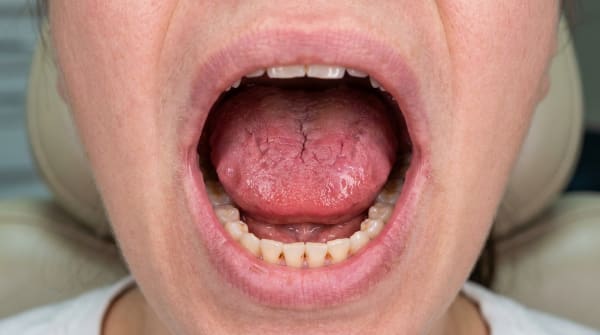
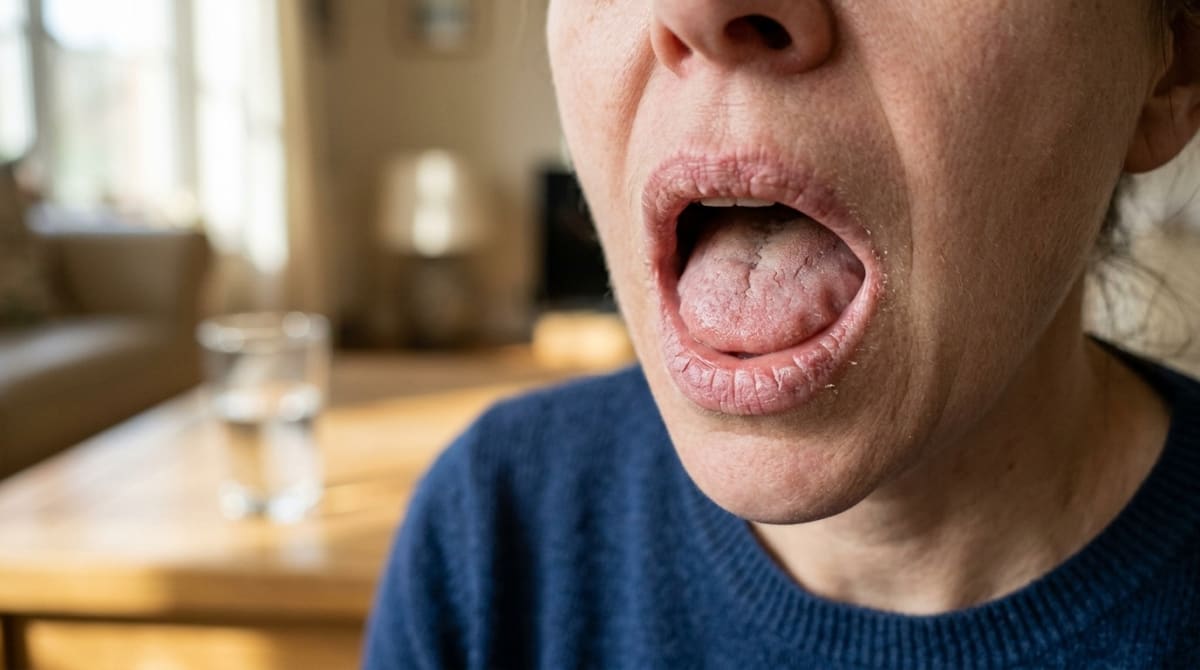
The oral mucosa often appears dry, red, shiny and slightly wrinkled or parchment-like. There may be very little pooled saliva in the floor of the mouth. Any saliva that is present can appear frothy, thick or ropey. Examining gloves or a dental mirror may stick to the mucosa during a check-up.
The tongue often becomes red and fissured, with loss of the small filiform papillae giving it a smooth or lobulated, cobblestone appearance. The corners of the mouth may crack and become inflamed (angular cheilitis), particularly when secondary candida infection is present. Patients with rapid-onset dryness often develop new decay along the gum line and on root surfaces, and existing fillings may begin to fail at the margins.
What it feels like
Common symptoms include:
A sticky, dry or burning feeling in the mouth
Difficulty chewing dry foods such as bread, biscuits or crackers
Difficulty swallowing without sips of water
Altered or blunted taste
A sore or tender tongue
Frequent need to drink during meals or overnight
Trouble speaking for long periods
An unpleasant taste or persistent bad breath
Recurrent oral thrush (white patches that wipe off, or red, sore patches under dentures)
Interestingly, the textbooks note that some people with severely reduced flow on testing report no dryness at all, while others with measurable normal flow are very symptomatic, for example those with burning mouth syndrome.
What an X-ray might show
Dry mouth itself is not visible on a routine X-ray, but the consequences often are. Dentists frequently see rapidly progressing cervical (gum-line) and root-surface caries, sometimes appearing in patients who previously had a low decay rate. In suspected Sjögren syndrome, sialography (a contrast study of the gland duct system) may show a characteristic "snowstorm" or "fruit-laden, branchless tree" appearance, with leakage of contrast into the gland tissue and loss of normal duct branching.
What happens at the dentist?
Dry mouth assessment usually starts with a careful conversation about symptoms and history. Your dentist may ask about:
How long the dryness has been present
Whether eyes, skin or other areas also feel dry
All current prescription and over-the-counter medications
Past or planned head-and-neck radiation therapy
Any known autoimmune conditions or relevant family history
Caffeine, alcohol, smoking and water-intake habits
The clinical examination looks at the moisture and colour of the mucosa, the appearance of the tongue, the state of the major salivary duct openings (and whether saliva can be expressed from them), the presence of new or recurrent decay, signs of candida infection, and the fit and comfort of any dentures.
Where appropriate, the dentist may measure salivary flow. Normal unstimulated flow is usually between 1 and 2 mL per minute; values significantly below this support a clinical impression of true hyposalivation. If an autoimmune cause is suspected, referral to the patient's GP or a specialist physician is appropriate, with possible blood tests for autoantibodies (such as rheumatoid factor, antinuclear antibodies, anti-SS-A and anti-SS-B), a Schirmer test for tear production, and in some cases a small labial salivary gland biopsy. A panoramic or other radiograph may be taken to look for sialoliths (salivary stones) or other gland pathology if obstruction is suspected.
When drug-induced dryness seems likely, the dentist often communicates with the prescribing doctor. Stopping or substituting a medication is a decision for the medical team, never the dentist alone.
Is this serious?
Dry mouth itself is rarely dangerous in the short term, but the longer-term consequences matter.
Untreated chronic xerostomia is associated with:
Rapidly progressing dental decay, especially around the gum line and on root surfaces
Recurrent oral thrush and angular cheilitis
Difficulty eating, leading in some cases to reduced nutrition and weight loss
Difficulty wearing dentures
A higher risk of bacterial infection of the salivary glands (suppurative parotitis)
Reduced quality of life, including effects on speech, sleep and social interaction
When dry mouth is part of an underlying systemic illness such as Sjögren syndrome, careful long-term monitoring is important. Sjögren syndrome carries an increased lifetime risk of marginal-zone B-cell lymphoma in the salivary glands (around 5% in some series, up to 6% in others), so any new persistent gland swelling in someone with established Sjögren syndrome should be assessed promptly.
If you've noticed dry mouth that has lasted more than two weeks, or you're seeing rapid changes in your teeth such as new decay or chipping at the gum line, it's worth booking an assessment.
Could it be something else?
Dry mouth has a long list of causes, and part of the dental review is working out which is most likely in your case. Differentials and overlapping conditions documented in the source textbooks include:
Medication side effect: by far the most common explanation in adult patients, particularly with antihistamines, antidepressants, antipsychotics, diuretics, anticholinergics and opioids. Identified by careful medication history; symptoms often improve when the drug is changed.
Sjögren syndrome (primary or secondary): autoimmune destruction of salivary and lacrimal glands. Distinguished by associated dry eyes, characteristic blood autoantibodies, salivary gland biopsy findings and connective tissue disease where present.
Radiation-induced salivary damage: follows therapeutic radiation to the head and neck. Identified by the treatment history and the timing of onset.
Chemotherapy-related dryness: usually transient and tied to the chemotherapy schedule.
Sjögren-like syndrome in graft-versus-host disease: develops in around a third of cases of severe GVHD; lip biopsy findings are similar to Sjögren syndrome.
Sarcoidosis (including Heerfordt syndrome): granulomas within salivary glands can lead to xerostomia, often with parotid swelling, ocular inflammation and facial palsy.
HIV-associated salivary gland disease: dryness with diffuse parotid enlargement, sometimes with cystic swellings, particularly in younger adults.
Hepatitis C infection: can produce a Sjögren-like picture without the classic autoantibodies.
Diabetes mellitus: reduced flow rates and bilateral parotid enlargement may be present.
Diabetes insipidus: dryness driven by water-balance disturbance.
IgG4-related disease (including Mikulicz-pattern presentations): fibroinflammatory salivary and lacrimal swelling, often submandibular; distinguished by histopathology and elevated serum IgG4.
Amyloidosis and iron-deposition disorders (haemochromatosis, thalassaemia): uncommon systemic causes.
End-stage renal disease and chronic dehydration: fluid balance changes affecting saliva.
Acute dehydration: from blood loss, vomiting, diarrhoea, fever or limited fluid intake.
Anxiety, depression and psychogenic dry mouth: the sensation of dryness without a major drop in measured flow.
Burning mouth syndrome: patients often describe dryness, but objective salivary flow is typically normal; thought to reflect oral sensory neuropathy.
Mouth breathing: a localised cause; the mucosa dries out without true gland dysfunction.
Salivary gland aplasia or ectodermal dysplasia: rare developmental causes presenting from childhood.
Chronic alcoholism, malnutrition, anorexia, bulimia and obesity-related sialadenosis: can cause bilateral parotid swelling with reduced function.
Mumps and other viral parotitis: usually transient dryness during acute illness.
At the chairside, dentists separate these by combining history, medication review, clinical signs (eye dryness, joint involvement, gland swelling pattern), salivary flow measurement, and where indicated, blood tests, imaging and biopsy.
How is it treated?
The textbooks are honest that managing chronic dry mouth is difficult and rarely curative. The aims of treatment are to relieve symptoms, protect the teeth and mucosa, and address any reversible cause.
Things you can do at home
Sip water frequently through the day rather than drinking large volumes occasionally.
Reduce or avoid caffeine and alcohol, both of which worsen dryness.
Avoid alcohol-containing mouth rinses; choose alcohol-free formulations.
Use sugar-free chewing gum or sugar-free lollies to stimulate flow (sugar-containing options are not appropriate for dentate patients with dry mouth, given the high decay risk).
Add moisture to dry foods with sauces, gravy or olive oil, and break dry foods up with sips of water.
Use a bedroom humidifier if dryness is worse overnight.
Avoid smoking, which compounds the problem.
Maintain meticulous home oral hygiene with a soft brush and gentle technique.
Saliva substitutes and lubricants
A range of saliva substitutes and oral moisturisers are available, including carmellose (carboxymethylcellulose) based sprays, mucin-containing sprays such as Saliva Orthana, gels such as Oralbalance, and pastilles. These do not restore gland function but make the mouth more comfortable for short periods.
Salivary stimulation
For patients with residual gland function, prescription cholinergic agonists such as pilocarpine and cevimeline can be considered. Pilocarpine is taken several times a day and can be an effective sialagogue, although side effects such as sweating, nausea and increased heart rate are common. Both pilocarpine and cevimeline are not suitable for everyone, for example, they are contraindicated in narrow-angle glaucoma, and prescription is a clinical decision made with the patient's medical team. Acupuncture and miniaturised intraoral electrostimulating devices have been reported with variable benefit.
Medication review
When drug-induced dryness is suspected, the dentist will usually liaise with the patient's GP or specialist about possible dose reduction, drug substitution or rescheduling. Stopping medications is always a decision for the prescribing doctor.
Protecting the teeth
Decay prevention is a core part of management. Treatment may include:
High-frequency professional check-ups and cleans
Topical fluoride applications and prescription higher-strength fluoride toothpaste
Remineralising products (for example casein phosphopeptide, amorphous calcium phosphate, CPP-ACP)
Chlorhexidine 0.2% mouthrinses for short courses to control plaque buildup
Dietary review to limit frequent sugar exposures
Restorative care for new decay, ideally caught early
Managing complications
Oral candidiasis (thrush) is treated with antifungal mixtures or gels rather than tablets, particularly in dentate patients with dry mouth. Denture hygiene is reviewed carefully, since plastic surfaces can harbour candida. Suppurative parotitis is treated with appropriate antibiotics after culture and sensitivity testing.
Specialist input
If an autoimmune cause is suspected, referral to a GP and onward to a rheumatologist or specialist physician is appropriate. People with established Sjögren syndrome often need ongoing care from a dentist, an ophthalmologist and a rheumatologist working in parallel.
What's the long-term outlook?
The long-term picture depends on what is causing the dry mouth.
Drug-induced dryness is often reversible once the causative medication is changed, when this is medically possible.
Dehydration and lifestyle-related dryness can resolve quickly with rehydration and habit changes.
Sjögren syndrome is a chronic disease. Salivary gland damage is essentially irreversible, and management focuses on long-term symptom control, dental protection and monitoring for the small but real risk of lymphoma.
Radiation-induced dry mouth is often permanent, especially after higher doses to the parotid glands. Newer techniques such as intensity-modulated radiation therapy (IMRT) are more gland-sparing, and submandibular gland transfer outside the radiation field has helped selected patients. Cytoprotective agents like amifostine have been used, with side effects to weigh up.
Psychogenic and anxiety-related dryness often improves when the underlying issue is addressed.
With good preventive dental care, regular review and prompt treatment of complications, most people with chronic dry mouth can keep their teeth, eat comfortably and maintain quality of life. The main long-term risks come from undiagnosed or undermanaged dryness, where rampant decay, recurrent infections and salivary gland complications can develop quietly over time. That is why an early dental assessment makes a real difference.
A note on this article
This article is for educational purposes only and does not constitute a clinical diagnosis. Please consult a registered dental practitioner for assessment and treatment advice.
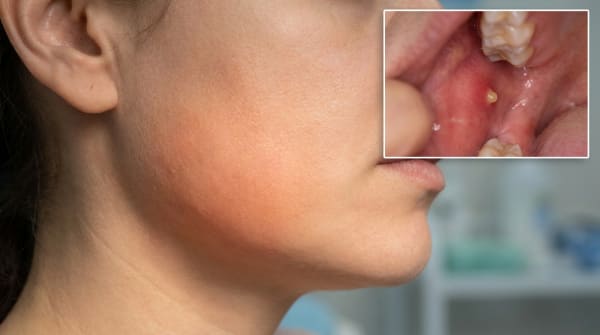
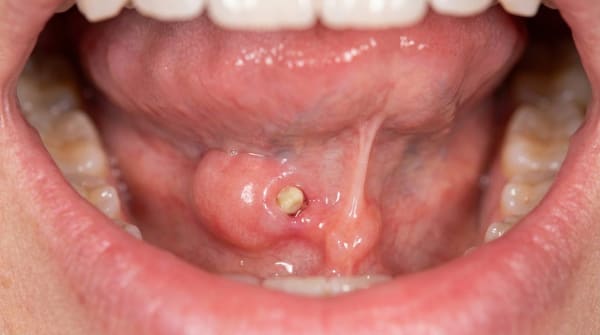
The cover image above is an AI-generated illustration based on the most common visible features of this condition described in clinical textbooks. It is not a photograph of a real patient and should not be used for self-diagnosis.
References
Regezi, J. A., Sciubba, J. J., & Jordan, R. C. K. (2017). Oral pathology: Clinical pathologic correlations (7th ed., Ch. 8 "Salivary Gland Diseases", pp. 195-201). Elsevier.
Neville, B. W., Damm, D. D., Allen, C. M., & Chi, A. C. (2023). Oral and maxillofacial pathology (5th ed., Ch. 11 "Salivary Gland Pathology", pp. 470-475; and Ch. 8 "Physical and Chemical Injuries", pp. 281-283). Elsevier.
Cawson, R. A., & Odell, E. W. (2017). Cawson's essentials of oral pathology and oral medicine (8th ed., Ch. 18 "Neoplastic and Non-neoplastic Diseases of Salivary Glands", pp. 294-299). Elsevier.
Laskaris, G. (2003). Pocket atlas of oral diseases (2nd ed., Ch. 34 "Other Salivary Gland Disorders, Xerostomia", pp. 334-335). Thieme.
Frequently asked questions
What's the difference between xerostomia and hyposalivation?
Xerostomia is the feeling of having a dry mouth, a symptom you experience. Hyposalivation is the measured drop in actual saliva flow rate. The two often overlap, but you can have one without the other. Some people feel very dry despite normal flow (often linked to anxiety, depression or burning mouth syndrome), and a few people with reduced flow don't notice it much until decay or infection brings them to the dentist.
Which medications are most likely to dry my mouth out?
The biggest groups are antihistamines, antidepressants (particularly tricyclics and SSRIs), antipsychotics, diuretics for blood pressure, opioids, anticholinergics for bladder and bowel, and some blood pressure medicines. The more medications you take at once, the higher the risk. Your GP can sometimes switch you to an alternative, but never stop a medication without asking them first.
Does dry mouth cause cavities?
Yes, and quickly. Saliva is your mouth's main natural defence against decay, it washes away food and bacteria, neutralises acid and remineralises early enamel damage. With less saliva, cavities can form along the gumline and between teeth in months rather than years. People with persistent dry mouth need extra fluoride, more frequent check-ups, and a low-sugar, low-acid diet to protect their teeth.
Will my dry mouth ever fully go away?
It depends on the cause. Dry mouth from a recent medication often improves when the drug is changed or reduced. Dry mouth from dehydration or stress usually resolves once the underlying issue is treated. Dry mouth from Sjögren's syndrome or after head-and-neck radiotherapy is usually permanent, but symptoms can be managed well with saliva substitutes, stimulants and good dental care.
How do I protect my teeth from decay if I have hyposalivation?
Reduced saliva means your enamel loses its main natural defence, so cavities can form quickly along the gum line and between teeth. The ArtSmiles SmileShield protocol is built for exactly this situation: a custom fluoride tray worn overnight (when natural defences are at their lowest), high-strength 5,000 ppm fluoride toothpaste, xylitol products, saliva substitutes, and closer check-up intervals matched to your risk level. Together these create a steady protective layer through the saliva-poor hours.