

One of the most common questions we hear from patients considering a smile makeover is: "Do I need veneers on all my teeth?" The short answer is no. In many cases, veneers on just a few teeth can make a beautiful difference. It all depends on what you want to change and what will give you the most natural looking result.
Let's walk through how it works, so you can feel confident about what's right for your smile.
Table of Contents
Can You Get Veneers on Just a Few Teeth?
Absolutely. Veneers are one of the most flexible cosmetic treatments available. You can place a single veneer on one tooth that's chipped, discoloured, or slightly out of shape, and it can blend in perfectly with the teeth around it.
If your concern is more about the overall look of your smile, your dentist may recommend veneers on the front six to eight upper teeth, since these are the ones most visible when you talk and smile. But there's no rule that says you need a full set. The number of dental veneers depends entirely on your goals and your starting point.
A study published in Case Reports in Dentistry demonstrated that even partial veneer placements, including no-prep veneers and ceramic fragments on just a few teeth, can achieve excellent aesthetic outcomes while preserving healthy tooth structure.
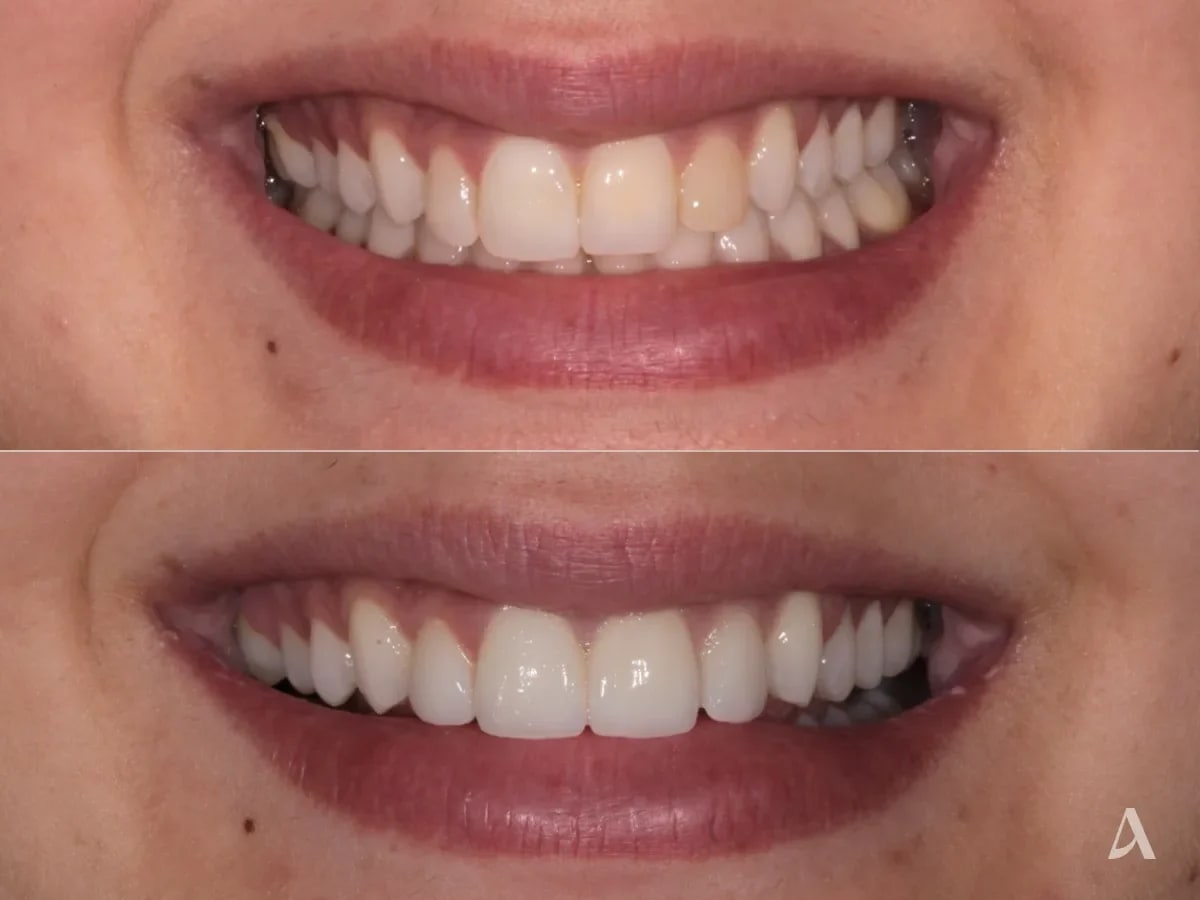
Example of veneers executed in only 4 upper incisors. Case executed by Dr. Dunker
How Many Veneers Do Most People Get?
There's no one-size-fits-all answer, but here's a general guide based on what we see in practice:
1 to 2 veneers: Great for fixing an individual tooth that's chipped, cracked, or noticeably discoloured. A single porcelain veneer can be shade-matched to blend with your surrounding teeth.
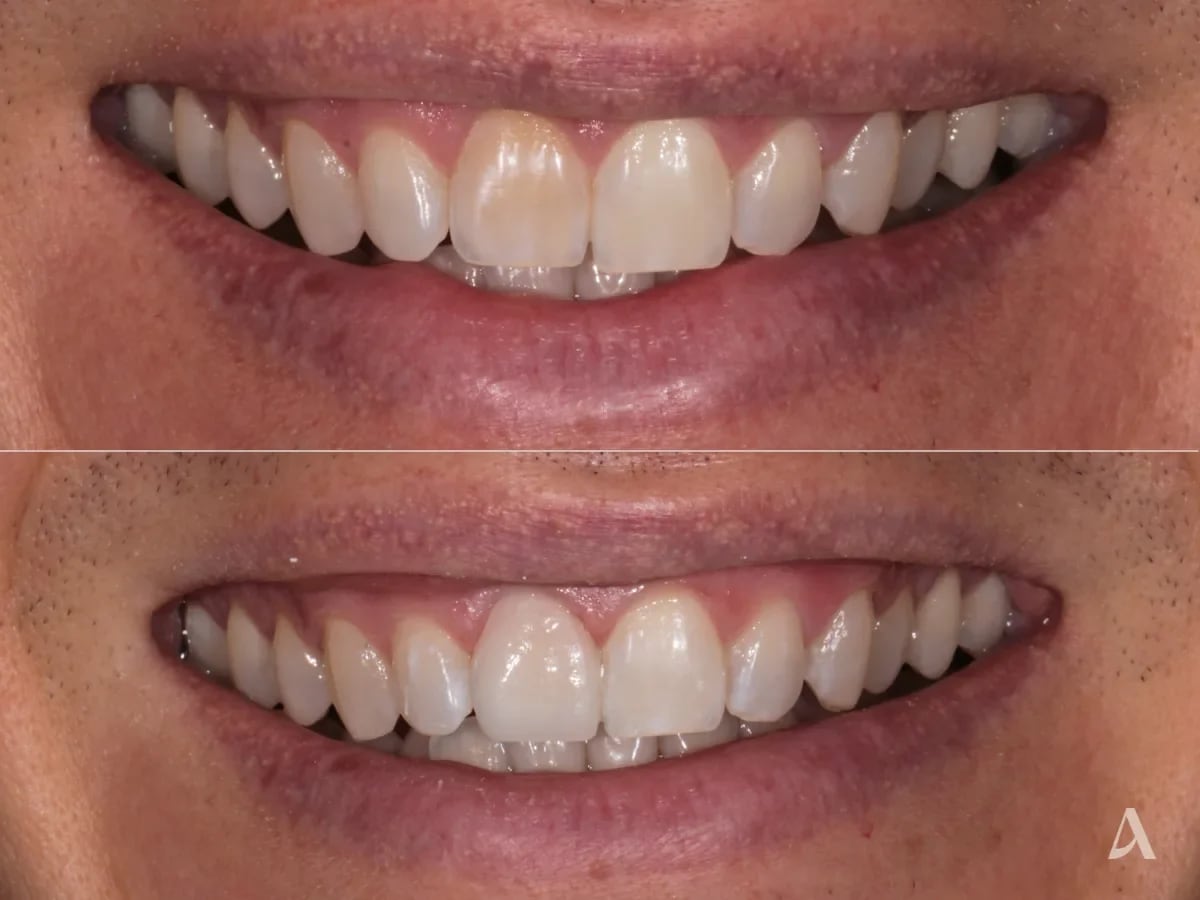
Example of single veneer executed in only one upper incisors. Case executed by Dr. Dunker
4 to 6 veneers: A popular option for patients who want to improve the look of their front teeth. This covers the teeth most visible in your smile line and can address minor spacing, colour, or shape issues.
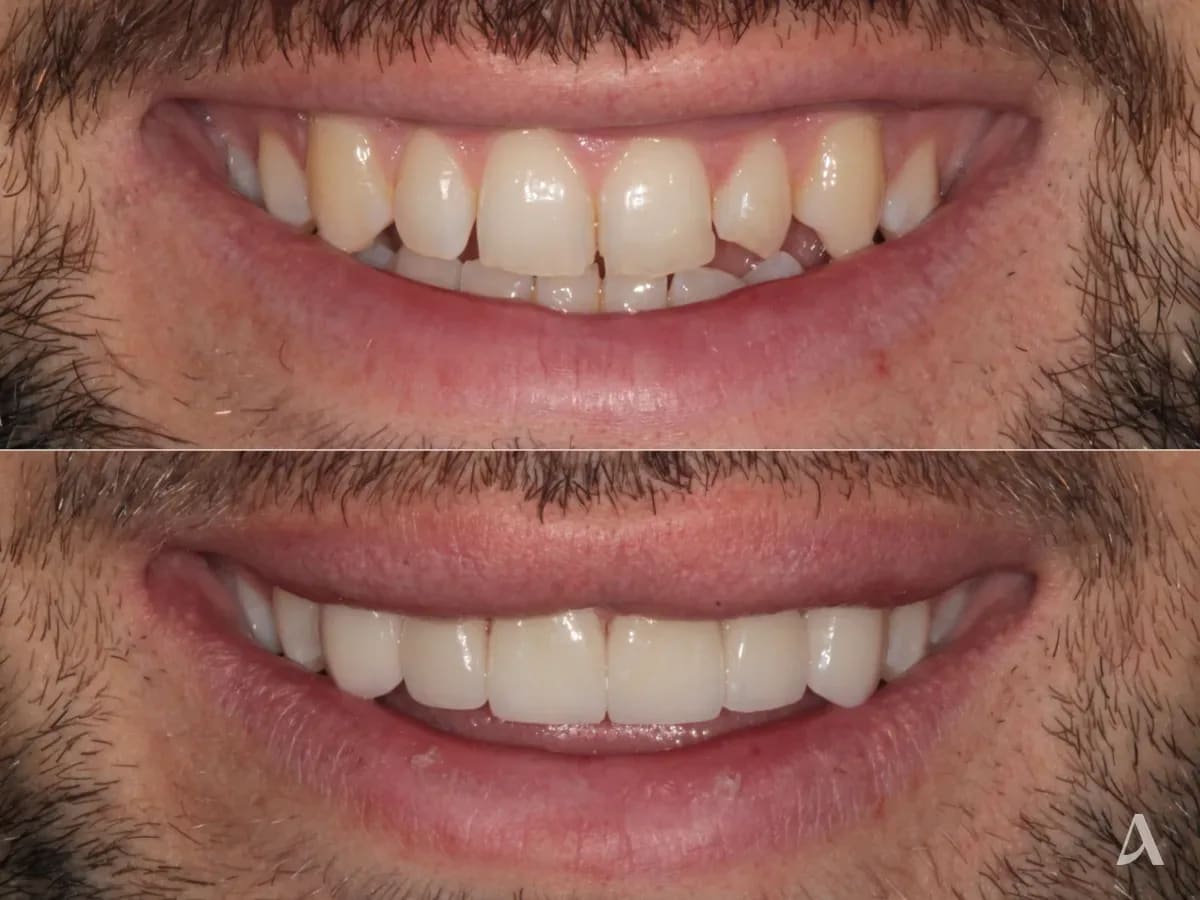
Example of 6 veneers executed in upper incisors and canines. Case executed by Dr. Dunker
8 to 12 veneers: For a more dramatic transformation, veneers on all the teeth visible when you smile create a beautifully uniform result. This is common in full smile makeovers and full mouth rehabilitation cases.
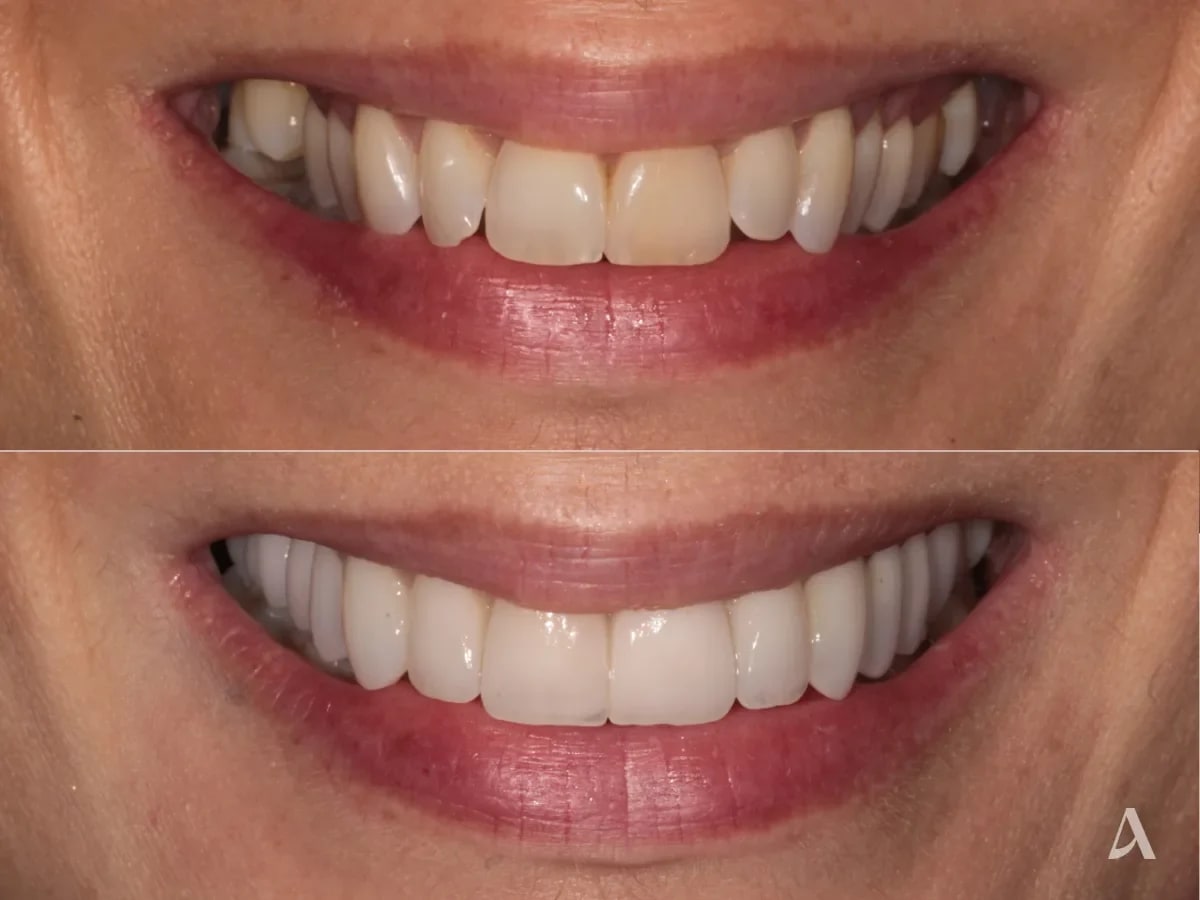
Example of Upper arch veneers and back bridge. Case executed by Dr. Dunker
For the most natural result, cosmetic dentists often recommend placing veneers in even numbers (2, 4, 6, 8, 10, or 12) to maintain symmetry across the smile.
What Decides How Many Veneers You Need?
Several factors come into play when planning your veneer treatment:
Your smile line: How many teeth show when you smile naturally? Some people show only four or six upper teeth, while others reveal ten or more.
The colour of your natural teeth: If your existing teeth are a shade you're happy with, fewer veneers may be needed. If you want to go significantly lighter, more veneers create a consistent result.
Tooth shape and alignment: Minor crowding, gaps, or uneven teeth shape issues may only need a handful of veneers to correct.
Your budget: Starting with fewer veneers on the teeth that bother you most is a perfectly valid approach. You can always add more later.
Try Smile Studio
Curious how a new smile might look on you before you commit to anything? Try Smile Studio, our free online tool. Upload a photo of your smile and preview different tooth shapes and shades right in your browser, in your own time and with no pressure. It works best on a computer or laptop, so open it on a desktop rather than your phone for the easiest experience. It is a simple way to explore the look you are after and bring those ideas to your consultation, so we can talk through what is realistic for your teeth. Keep in mind it is a visual guide to spark the conversation, not a treatment plan or a promise of results.
The Role of Digital Smile Design
At ArtSmiles, we use digital smile design to plan your veneers before any work begins. This means we can show you exactly what your smile will look like with different numbers of veneers, so there are no surprises.
Research by Gurel et al. (2012) highlights how digital planning combined with interim restorations (mock-ups) improves communication between the dentist and patient, leading to more predictable and satisfying results. You get to see and approve the design before we touch your teeth.
This planning stage also helps us determine the most conservative approach, preserving as much of your natural tooth structure as possible. A 2024 narrative review found that veneers with minimal or no preparation have the highest survival rates because the bonding stays within the enamel layer.
Porcelain or Composite: Does It Matter?
Both porcelain and composite veneers can be placed on individual teeth or across multiple teeth. Porcelain tends to last longer and resist staining better, while composite is more affordable and can often be done in a single visit.
Your cosmetic dentist can help you weigh the options based on your specific situation, your goals, and your budget.
What If I Only Want to Fix One Tooth?
That's completely fine. A single veneer is one of the most common cosmetic procedures we do. Whether it's a front tooth that chipped years ago, one that's darker than the rest, or a tooth that just doesn't sit right, a single porcelain veneer can transform it while looking completely natural.
The key is colour matching. Your dentist will carefully match the veneer to the shade, translucency, and texture of your surrounding teeth so it sits naturally alongside them.
How Long Do Veneers Last?
With proper care, porcelain veneers typically last 10 to 15 years or longer. A systematic review published in the Journal of Clinical Medicine (2021) found that porcelain laminate veneers have strong long-term survival rates, with the most common complications being minor chipping or debonding rather than complete failure.
Good oral hygiene, regular dental visits, and wearing a night guard if you grind your teeth will help your veneers last as long as possible. At ArtSmiles, all veneer treatments are covered under our structured warranty programme.
Disclaimer
This article documents patients’ treatment at ArtSmiles. It is shared for educational purposes with the patient’s written consent. Individual results vary and depend on factors including oral health, bone and gum condition, general medical history, and how well the restoration is maintained after treatment. Nothing in this article is a guarantee of outcome, a substitute for a clinical examination, or advice specific to your case. Any treatment carries risks and potential complications, which will be explained to you at consultation.
Cases executed by Dr Cristian Dunker
General Dentist
AHPRA DEN0002257085
ArtSmiles, Southport, Gold Coast
Frequently Asked Questions
Do you need veneers on all your teeth?
No. Veneers can be placed on as few as one tooth. Most patients choose between two and eight, typically targeting the teeth that show when they smile. The number comes down to what you would like to change, not a rule about how many you have to do.
Can you get veneers on just 2 or 4 teeth?
Yes. Getting veneers on two or four teeth is one of the most common approaches at ArtSmiles. It works well when the concern is limited to a small number of front teeth. Digital smile planning lets us match the veneers to your surrounding natural teeth so the result looks consistent.
How long do dental veneers last?
Porcelain veneers typically last 10 to 15 years with good care. Composite veneers usually last five to seven years before they need refreshing. Regular check-ups, avoiding very hard foods, and wearing a night guard if you grind help extend the life of your veneers.
What is the difference between porcelain and composite veneers?
Porcelain veneers are made in a dental lab and bonded over two visits. They are more durable, more stain-resistant, and tend to look more natural over time. Composite veneers are applied directly in a single visit and cost less, but they are more prone to staining and may need replacing sooner.
Will one veneer look different from my surrounding teeth?
Not if it is placed well. The shade and shape are matched to the adjacent teeth during the planning stage. In some cases, minor reshaping or whitening of the neighbouring teeth helps blend everything together. The goal is always a result that looks natural.
Ready to Find Out What's Right for Your Smile?
Finding the right number of veneers starts with a conversation. At ArtSmiles in Southport, we take the time to understand what you'd like to change, walk you through your options with digital smile planning, and put together a treatment plan that feels right for you.
There's no pressure and no obligation. Just honest advice from a team that genuinely cares about your smile. Book your complimentary veneer consultation today.
Written by Dr. Cristian Dunker, BDSc, MBA.
Medically reviewed by Dr. Cristian Dunker.