When Gum Disease Stops Hurting:
Why Silence Does Not Mean Safety

Gum disease does not always get louder as it gets worse. In many cases, it becomes quieter. That is what makes it dangerous.


In the early stages, gum disease sends clear signals. Gums bleed when you brush. They feel sore or swollen. Sometimes they look red or irritated. These signs are uncomfortable, but they are also helpful. They are your body’s way of asking for attention. As the condition progresses, those warning signs can fade. Bleeding may stop. Tenderness may disappear. Everything can feel calm on the surface, while the structures that support your teeth continue to break down underneath.


By the time teeth begin to feel loose or bad breath becomes persistent, the damage is often already advanced.
If you have noticed changes in your gums, or if it has been a while since your last dental check up, this article will help you understand what may be happening and when to act.

Why Gum Disease Can Feel Better as It Gets Worse

In its earliest stage, known as gingivitis, gum disease is very reactive. The gums respond strongly to plaque build up. They swell, bleed easily, and feel sensitive. Because this stage affects only the surface tissues, the symptoms tend to be noticeable.


If plaque and hardened calculus remain in place, inflammation gradually moves deeper. This is when gingivitis progresses into periodontitis.
Here is the part most people do not expect. Periodontitis is usually painless.


Bone has no pain receptors. As the infection shifts from the gums to the bone that supports the teeth, the body no longer sends the same warning signals. Bleeding and tenderness may reduce, even though damage continues. This is why periodontal disease is often described as a silent condition in dental research. The absence of pain does not mean the absence of disease.
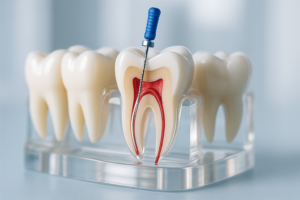

What Is Really Happening Beneath the Gumline

Once bacteria move below the gumline, they settle into an environment that is difficult to clean and easy for harmful bacteria to thrive. Over time, several things happen at once.


Bacteria form a sticky biofilm under the gums. Calculus hardens onto the tooth roots. The immune system stays permanently activated. Chronic inflammation causes the surrounding bone to slowly dissolve. Gum pockets deepen and become harder to reach with daily brushing. Teeth gradually lose their support.


Most patients do not feel this process unfolding. Instead, they may notice subtle changes such as food getting trapped more easily, small gaps appearing, or gums slowly receding.

When Bleeding Stops but the Disease Has Not

One of the most common misconceptions is believing that gums are healthier because they no longer bleed.
Bleeding can stop even while periodontitis continues to progress. This can happen for several reasons:

  • You may unconsciously avoid brushing sensitive areas.
  • The infection may have moved deeper where bleeding is not visible.
  • The gum tissue can become less reactive over time.
  • Smoking can reduce blood flow to the gums.
  • The immune response can become blunted after years of inflammation.

If bleeding has stopped but you notice gum recession, persistent bad breath, or changes in how your teeth feel, it is worth having your gums assessed.

Subtle Signs That Gum Disease Has Progressed

Advanced gum disease rarely announces itself with pain. Instead, it shows up in quieter ways.


– Teeth may start to feel slightly loose.
– New spaces can appear between teeth.
– Bad breath may persist even with good hygiene.
– Gums may recede, making teeth look longer.
– Food may lodge more often between teeth.
– Sensitivity can develop near the gumline.
– Your bite may feel different when you close your teeth together.


These signs do not mean tooth loss is inevitable. When addressed early, further damage can often be slowed or stabilised.

Why Home Care Is Not Enough Once Disease Is Deep

Brushing and flossing are essential, but they cannot clean deep periodontal pockets.


Once calculus forms beneath the gums, professional treatment is required to remove it safely and thoroughly.


At ArtSmiles, periodontal care usually includes a detailed gum assessment, deep cleaning to remove bacterial build up from below the gumline, personalised home care guidance, and regular maintenance visits for patients with a history of gum disease.


Deep cleaning allows the gums to heal, reduces inflammation, and helps prevent further bone loss.

What to Do If You Suspect Gum Disease Is Progressing

You do not need to wait for pain before taking action. Gum disease is far easier to manage when it is identified early.

If you are concerned about your gums, the most important steps are straight forward: 

  1. Book a professional periodontal assessment.
  2. Have a deep clean if pockets are detected.
  3. Use interdental brushes if recommended.
  4. Replace your toothbrush regularly.
  5. Maintain consistent professional reviews if you have had gum disease before.

When bone loss is detected early, many teeth can be preserved for years with the right care.

Understanding Your Next Steps

Gum disease does not behave the way most people expect. As it progresses, it often becomes quieter, not louder. The absence of pain is not reassurance. It is often a signal to look closer.


If you have noticed subtle changes in your gums, or if you simply want clarity about your oral health, a periodontal check can protect your smile before irreversible damage occurs.


To learn more or to book an appointment, visit ArtSmiles Gold Coast.

Scientific References

  1. Page RC, Schroeder HE. Pathogenesis of inflammatory periodontal disease. A summary of current work. Lab Invest. 1976.
  2. Löe H, Theilade E, Jensen SB. Experimental gingivitis in man. J Periodontol. 1965.
  3. Lindhe J, Ranney R, Lamster I, et al. Consensus report: Chronic periodontitis. Ann Periodontol. 1999.
  4. Armitage GC. Periodontal diagnoses and classification of periodontal diseases. Periodontol 2000. 2004.
  5. Socransky SS, Haffajee AD. Dental biofilm ecology and periodontal diseases. J Clin Periodontol. 2005.
  6. Tonetti MS, Greenwell H, Kornman KS. Staging and grading of periodontitis. J Periodontol. 2018.
  7. Jepsen S, Caton JG, Albandar JM, et al. Periodontal manifestations and bacterial profiles in chronic periodontitis. J Clin Periodontol. 2007.
  8. van der Velden U. Purpose and problems of periodontal disease measurement. Periodontol 2000. 2005.
  9. Quirynen M, et al. Mechanisms and clinical implications of halitosis-related periodontitis. J Clin Periodontol. 2009.
  10. Cobb CM. Clinical significance of scaling and root planing: Clinical and historical perspectives. J Clin Periodontol. 2002.