How Delaying Dental Treatment Affects Your Long-Term Costs (Backed by Science)

Most people don’t delay dental care because they don’t care.

They delay because life gets busy. Bills pile up. Work and family come first. And when nothing hurts, it feels reasonable to wait.

The issue is that dentistry follows a very predictable financial pattern, backed by decades of research: small problems become expensive problems when left untreated.

This isn’t about pressure. It’s about understanding what happens when dental disease progresses quietly and why early care almost always costs less.

Why Dental Damage Doesn’t Heal Itself

Dental tissues don’t behave like muscles or skin.

Costs increase over time because:

  • Enamel cannot regrow once damaged
  • Bone lost to gum disease does not return on its own
  • Cracks do not seal or fuse back together
  • Bacterial biofilm becomes more aggressive the longer it remains undisturbed

As damage progresses, treatment becomes more complex, more time-consuming, and more expensive.

The Cost Curve of a Cavity

A cavity has one of the clearest cost trajectories in dentistry.


Early cavity

  • Treatment: small filling
  • Cost: low

Untreated cavity

  • Decay spreads through dentin
  • Treatment: larger filling or onlay
  • Cost: moderate

Advanced cavity

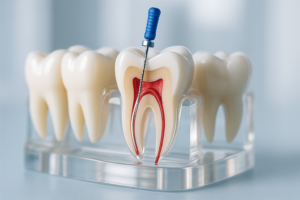
  • Bacteria reach the nerve
  • Treatment: root canal and crown
  • Cost: significantly higher

Severe decay

  • Tooth cannot be saved
  • Treatment: extraction and implant or bridge
  • Cost: highest

Same tooth. Different timing. Completely different cost.

Gum Disease Has an Even More Predictable Cost Pattern

Gum disease is usually painless early, but it slowly destroys bone.

Stage 1: Gingivitis

  • Treatment: professional cleaning
  • Cost: low

Stage 2: Early periodontitis

  • Bone loss begins
  • Treatment: deep cleaning
  • Cost: moderate

Stage 3: Moderate periodontitis

  • Teeth begin to shift
  • Treatment: deep cleaning, frequent maintenance
  • Cost: higher

Stage 4: Advanced periodontitis

  • Mobility, infections, recession
  • Treatment: surgery, extractions, implants
  • Cost: highest

This is why patients often say they wish they had acted earlier.

Cracked Teeth Become Expensive Quickly

Small cracks are common, especially in people who grind their teeth.

They rarely stay small.

Early crack

  • Treatment: bonding or crown
  • Cost: low to moderate

Deep crack

  • Treatment: root canal and crown
  • Cost: higher

Fractured tooth

  • Treatment: extraction and implant
  • Cost: highest

Once a crack reaches the pulp or root, treatment options narrow fast.

The Financial Reality Most Patients Don’t See

Long-term studies consistently show that preventive and early restorative care costs less over time.

Patients who attend regular check-ups and address issues early spend significantly less over a 10-year period than those who only seek care when pain appears.

Late-stage treatment requires:

  • More complex procedures
  • More appointments
  • Higher-precision materials
  • Specialist-level intervention

Waiting almost always creates cost, not savings.

Conclusion

Delaying dental care is common and understandable.


But dental disease follows a predictable path: the longer it progresses, the more complex and costly treatment becomes.


You don’t need to fix everything at once.


At ArtSmiles, many patients move forward in stages:

  • Address the most urgent issue first
  • Stabilise gum health
  • Repair failing restorations
  • Plan long-term cosmetic or implant work later

Progress doesn’t have to be rushed to be effective.
Scientific References

  1. Selwitz RH, Ismail AI, Pitts NB. Dental caries. The Lancet. 2007.
  2. Tonetti MS, Greenwell H, Kornman KS. Staging and grading of periodontitis. Journal of Periodontology. 2018.
  3. Abbott PV. Diagnosis and management of toothache. Australian Dental Journal. 2018.
  4. Marsh PD. Dental plaque as a biofilm. BMC Oral Health. 2006.