"It Doesn’t Hurt”… and That’s Why Dental Problems Are Often Missed

If you’ve delayed dental treatment because “it doesn’t hurt anymore,” you’re not alone.

It’s natural to think that no pain means no problem. That logic works for most of the body, but teeth are different. Dental disease is often quiet, slow, and painless until it becomes serious.

This article explains why pain is a poor indicator of oral health and why waiting for it can lead to bigger problems later.

Teeth Are Designed to Stay Quiet

The nerve of a tooth is sealed inside hard tissue. It doesn’t sense early damage.

Cavities don’t hurt at first
Early decay affects enamel, which has no nerves. You can have a significant cavity and feel nothing. Research published in The Lancet shows that pain usually appears only when decay reaches the deeper layers.

Gum disease is usually silent
Bone loss from gum disease rarely causes pain in its early or moderate stages. Many adults lose bone for years without ever feeling a toothache.

This is why serious disease often exists before patients realise anything is wrong.

Pain Usually Means the Problem Is Advanced

Dental pain is typically a late symptom.


Cavities hurt when the nerve is involved
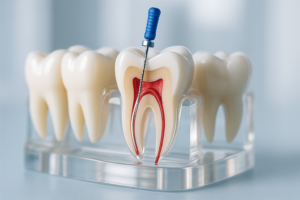
Once bacteria reach the pulp, pressure builds quickly. At this stage, simple fillings are no longer enough and root canal treatment is often required.

Gum disease hurts during flare-ups
Pain usually appears only when infection becomes severe or an abscess forms. The bone loss started long before that.

Cracked teeth are unpredictable
Cracks may cause occasional pain with biting or cold, then disappear. But cracks don’t heal. They only extend deeper over time.
Conditions That Often Progress Without Pain

Several common problems stay quiet for a long time:

  • Gum disease with bone loss
  • Early to moderate cavities
  • Cracked or fractured teeth
  • Grinding-related damage
  • Old fillings breaking down

By the time pain appears, treatment is usually more complex.

If Pain Isn’t the Signal, What Is?

Early warning signs matter far more than pain:

  • Bleeding gums
  • Food getting stuck
  • Persistent bad breath
  • Sensitivity near the gums
  • Rough edges or chips
  • Teeth shifting or loosening
  • Receding gums
  • Dark spots on teeth

These signs often appear months or years before a toothache.

What to Do If You’ve Been Waiting

You don’t need pain to justify a check-up. And you don’t need to fix everything at once.

At ArtSmiles, we focus on:

  • Calm, pressure-free assessments
  • Clear explanations of what’s happening now
  • Step-by-step treatment plans
  • Options for comfort and affordability

The goal is clarity, not urgency.

Conclusion

Pain is one of the least reliable indicators of dental health.


Most serious problems stay silent for a long time. Understanding that silence makes it easier to act early, before treatment becomes more invasive.


If you’re ready to check in or simply want an honest update, the team at ArtSmiles Gold Coast is here to help in a way that feels respectful, informed, and comfortable.

Scientific References

  1. Selwitz RH, Ismail AI, Pitts NB. Dental caries. The Lancet. 2007.
  2. Abbott PV. Diagnosis and management of toothache. Australian Dental Journal. 2018.
  3. Tonetti MS, Greenwell H, Kornman KS. Staging and grading of periodontitis. Journal of Periodontology. 2018.